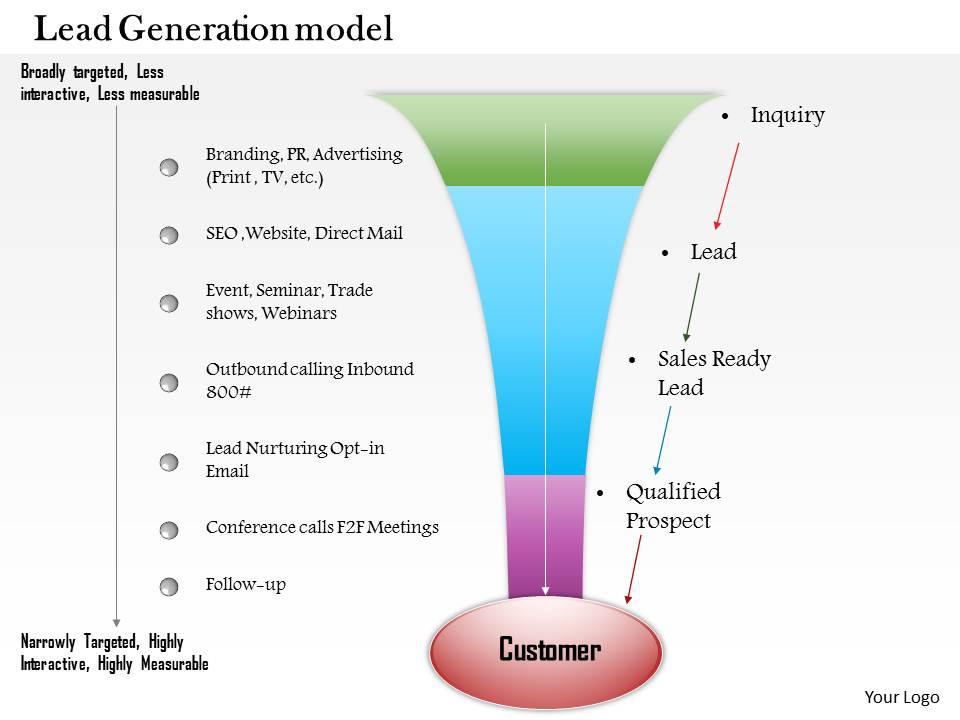
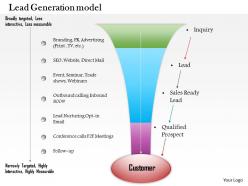
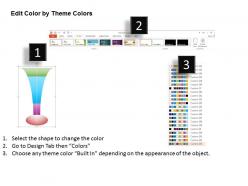
0614 business consulting diagram sales lead generation model powerpoint slide template

Rating:
90%
0614 business consulting diagram sales lead generation model powerpoint slide template
Slide 1 of 5
Favourites Favourites

Try Before you Buy Download Free Sample Product

Audience Impress Your
Audience
Editable 100%
Editable
Time Save Hours
of Time
The Biggest Sale is ending soon in
0
0
:
0
0
:
0
0
Rating:
90%
All images are 100% editable in the presentation design. Good quality images can be used to compliment the message. Works well in Windows 7, 8, 10, XP, Vista and Citrix. Editing in presentation slide show can be done from anywhere by any device. Students, teachers, businessmen or industrial managers can put to use the PPT layout as per their requirement. Compatibility with Google slides. High resolution is offered by the presentation slide show.

People who downloaded this PowerPoint presentation also viewed the following :

FAQs for 0614 business consulting diagram sales lead generation model

Effective business consulting diagrams include clear problem identification, strategic analysis frameworks, solution pathways, implementation timelines, and measurable outcomes. These components work together by visualizing complex business challenges, mapping strategic interventions, and demonstrating value creation processes, with many consulting firms finding that well-structured diagrams enhance client understanding and accelerate decision-making across diverse industries.

Visual elements in business consulting diagrams enhance client understanding by simplifying complex data, highlighting key relationships, and creating memorable visual anchors for strategic concepts. Through color coding, flowcharts, and infographics, consultants enable clients to grasp intricate business processes more quickly, facilitate better decision-making discussions, and ultimately improve project outcomes and implementation success rates.

Business consulting presentations commonly utilize process flow diagrams, organizational charts, SWOT analysis matrices, value chain diagrams, and stakeholder mapping visuals. These strategic frameworks enhance client understanding by illustrating complex business relationships, operational workflows, and competitive positioning, with many consulting firms finding that visual representations accelerate decision-making and streamline implementation discussions.

Business consulting diagrams assist strategic planning by visualizing complex data relationships, identifying process bottlenecks, and mapping stakeholder connections across organizational hierarchies. These visual frameworks enable executives to analyze market positioning, resource allocation, and competitive landscapes more effectively, with many consulting firms finding that diagram-driven presentations accelerate client decision-making and enhance strategic clarity.

**INPUT**: What software or tools are most effective for creating business consulting diagrams? **OUTPUT**: Effective tools for business consulting diagrams include Microsoft Visio, Lucidchart, Draw.io, PowerPoint, and SlideTeam's templates. These platforms streamline diagram creation by offering pre-built frameworks, collaborative features, and professional formatting, with many consulting firms finding that specialized template libraries significantly reduce preparation time while enhancing client presentation quality. [Word count: 51 words]

Color theory enhances consulting diagrams by using complementary colors for contrast, warm colors to highlight key insights, and consistent palettes to reinforce brand identity and information hierarchy. Strategic color application helps consultants guide client attention, differentiate data categories, and create emotional resonance, with many firms finding that thoughtful color choices significantly improve client comprehension and presentation memorability.

Best practices for labeling and annotating business diagrams include using clear, consistent terminology, maintaining hierarchical information flow, employing standardized symbols, ensuring readable font sizes, and strategic color coding for different categories or priorities. These approaches streamline stakeholder communication by eliminating ambiguity, accelerating decision-making processes, and enhancing presentation clarity, with many consulting firms finding that well-annotated diagrams reduce meeting times while improving client comprehension and project outcomes.

Business consulting diagrams can be tailored by incorporating industry-specific terminology, regulatory frameworks, operational workflows, and sector-relevant KPIs that resonate with particular audiences. Financial services diagrams might emphasize risk management and compliance pathways, while healthcare consulting visuals focus on patient outcomes and regulatory adherence, ultimately delivering targeted insights that enhance stakeholder understanding and strategic decision-making across diverse sectors.

Storytelling transforms business consulting diagrams from static visuals into compelling narratives that guide stakeholders through complex processes, strategic transformations, and decision-making frameworks. Through narrative structure, consultants create logical flow between diagram elements, helping clients visualize their current challenges, proposed solutions, and future outcomes, ultimately delivering clearer understanding and stronger buy-in for recommended strategies.

Diagrams facilitate problem identification and solution development by visualizing complex business relationships, data flows, and organizational structures, making abstract challenges tangible and measurable. Through process mapping, root cause analysis charts, and stakeholder matrices, consultants can systematically uncover inefficiencies, bottlenecks, and strategic gaps, while presenting clear implementation pathways that enhance client understanding and accelerate decision-making.

Common mistakes include overcrowding diagrams with excessive information, using inconsistent visual elements, neglecting clear hierarchy, poor color choices that reduce readability, and failing to align content with audience expertise levels. These design flaws significantly undermine communication effectiveness, with many consulting firms finding that streamlined, visually cohesive diagrams enhance client comprehension, accelerate decision-making processes, and ultimately deliver stronger strategic outcomes.

Interactive diagrams enhance consulting presentations by enabling real-time exploration of complex business scenarios, allowing clients to manipulate variables, drill down into specific data points, and visualize different strategic outcomes instantly. This dynamic approach transforms traditional static presentations into collaborative sessions where stakeholders actively participate in decision-making processes, ultimately delivering deeper understanding and stronger buy-in for recommended solutions.

Business consulting diagrams support change management by visualizing current and future states, mapping stakeholder impact, outlining implementation timelines, and identifying potential resistance points. These visual tools help organizations communicate transformation strategies more effectively, with many companies finding that diagram-based approaches reduce confusion, accelerate buy-in, and ultimately deliver smoother transitions with measurable adoption rates.

Key progress metrics in consulting diagrams include milestone completion rates, budget variance, timeline adherence, stakeholder satisfaction scores, and ROI indicators. These visual representations enable consulting teams to track project momentum, identify bottlenecks early, and demonstrate tangible value to clients, while stakeholders gain clear visibility into deliverable progress, ultimately enhancing project accountability and client confidence.

Cultural differences significantly influence business diagram interpretation through varying visual processing patterns, hierarchical representations, color associations, and information flow preferences across different regions and business cultures. These variations affect how consultants present data visualization, organizational structures, and process flows, with many international consulting firms adapting their diagrammatic approaches to enhance client comprehension and ensure strategic alignment across diverse cultural contexts.

Ratings and Reviews

90% of 100
Write a review
Most Relevant Reviews
  1. 100%

    by Eddy Guerrero

    Content of slide is easy to understand and edit.
  2. 80%

    by Deandre Munoz

    Design layout is very impressive.

2 Item(s)

per page: