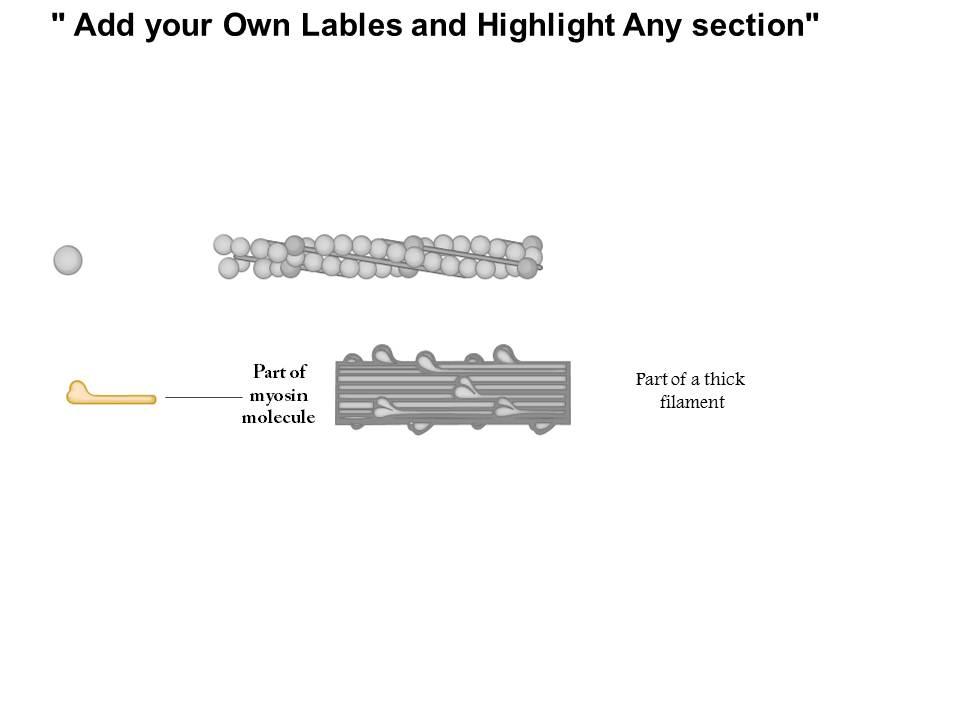
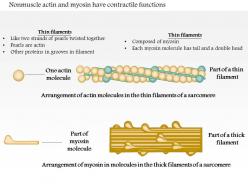
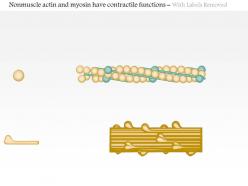
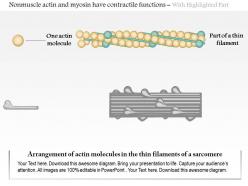
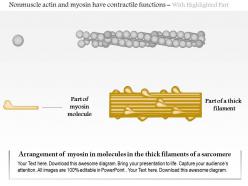
0614 nonmuscle actin and myosin have contractile functions medical images for powerpoint

Rating:
80%
0614 nonmuscle actin and myosin have contractile functions medical images for powerpoint
Slide 1 of 9
Favourites Favourites

Try Before you Buy Download Free Sample Product

Audience Impress Your
Audience
Editable 100%
Editable
Time Save Hours
of Time
The Biggest Sale is ending soon in
0
0
:
0
0
:
0
0
Rating:
80%
We are proud to present our 0614 nonmuscle actin and myosin have contractile functions medical images for powerpoint. Use this Nonmuscle Actin And Myosin Have Contractile Functions Medical Images For Powerpoint to give your presentation a more professional, uniform look. This medical image will help you organize and create effective presentations.

People who downloaded this PowerPoint presentation also viewed the following :

FAQs for 0614 nonmuscle actin and myosin have contractile functions medical

Nonmuscle actin and myosin primarily drive cell motility, shape maintenance, organelle transport, and cytokinesis through dynamic contractile networks. These proteins enable essential processes like wound healing in tissue repair, immune cell migration during inflammatory responses, and intracellular cargo delivery, ultimately facilitating cellular adaptation, tissue remodeling, and maintaining organizational integrity across diverse biological systems.

Nonmuscle actin and myosin drive cell motility by generating contractile forces at the cell's leading edge, forming stress fibers for directional movement, and creating cytoskeletal contractions that propel the cell forward. These molecular motors enable coordinated cellular migration through dynamic polymerization and contraction cycles, with many research laboratories finding that this mechanism underlies essential processes like wound healing, immune responses, and tissue development across diverse biological systems.

Muscle cells utilize organized sarcomeres with thick myosin and thin actin filaments for rapid, synchronized contractions, while nonmuscle cells employ dispersed actin-myosin networks that generate slower, more localized forces through stress fiber formation and cortical tension. These distinct mechanisms enable muscle cells to deliver powerful locomotive functions and nonmuscle cells to facilitate essential processes like cell division, migration, and shape changes, ultimately supporting different physiological requirements across tissues.

Signaling pathways regulate nonmuscle actin-myosin contractility through phosphorylation cascades, calcium signaling, and Rho GTPase activation, controlling myosin light chain kinase activity and actin polymerization. These regulatory mechanisms enable precise coordination during cell division, migration, and morphogenesis, with pathways like RhoA/ROCK and calcium-calmodulin ultimately delivering controlled contractile forces essential for proper cellular function.

Nonmuscle actin filaments exhibit shorter, more dynamic structures with frequent branching networks, rapid turnover rates, and less organized arrangements compared to muscle tissue's long, stable, highly ordered sarcomeric filaments. These structural differences enable nonmuscle actin to facilitate diverse cellular functions including membrane dynamics, intracellular transport, and shape changes across various cell types, ultimately delivering enhanced cellular mobility and adaptive responses.

Nonmuscle actin-myosin interactions facilitate cellular shape changes by generating contractile forces, reorganizing cytoskeletal networks, and driving membrane dynamics through coordinated filament sliding. These molecular motors enable cells to undergo morphological transitions during migration, division, and wound healing, with contractile stress fibers and cortical networks ultimately delivering the mechanical forces necessary for shape remodeling and structural adaptation.

Nonmuscle actin-myosin contractility drives tissue development and repair by regulating cell migration, wound closure, morphogenetic movements, and extracellular matrix remodeling throughout embryogenesis and healing processes. These contractile mechanisms enable precise tissue architecture formation, facilitate coordinated cellular responses during injury repair, and maintain structural integrity, with regenerative medicine applications increasingly leveraging these pathways for enhanced therapeutic outcomes.

Nonmuscle actin forms the contractile ring with myosin II during cytokinesis, creating the mechanical force needed to physically separate daughter cells through progressive constriction. This actin-myosin network assembles at the cell equator, systematically pinches the cell membrane inward, and ultimately delivers precise cellular division, with many cell types relying on this contractile mechanism for successful mitotic completion.

Dysregulation of nonmuscle actin and myosin disrupts essential cellular processes including cell division, migration, and tissue integrity, leading to cancer metastasis, cardiovascular disorders, and developmental abnormalities. These contractile proteins enable proper wound healing, immune cell function, and organ development, with many pathological conditions finding that altered cytoskeletal dynamics ultimately compromise cellular organization and tissue homeostasis.

Key experimental techniques include fluorescence microscopy with GFP-tagged proteins, live-cell imaging with photoactivatable probes, traction force microscopy, atomic force microscopy, and optogenetic manipulation systems. These advanced methods enable researchers to visualize real-time cytoskeletal dynamics, measure contractile forces, and manipulate cellular mechanics in living systems, with many laboratories finding that combining multiple approaches delivers comprehensive insights into cellular motility and mechanobiology processes.

Nonmuscle myosin II differs from other isoforms through its unique bipolar filament assembly, enhanced ATPase activity, and superior force generation capabilities for cellular contraction. While myosin I and V primarily function in cargo transport and membrane dynamics, myosin II specializes in cytoskeletal tension, cell division, and tissue morphogenesis, ultimately delivering the contractile power essential for developmental processes and cellular mechanical functions.

Understanding nonmuscle contractility reveals how cancer cells exploit actin-myosin mechanisms to invade tissues, migrate through blood vessels, and establish metastatic sites. This knowledge enables researchers to develop targeted therapies that disrupt contractile pathways, potentially reducing tumor spread, while pharmaceutical companies increasingly focus on myosin inhibitors and cytoskeletal modulators, ultimately delivering more precise cancer treatments.

The mechanical properties of the cellular environment significantly influence nonmuscle actin-myosin contractility through substrate stiffness, extracellular matrix composition, and spatial constraints that modulate force generation and cytoskeletal organization. Cells on rigid substrates exhibit enhanced contractile forces and stress fiber formation, while softer environments promote different contractile patterns, ultimately enabling adaptive responses that optimize cellular migration, division, and tissue remodeling across various physiological contexts.

Targeting nonmuscle actin and myosin presents therapeutic potential for cancer metastasis, fibrosis, cardiovascular diseases, and neurological disorders through modulating cell migration, division, and tissue remodeling. While these approaches enable enhanced drug delivery and reduced pathological scarring, challenges include achieving tissue-specific targeting and managing off-target effects, with pharmaceutical companies increasingly developing selective inhibitors for improved therapeutic outcomes.

Studying nonmuscle contractile functions reveals how actin-myosin networks regulate stem cell fate decisions, migration patterns, and tissue morphogenesis through mechanical signaling pathways, cytoskeletal reorganization, and force generation mechanisms. These insights enable researchers to enhance regenerative medicine approaches, optimize tissue engineering protocols, and develop targeted therapies for developmental disorders, ultimately delivering improved therapeutic strategies and deeper understanding of cellular differentiation processes.

Ratings and Reviews

80% of 100
Write a review
Most Relevant Reviews
  1. 80%

    by Darius Webb

    It saves your time and decrease your efforts in half.
  2. 80%

    by Cory Reynolds

    Great designs, really helpful.

2 Item(s)

per page: