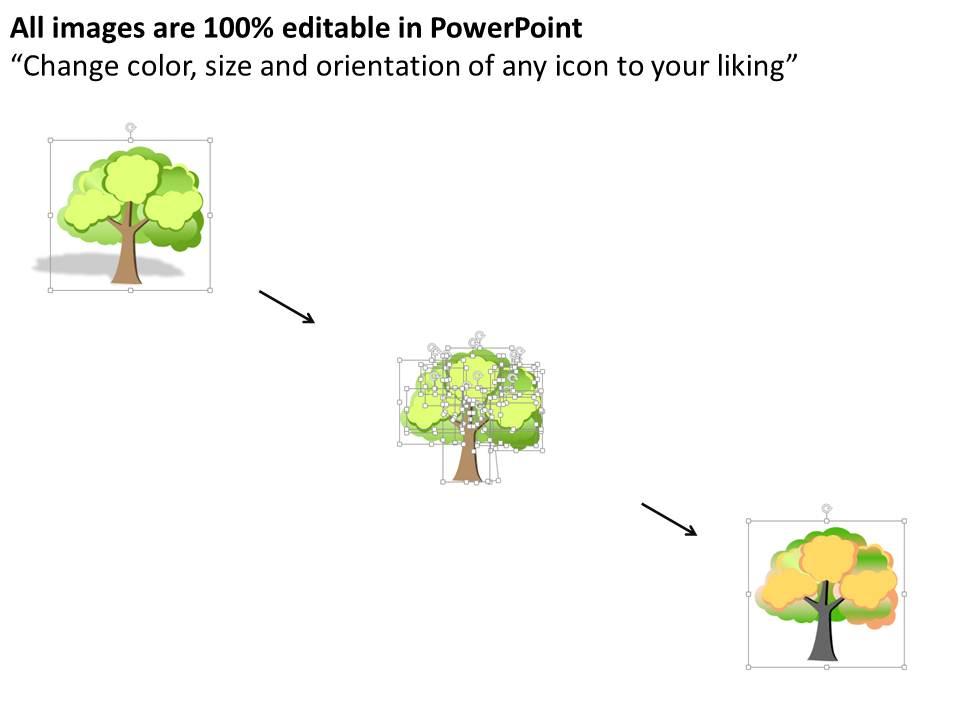
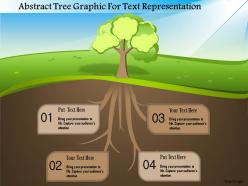
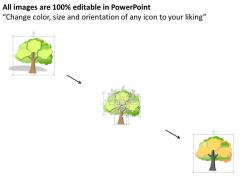
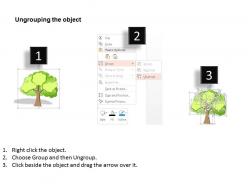
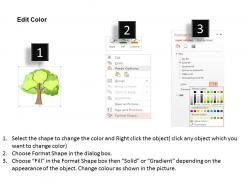
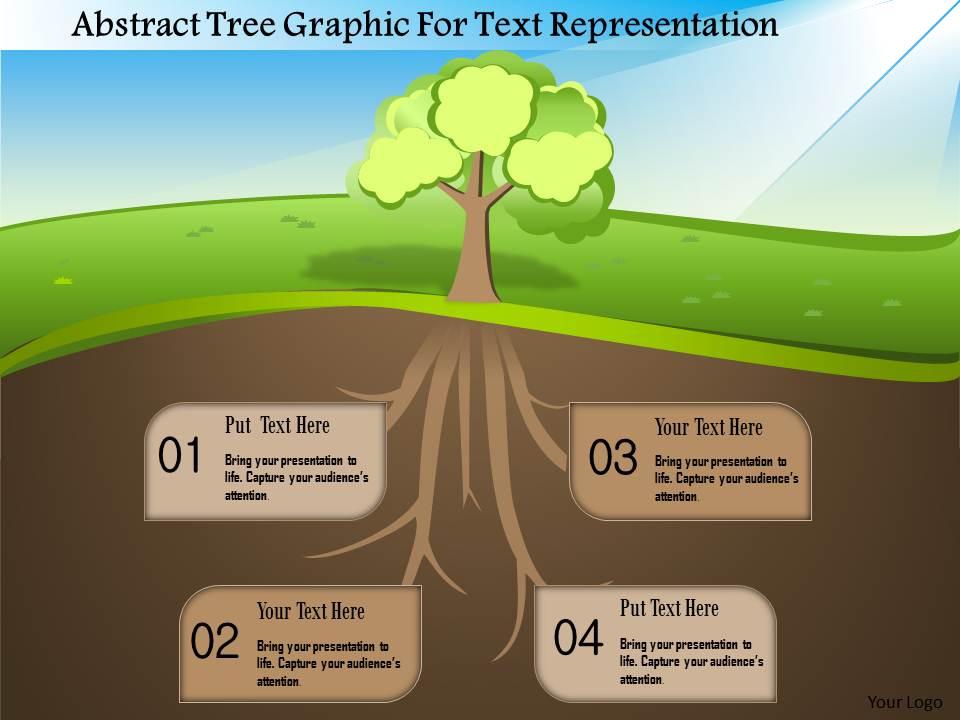
1214 abstract tree graphic for text representation powerpoint template
Try Before you Buy Download Free Sample Product
Audience
Editable
of Time
Our 1214 Abstract Tree Graphic For Text Representation PowerPoint Template enjoy diversity. They absorb the best from different cultures.
People who downloaded this PowerPoint presentation also viewed the following :
1214 abstract tree graphic for text representation powerpoint template with all 5 slides:
Generate a gush of enthusiasm with our 1214 Abstract Tree Graphic For Text Representation PowerPoint Template. Everyone will feel greatly activated.
FAQs for 1214 abstract tree graphic for text
**INPUT**: What design principles should be considered when creating an abstract tree graphic for presentations? **OUTPUT**: Key design principles include visual hierarchy, color consistency, scalable typography, balanced proportions, and clear information flow throughout the tree structure. These elements work together by ensuring readability across different screen sizes, maintaining audience engagement through strategic color placement, and delivering complex organizational or process information in digestible formats, with many presenters finding that simplified abstract designs enhance comprehension while supporting professional credibility. **Word count: 60 words**
Color theory significantly influences abstract tree graphic perception by affecting emotional response, visual hierarchy, and message interpretation through warm colors suggesting growth and energy while cool colors conveying stability and trust. In presentation contexts, strategic color choices enhance audience engagement and comprehension, with many presenters finding that complementary color schemes create visual impact while analogous palettes maintain professional cohesion, ultimately delivering stronger message retention.
**INPUT**: What are some effective ways to integrate abstract tree graphics into data visualization? **OUTPUT**: Effective integration methods include hierarchical organizational charts, decision tree mapping, process flow documentation, categorical data branching, and multi-level comparison frameworks. These visual approaches streamline complex information by creating intuitive pathways, enhancing data comprehension through familiar organic structures, and enabling stakeholders to navigate layered datasets more efficiently, ultimately delivering clearer insights and faster decision-making across various business applications.
Abstract tree graphics deliver greater impact when presenting complex organizational hierarchies, creative storytelling, or brand-focused content where visual appeal matters more than technical precision. These stylized designs enhance presentations for executive audiences, marketing campaigns, and conceptual frameworks, with many organizations finding that abstract approaches create memorable impressions while maintaining professional credibility in client-facing materials.
Abstract tree graphics simplify complex ideas by organizing information hierarchically, breaking down intricate processes into interconnected branches, and creating visual pathways that guide audience understanding from core concepts to detailed components. These visual structures enable organizations across sectors like consulting, education, and strategic planning to transform overwhelming data into digestible formats, ultimately enhancing comprehension and decision-making processes while streamlining communication.
Adobe Illustrator, Procreate, Canva, Figma, and CorelDRAW offer comprehensive features for creating custom abstract tree graphics through vector editing, layering capabilities, and diverse brush libraries. These platforms enable designers to streamline creative workflows, enhance visual storytelling, and deliver scalable graphics for presentations, with many organizations finding that vector-based tools ultimately provide greater flexibility for branding consistency.
Abstract tree graphics enhance storytelling by visually representing hierarchical relationships, growth processes, organizational structures, and branching narratives through intuitive metaphors. These versatile visuals enable presenters to illustrate complex concepts like family trees, decision pathways, and evolutionary processes, while creating memorable visual anchors that help audiences follow multi-layered stories and retain key information more effectively.
Tree imagery carries diverse cultural meanings, from growth and wisdom in Western contexts to ancestral connections in indigenous cultures, spiritual enlightenment in Eastern traditions, and life cycles across various societies. Designers should research their target audience's cultural background, consider religious or spiritual associations, and ensure tree symbolism aligns with brand values, while many global organizations find that universal themes like growth and stability transcend cultural boundaries effectively.
Common mistakes include using overly complex designs that distract from content, choosing poor color contrast that reduces readability, overcrowding slides with excessive tree elements, and failing to align graphics with the presentation's message. These design missteps can confuse audiences and undermine professional credibility, with many presenters finding that simplified, purposeful tree graphics enhance understanding while maintaining visual impact.
Abstract tree graphics facilitate audience engagement by transforming complex hierarchical information into visually intuitive formats that mirror natural cognitive patterns, making data relationships instantly recognizable and memorable. These visual structures enhance information retention through spatial organization, color coding, and branching pathways, with organizations in education, consulting, and project management finding that audiences process and recall tree-structured content significantly faster than traditional linear presentations.
Whitespace in abstract tree graphics enhances visual hierarchy, reduces cognitive load, and improves information comprehension by creating clear separation between branches and elements. Strategic whitespace placement enables viewers to process complex organizational structures, data relationships, and decision trees more efficiently, with many businesses finding that well-spaced graphics deliver significantly better audience engagement and understanding.
Motion enhances abstract tree graphics through progressive growth animations, branch-by-branch reveals, seasonal transitions, and interactive hover effects that guide audience attention. These dynamic elements help presenters illustrate organizational development, project timelines, and hierarchical relationships more effectively, with many corporate trainers and consultants finding that animated tree graphics significantly improve audience engagement and information retention.
Abstract tree graphics accessibility requires alt text descriptions, high contrast color schemes, readable fonts, and alternative text formats for screen readers and visually impaired audiences. These practices streamline inclusive design by providing multiple information pathways, ensuring color-blind friendly palettes, and maintaining clear hierarchical structures, with many organizations finding that accessible graphics ultimately enhance comprehension for all viewers.
Adapting abstract tree graphics involves adjusting visual complexity, color schemes, terminology, and contextual framing to match audience expectations and communication preferences. Corporate audiences typically respond to streamlined designs with professional color palettes and business-focused labels, while academic audiences often prefer detailed hierarchies with comprehensive data points and scholarly annotations, ultimately ensuring maximum engagement and comprehension across sectors.
Research shows nature-inspired visuals, including abstract tree graphics, reduce stress, enhance cognitive performance, improve mood, and increase creativity through biophilic design principles. Studies across healthcare facilities, corporate offices, and educational institutions demonstrate that these graphics lower cortisol levels, boost focus and productivity, while creating calming environments that enhance overall well-being and workplace satisfaction.
-
Content of slide is easy to understand and edit.
-
Easily Understandable slides.