1214 road map timeline with road signs powerpoint presentation
Try Before you Buy Download Free Sample Product
Audience
Editable
of Time
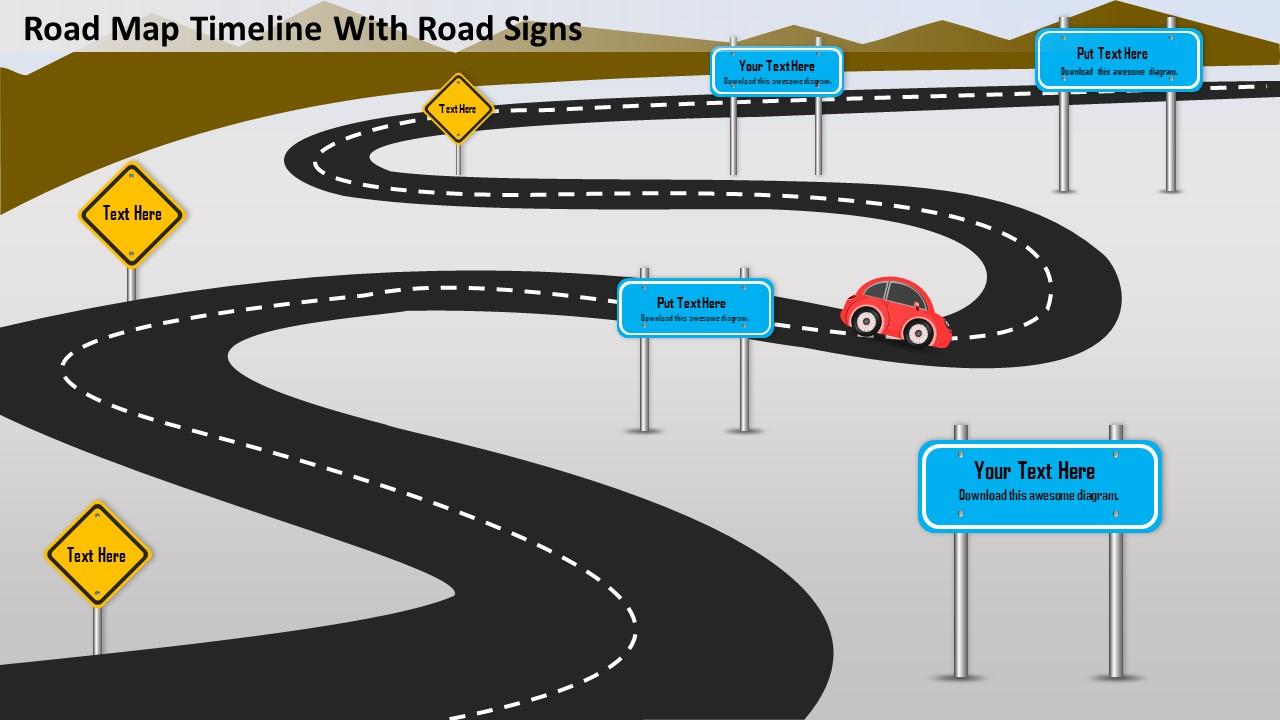
Create your own path-breaking set of targets and achieve them with panache on your road to ultimate success by motivating your managers and executives with this PowerPoint presentation that features a timeline through an arresting graphic of a roadmap aptly interspersed with road signs to serve as milestones. It could be your technology roadmap, enterprise automation plan, a roadmap for digital transformation or the long term business strategy of your firm, our quirky new presentation design will encapsulate the key sub-targets and the associated deadlines in an engaging and interesting manner for your audience. Summarize the key takeaways from a meeting on marketing planning process leading up to the success of your marketing strategy to enthrall and energize your team using this PPT slide template. Look no further than our remarkable presentation slide to emphasize the vision and mission of your organization while proposing new business plans, diversification, expansion etc. by showcasing the achievement of organizational goals in the process.Communicate across the earth with our 1214 Road Map Timeline With Road Signs Powerpoint Presentation. Derive the benefits of glocal capability.
People who downloaded this PowerPoint presentation also viewed the following :
1214 road map timeline with road signs powerpoint presentation with all 5 slides:
Give folks the courage to express their feelings with our 1214 Road Map Timeline With Road Signs Powerpoint Presentation. You will extract accurate feedback.
FAQs for 1214 road map timeline with road
So the 1214 roadmap has four main chunks. Q1 is getting everyone on the same page and planning stuff out. Then Q2 covers system design and figuring out resources. Q3 is where you actually build everything and test it - honestly this quarter always turns into chaos, but whatever. Final quarter is deployment and training users. Don't skip those checkpoint reviews between phases though. They're hard stops and you can't move on without approval. There's built-in buffer time for when things go sideways too. Oh, and grab that detailed milestone doc from the project portal - it'll show you all the smaller pieces and what depends on what.
Honestly, the 1214 Road Map works pretty well with whatever you're already doing - Agile, Waterfall, whatever. Just map those milestones to your current sprint cycles or project phases. No need to blow up your whole process (because who wants that headache?). Think of it more like... putting a strategic layer on top of what you've got. Your workflows stay the same underneath. I'd probably start by figuring out which milestones you already have that match up with the 1214 targets, then tweak your timeline from there. Way easier than starting from scratch.
Honestly, the worst part is always people just not wanting to change - like, I get it, why fix what isn't broken, right? Then you've got the whole "whose job is this anyway?" problem because nobody really owns it. Oh and good luck getting actual budget or time allocated, everyone wants results but won't pay for them. Communication between departments? Total nightmare during rollouts. Plus leadership always thinks this stuff happens overnight. My take is run a small test first in just one department. Get some wins under your belt, then those success stories basically sell themselves to other teams.
Honestly, just make it visual - like a simple roadmap or Gantt chart instead of boring slides. Way easier for everyone to follow. Do monthly check-ins where you walk through what's happening and what's next. Here's the thing though - don't get too technical with them. Break down your milestones into stuff they actually care about, like business impact. Send quick weekly updates even when nothing big is happening. I know it seems extra, but trust me - when stakeholders don't hear from you, they start imagining the worst. Consistency beats perfection every time.
Okay so for your roadmap presentation - keep it super clean and just hit the major milestones. Don't try to cram everything in there. Go with a horizontal timeline, mark your quarters clearly, and use different colors for the big deliverables. Honestly, I've seen some that look like complete disasters with too much stuff. Make your text big enough so people in the back can actually read it. Oh and definitely have two versions - one high-level for the executives and a detailed one for your working sessions. Don't forget to date it and add a legend!
Yeah, the 1214 Road Map works across pretty much any industry - it's more about the planning structure than specific tactics. So whether you're doing tech, manufacturing, healthcare, whatever, you just map your industry's weird requirements onto each phase. Pharma companies stretch out their testing forever while software startups rush through everything. Makes sense though. You keep those same strategic checkpoints but tweak the timing and content for your sector. I'd start by figuring out what your critical milestones are, then just plug them into the framework. It's honestly pretty straightforward once you get the hang of it.
For 1214 Road Maps, honestly just go with Microsoft Project or Smartsheet - they can actually handle the complexity without breaking. I've watched too many teams try cramming this stuff into basic tools and it becomes a nightmare. Roadmunk or ProductPlan work great if your team likes visual stuff since they're made specifically for roadmapping. Simpler timelines? Asana or Monday.com's Gantt charts do the job fine. My advice is start with whatever you're already using and only upgrade when you hit walls.
So basically you pick 12 big goals for the year, then focus on just one thing each quarter. Way less overwhelming than trying to juggle everything at once. Each month you track 4 specific numbers to see if you're actually making progress. I love this because I'm terrible at sticking to stuff - the monthly check-ins keep me honest instead of just pretending everything's fine until December hits. It's like training wheels for goal-setting, honestly. Oh, and start with your 12 goals first, then figure out what to focus on each quarter from there.
Look, stakeholder feedback is what stops your roadmap from turning into a total disaster. Regular check-ins and surveys are your friends here - plus those brutal feedback sessions where people actually tell you the truth. Some of my best pivots happened because someone made a random comment I wasn't expecting. Set up structured times where they can weigh in on priorities and timelines before you're too deep in the weeds. Oh, and actually do something with the feedback you collect - don't just file it away somewhere. Document everything but make sure it leads to real changes.
Track your completion rates, budget stuff, and timeline performance - that's the easy part. But honestly? The real gold is in talking to people. Send out quick pulse surveys to see if your team's actually happier and if stakeholders feel like you're solving their problems. I'd do monthly check-ins on the hard numbers, then quarterly deeper dives that include the human feedback. Numbers lie sometimes - or at least don't tell you why something worked or didn't. Adjust as you go based on what you're hearing from actual people using the process.
Honestly, most people think you've gotta nail every milestone perfectly in order - total myth. The 1214 framework gets this bad rep for being super rigid, but it's actually built to flex with whatever your team can handle. Oh, and don't do what I did and try skipping the planning stuff to jump straight into execution. Trust me on that one. The timeline? More like a rough guide than some hard deadline. I'd just use it to keep yourself on track without getting stressed if things shift around or you need extra time on certain parts.
Honestly, the 1214 Road Map is a game changer for getting teams on the same page. When everyone's staring at the same timeline, dependencies suddenly make sense and you can actually see where handoffs need to happen. I'd throw it into your next cross-team meeting - have people build the map together instead of working in silos. The visual aspect really helps different teams understand how their work connects. Short sentences work. But collaborative planning sessions become way more productive when you're all contributing pieces to one shared timeline rather than guessing what everyone else is doing.
So the 1214 Road Map thing is actually way older than you'd think - goes back to medieval military planning around the Battle of Bouvines. Those commanders had to coordinate massive campaigns across different regions, so they developed this whole system of breaking everything into phases with checkpoints. Smart stuff, honestly. Modern project management basically just stole their homework and rebranded it for business. Same DNA though - you've got your sequential phases, milestones, backup plans if things go sideways. Worth trying on your next big project, the historical approach actually works pretty well.
Honestly, the 1214 Road Map is pretty brilliant for this stuff. It gives you a timeline where you can spot risks before they blow up in your face. Just plot your major risk categories against each phase - you'll instantly see where you're flying blind. The timeline format is clutch because it shows dependencies that could domino if one thing falls apart. Build in checkpoints so you can reassess as things change (and they always do). Think of it like a crystal ball that actually works since it makes you plan ahead systematically. Way better than just hoping for the best.
The 1214 Road Map's gonna need some serious updates with all the changes happening. AI tools are making scenario planning crazy fast now - like, we can model stuff in minutes that used to take days. Remote work is still messing with everyone's timeline expectations too. New regulations around data privacy and sustainability are popping up everywhere, which honestly wasn't even a thing when these frameworks started. My take? Build way more flexibility into your quarterly check-ins. Maybe add some kind of "trend impact review" - sounds fancy but it's just asking "what's changing that we didn't see coming?" Works better than pretending you can predict everything six months out.
-
Good
-
Easy to edit slides with easy to understand instructions.
-
Illustrative design with editable content. Exceptional value for money. Highly pleased with the product.