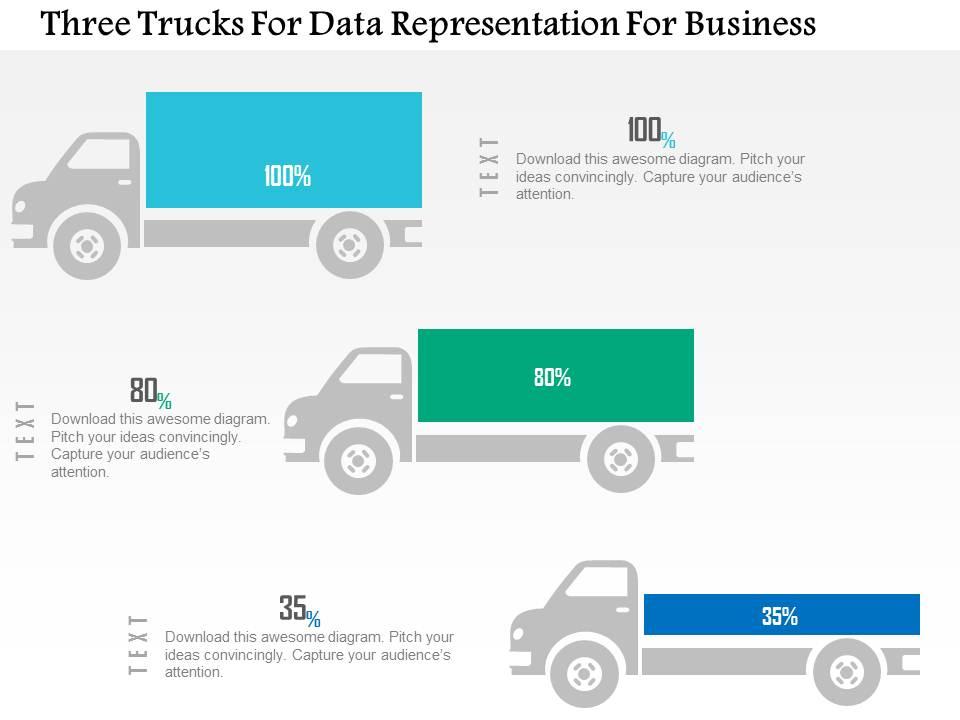
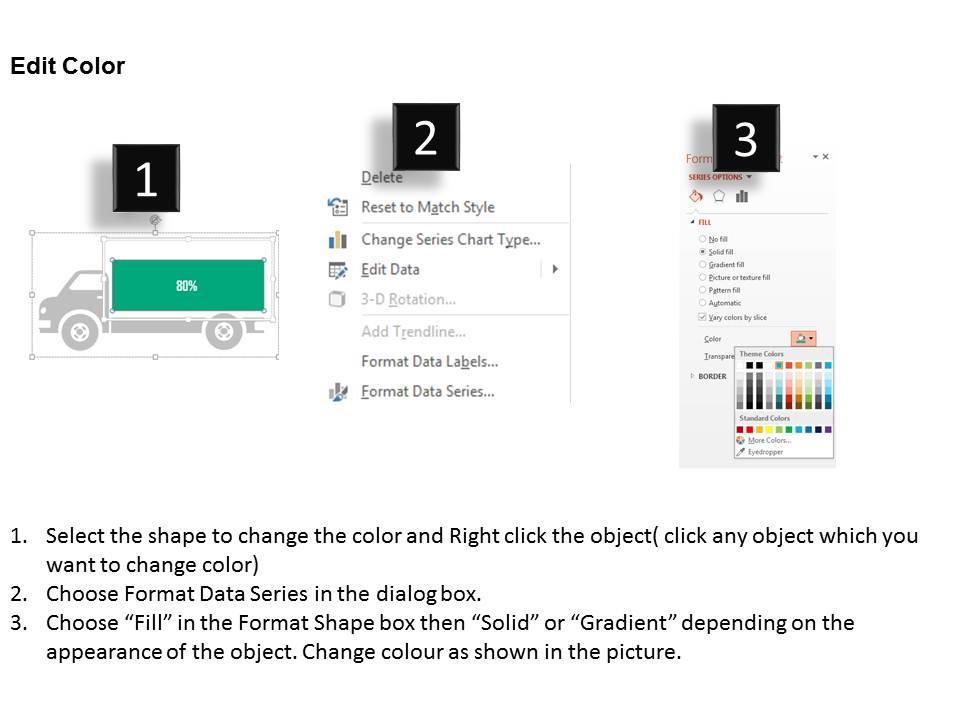
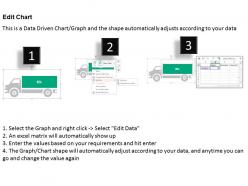
1214 three trucks for data representation for business powerpoint slide
Try Before you Buy Download Free Sample Product
Audience
Editable
of Time
Make sure people remember your presentation. Use our 1214 Three Trucks For Data Representation For Business Powerpoint Slide with carefully selected images to look like a presentation pro.
People who downloaded this PowerPoint presentation also viewed the following :
1214 three trucks for data representation for business powerpoint slide with all 3 slides:
There is no dearth of facilities with our 1214 Three Trucks For Data Representation For Business Powerpoint Slide. You will find anything you desire.
FAQs for 1214 three trucks for data representation for
**INPUT**: What are the most effective chart types for visualizing complex datasets? **OUTPUT**: Effective chart types for complex datasets include heat maps, scatter plot matrices, parallel coordinates, treemaps, and multi-dimensional dashboards. These visualization methods streamline data interpretation by revealing patterns, correlations, and hierarchical relationships, with many organizations finding that strategic combinations ultimately deliver enhanced decision-making capabilities and competitive analytical advantages.
Color theory enhances data interpretation by creating visual hierarchies, emphasizing key insights, ensuring accessibility through contrast, and guiding audience attention strategically. Through purposeful color palettes, presenters streamline complex information, reduce cognitive load, and accelerate decision-making processes, with many organizations finding that consistent color coding across dashboards and reports ultimately delivers clearer communication and faster analytical insights.
Key principles of visual hierarchy in data representation include size contrast, color emphasis, positioning strategies, typography variations, and strategic whitespace usage. These principles enhance comprehension by directing attention to critical insights first, minimizing cognitive load, and creating intuitive information pathways, with many organizations finding that well-structured visual hierarchies ultimately deliver faster decision-making and improved stakeholder engagement.
Cultural differences significantly affect visual data interpretation through varying color associations, reading patterns, symbolic meanings, and numerical representations. For example, while red signifies danger in Western cultures, it represents prosperity in many Asian markets, and right-to-left reading cultures interpret timeline graphics differently, ultimately requiring organizations to adapt their data visualization strategies for global audiences.
Data storytelling transforms complex datasets into compelling narratives through visual elements, contextual frameworks, and emotional connections that resonate with diverse audiences. This strategic approach enables organizations to drive decision-making, secure stakeholder buy-in, and communicate insights more effectively, with many companies finding that narrative-driven presentations increase retention rates and accelerate strategic initiatives across departments.
Infographics simplify dense information by transforming complex data into visual narratives through charts, icons, flowcharts, and strategic color coding that guide reader comprehension. These visual tools enable organizations to communicate quarterly reports, process workflows, and technical concepts more effectively, with many companies finding that infographics increase audience engagement and information retention significantly.
Best practices for displaying statistical data accurately include choosing appropriate chart types, maintaining consistent scales, providing clear labels, avoiding misleading visual elements, and including data sources. These practices enhance comprehension by eliminating distortion, ensuring proper context, and enabling informed decision-making, with many organizations finding that transparent data visualization builds stakeholder trust and drives strategic insights.
Interactive data visualizations improve user experience by enabling personalized exploration, real-time filtering, and intuitive drill-down capabilities that transform static reports into engaging analytical tools. These dynamic interfaces streamline decision-making processes by allowing users to customize views, uncover hidden patterns, and access relevant insights instantly, with many organizations finding that interactive dashboards significantly reduce time-to-insight while enhancing user engagement and data comprehension.
Tools for creating dynamic data presentations include Tableau, Power BI, D3.js, Plotly, and Google Data Studio, along with programming languages like Python and R. These platforms enable businesses to transform static reports into interactive dashboards with real-time updates, automated refresh capabilities, and user-driven exploration, ultimately delivering enhanced stakeholder engagement and faster decision-making across organizations.
Typography choices significantly impact data visual readability through font selection, size hierarchy, contrast ratios, and spacing decisions that guide viewer attention and comprehension. Strategic typography enhances data interpretation by creating clear visual pathways, reducing cognitive load, and ensuring accessibility across different audiences, with many organizations finding that consistent typographic standards improve stakeholder engagement and decision-making speed.
Accessibility considerations in data representation include alternative text for visuals, color-blind friendly palettes, screen reader compatibility, keyboard navigation, and scalable fonts. These design elements streamline information access by eliminating visual barriers, enhancing user experience across disabilities, and ensuring regulatory compliance, with many organizations finding that inclusive design ultimately delivers broader audience reach and improved usability for all users.
Effective animations in data presentations enhance understanding by gradually revealing data points, highlighting key trends, and guiding audience attention through logical sequences. When used strategically, animations help viewers process complex information in digestible segments, with many presenters finding that subtle transitions, controlled pacing, and purposeful movement ultimately deliver clearer insights and improved audience engagement without creating visual clutter.
Common pitfalls include misleading scales, cherry-picked data ranges, inappropriate chart types, missing context, and unclear labeling that distorts interpretation. These issues can significantly undermine decision-making in organizations, with many financial services and retail companies finding that clear, standardized visualization protocols enhance analytical accuracy and stakeholder trust.
Data visualization transparency requires using clear, unmanipulated scales, comprehensive context, and representative sample sizes, while avoiding selective data omission and misleading chart types. Organizations achieve bias-free presentations by implementing peer review processes, standardizing visualization guidelines, and including data source documentation, with many financial services and healthcare institutions finding that diverse review teams significantly enhance accuracy and stakeholder trust.
Techniques include storytelling with data narratives, progressive disclosure of information, interactive visualizations, strategic use of color and contrast, and incorporating relevant analogies or real-world comparisons. These approaches enhance engagement by transforming static presentations into dynamic experiences, with many organizations finding that combining visual hierarchy with audience participation maintains focus and improves information retention significantly.
-
Best Representation of topics, really appreciable.
-
Easily Understandable slides.