3 step circle diagram with strategy and idea icon

3 step circle diagram with strategy and idea icon
Slide 1 of 5
Favourites Favourites

Try Before you Buy Download Free Sample Product

Audience Impress Your
Audience
Editable 100%
Editable
Time Save Hours
of Time
The Biggest Sale is ending soon in
0
0
:
0
0
:
0
0
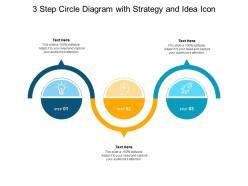
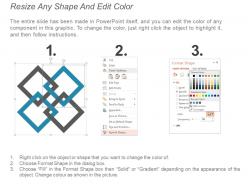
Presenting this set of slides with name 3 Step Circle Diagram With Strategy And Idea Icon. This is a three stage process. The stages in this process are 3 Step Circle Diagram, Process, Planning. This is a completely editable PowerPoint presentation and is available for immediate download. Download now and impress your audience.

People who downloaded this PowerPoint presentation also viewed the following :

FAQs for 3 step circle diagram with strategy

Key components for effective 3-step circle diagrams include clear sequential labels, concise descriptive text, directional arrows or connectors, consistent visual hierarchy, and balanced spacing between elements. These design elements work together by guiding audience attention through the process flow, eliminating confusion about sequence order, and enhancing message retention, with many organizations finding that well-structured circular diagrams significantly improve presentation clarity and stakeholder understanding.

A 3-step circle diagram enhances clarity by breaking complex concepts into digestible sequential stages, creating visual flow that guides audience understanding, and eliminating overwhelming details through focused simplification. This approach enables presenters to maintain audience engagement while systematically building comprehension, with many organizations finding that circular progression naturally reinforces key relationships and dependencies within complex processes.

Industries that can benefit from 3-step circle diagrams include healthcare for patient care workflows, manufacturing for production processes, financial services for loan approval stages, retail for customer journey mapping, and consulting for strategic planning phases. These versatile visual tools streamline complex information across sectors by enhancing audience comprehension, accelerating decision-making processes, and delivering clearer stakeholder communication, with many organizations finding that circular progression formats significantly improve presentation effectiveness.

Determining logical steps for a 3-step circle diagram involves identifying the core phases of your process, ensuring each step flows naturally to the next, and maintaining clear cause-and-effect relationships. Focus on high-level stages rather than detailed tasks, with many organizations finding that grouping related activities into strategic phases like "Plan-Execute-Evaluate" or "Input-Process-Output" creates the most compelling visual narratives.

Recommended tools include Canva, Lucidchart, PowerPoint, Adobe Illustrator, and Visio, each offering intuitive templates and customization features for professional diagram creation. These platforms streamline design workflows by providing drag-and-drop functionality, pre-built templates, and collaboration capabilities, with many organizations finding that PowerPoint and Canva deliver the best balance of accessibility and visual impact for business presentations.

Color theory enhances 3-step circle diagrams through strategic hue selection, contrast optimization, and psychological color associations that guide viewer attention and comprehension. By applying complementary colors for distinction, using warm-to-cool progressions for flow direction, and leveraging colors like blue for trust or green for growth, organizations create more intuitive visual communications that improve audience engagement and information retention across presentations.

Common mistakes include overcrowding circles with excessive text, using inconsistent visual elements across steps, neglecting logical flow between processes, choosing poor color contrast that reduces readability, and failing to maintain proportional sizing. These design flaws significantly impact audience comprehension and presentation effectiveness, with many organizations finding that streamlined, visually consistent diagrams enhance stakeholder engagement and decision-making processes.

Ensure clarity in your 3-step circle diagram by using sequential numbering, directional arrows, and consistent visual hierarchy with distinct colors or shapes for each step. Incorporate clear, concise labels and maintain logical clockwise flow, while adding brief explanatory text beneath each circle, ultimately enabling audiences to quickly grasp process relationships and strategic connections across organizational workflows.

Yes, 3-step circle diagrams can be effectively adapted for interactive presentations through clickable elements, animated transitions between steps, hover effects that reveal additional details, and progressive disclosure features. These interactive enhancements enable presenters to guide audiences through complex processes more dynamically, with many organizations finding that interactive circular workflows improve audience engagement and information retention during strategic presentations.

Typography significantly impacts readability through font size, weight, contrast, and hierarchy, ensuring each step remains clear and accessible across different viewing distances. Well-chosen fonts enhance comprehension by creating visual distinction between headings and body text, while consistent spacing and readable typefaces help viewers quickly navigate the circular flow and absorb key information effectively.

Real-life case studies can be integrated into a 3-step circle diagram by placing specific examples within each circular step, connecting abstract processes to tangible scenarios from sectors like healthcare, finance, or retail. This approach transforms theoretical frameworks into relatable business narratives, with many organizations finding that case-driven presentations significantly enhance audience engagement and comprehension.

Alternative designs include linear flowcharts for sequential processes, pyramid diagrams for hierarchical concepts, timeline layouts for chronological steps, and interconnected network models for complex relationships. These alternatives can enhance clarity and engagement, with many organizations finding that matching diagram style to content type—such as using timelines for project phases or pyramids for organizational structures—ultimately delivers better audience comprehension and more effective communication outcomes.

A 3-step circle diagram transforms storytelling by creating clear narrative progression through beginning, middle, and resolution phases, while visually reinforcing story flow and character development. This approach enables presenters to guide audiences through compelling case studies, customer journeys, and transformation stories with enhanced retention and engagement, ultimately delivering more persuasive and memorable presentations.

**INPUT**: What tips can you provide for animating a 3-step circle diagram to maintain audience engagement? **OUTPUT**: Effective animation strategies include sequential reveals, smooth transitions between steps, strategic use of color changes, directional arrows, and synchronized timing with your narration. These techniques enhance comprehension by guiding audience attention systematically through each phase, while dynamic visual elements maintain focus and prevent information overload, ultimately delivering clearer presentations and stronger audience retention.

Peer feedback enhances 3-step circle diagrams by identifying clarity issues, suggesting visual improvements, and validating logical flow between sequential steps. Through collaborative review, presenters can streamline complex processes, optimize color schemes and typography, and ensure audiences grasp key transitions, ultimately delivering more engaging presentations that communicate strategic processes with greater impact and professional polish.

Ratings and Reviews

0% of 100
Write a review
Most Relevant Reviews

No Reviews