30 60 90 project management plan examples of activities powerpoint presentation slides

Rating:
100%
Slide 1 of 12
Favourites Favourites

Try Before you Buy Download Free Sample Product

Audience Impress Your
Audience
Editable 100%
Editable
Time Save Hours
of Time
The Biggest Sale is ending soon in
0
0
:
0
0
:
0
0
Rating:
100%
This deck consists of a total of twelve slides. The slide is easily available in both 4:3 and 16:9 aspect ratio. The template is compatible with Google Slides, which makes it accessible at once. Each template is well crafted and designed by our PowerPoint experts. Edit the color, text, font size, add or delete the content as per the requirement. Can be changed into various formats like PDF, JPG, and PNG. Download this deck now and engage your audience with this ready-made presentation.

Content of this Powerpoint Presentation


Slide 1: This slide introduces 30 60 90 Project Management Plan. State Your Company Name
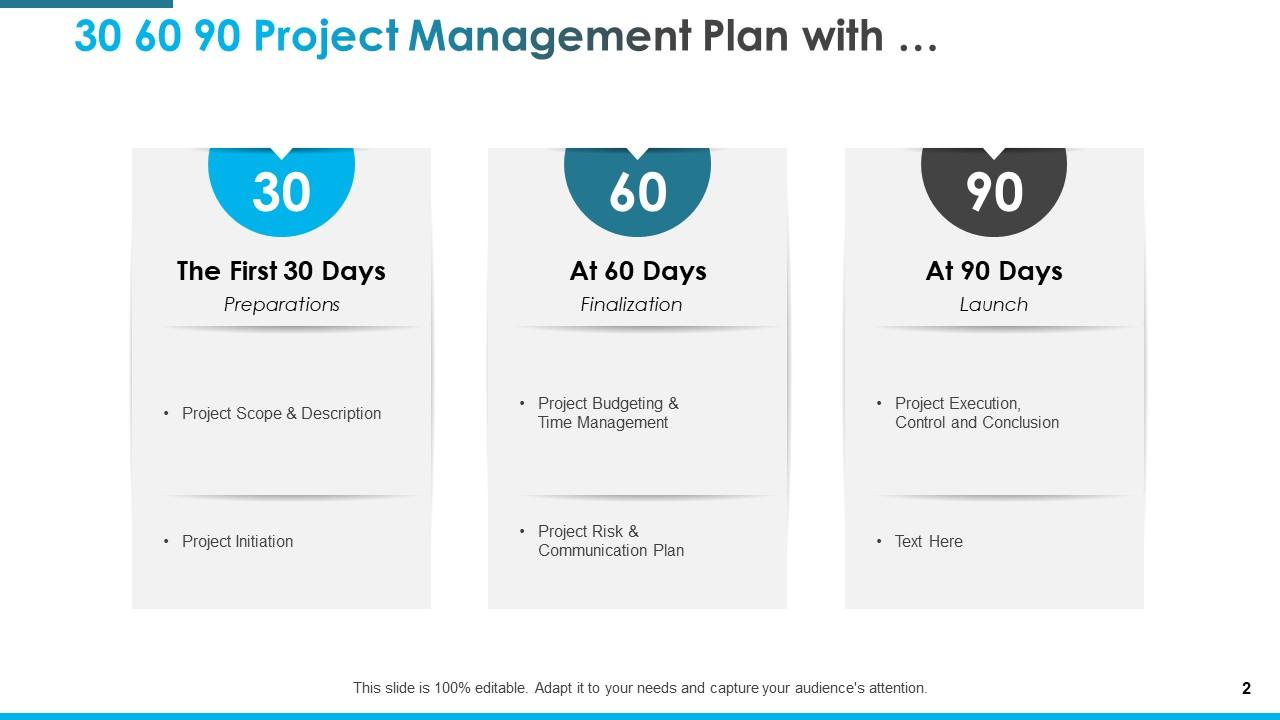
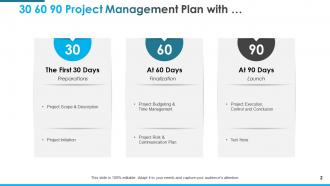
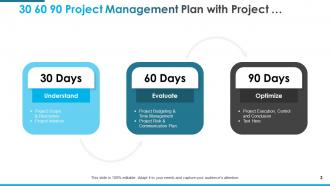
Slide 2: This slide describes 30 60 90 Project Management Plan with Project Scope & Description, Project Initiation, Preparations, Project Budgeting & Time Management, Project Risk & Communication Plan, Finalization, Project Execution, Control and Conclusion, Launch,
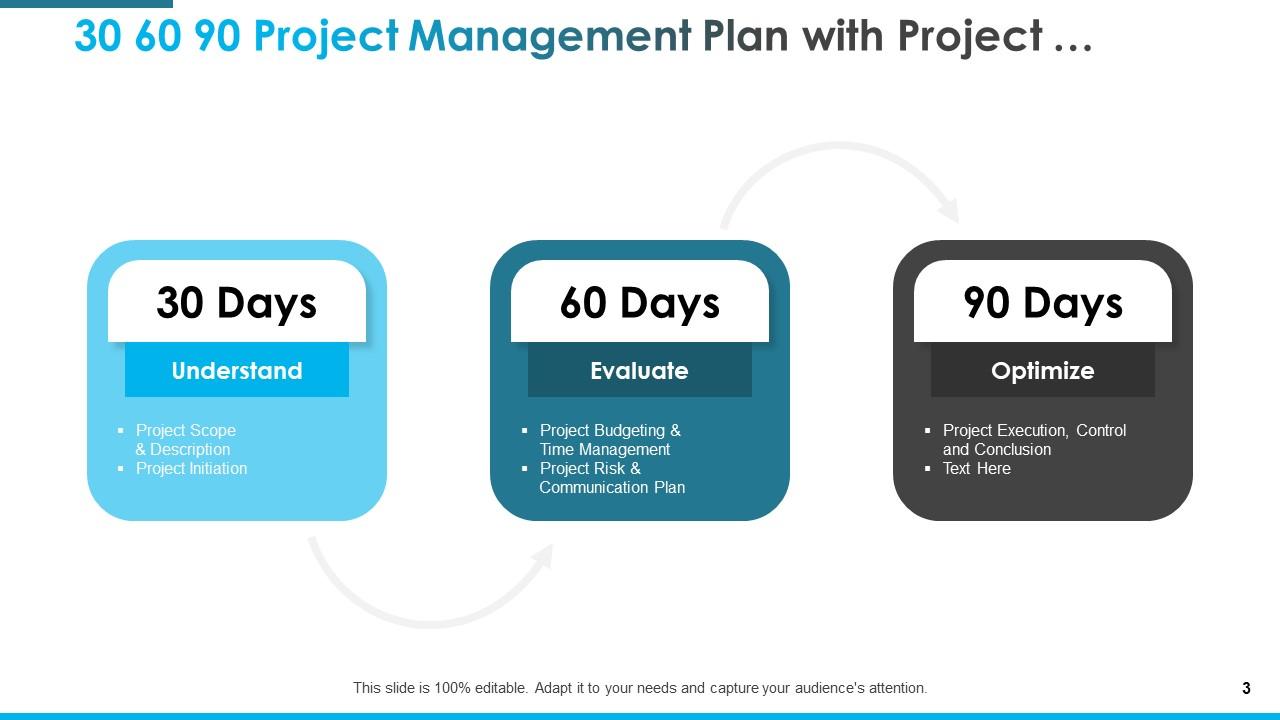
Slide 3: This slide is continued with 30 60 90 Project Management Plan with Project Scope & Description, Project Initiation, Project Budgeting & Time Management, Project Risk & Communication Plan, Project Execution, Control and Conclusion, Optimize
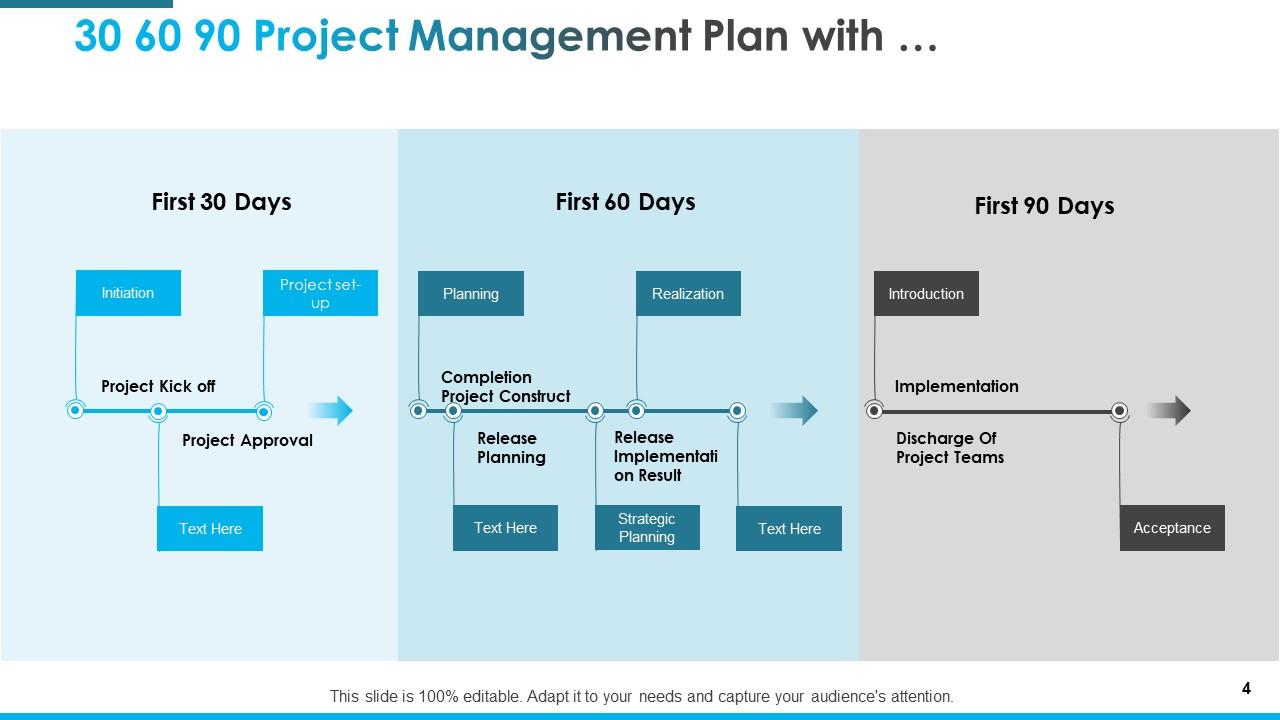
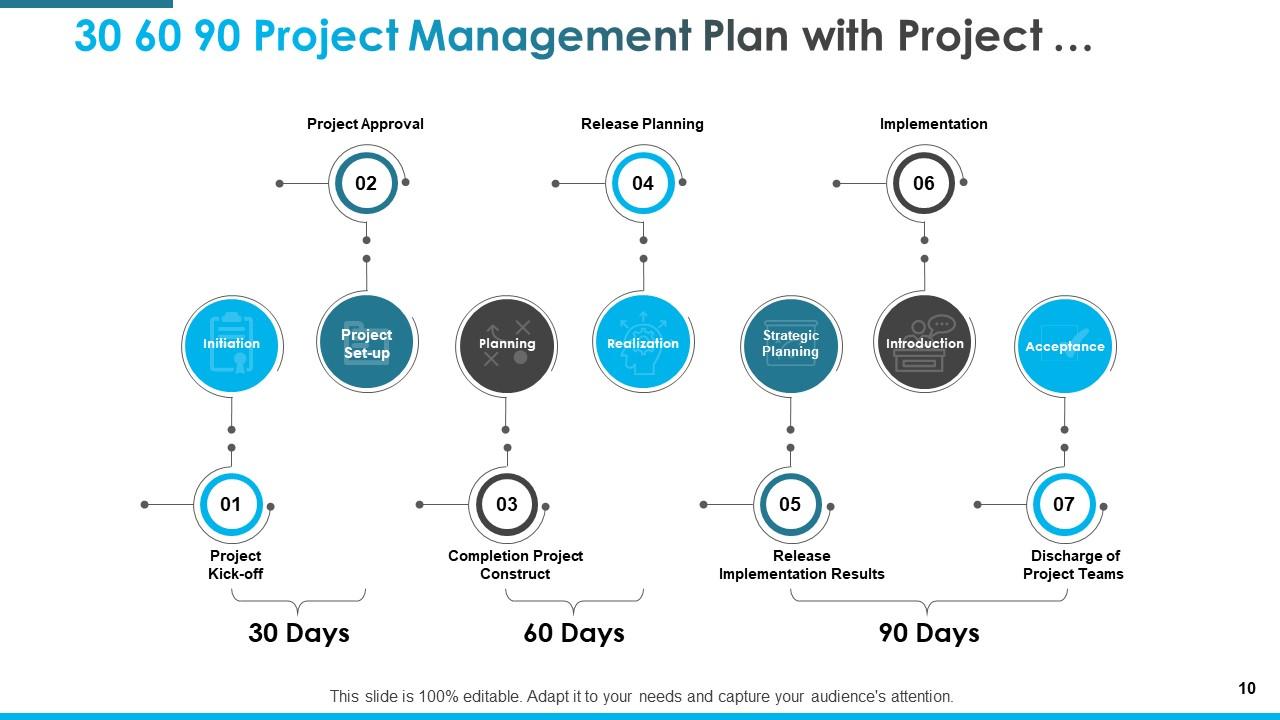
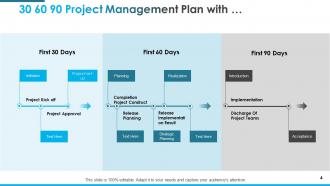
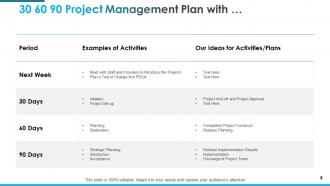
Slide 4: This slide describes 30 60 90 Project Management Plan with- Initiation, Project set-up, Project Kick off, Project Approval, Introduction, Acceptance, Implementation, Discharge Of Project Teams, Planning, Realization, Strategic Planning, Completion, Project Construct, Release, Implementation Result, Release Planning,
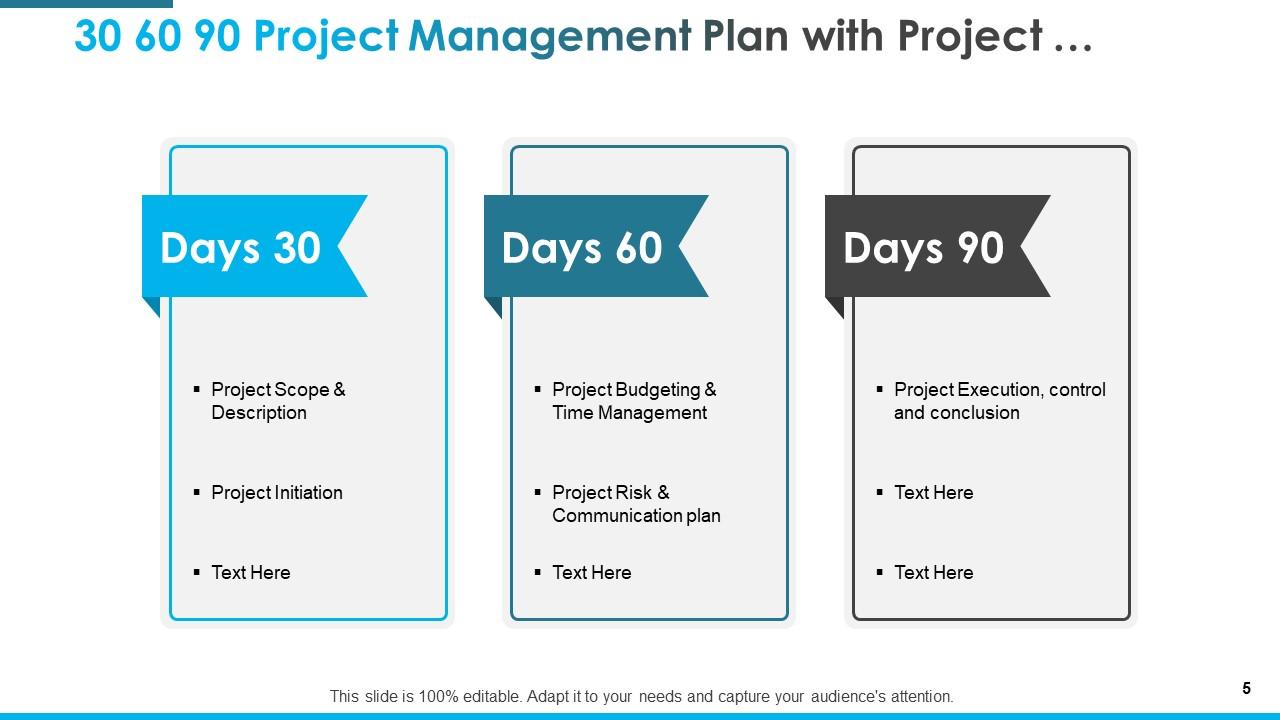
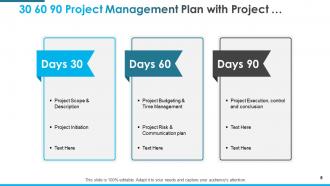
Slide 5: This slide showcases 30 60 90 Project Management Plan with Project Scope & Description, Project Initiation, Project Budgeting & Time Management, Project Risk & Communication plan, Project Execution, control and conclusion,
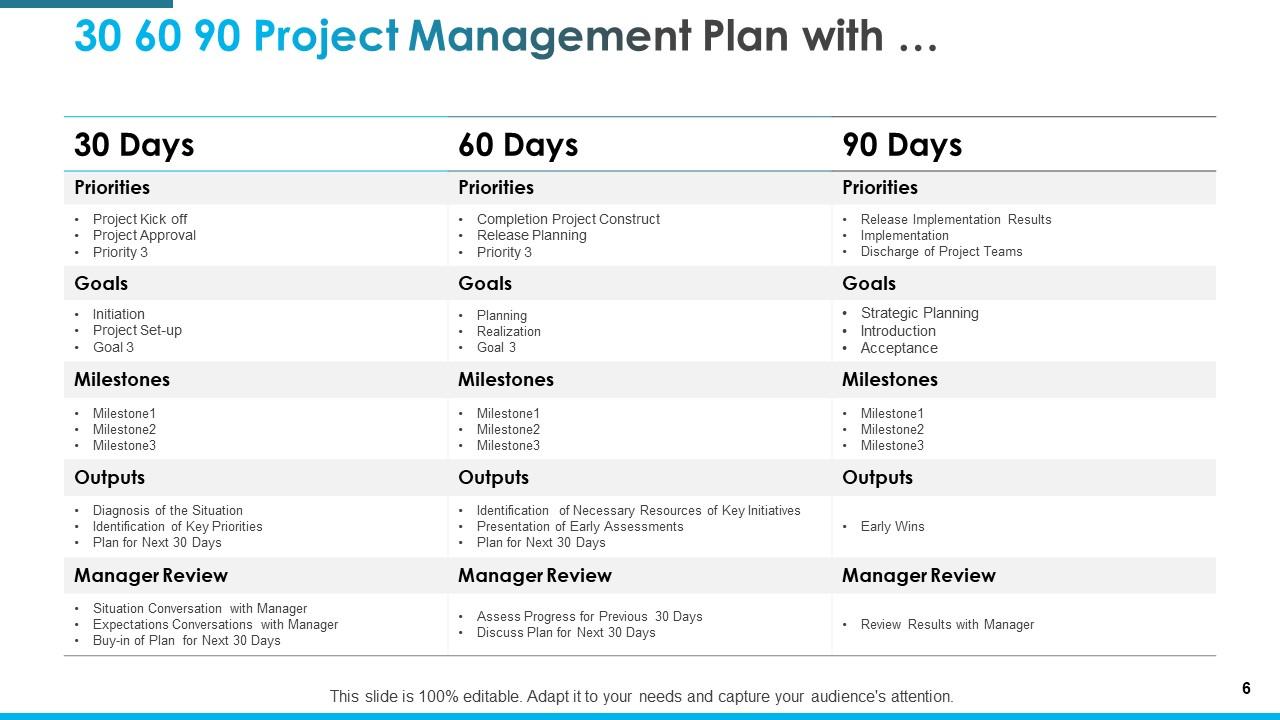
Slide 6: This slide is continued with 30 60 90 Project Management Plan
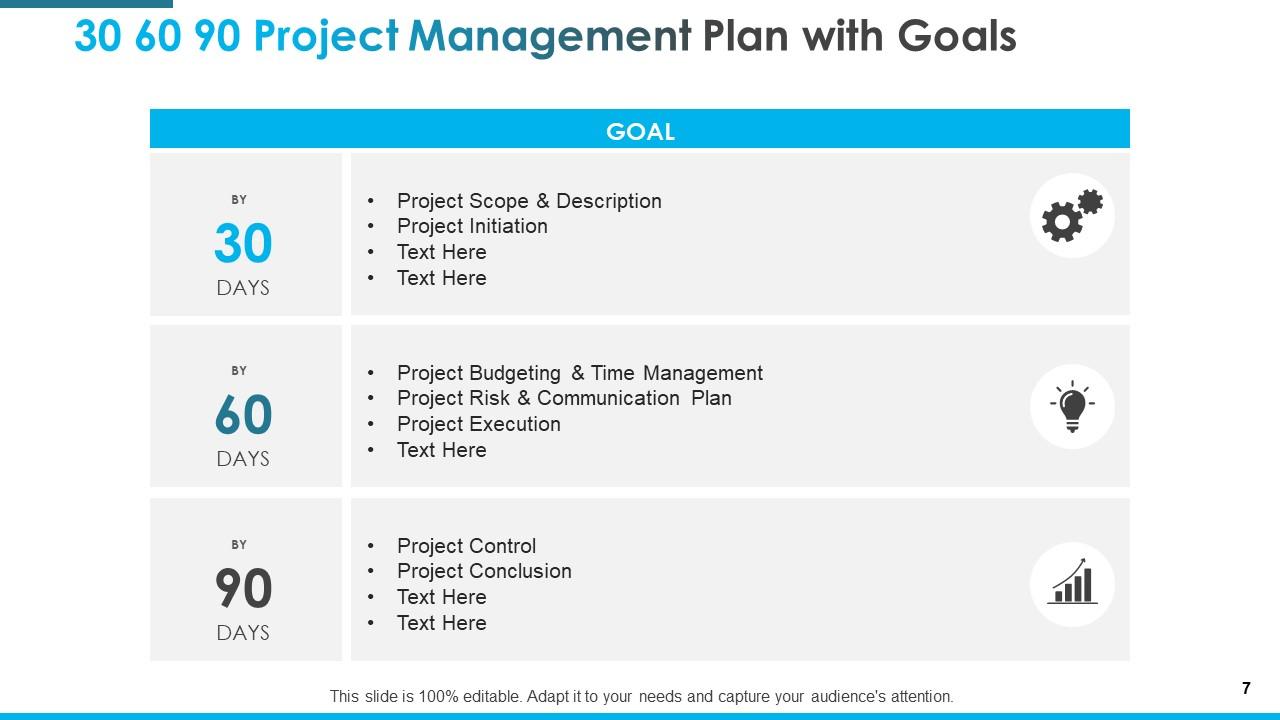
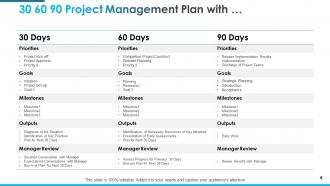
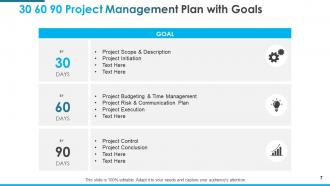
Slide 7: This slide 30 60 90 Project Management Plan with Goals
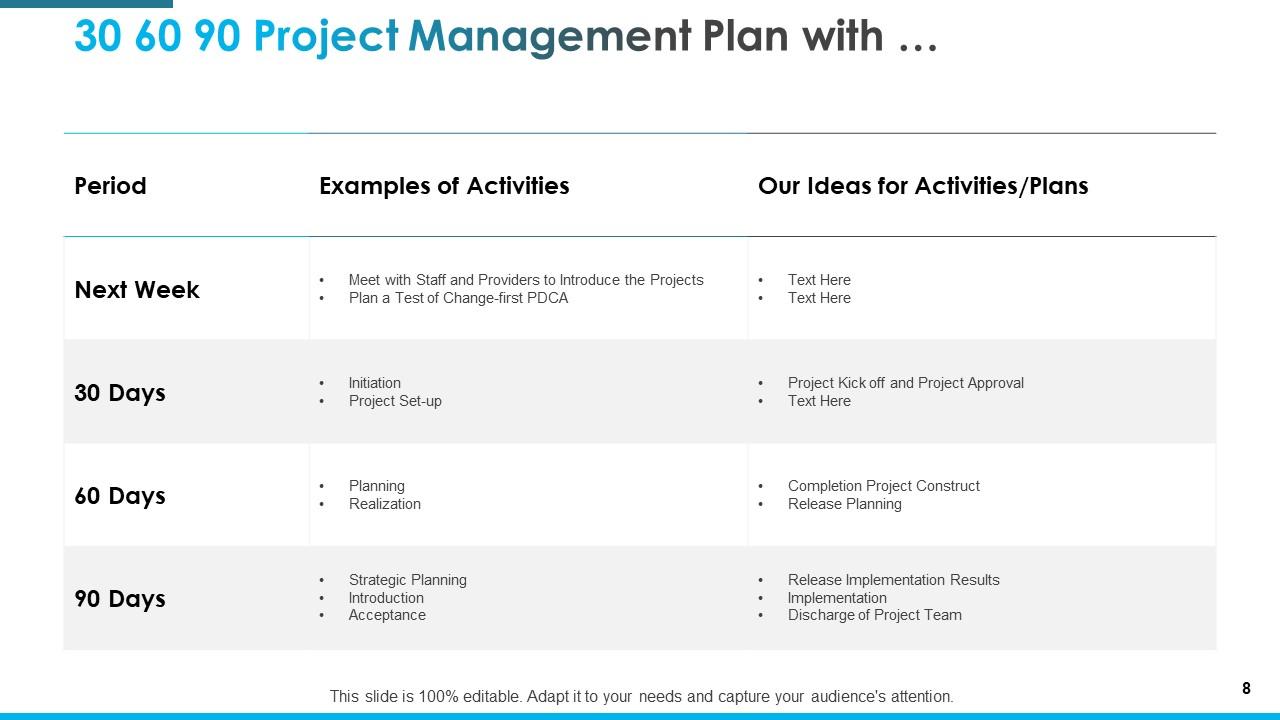
Slide 8: This slide is continued with 30 60 90 Project Management Plan with Goals
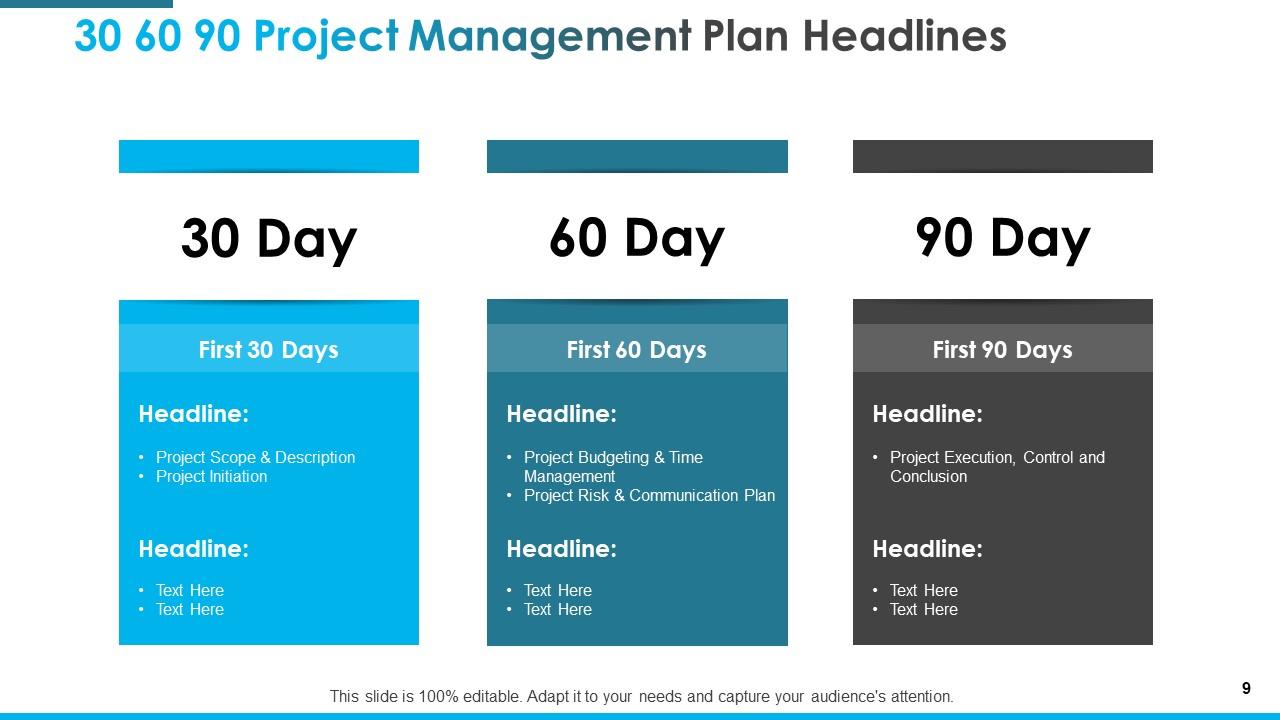
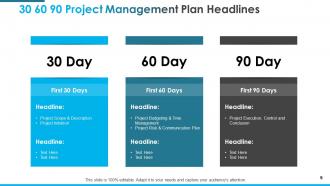
Slide 9: This slide showcases 30 60 90 Project Management Plan Headlines
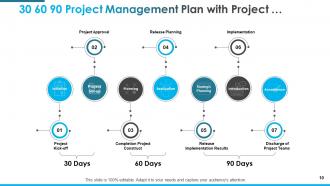
Slide 10: This 30 60 90 Project Management Plan with Project Initiation Project Kick-off, Project Set-up, Project Approval, Initiation, Planning, Initiation, Realization, Release Planning, Strategic Planning, Release, Implementation Results, Introduction, Implementation, Acceptance,
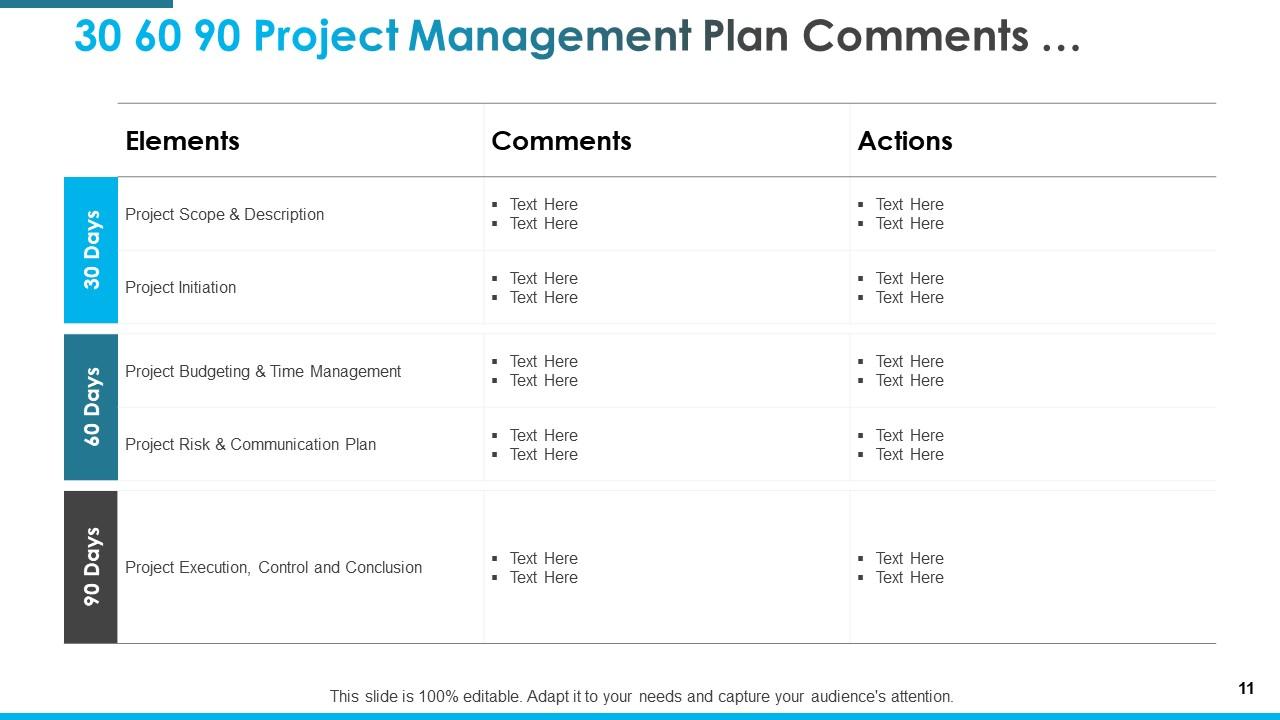
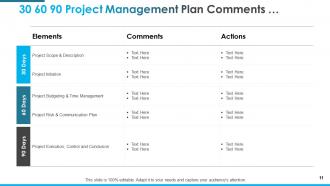
Slide 11: This slide contains Comments.
Slide 12: This is Thank You slide with Contact number, Email Address and Address12

FAQs for 30 60 90 project management plan examples of activities

Your first month should be all about learning the ropes and meeting everyone who matters. Get a feel for how things actually work there (not just what's in the handbook). Month two is when you start building real connections and spotting ways to make things better. By your last 30 days, you want to be implementing stuff and proving you're worth keeping around. The relationship part honestly matters just as much as crushing your actual work - maybe more? Set concrete goals for each phase so you can show your boss what you've been up to. You'll thank yourself later.

So basically, you just tailor your 30-60-90 plan to whatever industry you're in. Tech jobs? Focus on learning their systems and codebase first. Sales is all about building relationships and understanding the pipeline. Healthcare - ugh, so much compliance training, but you can't skip the patient safety stuff. Manufacturing usually means tons of safety protocols upfront. Consulting? You'll want to nail down their methodology and client management approach. Each field has its own priorities, you know? Just ask your manager what the top 3 skills are for your specific role and build around those.

Look, don't get caught up tracking a million things - that's just gonna stress you out. First 30 days? Watch your training completion and how many key people you've actually connected with. Month two is about independence - how fast you're finishing tasks, quality of your work, feedback you're getting. The 90-day mark should look more like your teammates' numbers, whatever those are for your role. Honestly, I'd stick to maybe 2-3 things per phase that your boss genuinely cares about. No point measuring stuff that doesn't matter to anyone.

So a 30-60-90 plan is clutch for building rapport - basically shows your team you're not gonna steamroll them with changes right away. First month, do one-on-ones with everyone to figure out their roles and what's bugging them. Month two, work together on small fixes based on what they told you. Shows you actually listened, you know? Last 30 days is when you can tackle bigger stuff together. I swear, most new managers totally skip the listening phase and then act shocked when people push back later. Ask real questions and actually use their input when you're planning - makes all the difference.

Honestly, most people screw up by being way too vague - like writing "understand the team dynamics" instead of "meet with each team member for 30 minutes." That's useless. Also, don't pack your first month crazy tight because you're already gonna be overwhelmed learning basic stuff. I made that mistake once, terrible idea. Make sure your boss actually agrees with what you're planning to focus on first - otherwise you might be working on completely wrong things. Oh, and definitely run your plan by them before you submit it anywhere. Keep it realistic, you know?

Honestly, 30-60-90 plans are game-changers because everyone knows exactly what they're shooting for instead of just winging it. Break your big goals into monthly chunks so people aren't sitting there like "uh, what now?" Your team actually stays motivated hitting smaller wins every 30 days rather than grinding for months with nothing to show. Weekly check-ins help you catch problems before they blow up (learned this the hard way). Pick 3-5 main things you want done each phase. The structure just makes everything less chaotic - people thrive when they're not guessing what success looks like.

Visual stuff is a game changer for these plans. Nobody wants to stare at another wall of bullet points - I mean, come on. Grab something like Miro or even just PowerPoint and make a timeline with color coding for priorities. Progress bars work great too. Your stakeholders will actually spot problems way faster when they can see everything laid out visually instead of hunting through paragraphs. Plus it looks more professional. Honestly, I've seen people's eyes glaze over during text-heavy presentations, but throw in some charts and suddenly everyone's paying attention. Start basic and build from there.

Honestly, getting feedback on your 30-60-90 day plan is like having someone check your blind spots before changing lanes. Talk to your manager and teammates first - they'll spot stuff you totally missed and tell you what actually needs priority vs. what just looks impressive. I've watched people write these perfect-sounding plans that completely clash with ongoing projects or how the team works. Big mistake. Plus when you get their input upfront, nobody's blindsided later by your approach. Just make sure you actually use their suggestions though. Don't be that person who asks for advice then ignores it.

Look, you gotta map each milestone directly to their actual business goals from day one. Don't just throw tasks together and cross your fingers. Get the manager and department heads to review everything upfront - make sure it connects to quarterly targets and whatever strategic stuff they're pushing. Regular check-ins are crucial, but skip the vague "how are things?" conversations. Actually measure against those business metrics you identified earlier. The whole thing should feel like a back-and-forth discussion, not some one-sided evaluation. Honestly, most companies mess this up because they treat alignment like an afterthought instead of the foundation.

Okay so first thing - figure out what each person actually wants to hear. Executives just care about the big picture and numbers, but your team needs all the nitty-gritty details. Weekly email updates are clutch - keep them short with wins, what's blocking you, and next steps. Visual dashboards are surprisingly effective (people really do love those progress bars). Don't wait until the end to check in - hit them up at each milestone. Oh and create some kind of shared doc where everyone can see what's happening in real time. Honestly, just map out who needs what level of info first, then build your whole communication schedule around that.

Check in weekly with your plan but save the big changes for monthly reviews. I used to skip the weekly part and wow, bad idea - missed so many networking opportunities because I wasn't paying attention. Friday afternoons work great for quick check-ins, just set a reminder. Monthly is when you actually adjust things based on feedback and what's working (or totally bombing). Your priorities will shift anyway, so don't stress about pivoting. Honestly, the weekly thing feels annoying at first but it saves you from those "oh crap" moments later.

Honestly, most companies keep their onboarding plans pretty close to the vest, but there's definitely a pattern. Google does this thing where new people spend their first month just learning the systems, then shadow teammates for month two, and finally get real projects by month three. Salesforce sales teams do something similar - product training first, then shadowing customers, then running their own deals. It's basically always learn → watch → do, which makes sense when you think about it. I'd probably look at what the big players in your industry are doing and just steal their framework lol. Works better than starting from scratch.

Honestly, 30-60-90 day plans are a game changer for new hires. First month they're learning your systems and processes. Month two is when they start building relationships and maybe take on some smaller projects. By day 90, they should be working pretty independently. Way better than just dumping someone at their desk and saying "good luck" - which I've definitely seen happen before lol. Your managers will thank you too since it gives them actual checkpoints to hit. Oh, and create templates for different roles so you're not starting from scratch every single time.

Honestly, ditch the spreadsheets - they're a nightmare. Apps like Asana or Trello are lifesavers for this stuff. You can set reminders that actually work and see your progress visually. I'm weirdly addicted to checking off those little boxes, but whatever works, right? The calendar integration is clutch too - you'll actually block time instead of just hoping it happens. Oh, and don't be that person who downloads ten different apps. Pick one and commit. Even my sister stuck with hers for once! Start basic with task tracking, then add fancy features later.

Honestly, those 30-60-90 day plans are game changers for keeping new people engaged. No more "wtf am I even supposed to do here" panic - which we've all been there, right? New hires actually feel like someone cares instead of being totally lost. They can track their wins, know what's expected, and build confidence hitting those checkpoints. Shows you didn't just hire them and disappear. The real trick though? You've gotta actually check in during those periods. Otherwise it's just another useless document sitting in their inbox.

Ratings and Reviews

100% of 100
Review Form
Write a review
Most Relevant Reviews
  1. 100%

    by Dewayne Nichols

    Thanks for all your great templates they have saved me lots of time and accelerate my presentations. Great product, keep them up!

1 Item

per page: