360 Degree Employee Performance Appraisal Dashboard

Rating:
100%
360 Degree Employee Performance Appraisal Dashboard
Slide 1 of 7

or

Favourites Favourites

Try Before you Buy Download Free Sample Product

Audience Impress Your
Audience
Editable 100%
Editable
Time Save Hours
of Time
The Biggest Sale is ending soon in
0
0
:
0
0
:
0
0
Rating:
100%
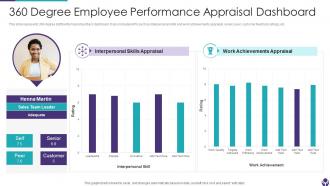
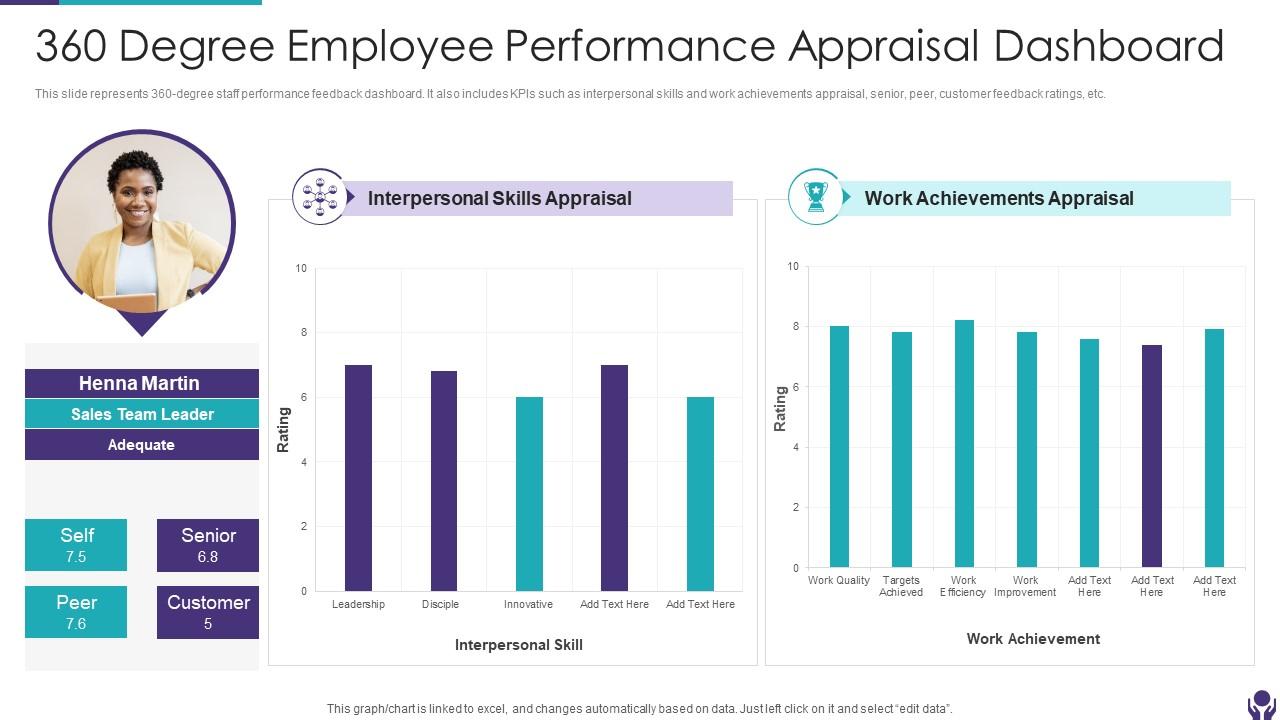
This slide represents 360 degree staff performance feedback dashboard. It also includes KPIs such as interpersonal skills and work achievements appraisal, senior, peer, customer feedback ratings, etc. Presenting our well structured 360 Degree Employee Performance Appraisal Dashboard. The topics discussed in this slide are Work Achievement, Interpersonal Skill, Appraisal. This is an instantly available PowerPoint presentation that can be edited conveniently. Download it right away and captivate your audience.
FAQs for 360 Degree Employee

So I'd focus on the basics first - goal achievement, work quality, and how productive they actually are. Meeting deadlines matters too, obviously. But here's what I learned the hard way: don't just obsess over numbers like I used to. Teamwork and communication skills are huge. Customer feedback is pure gold if you can get it. Peer reviews help too, though some people are weird about giving honest feedback. Pick maybe 3-5 things that actually move the needle for each role. Trust me, trying to track everything just makes you crazy and you'll lose sight of what really counts.

Oh dude, try the SBI thing - Situation, Behavior, Impact. Basically you describe what happened, what they did, then how it affected things. Way less awkward than just saying "you suck at this" lol. The game changer though? Don't just point out problems - tell them exactly what good communication looks like instead. I learned this the hard way after some truly cringe feedback sessions. Also throw in what they're crushing at, not just the messy stuff. End with something concrete they can actually do next week.

Okay so basically it's your chance to control the narrative before your manager writes their version. Most managers actually start with what you write, so don't skip it! Highlight your wins and be honest about growth areas. Bring up projects they might've forgotten about - happens more than you'd think. Don't undersell yourself but also don't go overboard. Document specific examples with numbers if you can. Honestly, it's one of the few times you get to toot your own horn professionally, so make it count.

Honestly, tech makes performance reviews so much less painful. Digital forms mean no more scrambling for paperwork or trying to remember what someone did months ago. You can automate reminders and pull metrics directly from other systems - saves tons of time. Performance management software lets you collect feedback in real-time instead of waiting for annual reviews (which is way better anyway). Everything lives in one dashboard so you can actually spot patterns. Makes it easier to create development plans that aren't just generic fluff.

Ugh, performance reviews are the worst for bias stuff. You've got recency bias where you only think about last month's drama. Then there's that halo effect thing - like when Sarah crushed that one project so suddenly she can do no wrong? Super annoying. Confirmation bias is huge too, where you're just looking for proof you were right about someone all along. Honestly though, the comparison trap gets me every time. Instead of judging people on their own merits, I'm sitting there ranking them against each other like it's some weird office Olympics. Best advice? Keep notes year-round instead of panicking before review season.

Honestly, I'd start by mapping out how the big company goals connect to what each person actually does day-to-day. Like, Sarah needs to see how her work ties to quarterly revenue, you know? I usually draw it out first - visual stuff just clicks better for me. Work with everyone to set 3-4 SMART goals that roll up to those bigger targets. Don't make it feel like you're just assigning homework though. Regular check-ins are crucial since priorities change constantly. The whole thing should feel collaborative, not like some corporate mandate from above.

Honestly, regular check-ins are so much better for keeping people motivated. Annual reviews are basically like waiting all year for your report card - super stressful and not helpful at all. When you talk to people monthly or every couple weeks, you can fix problems fast and celebrate stuff while it still matters. Your team feels way more supported too. I've noticed there's never any awkward surprises during formal reviews because you've already been chatting about everything. Just start doing these casual monthly conversations - trust me, everyone will be happier.

Be straight with them but don't be a jerk about it. Write down specific examples where they messed up - vague feedback helps nobody. They probably already sense something's wrong anyway. Build a real improvement plan with actual deadlines and goals they can hit. Ask what they need from you too, because honestly? Sometimes it's just a training gap, not laziness. Oh and don't ghost them after - check in weekly or whatever makes sense. Waiting six months until the next review is basically setting them up to fail.

Honestly? Skip the formal review BS and just make feedback a weekly thing. Those quick check-ins where people actually talk about what's broken work way better than sitting through some painful annual meeting. Get your managers to ask for feedback too - monkey see, monkey do, you know? Set up buddy systems or retrospectives so peers can call each other out constructively. The whole point is making it so normal that nobody freaks out about it anymore. Oh, and create spaces where people won't get fired for speaking up. Consistency beats perfection here.

Honestly, performance reviews are gold mines for figuring out who's ready to level up. I use them to spot people with potential - you'd be surprised how many gems are just sitting there waiting. Ask what skills they want to build this year instead of just telling them what they need to work on. Way better results when it's actually a conversation. Set some real development goals together, talk about where they see themselves going. Some of your quieter employees might shock you with their ambitions. It's like having a roadmap but they help draw it.

Set clear criteria from the start and actually stick to them - sounds obvious but you'd be surprised how many managers wing it. Document stuff throughout the year, not just when reviews roll around (your memory sucks, trust me). Get specific with feedback instead of useless comments like "needs improvement." What does that even mean? Having multiple people weigh in helps cut down on bias too. Oh, and let employees do a self-eval first - sometimes they're harder on themselves than you'd be. The whole thing works better when people aren't blindsided by your evaluation process.

Honestly, peer reviews are pretty solid for getting different viewpoints on people's performance. Managers can miss stuff that coworkers see every day. But here's the thing - office drama always finds a way in. Some people go easy on their friends or get petty with people they don't like. Most employees suck at giving feedback too, so you'd need to actually teach them how to do it properly. Takes up a bunch of time though. Oh, and don't make it the only way you evaluate people - that's asking for trouble. Mix it with other methods and don't weigh peer input too heavily.

So I'd start with engagement scores - check them before and after reviews to see if there's actually a difference. Turnover rates tell you a lot too, especially if you're losing your best people. Development goals are huge - are folks hitting what they set out to do? Honestly, the conversation quality matters more than most metrics though. Is it real feedback or just going through the motions? Survey your managers and employees about the whole thing. Performance improvements afterward are obviously the gold standard. My advice? Pick 2-3 things that actually matter to your company and track those consistently instead of trying to measure everything.

Engaged employees make performance reviews actually work - otherwise you're just checking boxes. They'll give you real feedback during self-assessments instead of corporate speak. Honestly, engagement is one of the best ways to predict who's going to crush it next year. During reviews, dig into what actually drives them and what's blocking their progress. That stuff is gold for building development plans they'll care about. Generic goals from HR? Total waste of time. Focus on what matters to them personally - that's where you'll see results. Oh, and track engagement as part of the whole evaluation process.

Honestly, ditch the annual review nonsense and start doing monthly check-ins instead. Ask your team what they think good performance actually looks like - their answers might surprise you. Be super specific about metrics and behaviors, because I swear half the problems come from people just assuming everyone's on the same page. Oh, and write this stuff down! Can't tell you how many times I've seen arguments about "but you said..." Create some psychological safety by letting them weigh in on goals and roadblocks. Most managers think everyone just magically knows what success means. They don't.

Ratings and Reviews

100% of 100
Review Form
Write a review
Most Relevant Reviews
  1. 100%

    by Robert Young

    I was never satisfied with my own presentation design but SlideTeam has solved that problem for me. Thank you SlideTeam!
  2. 100%

    by Douglas Lane

    I was able to find the right choice of PPT template for my thesis with SlideTeam. Thank you for existing.

2 Item(s)

per page: