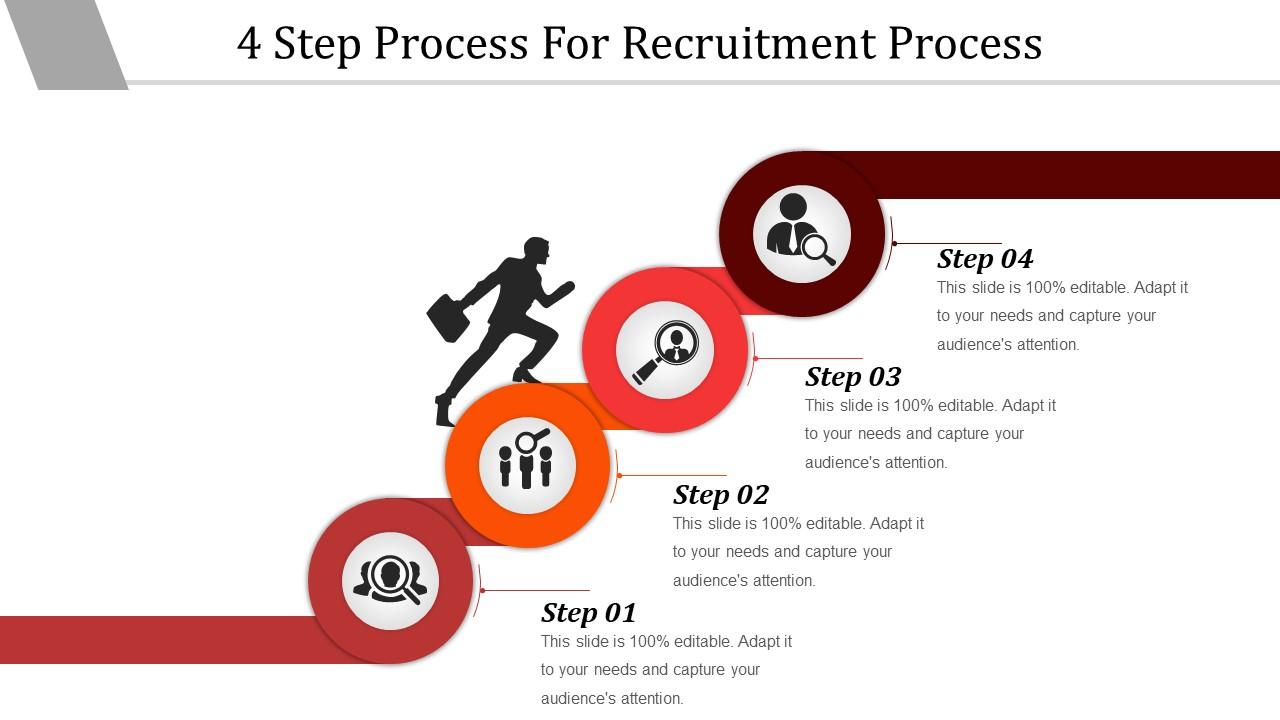
4 step process for recruitment process powerpoint layout
Try Before you Buy Download Free Sample Product
Audience
Editable
of Time
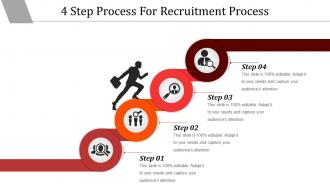
Improve your business efficiency by employing the skilled professionals in your business team with our 4 step recruitment process PowerPoint layout. Graphically represent the structure of your HR functions with this selection process PowerPoint slide template. Define the stages of the process with our professionally developed hiring process PPT diagram, thus, it starts from identifying the required skills till the stage of employing or selecting the ideal right candidate. You can define the significance of developing a better human resources processes with this recruitment and section process PowerPoint diagram. An improved HRM process will help in providing the cost and time effective advantages to the company. It helps in reducing your recruitment cost. And further results in attaining the high revenue goals for the business while improving your market value too. Therefore, start functioning over this business selection process PPT design image to improve your overall business capabilities. Thus, click on the download link now. Astound folks with your adept handling of our 4 Step Process For Recruitment Process Powerpoint Layout. You will be able to pull it out of the hat.
People who downloaded this PowerPoint presentation also viewed the following :
4 step process for recruitment process powerpoint layout with all 5 slides:
Get folks clamoring for the job with our 4 Step Process For Recruitment Process Powerpoint Layout. Create a buzz about incentives.
FAQs for 4 step process for recruitment
Okay so basically you start with job analysis and posting - figure out exactly what you need first. Screen applications to weed out the obvious nos (trust me, saves so much time). Then structured interviews work way better than just improvising. Check their references after that, then make your offer. Keep candidates in the loop though - good people disappear fast if you go radio silent. Oh and the whole thing typically takes like 2-4 weeks depending on how senior the role is. Pretty straightforward process once you get the hang of it.
Honestly, you've got to nail three things here. First - post your salary ranges upfront because nobody has time for that guessing game nonsense. Make sure they're actually competitive too. Your hiring process needs to move way faster since good people get hired within like 2 weeks max. Building up your company's reputation helps a ton - get real employee stories on social media, show off what it's actually like to work there. Oh, and maybe time how long your current process takes? I bet it's longer than you think. Speed kills in this market.
So employer branding is just how your company looks as a place to work. Candidates will stalk you online anyway - Glassdoor, social media, all that stuff. Good employer branding means better people actually want to join you instead of just desperately needing any job. Plus hiring goes way faster when they're already excited about your culture. Oh and definitely make sure your job posts match reality - I've seen too many companies oversell themselves. Your careers page and what employees actually say should line up. Nobody likes feeling tricked after they start.
Honestly, tech makes recruiting way less painful. ATS systems will sort resumes for you automatically - saves tons of time vs doing it manually. Chatbots answer candidate questions around the clock, which is pretty nice. Video interviews are a game changer too since you don't have to play email tag trying to schedule stuff. I know companies that shaved 40% off their hiring time just automating the tedious parts. Oh, and analytics show you exactly where people bail out of your process. Just pick one tool to start with though - going full digital overnight will make everyone's head spin.
Honestly, just lead with the cool stuff they'll actually be doing - none of that "rockstar ninja" garbage. Write "you'll" instead of bullet points when you can. Be real about the day-to-day work because people appreciate honesty. Focus on what they'll accomplish, not just a boring requirements list. Short paragraphs help too since everyone's skimming anyway. Oh, and throw in the salary range if possible - candidates love that transparency. Make applying super straightforward. The harder you make it, the more good people you'll lose to companies that don't overthink it.
Ask behavioral questions about their work style and how they handle conflict - those answers tell you everything. I love throwing in "describe a time you disagreed with a colleague" because people's true colors come out. Pay attention during the actual interview too. Are they asking good questions about team dynamics? Do they seem genuinely curious about your culture? Here's the thing though - you need to define what "fit" actually means for your specific team first, otherwise you're just winging it. Watch how they interact throughout the whole process, not just their rehearsed answers.
Focus on time-to-fill, cost-per-hire, and quality-of-hire - those three will tell you everything you need to know. Quality's the hardest to measure but worth it. Check performance reviews and whether people stick around after 6 months. Offer acceptance rates are solid too if you're tracking that stuff. My old boss went crazy with metrics and honestly it became this whole spreadsheet nightmare. Don't do that to yourself. Pick maybe 4 max and actually look at them monthly. Otherwise you'll be drowning in data instead of finding good people.
LinkedIn's obviously your best bet for recruiting, but Instagram and TikTok are actually pretty solid for reaching younger talent these days. Post your job openings there and show off what your company culture's really like. Facebook groups are surprisingly good too - especially the industry-specific ones where you can find those hard-to-reach specialists. Before you start hunting for candidates though, make sure your own company profiles don't look like garbage first. Oh, and if you're checking out candidates' social media before interviews, just watch out for letting random stuff influence you too much.
Oh man, the soft skills thing is brutal - you can't really read people the same way over Zoom, you know? Time zones are a nightmare if your team's spread out. I'd do way more behavioral questions with specific examples, and break interviews into shorter chunks instead of those awful 3-hour marathons. Technical stuff gets weird too since you can't see how they actually think. Try doing working sessions where they talk through problems out loud. Also test how they communicate since remote work lives or dies on that. Honestly might sound obvious but collaboration skills matter way more when everyone's distributed.
Honestly, D&I initiatives are game-changers for hiring better people. You get access to way more talent when you're not accidentally filtering out good candidates with biased job posts or narrow recruiting. Diverse teams just crush it performance-wise too - I've seen it firsthand. The trick is being super deliberate about everything. Where are you posting jobs? How are you writing them? Your interview process probably has hidden bias you don't even realize. Start by cleaning up your job descriptions - they're often full of exclusionary language. Then branch out where you're sourcing candidates. It's not just feel-good stuff, it actually works.
Oh, behavioral questions are huge for this - ask them about times they actually used teamwork or solved problems. The STAR method is clutch. I'd also throw in some role-playing or group stuff during interviews. Panel interviews work well because different people pick up on different vibes. Maybe have them do a quick presentation or case study to see how they communicate. Don't sleep on reference checks either, people are way more honest there. Mix a few methods together instead of banking on just one approach - you'll get a way better read on who they really are.
Honestly, structured interviews are so much better - like, the data on this is pretty clear. You're asking everyone the same behavioral questions, so you can actually compare candidates fairly instead of just going off vibes. Unstructured ones feel more natural, sure, but they're basically expensive conversations that don't predict job performance at all. I learned this the hard way at my last company. Make a scoring rubric beforehand too - it'll save you when someone questions your hiring decisions later.
Look, feedback is literally your map to figure out what's screwed up in your hiring. Get it from candidates, interviewers, hiring managers - you'll start seeing patterns emerge. Maybe your process drags on forever or those "culture fit" questions are useless. Most companies totally suck at this, but the good ones? Their hiring success rates are way higher. After every hire AND rejection, collect that feedback. Then actually sit down quarterly and review it - don't just let it pile up in some folder. Honestly, just start by sending a quick survey to your last 10 candidates and see what keeps coming up.
Blind resume reviews are a game changer - just strip out names and personal info at first. I'd also do standardized interview questions so you're not winging it differently for each person. Diverse hiring panels help too since one person's gut feeling can be way off. Skills assessments work better than just talking anyway, honestly. The whole thing is about consistency - otherwise you end up comparing totally different things. Oh, and bias sneaks in even when we think we're being fair. Maybe start with standardized questions first? That's probably the easiest fix.
Okay so basically you can't ask about age, marriage, pregnancy, religion, or disabilities - that stuff's off limits legally. Job postings need clean language too so you don't accidentally exclude people. Background checks require written permission and some states are super picky about what you can even look into. HR typically deals with most of this headache, but knowing the basics helps. My advice? Create a standard question list for interviews and definitely run anything weird by legal first. Trust me, it's way easier than dealing with a lawsuit later.
-
Innovative and attractive designs.
-
Best Representation of topics, really appreciable.