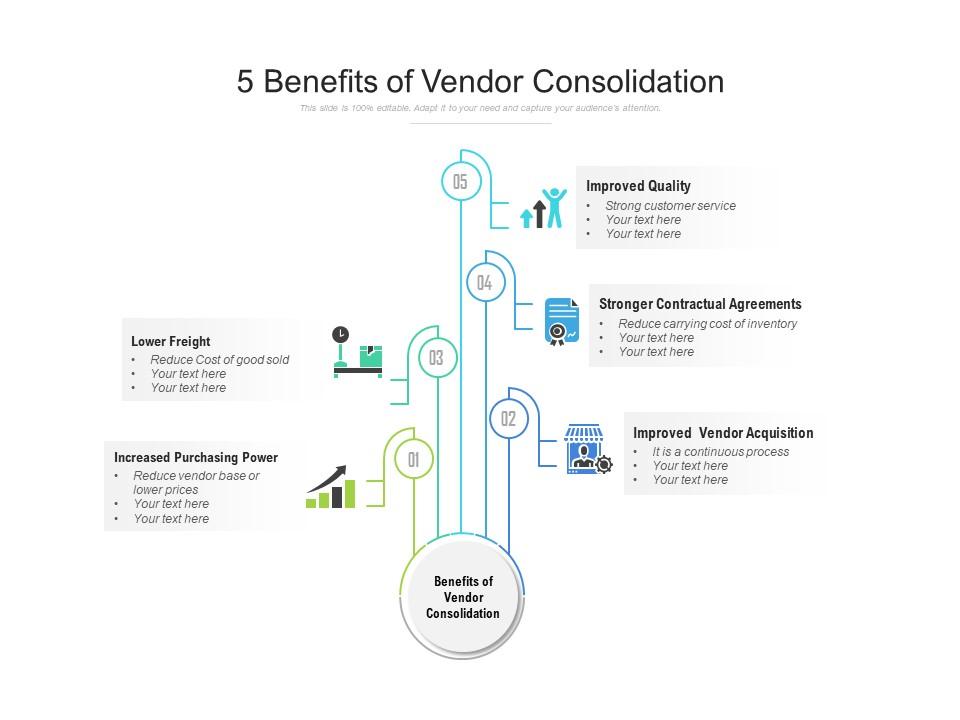
5 benefits of vendor consolidation
Try Before you Buy Download Free Sample Product
Audience
Editable
of Time
Garner consistent applause with our 5 Benefits Of Vendor Consolidation. Their collection will be a fabulous asset.
People who downloaded this PowerPoint presentation also viewed the following :
5 benefits of vendor consolidation with all 5 slides:
Our 5 Benefits Of Vendor Consolidation are among the finest in the craft. Be assured of generating accolades.
FAQs for 5 benefits
Vendor consolidation delivers reduced administrative overhead, simplified contract management, enhanced negotiating power, improved service coordination, and greater cost efficiency through volume discounts. Through strategic consolidation, organizations streamline procurement processes, minimize vendor management complexity, and achieve better pricing structures, with many companies finding that fewer, stronger partnerships ultimately enhance operational efficiency and competitive advantage.
Vendor consolidation reduces procurement costs through bulk purchasing discounts, streamlined administrative processes, and reduced transaction fees across fewer supplier relationships. Organizations typically achieve 15-30% cost reductions by leveraging increased buying power, minimizing contract management overhead, and eliminating redundant vendor onboarding processes, while gaining better pricing transparency and strategic partnerships.
Organizations can effectively manage fewer vendors through strategic relationship development, enhanced communication protocols, comprehensive performance monitoring, and diversified service agreements within single partnerships. This approach enables deeper collaboration, streamlined procurement processes, and stronger negotiation leverage, with many companies finding that consolidated vendor relationships deliver improved service quality, reduced administrative overhead, and greater operational efficiency.
Vendor consolidation strengthens supplier relationships by creating deeper partnerships, increasing communication frequency, and establishing mutual dependency that benefits both parties. This strategic approach enhances negotiating power through larger contract volumes, enables better terms and pricing, and facilitates collaborative innovation, with many organizations finding that consolidated vendors become more responsive and invested in long-term success.
Vendor consolidation enhances risk management by reducing the number of vendor relationships to monitor, creating clearer accountability chains, and enabling more focused due diligence processes. This strategic approach streamlines compliance oversight and contract management, while concentrating resources on fewer, higher-quality partnerships, ultimately delivering better risk visibility and stronger vendor performance standards.
Technology streamlines vendor consolidation through automated procurement platforms, integrated supplier management systems, data analytics for performance tracking, and centralized communication tools. These solutions enable organizations to evaluate vendor capabilities more effectively, monitor compliance seamlessly, and optimize contract negotiations, ultimately delivering reduced operational costs and enhanced supplier relationships across industries.
Vendor consolidation can enhance service quality through stronger partnerships, streamlined communication, improved accountability, and better resource allocation from preferred suppliers. While fewer vendors may reduce some competitive pressure, consolidated partnerships often deliver superior consistency, faster issue resolution, and more strategic collaboration, with many organizations finding that deeper vendor relationships ultimately enable higher service standards and innovation.
Companies should track cost reduction percentages, vendor performance scores, contract compliance rates, procurement cycle times, and risk mitigation effectiveness to measure consolidation success. These metrics enable organizations to quantify operational efficiency gains, strengthen supplier relationships, and demonstrate strategic value, with many finding that streamlined vendor portfolios ultimately deliver enhanced negotiating power and reduced administrative overhead.
Businesses maintain compliance during vendor consolidation by conducting thorough due diligence assessments, implementing standardized compliance frameworks, and establishing continuous monitoring systems across all vendor relationships. Through strategic audit protocols and regulatory mapping processes, organizations streamline oversight while enhancing transparency, with many financial services and healthcare institutions finding that consolidated vendor management ultimately delivers stronger compliance outcomes and reduced regulatory risk.
Vendor consolidation challenges include contract negotiation complexities, service quality disruptions, employee resistance, integration difficulties, and dependency risks on fewer suppliers. These obstacles can be mitigated through phased implementation timelines, comprehensive vendor evaluations, clear communication strategies, and robust contingency planning, with many organizations finding that structured change management and stakeholder engagement ultimately deliver smoother transitions and sustained operational efficiency.
Vendor consolidation enhances supply chain resilience by strengthening partnerships, improving communication, and creating deeper integration with fewer suppliers, while potentially reducing redundancy options. Strategic consolidation enables organizations to develop more robust relationships, streamline processes, and accelerate decision-making, with many manufacturers finding that fewer, stronger partnerships ultimately deliver greater agility and risk management capabilities.
Vendor consolidation supports sustainability initiatives by reducing transportation emissions through streamlined logistics, minimizing packaging waste from fewer suppliers, and enabling stronger environmental partnerships with selected vendors. Organizations achieve greater resource efficiency, simplified compliance tracking, and enhanced carbon footprint monitoring, with many companies finding that consolidated vendor relationships facilitate joint sustainability projects and measurable environmental impact reductions.
Vendor consolidation can create anxiety about service quality and relationship changes, alongside relief from reduced complexity and clearer accountability structures. These psychological impacts can be managed through transparent communication about vendor selection criteria, involving team members in transition planning, and demonstrating how consolidated partnerships enhance operational efficiency, ultimately delivering stronger vendor relationships and reduced administrative burden for teams.
SMEs leverage vendor consolidation to compete with larger corporations by achieving economies of scale, reducing procurement costs, and streamlining supplier relationships. Through strategic vendor partnerships, smaller businesses can negotiate better pricing terms, access enterprise-level services, and minimize administrative overhead, while enhancing operational efficiency and ultimately delivering competitive advantages that enable them to operate more like their larger counterparts.
Healthcare, manufacturing, retail, and financial services benefit most from vendor consolidation due to their complex supply chains, strict regulatory requirements, and high transaction volumes. These industries can significantly reduce administrative overhead, streamline compliance processes, and enhance operational efficiency through consolidated partnerships, ultimately delivering cost savings and improved service quality while maintaining competitive advantage.
No Reviews