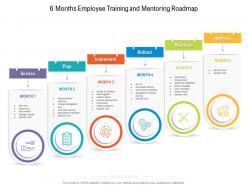
6 months employee training and mentoring roadmap

Rating:
92%
6 months employee training and mentoring roadmap
Slide 1 of 2
Favourites Favourites

Try Before you Buy Download Free Sample Product

Audience Impress Your
Audience
Editable 100%
Editable
Time Save Hours
of Time
The Biggest Sale is ending soon in
0
0
:
0
0
:
0
0
Rating:
92%
Presenting 6 Months Employee Training And Mentoring Roadmap PowerPoint Template. This PPT presentation is Google Slides compatible hence it is easily accessible. You can download and save this PowerPoint layout in different formats like PDF, PNG, and JPG. This PPT theme is available in both 4,3 and 16,9 aspect ratios. This PowerPoint template is customizable so you can modify the font size, font type, color, and shapes as per your requirements.

FAQs for 6 months employee training

You need clear career paths first - people want to know where they're headed. Then focus on regular feedback and mixing up learning opportunities like mentoring, training, stretch assignments. Skills assessments help too so you actually know where everyone stands. Honestly, the best part is getting employees to help design their own development plans. Most managers skip this step and wonder why people aren't engaged. Also tie everything to business goals or it feels pointless. Start with a simple survey asking what skills they want to build - you'd be amazed how much their interests align with what you need anyway.

Honestly, I'd focus on both the numbers and the soft stuff. Internal promotions and retention rates give you solid data - plus skill assessments if you do those. But don't sleep on the feedback side either. One-on-ones and pulse surveys tell you if people actually feel like they're progressing, which matters way more than you'd think. Performance reviews are obvious but useful too. Oh, and see if they're actually using new skills day-to-day. My take? Pick maybe 3-4 things you'll actually track consistently instead of going overboard with metrics.

Honestly, tech has completely changed how we learn at work now. Your phone becomes this whole learning hub - personalized courses, quick skill assessments, bite-sized lessons you can knock out anywhere. The AI stuff is getting scary good at figuring out exactly what you need to learn for your job. Some companies are even doing VR training which sounds gimmicky but actually works great for technical stuff. Best part? No more sitting through those awful scheduled training sessions. Learn on the bus, during lunch, whenever. Oh and definitely ask HR what platforms you already have access to - most people have no clue what's already available to them.

Honestly, you've got to make learning just part of how things work, not some extra burden. I started asking more questions in meetings and admitting when I'm clueless about stuff - turns out people actually respect that more than pretending you know everything. Budget for courses or conferences if you can swing it. Give your team time to share cool things they've learned, maybe in regular meetings. Don't freak out when someone messes up while trying something new (this one's huge). Oh, and try giving everyone like 30 minutes a week to explore random work-related stuff they're curious about. It's such a small thing but people love it.

Honestly, just start with regular one-on-ones - they're way more useful than formal performance reviews. Ask people straight up what they want to learn and where they're struggling. I'd also do a quick skills gap analysis, comparing what they can do now versus what the role actually needs. Oh, and get peer feedback if you can swing it - you'll catch stuff you'd never notice otherwise. The real trick though? Watch for patterns. If three people are all terrible at the same thing, that's not a coincidence. Pick one approach and stick with it consistently.

Honestly, most mentorship programs I've seen are trash because they're too vague. You need clear goals upfront - like what does success actually look like? Match people based on where they want their career to go, not just who sits nearby. Give them conversation guides and set 3-6 month cycles with real outcomes to hit. The "let's grab coffee sometime" approach never works. Group sessions help too - pairs can learn from each other. Structure keeps things moving, but don't make it so rigid that relationships feel forced. Oh, and define expectations for both people from day one.

Honestly, microlearning and gamification are where it's at right now. Break stuff into small chunks people can actually digest. VR's getting big if you've got the budget, but even simple simulations work great. What I've seen work best though? Flip it around - let your employees teach each other. Lunch-and-learns, internal podcasts, that kind of thing. Way more engaging than sitting through another PowerPoint, you know? Interactive workshops crush boring lectures every time. Just make sure whatever you pick actually connects to what they're dealing with day-to-day. Start small with one approach and see how your team responds.

Definitely offer the same stuff in different formats - that's what works. Some people jump right into hands-on workshops, others want to read guides or watch videos first. Mix in discussion groups too. Yeah it's more prep work upfront, but engagement goes way up so it's totally worth it. Let people pick their own path through the material instead of making everyone do the exact same steps. I'd honestly just survey your team first about what they prefer, then design around that. Way easier than guessing what'll work.

So here's the thing - when you tie employee development to what your company actually needs, everyone wins. Your team builds skills that matter for business goals instead of doing random training that goes nowhere. Performance improves, people feel more engaged, and you're not burning money on useless programs. Honestly, most managers totally miss this connection. Employees also feel way more invested when they see how their growth fits the bigger picture. Oh, and definitely map out your team's development plans against this quarter's objectives - that's where I'd start if I were you.

Honestly, ditch the whole "annual review" thing and just talk to them regularly. I do quick monthly sit-downs where we go over real examples - what went well, what didn't. Don't be that manager who waits forever to bring stuff up though! If their presentation was rough, mention it that week, not three weeks later. Here's what really works: tie everything back to where they want to grow career-wise. They'll actually listen then. Oh and ask them how you're doing as their boss too - that always catches people off guard but they appreciate it. Follow up on old conversations so they know you're paying attention.

Honestly? Money's always tight, and good luck convincing leadership when they can't see instant results. Your team will push back too - they're drowning in work already and think training is just more stuff piled on. Measuring if it actually works is brutal, especially soft skills development (like, how do you even track that?). Generic programs suck because everyone learns differently. I'd say pilot something small first. Connect whatever you do directly to business goals. Oh, and actually ask people what they want to learn instead of guessing. Makes a huge difference.

Honestly, engagement makes or breaks these programs. Engaged people actually show up and use what they learn. The disengaged ones? They're basically ghosts - there physically but mentally checked out. Here's what actually works: ask your team what they want to learn before building anything. I know it sounds obvious, but so many companies just assume they know what skills people need. Survey everyone first, then design around their genuine interests. When people are hungry to develop specific skills, they'll stick with it long-term. Otherwise you're just burning through your training budget.

Honestly, you've got tons of options here. Universities are great for specialized courses, and industry associations usually have solid certification programs. Professional orgs are where it's at though - they've got resources your team probably can't access internally. Consulting firms can do custom workshops if you need something specific. Oh, and mentorship exchanges with other companies are pretty cool too. There's also those consortium training programs where you split costs with other businesses, which is nice for the budget. But yeah, figure out your actual skill gaps first. Then find partners who really know that stuff instead of trying to handle everything yourself.

Dude, personalized development plans are game-changers for keeping people around. When you sit down and actually talk to each person about what they want - not just what the company needs - they feel heard. Cookie-cutter training is dead, honestly. Everyone's wired differently. I've seen teams where managers just ask "where do you see yourself in two years?" then build actual steps to get there. Boom - higher engagement, less turnover. People work harder when they know you're investing in their future, not just plugging them into whatever role needs filling. It's really that simple.

Yeah totally! Start by spending money on training that actually matters for your business goals - skip the generic stuff nobody remembers. Mix online modules (way cheaper) with some in-person sessions, but only when you really need that face-to-face thing. Here's what I'd do: use people from your own team as trainers instead of paying crazy consultant fees. Track what's working through feedback and performance numbers, then put more resources into whatever actually makes a difference. Honestly, proving ROI first makes it so much easier to get budget later. Start small and build from there.

Ratings and Reviews

92% of 100
Review Form
Write a review
Most Relevant Reviews
  1. 80%

    by Clayton Sanders

    Great quality product.
  2. 100%

    by Daniel Mcdonald

    Great designs, really helpful.
  3. 100%

    by Charles Nguyen

    Great designs, really helpful.
  4. 80%

    by Diego Gardner

    Perfect template with attractive color combination.
  5. 100%

    by Clint Perry

    The Designed Graphic are very professional and classic.

5 Item(s)

per page: