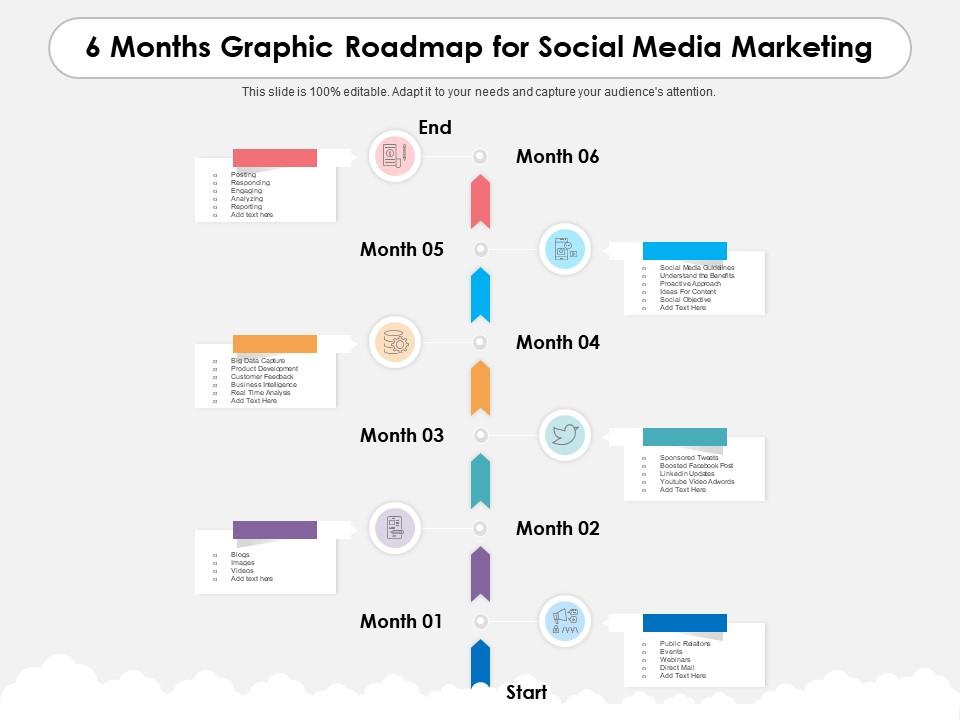
6 months graphic roadmap for social media marketing

6 months graphic roadmap for social media marketing
Slide 1 of 2

or

Favourites Favourites

Try Before you Buy Download Free Sample Product

Audience Impress Your
Audience
Editable 100%
Editable
Time Save Hours
of Time
The Biggest Sale is ending soon in
0
0
:
0
0
:
0
0
Presenting 6 Months Graphic Roadmap For Social Media Marketing PowerPoint slide. This PPT theme is available in both 4,3 and 16,9 aspect ratios. This PowerPoint template is customizable so you can modify the font size, font type, color, and shapes as per your requirements. This PPT presentation is Google Slides compatible hence it is easily accessible. You can download and save this PowerPoint layout in different formats like PDF, PNG, and JPG.

FAQs for 6 months graphic roadmap for

Honestly, start with an audit of what you've got now - it's kind of eye-opening to see where you're actually at. Define real goals that matter to your business, not just vanity metrics like follower counts (though those feel good, I get it). Research your audience properly and figure out which platforms they're actually using - spreading yourself across every single network is exhausting and pointless. Map out a content strategy with consistent posting and mix up your content types so people don't get bored. Track everything with analytics so you know what's bombing versus what's working. Those five things will get you a solid foundation.

Honestly, just pick metrics that actually tie to what you're trying to accomplish. Want brand awareness? Track reach and impressions. Need leads? Focus on click-through rates and conversions. I know follower count feels good to watch grow, but it's mostly just ego food. Look at engagement rates instead - way more telling. Website traffic from social is huge too, plus cost per acquisition if you're running ads. Pick maybe 3-5 things that genuinely impact your bottom line, not every random metric the platform shows you. Set up tracking and check monthly to see what's working. Simple as that.

Honestly, audience segmentation is what makes or breaks your whole social media game. Don't make my mistake of posting the same stuff everywhere - it's like shouting into the void. Break your followers into maybe 2-3 groups based on age, interests, whatever makes sense for your brand. Then actually tailor your content for each group. Like, your Gen Z audience probably wants different vibes than millennials, you know? Once you've got those segments figured out, create specific content themes for each. It's way more work upfront but the engagement difference is insane.

Okay so here's what you gotta do - start with your actual business goals first. Say you want 20% more sales this year. Don't just throw random content at the wall! Instead, set real targets like "get 500 solid leads monthly" or "drive 1K people to our site from social." Each platform should serve a different purpose too. Instagram's great for getting eyeballs on your brand, while LinkedIn's better for warming up potential customers. I learned this the hard way tbh - used to chase likes and follows thinking that mattered. But honestly? Every single post needs to connect back to actually growing your business, not just looking good on paper.

Honestly, I'd start with either Hootsuite or Buffer for scheduling - both are pretty affordable and do the job well. Sprout Social costs more but the team features are actually amazing if you're working with others. Don't sleep on the free analytics though! Facebook Insights and Twitter Analytics give you way more data than you'd expect. Google Analytics is a must for seeing how social traffic converts on your site. Oh, and if you're doing lots of Instagram stuff, Later is clutch. My advice? Pick one scheduling tool and one analytics thing first. You can always add more later once you figure out what you actually need.

Look, you can't just copy-paste the same content everywhere. Instagram's all about those pretty visuals and Stories. LinkedIn wants you sounding professional with industry takes. Twitter? Quick thoughts and conversations - I waste way too much time there lol. TikTok needs those fun, snappy videos that don't feel forced. Facebook's better for longer posts and building community. YouTube obviously wants polished videos with decent thumbnails. The trick is matching what people actually expect on each platform. Don't be that person posting LinkedIn content on TikTok - it's painful to watch.

Honestly, just focus on giving value instead of trying to sell stuff. Behind-the-scenes posts work great, and definitely respond to comments fast - people notice that. User-generated content is gold too since everyone loves getting featured. Ask questions that actually make people want to reply (not just "what's your favorite color" type stuff). Stay consistent with how you sound but don't be fake about it. Sometimes just saying "thanks for sharing!" beats some perfectly written response anyway. Oh, and track what gets real engagement, not just likes. Then do more of that.

Don't ignore negative comments - that just pisses people off more. Jump on it fast but keep it professional. Acknowledge what they're saying publicly, then slide into their DMs to hash out the details. Nobody wants to watch brands have meltdowns in the comment section, it's cringey. Stay brief and focus on fixing whatever went wrong. Trolls are different though - sometimes you gotta just delete and block those idiots. But real complaints? That's your chance to show everyone else you actually give a damn about customer service. Always circle back privately to solve their actual problem.

Honestly, batch creating content saved my sanity - I use Hootsuite to schedule everything in advance. Check your analytics for when people are actually scrolling instead of just posting randomly. Made that mistake for months and got like 3 likes per post lol. Stick to mostly helpful stuff - behind the scenes content, tips, reposting your customers' photos. Then maybe 20% can be "buy my thing" posts. But don't just schedule and disappear! I spend 15 minutes each morning replying to comments and liking other people's stuff. It's boring but it works way better than I expected.

Honestly, paid ads work best when you already know what content hits. I always tell people to boost their top organic posts first - it's like adding gas to a fire that's already burning. Your organic stuff is perfect for testing what people actually want to see, then you throw money behind whatever performs. The targeting is insanely specific too, way better than hoping the algorithm picks up your content organically. I'd probably start small though, maybe just promote one really good post and see what happens. Once you get the hang of it, you can use ads to reach people your organic content never would've found.

Look, start with the basics - likes, shares, comments, click-through rates. That stuff tells you if people actually care about your content. Then dig into what matters: leads, email signups, sales from your campaigns. Track how much you're spending to get each customer and what they're worth long-term. Website traffic from social is massive too. Follower count is pretty much useless if nobody's buying anything, honestly. Oh, and set up those UTM thingies on your links - sounds techy but it's easy and you'll see exactly which posts make you money in Google Analytics.

Check your analytics weekly - that's honestly where you'll spot trouble first. I have notifications on for Instagram and Facebook's business blogs (yeah, I'm that person) because they hide updates in random posts sometimes. When engagement starts tanking, don't freak out and change everything at once. New content formats usually get prioritized by the algorithm, so jump on those fast. The monthly audit thing really helps too - just comparing what's still crushing it versus what's totally dead now. Flexibility beats perfection every time with this stuff.

User-generated content is seriously underrated. When your customers post about you, it's way more trustworthy than anything you'll create yourself. People trust other people over brands every time - that's just human nature. Free content that actually converts? Yes please. Real customers sharing photos or reviews gives you authentic social proof that drives engagement through the roof. Your reach expands too since friends trust their friends' recommendations. Oh, and it saves you from constantly brainstorming content ideas. Create some branded hashtags and start reposting customer stuff. You'll see the difference pretty quickly.

Look for micro-influencers in your space first - they're way more engaged than those massive accounts that feel super fake now. Don't just go for follower counts. Build actual relationships before you pitch anything, and let them create content their way instead of being all controlling about it. Track engagement and clicks, not just how many people saw it. Oh and definitely nail down expectations upfront about what they're delivering and when, plus how much you're paying. Trust me, those conversations get weird if you wait. The audience overlap thing is huge too - better to have someone with 5k followers who actually match your customers than some random person with 100k.

Honestly, the worst mistake is jumping in without clear goals - like what even counts as winning? Also don't spread yourself thin across every platform. Pick 2-3 max or you'll hate your life. People skip audience research constantly and just post what they think sounds cool instead of what their actual customers want to hear. Super common mistake. Timeline-wise, everyone underestimates how long content actually takes to make. Oh and this drives me nuts - they post then disappear! You gotta respond to comments and be social, not just dump content and run.

Ratings and Reviews

0% of 100
Review Form
Write a review
Most Relevant Reviews

No Reviews