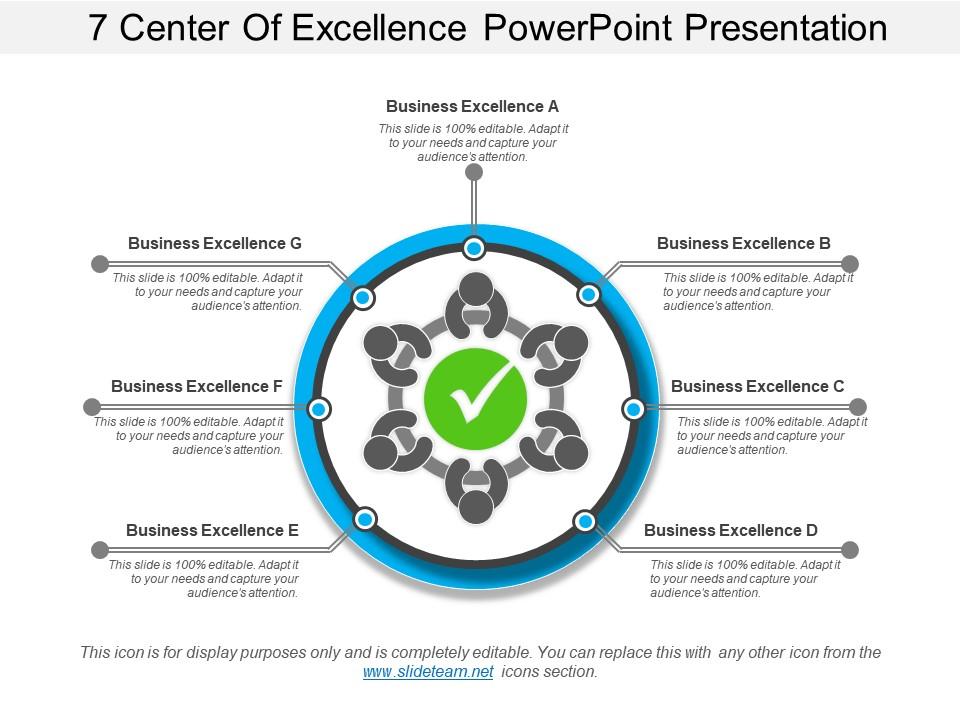
7 center of excellence powerpoint presentation

Rating:
90%
7 center of excellence powerpoint presentation
Slide 1 of 5
Favourites Favourites

Try Before you Buy Download Free Sample Product

Audience Impress Your
Audience
Editable 100%
Editable
Time Save Hours
of Time
The Biggest Sale is ending soon in
0
0
:
0
0
:
0
0
Rating:
90%
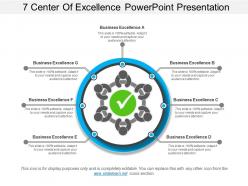
Sharing 7 center of excellence PowerPoint template. Easy to download and save and can be presented into JPG and PDF format. Fully editable presentation slide as color, text and font can be edited easily. PPT template can be delivered in both standard and widescreen display. Similar designs are accessible with different nodes and stages. Pre-designed presentation sample is well corresponding with Google Slides and can be merged without any trouble.

People who downloaded this PowerPoint presentation also viewed the following :

FAQs for 7 center of

So basically it's your company's expert hub for whatever tech or skill you're focusing on. You get all the smart people in one place who really know their stuff. Honestly, it beats having random teams figure things out from scratch every time - such a waste. CoEs spread the good ideas around and keep everyone from making the same mistakes twice. They're clutch when you need answers fast too. My advice? Look at where your teams are struggling most or doing totally different approaches for the same problems. That's probably where you'd want to start one.

So here's the thing - a CoE is basically your knowledge-sharing powerhouse. Pick experts from different teams and give them real authority (not just advisory BS). They'll run workshops, spot what's actually working across departments, then help scale those wins everywhere else. Best practice libraries, pilot projects, the whole deal. I'd probably start small though - grab one area where you can show quick results and build from there. Cross-departmental stuff gets messy fast if you don't have leadership buy-in. But once it clicks? Game changer for innovation.

So you gotta look at both the numbers and the fuzzy stuff. Track adoption rates first - are teams actually using your standards and tools? Then dig into impact: better quality, cost savings, faster delivery, whatever fits your area. But honestly, the soft metrics are just as crucial. Survey people about satisfaction with your support and whether they feel more capable after working with you. Knowledge sharing effectiveness too - that one's harder to measure but super telling. The real win? When teams start reaching out to you instead of you having to hunt them down. That's when you know it's working.

So a CoE spreads knowledge across teams instead of just doing the daily grind like regular departments. Your marketing team runs campaigns, right? But a Marketing CoE would train people, build frameworks, set standards - stuff like that. They're more about teaching others than cranking out work themselves. Though honestly, the boundaries get messy sometimes. Traditional departments stay in their lane and deliver outputs. CoEs break out of that to coach and support everyone else. Just make sure if you build one, they actually get time for the advisory stuff instead of getting pulled into random projects all day.

Dude, you absolutely need strong leadership backing this thing. Without it, you're basically screwed - nobody will prioritize your CoE stuff over their actual work (trust me on this one). Get a senior leader who genuinely believes in what you're doing, not someone just checking boxes. They need to champion your mission, communicate why it matters, and knock down barriers when teams inevitably push back. Oh, and they give you the actual authority to make changes happen. Don't settle for someone who's just going through the motions - that's a recipe for failure.

Look, your CoE should feel like the natural meeting spot where teams actually want to collaborate. Get representatives from each department so someone always understands what marketing or IT is really dealing with. Regular workshops work great - honestly, shared project spaces are even better for day-to-day stuff. Pick one big project where departments have to work together and use that as your testing ground. Common standards help too, but don't overthink it at first. Set up decent collaboration tools and communication channels. The goal is making cross-functional work feel normal, not forced. Once people see it working on that first project, they'll buy in.

Getting leadership to actually commit budget and people is brutal - they want results but won't give you resources. Everyone's gonna try to dump their problems on your CoE too, so scope creep happens fast. Existing teams will probably see you as competition, which creates weird politics. Oh, and nobody ever agrees on what "success" means, so define that first or you're screwed. Start small though. Find an executive sponsor who'll actually fight for you (not just show up to one meeting). Quick wins are your friend - prove value early before people start questioning why you exist.

Mix up your approach - knowledge sessions where experts present to teams work well. Back those up with a wiki people can actually navigate (not some buried mess no one finds). Short newsletters highlighting real wins are solid too. Lunch-and-learns are honestly clutch because food = attendance. But here's the thing - make everything easy to access and actually useful. Office hours are perfect for this. Teams can bug your experts directly about whatever they're stuck on. Way better than some formal process that takes forever. The whole point is removing friction so people don't give up halfway through getting help.

Honestly, tech is a game-changer for CoEs. Automation handles all the boring stuff while collaboration platforms tear down those annoying departmental walls. AI tools are pretty solid at spotting patterns and predicting problems before they blow up. Self-service portals let teams grab best practices whenever they need them - no more waiting around. Analytics dashboards track your wins and show leadership the ROI (they eat that stuff up). But here's the thing - don't just chase whatever's trendy. Pick tools that actually fix your real problems first. I'd start with maybe two technologies max that target your worst bottlenecks.

Honestly, a CoE is pretty solid for team development. They set up standardized training and mentoring programs that actually work across departments. You'll get learning paths for specific skills, workshops with real experts, and repositories of stuff you can use right away. They're also good at spotting skill gaps before things get messy. What I really like is how they connect people with mentors from totally different parts of the company - sometimes those are the best connections. Definitely ask what training resources they've got already. You might find some hidden gems there.

Skip the credential obsession - hire genuinely curious people who love tackling messy problems. Problem-solvers who can work across different teams are gold. Money's important, but autonomy and real impact actually matter more than most execs realize. Give them ownership of initiatives and clear growth paths within the CoE. Here's the thing though - don't drown them in meetings. They need deep work time. Celebrate their wins publicly and tie their work to business results. Otherwise you'll lose them to some startup that actually gets it.

Look, you've gotta bake adaptability into your CoE right from the start. I always block Friday afternoons for scanning - tech reports, what competitors are doing, industry stuff. Sounds boring but it's actually pretty eye-opening sometimes. Get feedback loops going with your business units so you catch problems early. Cross-train people so they can shift around when things change (and they will). Don't stress about pilot projects failing - that's literally the point. Pick one emerging trend that matters to your space and just run a small proof-of-concept next quarter. Start small, learn fast.

Honestly, CoEs usually work pretty well for both culture and engagement. People feel way more confident when they actually know who to ask for help - no more wandering around looking for answers. Knowledge sharing gets better too since there's finally a clear hub for expertise. The main thing to watch out for? Don't let it turn into some exclusive expert club where everyone else feels left out. That's happened at places I've seen before and it's rough. When you get it right though, teams genuinely feel more skilled and connected to what the company's trying to do. Definitely track engagement scores before and after - you'll want those numbers.

Look, your CoE needs direct access to senior leadership from day one - none of this quarterly report nonsense that gets ignored. Have real conversations with executives about priorities and results. I've watched way too many CoEs turn into fancy innovation labs that accomplish basically nothing meaningful. Before starting any initiative, ask yourself "how does this actually support our strategic goals?" Then document those connections. Oh and measure impact using metrics the C-suite actually cares about. Technical wins are cool but they don't matter if leadership can't see the business value.

Yeah, there are some solid examples out there. Netflix used their data science CoE to completely pivot from mailing DVDs to streaming - basically centralized all their analytics to make better product calls. GE did something similar with digital transformation, which is wild for such an old-school company. They moved their whole industrial side toward IoT and predictive maintenance. Capital One's machine learning CoE totally changed how they handle risk and customer stuff. The cool thing is none of these just made existing stuff better - they actually changed how these companies compete. Pretty smart move if you ask me.

Ratings and Reviews

90% of 100
Review Form
Write a review
Most Relevant Reviews
  1. 80%

    by Curtis Herrera

    Great experience, I would definitely use your services further.
  2. 100%

    by Chester Kim

    It saves your time and decrease your efforts in half.
  3. 100%

    by Darrick Simpson

    Top Quality presentations that are easily editable.
  4. 80%

    by Dane Harrison

    Design layout is very impressive.

4 Item(s)

per page: