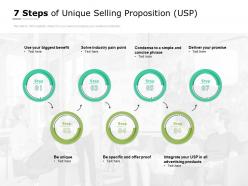
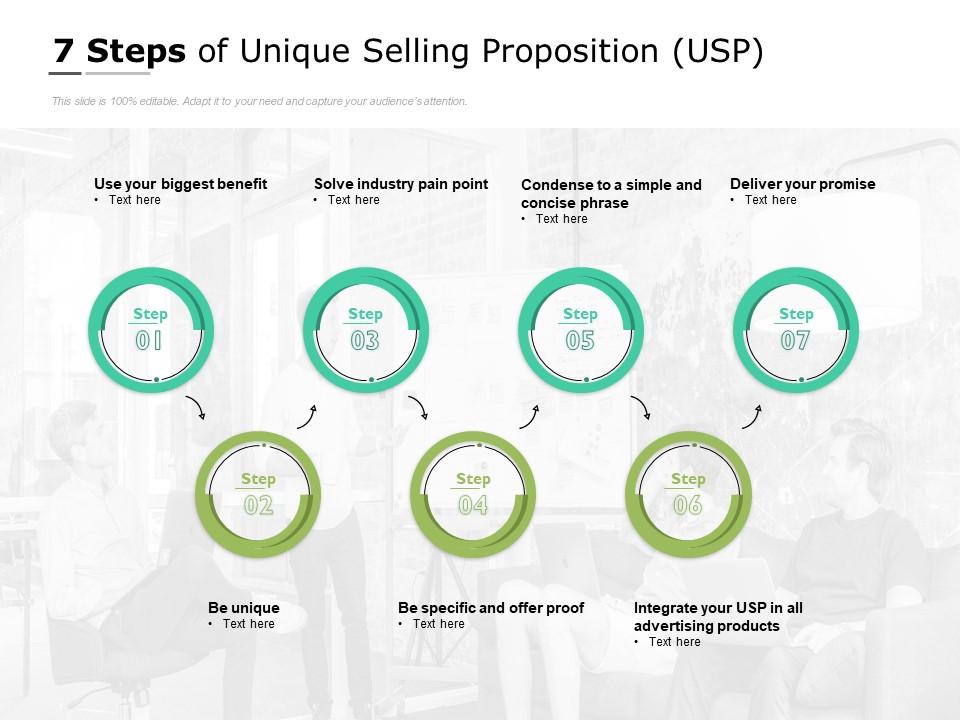
7 steps of unique selling proposition usp
Try Before you Buy Download Free Sample Product
Audience
Editable
of Time
Arrive at the correct formula with our 7 Steps Of Unique Selling Proposition USP. Your ideas will create the chemistry.
People who downloaded this PowerPoint presentation also viewed the following :
7 steps of unique selling proposition usp with all 5 slides:
Face dilemmas with our 7 Steps Of Unique Selling Proposition USP. They help make the correct decisions.
FAQs for 7 steps of unique
A strong USP for presentation template businesses includes distinctive design aesthetics, industry-specific customization options, user-friendly editing capabilities, comprehensive template variety, and professional quality standards. These elements work together by addressing diverse client needs, streamlining content creation processes, and delivering time-saving solutions, with many organizations finding that specialized templates enhance their brand consistency while reducing presentation development costs.
A well-defined USP enhances presentation templates by creating focused messaging that immediately differentiates your offering, streamlines content organization around core value propositions, and establishes compelling visual hierarchy that guides audience focus. This strategic combination enables presenters to deliver more persuasive narratives, reduce cognitive load through clear positioning, and ultimately capture attention faster while building stronger recall, with many organizations finding that USP-driven templates significantly improve engagement rates and conversion outcomes.
Effective USP communication in presentation templates employs strategic visual hierarchy, consistent brand elements, compelling value proposition statements, testimonial integration, and competitive differentiation frameworks. These design strategies enhance message clarity by positioning key benefits prominently, using distinctive color schemes and typography, and incorporating real-world success stories, ultimately delivering memorable presentations that resonate with audiences and drive business outcomes.
A presentation template's USP influences customer decisions by addressing specific pain points like time constraints, design expertise gaps, professional credibility needs, and industry-specific requirements. These strategic differentiators enable businesses to streamline proposal processes, enhance client presentations, and deliver consistent brand messaging, with many organizations finding that compelling template USPs ultimately reduce preparation time while improving presentation outcomes and competitive positioning.
Identifying unique target audience needs involves analyzing demographics, pain points, industry challenges, usage patterns, and competitive gaps through surveys, interviews, and market research. This analysis enables template creators to develop USPs addressing specific requirements like time constraints in corporate settings, visual impact needs in sales presentations, or compliance standards in regulated industries, ultimately delivering targeted solutions that resonate with distinct user segments.
Market research identifies target audience needs, competitor gaps, design preferences, industry-specific requirements, and pricing expectations that directly inform template positioning. Through surveys, focus groups, and competitive analysis, businesses can discover unmet presentation needs across sectors like consulting, healthcare, or education, ultimately enabling them to craft compelling value propositions that differentiate their templates and drive market adoption.
Customer feedback can strengthen your USP by revealing which template features truly differentiate your offerings, identifying gaps competitors miss, and highlighting specific benefits users value most. Through surveys, usage analytics, and client testimonials, businesses can refine their positioning around proven advantages like time-saving automation or industry-specific customization, ultimately delivering templates that address real user pain points while reinforcing competitive differentiation.
**INPUT**: What are some examples of successful USPs from leading companies that offer presentation templates? **OUTPUT**: Successful USPs include Canva's "Design anything professionally," Prezi's dynamic storytelling approach, Slidebean's AI-powered automation, Beautiful.ai's intelligent formatting, and SlideTeam's research-backed content library. These companies differentiate by streamlining design processes, enhancing visual storytelling, and delivering time-saving solutions, with many organizations finding that specialized positioning ultimately drives customer loyalty and competitive advantage.
**INPUT**: How can you differentiate your presentation templates from competitors in a saturated market using a USP? **OUTPUT**: A strong USP differentiates presentation templates by highlighting unique design aesthetics, specialized industry focus, advanced customization features, or superior user experience elements that competitors lack. Through strategic positioning around specific benefits like time-saving automation, professional credibility enhancement, or niche market expertise, template providers can capture targeted segments while building brand loyalty, ultimately delivering competitive advantage in an increasingly crowded marketplace.
A strong USP for presentation templates builds brand loyalty by establishing clear differentiation through superior design quality, exclusive features, industry-specific customization, and consistent user experience across template collections. This strategic positioning creates customer confidence and trust, with many businesses finding that templates offering unique value propositions, such as data visualization capabilities or sector-specific layouts, ultimately deliver enhanced presentation outcomes and streamlined workflow efficiency.
Businesses often struggle with differentiating generic template features, balancing broad appeal with niche specificity, and clearly communicating value beyond basic design aesthetics. These challenges require strategic positioning that emphasizes unique functionality, industry-specific applications, and measurable outcomes, with many companies finding that focusing on specific user pain points and demonstrable efficiency gains ultimately delivers stronger market positioning.
Visual appeal is crucial in reinforcing USP during customer interactions, as compelling design elements immediately communicate professionalism, credibility, and brand values through color schemes, typography, and layout consistency. Well-designed presentation templates enhance message retention, build trust with prospects, and differentiate offerings from competitors, with many sales teams finding that visually striking presentations significantly improve engagement rates and ultimately accelerate decision-making processes.
Common pitfalls include being too generic or vague, making unsubstantiated claims, focusing solely on features rather than user benefits, and creating overly complex messaging that dilutes impact. Many template creators find that avoiding industry jargon, ensuring the USP addresses specific pain points like time constraints or design challenges, and maintaining clarity while emphasizing unique value propositions ultimately delivers stronger market positioning and customer resonance.
A USP can and should evolve as market conditions, customer needs, competitive landscapes, and business capabilities change over time. For presentation templates, evolution should be triggered by shifting client demands like remote collaboration needs, emerging design trends, new industry requirements, technological advances in presentation software, or competitive differentiation challenges, ultimately ensuring continued market relevance and competitive advantage.
Storytelling can be integrated into presentation template USPs by incorporating customer journey narratives, problem-resolution frameworks, and outcome-focused case studies that demonstrate real-world transformation. These narrative elements help templates connect emotionally with users by showcasing specific scenarios like startup pitch successes or corporate training breakthroughs, ultimately delivering more engaging presentations and stronger audience connection.
No Reviews