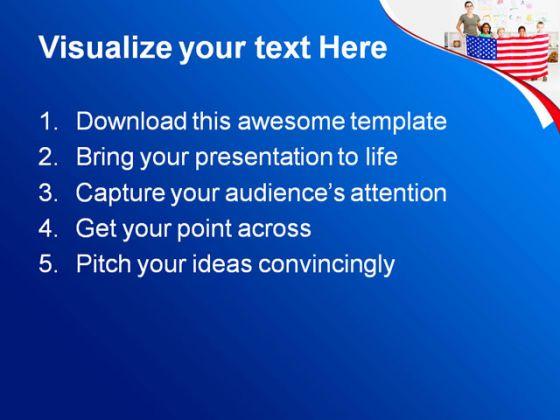
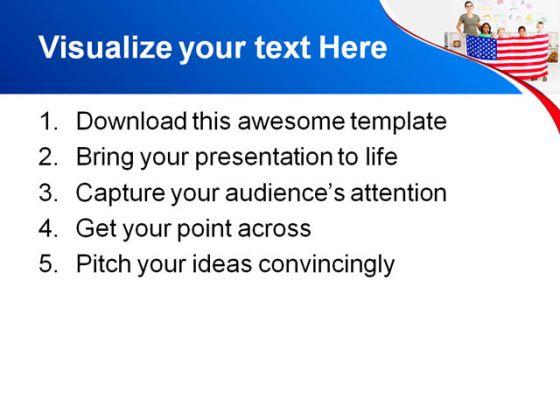
American students education powerpoint templates and powerpoint backgrounds 0611
Try Before you Buy Download Free Sample Product
Audience
Editable
of Time
Prepare for the deafening applause. Our American Students Education PowerPoint Templates And PowerPoint Backgrounds 0611 are great cheerleaders.
People who downloaded this PowerPoint presentation also viewed the following :
American students education powerpoint templates and powerpoint backgrounds 0611 with all 3 slides:
Announce your arrival with our American Students Education PowerPoint Templates And PowerPoint Backgrounds 0611. Take the stage with aplomb.
FAQs for American students education powerpoint templates and
American students face challenges including inadequate funding for schools, growing mental health concerns, technology access gaps, increasing college costs, and standardized testing pressures. These obstacles significantly impact learning outcomes by limiting educational resources, creating stress-related barriers, and widening achievement gaps, with many districts finding that addressing these interconnected issues requires comprehensive support systems and strategic investment in student wellbeing.
Socioeconomic factors significantly influence educational opportunities through access to quality schools, technology, tutoring services, and extracurricular programs. Students from higher-income families often attend well-funded districts with advanced coursework and college preparation resources, while lower-income students face challenges including limited educational materials, fewer experienced teachers, and reduced access to higher education, ultimately creating achievement gaps that affect long-term career prospects and economic mobility.
Technology integration in American education enhances learning through personalized adaptive platforms, interactive digital resources, virtual laboratories, and collaborative online tools that accommodate diverse learning styles. While these technologies streamline access to information and enable real-time feedback, they also present challenges including digital equity gaps and screen fatigue, with many schools finding that strategic implementation ultimately delivers improved engagement and academic outcomes.
Mental health significantly impacts American students' educational performance through attention, memory retention, classroom engagement, and academic motivation, with anxiety and depression being primary barriers to learning success. Students experiencing mental health challenges often struggle with concentration during lessons, test performance, and social interactions, while schools implementing comprehensive mental health support programs find improved graduation rates, better academic outcomes, and enhanced overall student wellbeing.
Standardized testing impacts student learning by providing measurable benchmarks, identifying knowledge gaps, and ensuring curriculum alignment, while also creating pressure that can narrow instructional focus. These assessments enable educators to track progress and adjust teaching methods, though many schools find that excessive testing reduces creative learning time, with successful districts balancing assessment data with engaging, holistic educational approaches.
American schools are implementing diverse teaching methods, multicultural curricula, universal design principles, peer collaboration programs, and bias-reduction training for educators. These approaches enhance learning by accommodating different learning styles, celebrating cultural backgrounds, and removing barriers, with many districts finding that inclusive classrooms ultimately deliver improved academic outcomes and better prepare students for an increasingly diverse workforce.
The American education system delivers mixed results compared to international peers, with strengths in higher education access and innovation but challenges in K-12 mathematics and science rankings. While countries like Finland and Singapore often outperform in standardized assessments, American universities maintain global leadership, and the system's flexibility enables diverse pathways to success, ultimately producing competitive graduates across multiple sectors.
Remote learning in American schools creates mixed effects on engagement and performance, with some students thriving through flexible scheduling and personalized pacing, while others struggle with reduced social interaction and technological barriers. Many districts find that hybrid approaches combining virtual and in-person elements deliver improved accessibility and cost efficiency, while maintaining essential peer collaboration, ultimately enabling schools to reach diverse learning styles more effectively.
Extracurricular activities enhance American students' development by building leadership skills, fostering teamwork, improving time management, and developing social connections beyond academics. Through sports, debate clubs, volunteer programs, and arts participation, students cultivate emotional intelligence, college readiness, and career-relevant competencies, with many educators finding that these experiences ultimately deliver well-rounded individuals prepared for competitive academic and professional landscapes.
Early childhood education establishes foundational cognitive, social, and emotional skills that significantly influence American students' long-term academic trajectories, reading comprehension abilities, and mathematical reasoning development. These early programs enhance school readiness by building critical thinking frameworks, social interaction capabilities, and learning motivation, with many districts finding that quality pre-K investments ultimately deliver improved graduation rates and reduced achievement gaps.
Educators are adapting through differentiated instruction, technology integration, project-based learning, culturally responsive teaching, and flexible assessment methods. These approaches enable personalized learning experiences by accommodating various learning styles, cultural backgrounds, and academic abilities, with many schools finding that adaptive strategies improve student engagement, academic outcomes, and educational equity across diverse classroom environments.
Parental involvement significantly enhances student achievement through improved academic performance, better attendance rates, increased motivation, and stronger social-emotional development. Students with engaged parents demonstrate higher test scores, graduation rates, and college enrollment, while schools benefit from enhanced community support, ultimately delivering better educational outcomes and preparing students for competitive success in an increasingly knowledge-based economy.
Schools can better support food-insecure students through comprehensive meal programs, weekend food backpacks, on-site food pantries, and partnerships with local organizations. These strategies enhance learning outcomes by ensuring consistent nutrition, reducing classroom distractions, and improving attendance rates, with many districts finding that holistic food security initiatives ultimately deliver stronger academic performance and greater student engagement.
Emerging trends in career and technical education include industry partnerships with local businesses, integrated STEM programming, digital certification pathways, apprenticeship opportunities, and project-based learning approaches. These programs streamline workforce preparation by combining academic rigor with practical skills, hands-on experience, and real-world applications, ultimately delivering faster career entry and enhanced employment prospects for graduates.
Cultural differences influence American academic performance through varying communication styles, learning preferences, parental expectations, and teacher-student interaction patterns. Students from collectivist cultures often excel in collaborative settings while individualistic backgrounds may favor independent work, with many schools finding that culturally responsive teaching methods and diverse instructional approaches ultimately enhance engagement and achievement across all student populations.
-
I discovered this website through a google search, the services matched my needs perfectly and the pricing was very reasonable. I was thrilled with the product and the customer service. I will definitely use their slides again for my presentations and recommend them to other colleagues.
-
Enough space for editing and adding your own content.