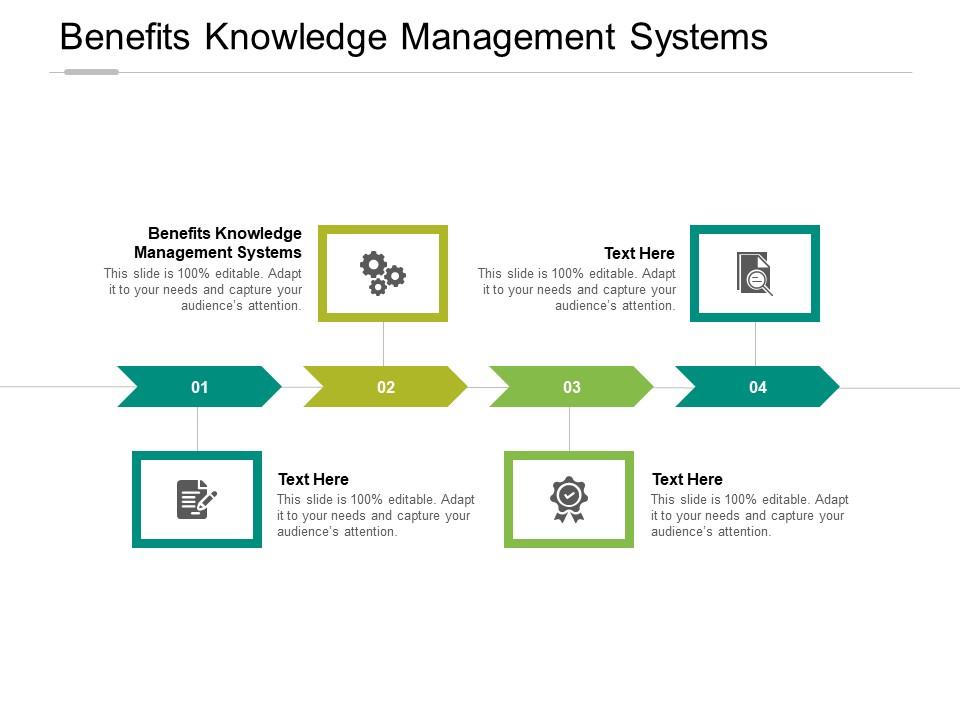
Benefits knowledge management systems ppt powerpoint presentation styles cpb

Benefits knowledge management systems ppt powerpoint presentation styles cpb
Slide 1 of 2
Favourites Favourites

Try Before you Buy Download Free Sample Product

Audience Impress Your
Audience
Editable 100%
Editable
Time Save Hours
of Time
The Biggest Sale is ending soon in
0
0
:
0
0
:
0
0
Presenting this set of slides with name Benefits Knowledge Management Systems Ppt Powerpoint Presentation Styles Cpb. This is an editable Powerpoint four stages graphic that deals with topics like Benefits Knowledge Management Systems to help convey your message better graphically. This product is a premium product available for immediate download and is 100 percent editable in Powerpoint. Download this now and use it in your presentations to impress your audience.

People who downloaded this PowerPoint presentation also viewed the following :

FAQs for Benefits knowledge management systems ppt powerpoint

Effective Knowledge Management Systems include knowledge repositories, search and retrieval tools, collaboration platforms, content management workflows, and analytics dashboards. These components work together by centralizing organizational expertise, enabling seamless information sharing, and tracking knowledge utilization patterns, with many enterprises finding that integrated systems ultimately deliver faster decision-making and enhanced competitive advantage.

Organizations assess KMS ROI by measuring productivity gains, reduced training costs, faster decision-making, and decreased knowledge loss during employee turnover. Through metrics like time-to-competency for new hires, reduced duplicate work, and improved customer service response times, companies can quantify benefits, with many finding that comprehensive knowledge systems deliver cost savings within 12-18 months while enhancing competitive advantage.

Culture plays a pivotal role in Knowledge Management System success by determining employee willingness to share information, collaborate across departments, and actively contribute to organizational learning initiatives. Organizations with open, collaborative cultures see significantly higher adoption rates and knowledge quality, while those emphasizing transparency and continuous learning find their systems become strategic assets for innovation and competitive advantage.

Artificial intelligence enhances Knowledge Management Systems by automating content categorization, enabling intelligent search capabilities, and providing personalized knowledge recommendations based on user behavior and expertise patterns. Through machine learning algorithms, organizations streamline knowledge discovery, reduce information silos, and accelerate decision-making processes, with many financial services and healthcare institutions finding significantly improved operational efficiency and faster employee onboarding.

Methods to encourage employee participation in knowledge sharing include creating incentive programs, establishing collaborative platforms, implementing recognition systems, providing dedicated time for knowledge activities, and fostering a culture of learning. Organizations across sectors like consulting, healthcare, and manufacturing find that combining formal rewards with informal peer recognition, regular knowledge-sharing sessions, and leadership modeling ultimately drives sustained participation and competitive advantage.

Knowledge Management Systems enhance remote work by centralizing organizational knowledge, enabling seamless information sharing, and providing collaborative platforms for distributed teams. These systems streamline virtual collaboration through real-time document sharing, expertise location tools, and integrated communication channels, with many organizations finding that remote employees can access critical resources instantly, ultimately delivering improved productivity and maintaining knowledge continuity across global teams.

Common KMS implementation challenges include resistance to change, inadequate user training, poor content quality control, integration difficulties with existing systems, and insufficient leadership support. Organizations often struggle with encouraging knowledge sharing cultures, managing information overload, and ensuring sustainable adoption, with many finding that addressing cultural barriers and providing comprehensive change management ultimately determines implementation success.

A KMS facilitates continuous learning by centralizing organizational knowledge, enabling real-time collaboration, tracking learning progress, and creating feedback loops for knowledge refinement. Through automated content recommendations and analytics, organizations streamline skill development, accelerate onboarding processes, and foster innovation cultures, with many companies finding that systematic knowledge sharing ultimately delivers improved decision-making and competitive advantage.

**INPUT**: What strategies can be employed to ensure the quality and accuracy of knowledge captured? **OUTPUT**: Quality assurance strategies include implementing peer review processes, establishing content validation workflows, creating standardized templates, conducting regular audits, and deploying automated accuracy checks. These approaches enhance knowledge reliability by streamlining verification procedures, minimizing errors, and maintaining consistency standards, with many organizations finding that systematic quality controls ultimately deliver improved decision-making capabilities and operational efficiency.

Knowledge Management Systems vary significantly across industries based on specific operational needs, regulatory requirements, and information types. Healthcare systems prioritize patient data security and clinical decision support, while manufacturing focuses on process documentation and quality control, and financial services emphasize compliance tracking and risk management, with each sector finding that tailored approaches ultimately deliver better operational efficiency and competitive advantage.

Ethical considerations in Knowledge Management include data privacy protection, intellectual property rights, information accuracy verification, equitable access to knowledge resources, and transparent attribution practices. These considerations become increasingly critical as organizations scale their knowledge systems across departments, with many companies finding that establishing clear ethical frameworks enhances trust, reduces legal risks, and ultimately delivers sustainable competitive advantage.

Businesses can measure KMS effectiveness through user adoption rates, knowledge retrieval speed, employee productivity metrics, reduced training time, and decreased support ticket volumes. Many organizations track these indicators alongside revenue per employee and customer satisfaction scores, finding that strategic knowledge accessibility ultimately delivers faster decision-making, enhanced operational efficiency, and measurable competitive advantage.

Best practices for maintaining Knowledge Management Systems include regular content audits, establishing clear governance protocols, implementing user feedback mechanisms, ensuring consistent metadata tagging, and creating automated update workflows. These approaches streamline knowledge accuracy by removing outdated information, standardizing contribution processes, and encouraging user engagement, with many organizations finding that structured maintenance schedules and dedicated content stewards ultimately deliver enhanced system reliability and improved decision-making capabilities.

A KMS aligns with organizational goals by centralizing critical knowledge assets, streamlining decision-making processes, and enabling strategic knowledge sharing across departments. Through intelligent categorization and automated workflows, organizations enhance operational efficiency, accelerate innovation cycles, and maintain competitive advantage, with many enterprises finding that strategic knowledge alignment directly improves performance outcomes and scalability.

**INPUT**: What are the trends in Knowledge Management Systems for the next decade? **OUTPUT**: Knowledge management systems trends include AI-powered content curation, conversational knowledge interfaces, real-time collaborative platforms, automated knowledge extraction, and personalized learning experiences. These technologies streamline organizational learning by reducing information silos, accelerating decision-making, and enhancing employee productivity, with many enterprises finding that integrated knowledge ecosystems ultimately deliver competitive advantage and improved innovation capacity. **Word count: 54 words**

Ratings and Reviews

0% of 100
Write a review
Most Relevant Reviews

No Reviews