


Big data analytics architecture powerpoint presentation slides
Select our content ready Big Data Analytics Architecture PowerPoint Presentation Slides to showcase the process of data curation and analysis. This big data analysis framework PowerPoint complete deck comprises of professionally designed PPT slides like conceptual view of big data reference, different types of data, important aspects, unified information management, real-time analytics, intelligent process, architecture principles, all forms of data, consistent information and object model, integrated analysis, insight to action, etc. Demonstrate how to connect information from different areas using the big data management presentation design. Big Data Analytics ppt also goes well with various related topics such as big data processing, data science, data warehouse, data storage, data analysis, data virtualization, modern data architecture and many more. Data analytics platform PPT design is a helpful tool to simplify the data discovery process. Showcase unified approach of data management with ready to use big data storage architecture PowerPoint template. Address feelings of inferiority with our Big Data Analytics Architecture Powerpoint Presentation Slides. Enhance the confidence they have in their ability.
















-

- Google Slides is a new FREE Presentation software from Google.
- All our content is 100% compatible with Google Slides.
- Just download our designs, and upload them to Google Slides and they will work automatically.
- Amaze your audience with SlideTeam and Google Slides.
-

Want Changes to This PPT Slide? Check out our Presentation Design Services
-

- WideScreen Aspect ratio is becoming a very popular format. When you download this product, the downloaded ZIP will contain this product in both standard and widescreen format.
-

- Some older products that we have may only be in standard format, but they can easily be converted to widescreen.
- To do this, please open the SlideTeam product in Powerpoint, and go to
- Design ( On the top bar) -> Page Setup -> and select "On-screen Show (16:9)” in the drop down for "Slides Sized for".
- The slide or theme will change to widescreen, and all graphics will adjust automatically. You can similarly convert our content to any other desired screen aspect ratio.
Compatible With Google Slides

Get This In WideScreen
You must be logged in to download this presentation.


Do you want to remove this product from your favourites?
PowerPoint presentation slides
Presenting this set of slides with name - Big Data Analytics Architecture Powerpoint Presentation Slides. This PPT deck displays twenty six slides with in depth research. Our topic oriented Big Data Analytics Architecture Powerpoint Presentation Slides presentation deck is a helpful tool to plan, prepare, document and analyse the topic with a clear approach. We provide a ready to use deck with all sorts of relevant topics subtopics templates, charts and graphs, overviews, analysis templates. Outline all the important aspects without any hassle. It showcases of all kind of editable templates infographs for an inclusive and comprehensive Big Data Analytics Architecture Powerpoint Presentation Slides presentation. Professionals, managers, individual and team involved in any company organization from any field can use them as per requirement.

People who downloaded this PowerPoint presentation also viewed the following :
Content of this Powerpoint Presentation
Slide 1: This slide introduces Big Data Analytics Architecture. State Your Company Name and begin.
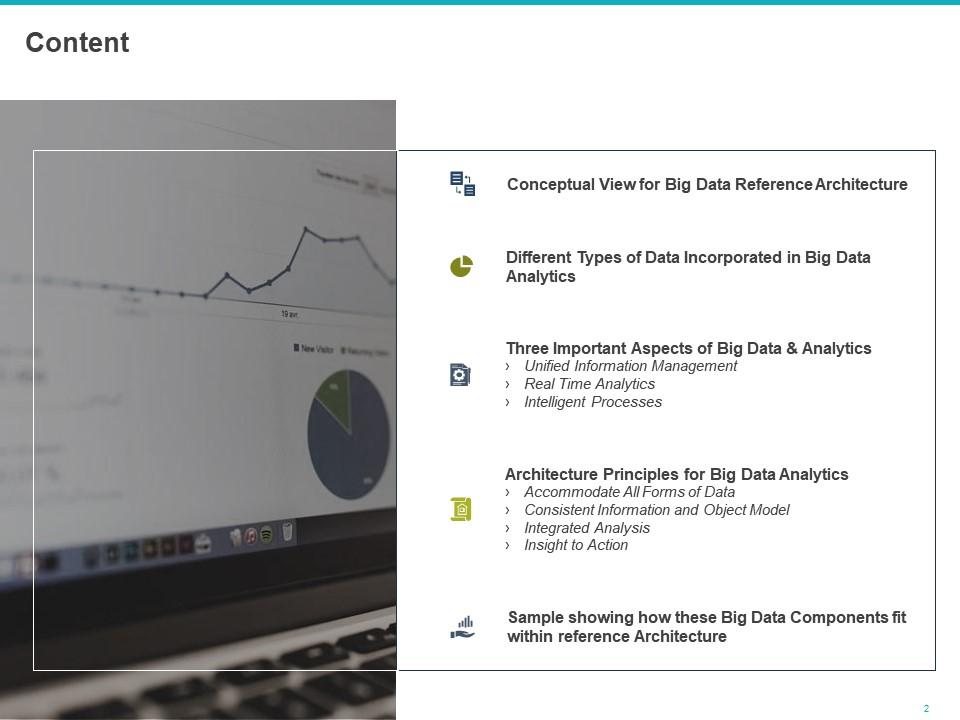
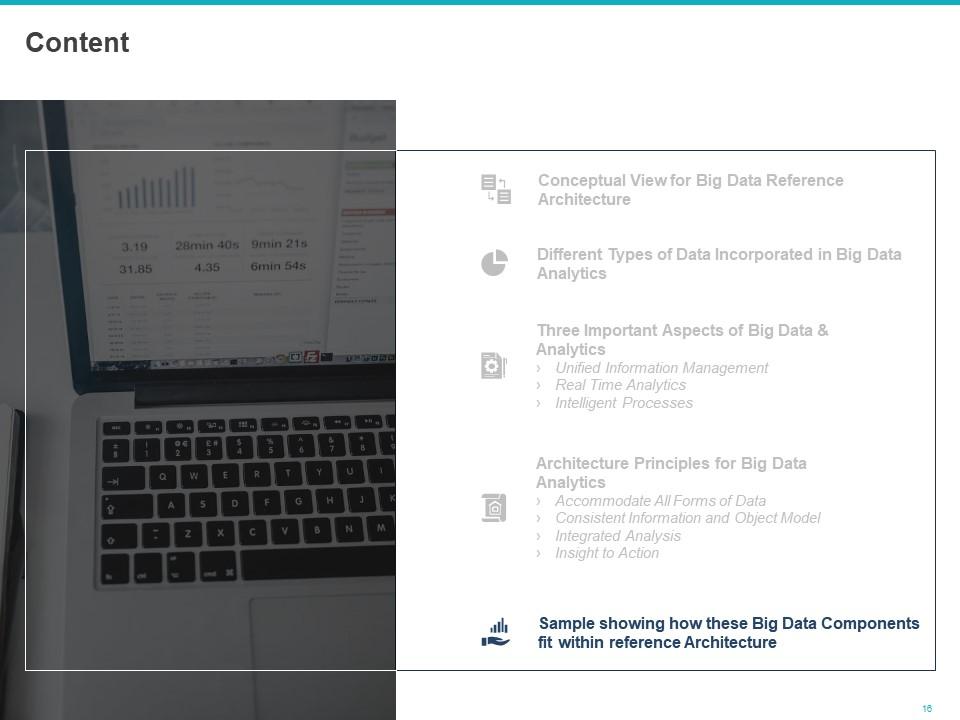
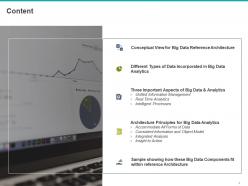
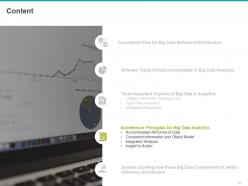
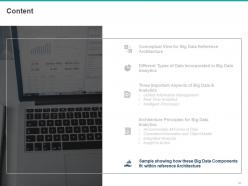
Slide 2: This slide shows Content of the presentation.
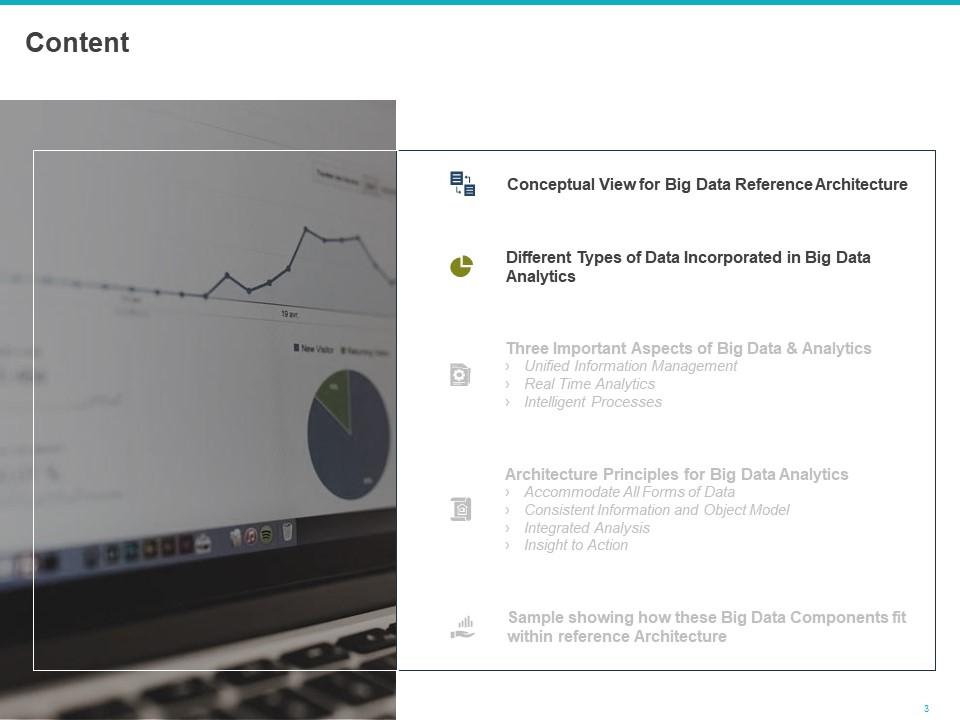
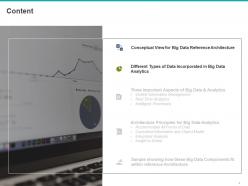
Slide 3: This slide highlights two topics as- Conceptual View for Big Data Reference Architecture and Different Types of Data Incorporated in Big Data Analytics.
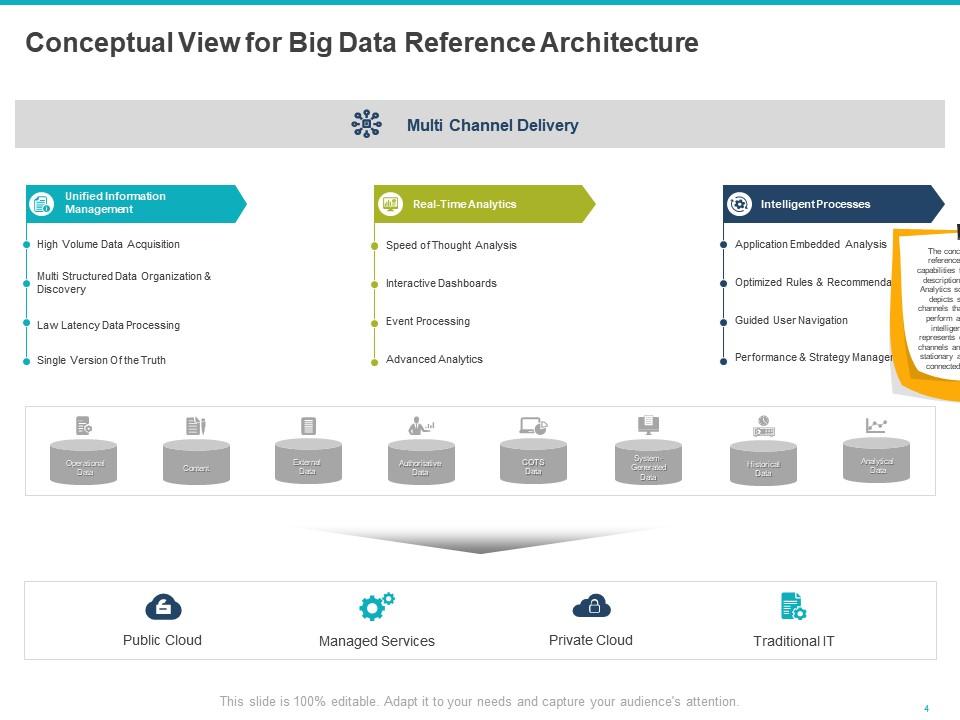
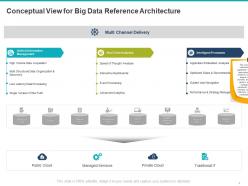
Slide 4: This slide presents Conceptual View for Big Data Reference Architecture with capabilities to provide a high-level description of the Big Data and Analytics solution.
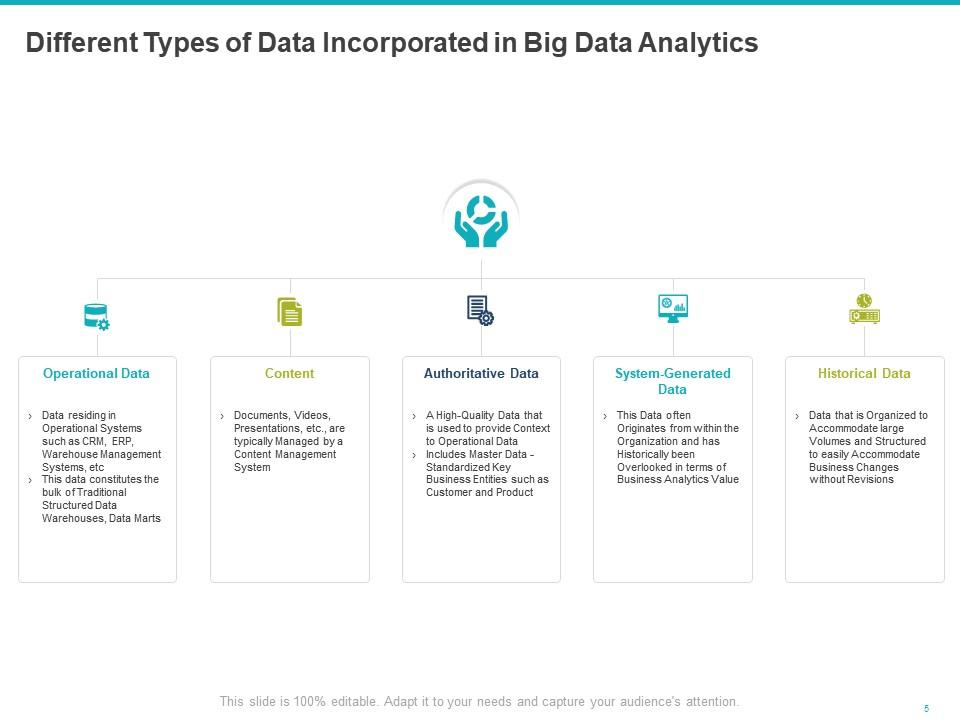
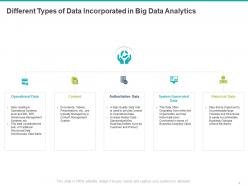
Slide 5: This slide displays Different Types of Data Incorporated in Big Data Analytics describing- Authoritative Data, System-Generated Data, Historical Data, Operational Data, Content.
Slide 6: This slide showcases Important Aspects of Big Data & Analytics with related imagery.
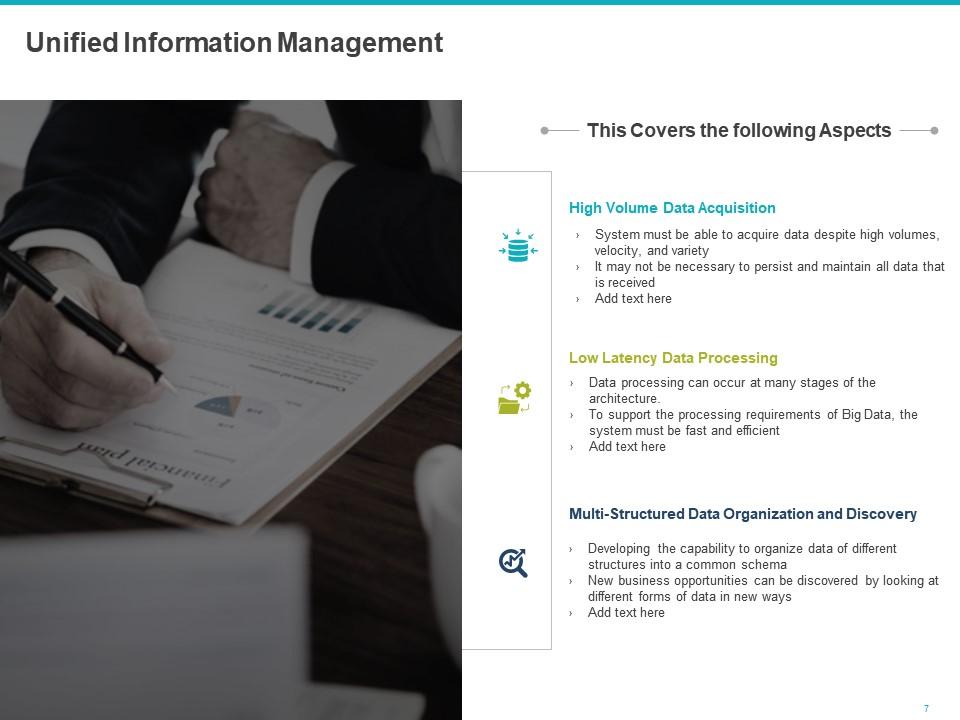
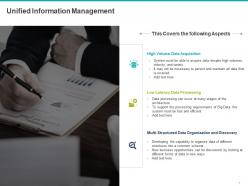
Slide 7: This slide represents Unified Information Management covering High Volume Data Acquisition, Low Latency Data Processing, Multi-Structured Data Organization and Discovery.
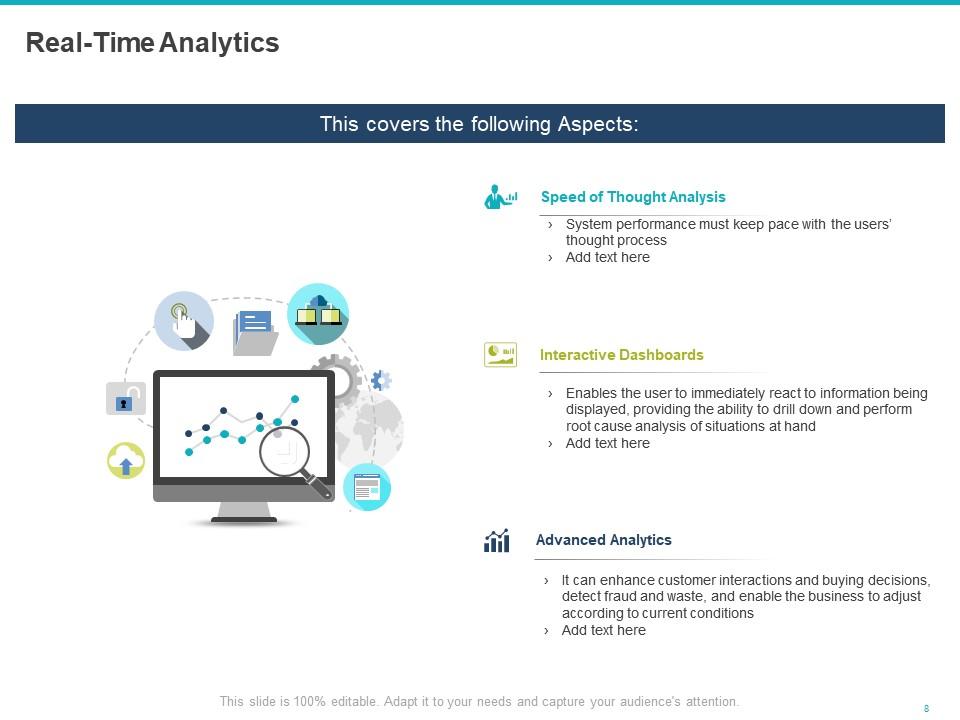
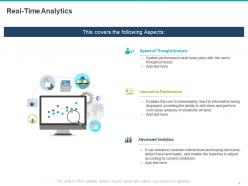
Slide 8: This slide shows Real-Time Analytics covering- Advanced Analytics, Interactive Dashboards, Speed of Thought Analysis.
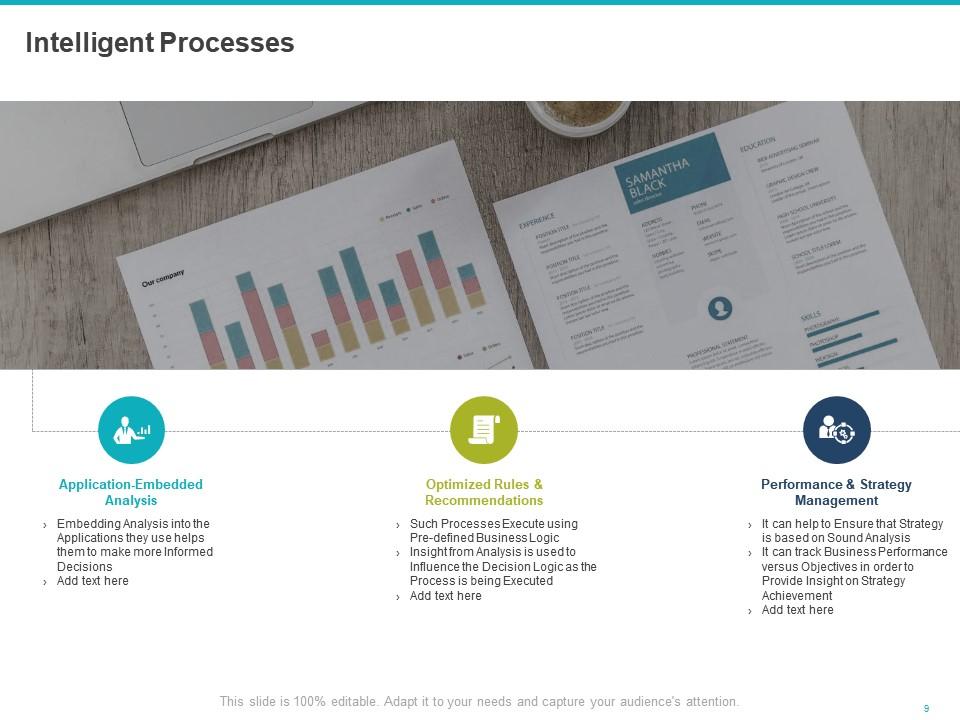
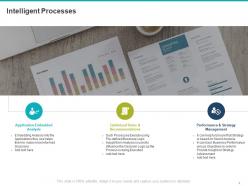
Slide 9: This slide presents Intelligent Processes describing- Application-Embedded Analysis, Optimized Rules & Recommendations, Performance & Strategy Management.
Slide 10: This slide highlights another topic of the presentation as- Architecture Principles for Big Data Analytics.
Slide 11: This slide displays Architecture Principles for Big Data Analytics with related imagery.
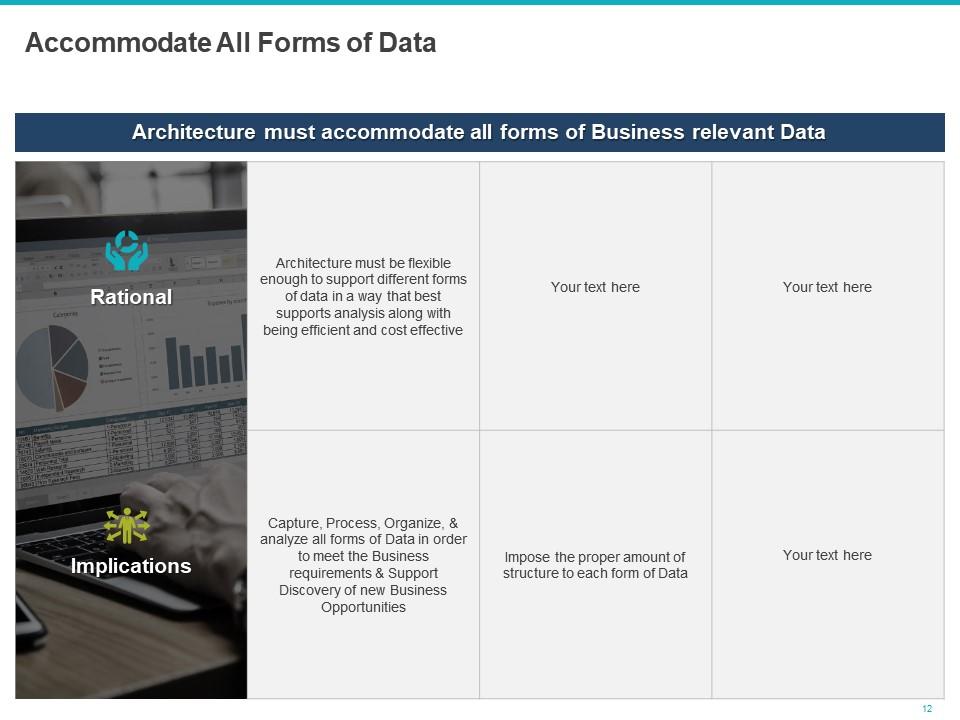
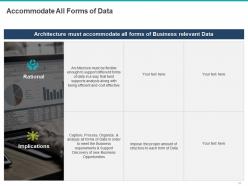
Slide 12: This slide represents Accommodate All Forms of Data relevant to business.
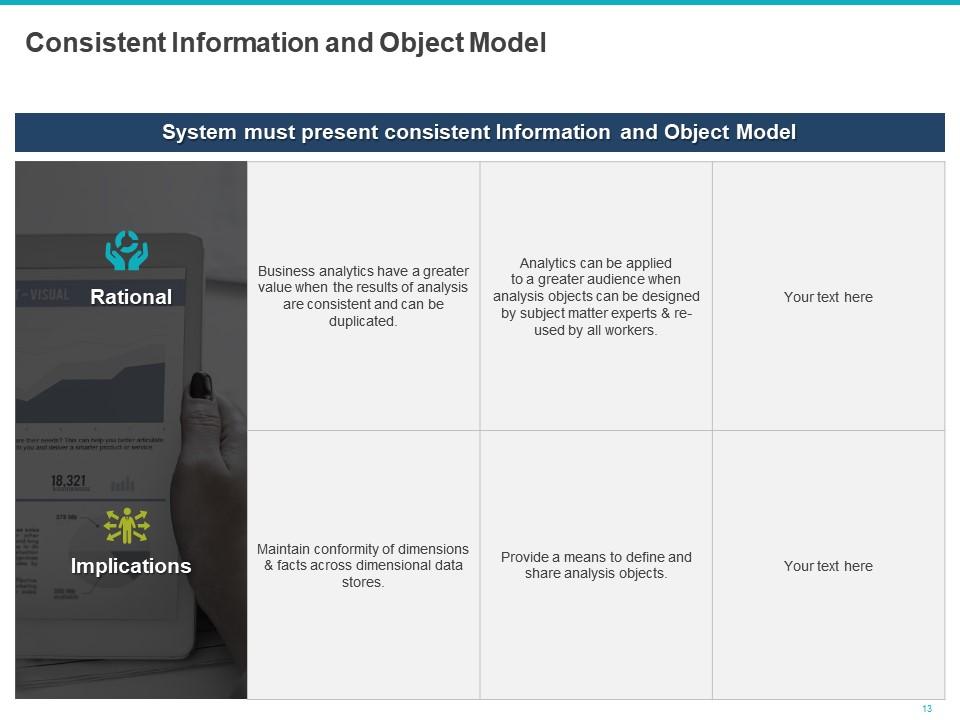
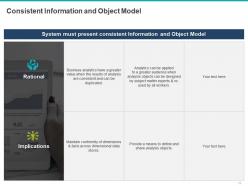
Slide 13: This slide showcases Consistent Information and Object Model. You can add or edit data as per requirements.
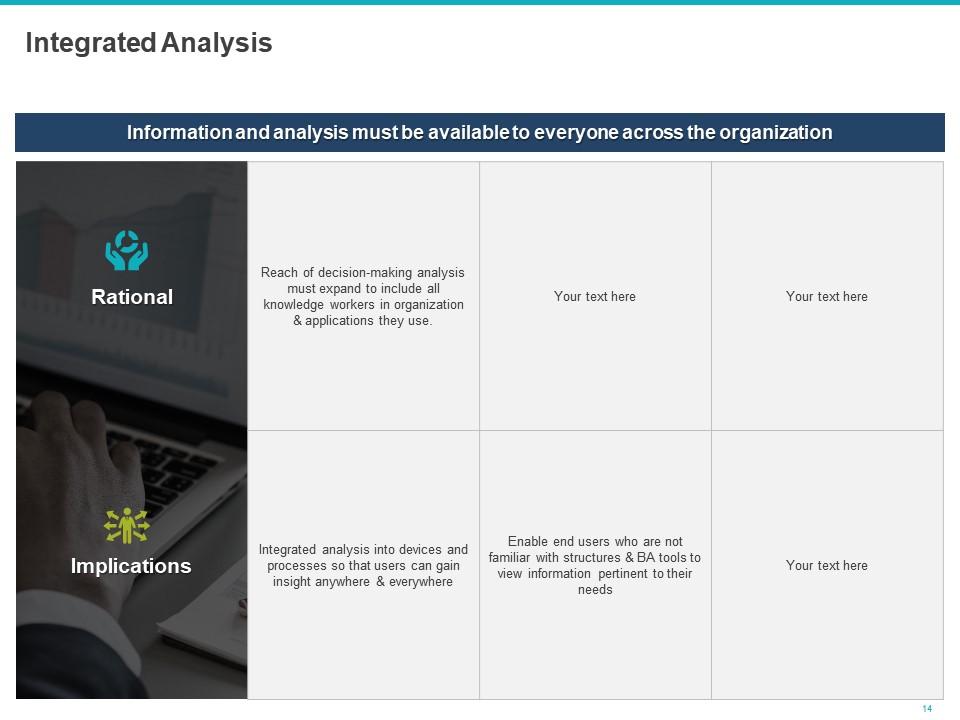
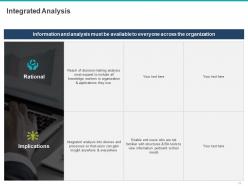
Slide 14: This slide shows Integrated Analysis to provide information and analysis across the organisation.
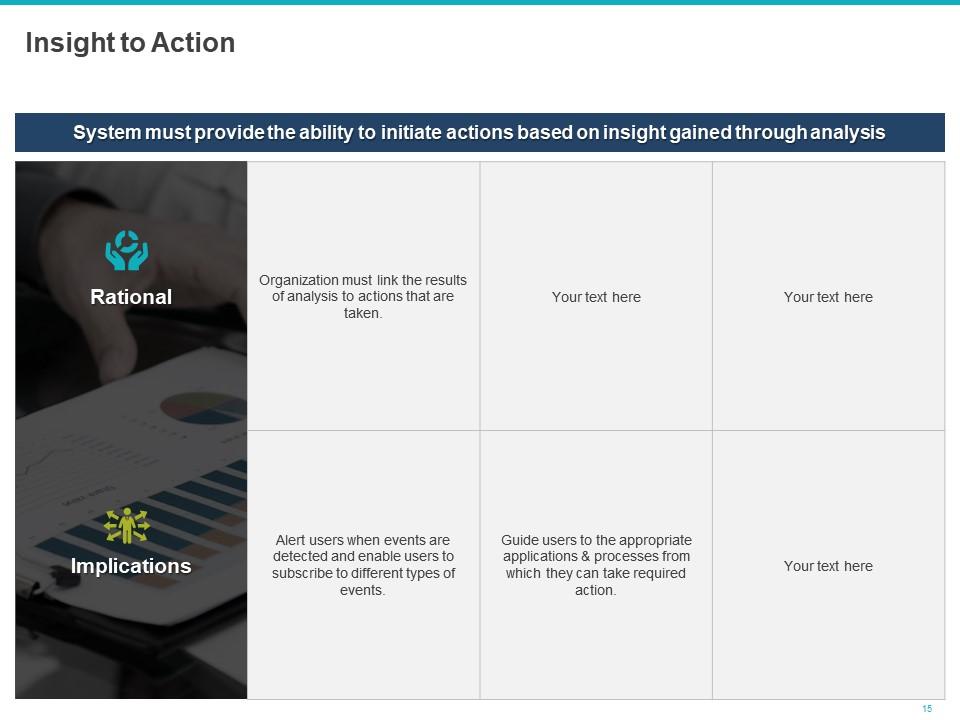
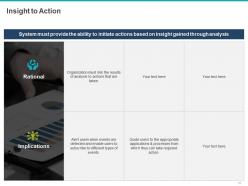
Slide 15: This slide presents Insight to Action with related imagery and text.
Slide 16: This slide highlights another topic of the presentation as- Sample showing how these Big Data Components fit within reference Architecture.
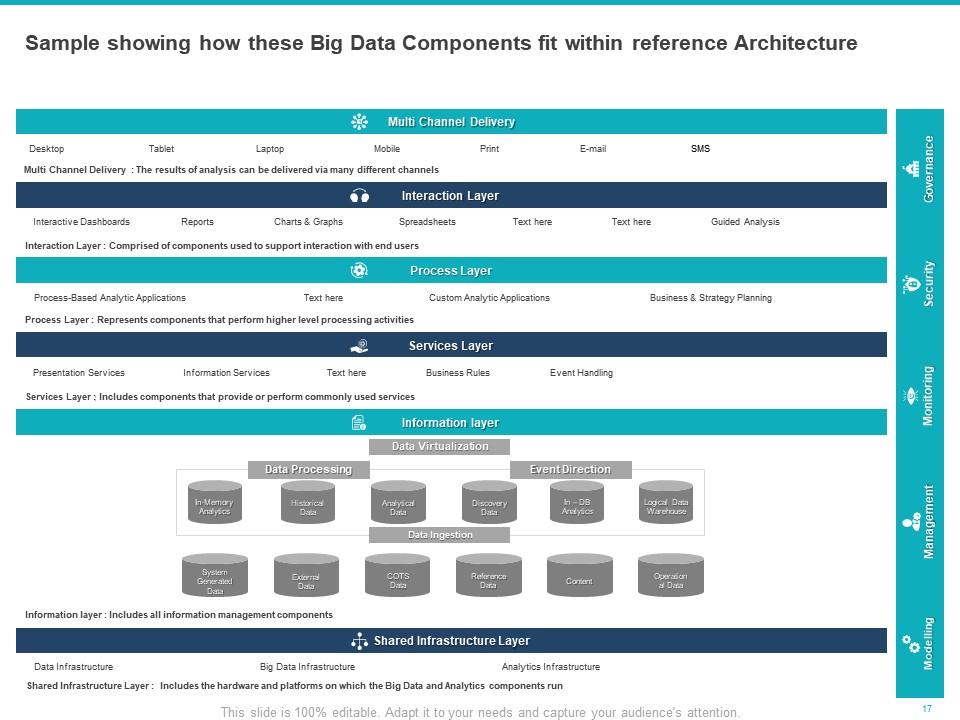
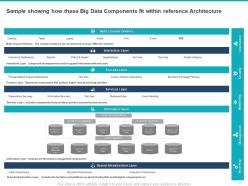
Slide 17: This slide displays Sample showing how these Big Data Components fit within reference Architecture describing- Multi Channel Delivery, Services Layer, Process Layer, Information layer, Interaction Layer, Shared Infrastructure Layer.
Slide 18: This slide is titled as Additional Slides for moving forward.
Slide 19: This is Our Mission slide with related imagery and text.
Slide 20: This is Meet our Team slide with names and designation.
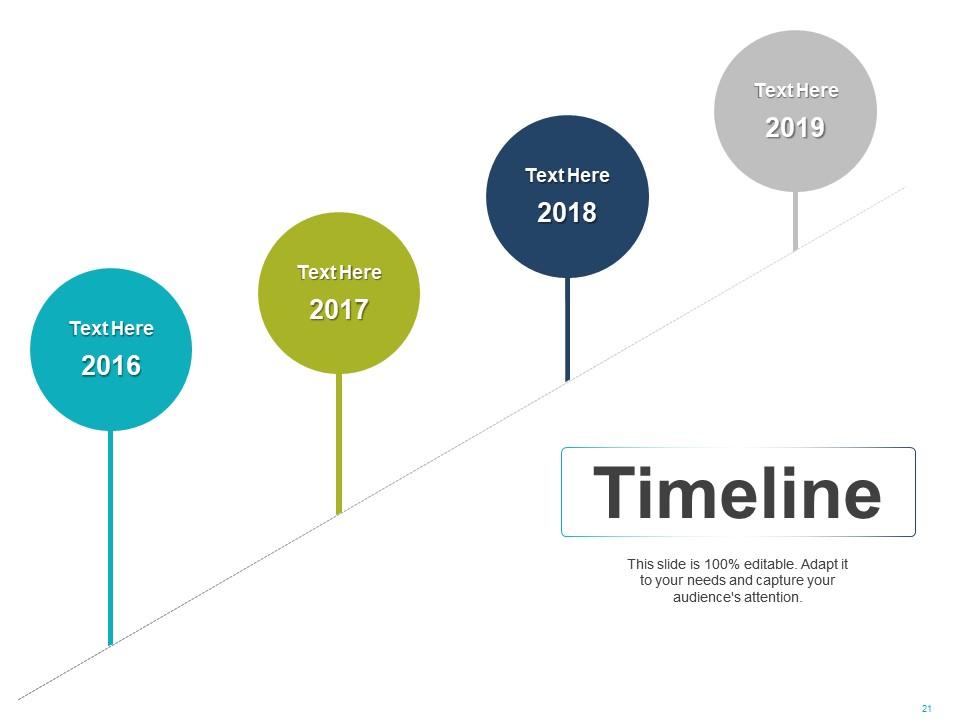
Slide 21: This is a Timeline slide to show information related with time period.
Slide 22: This slide shows Mind Map for representing entities.
Slide 23: This is a Venn slide with text boxes.
Slide 24: This is a Lego slide with additional text boxes to show information.
Slide 25: This is a Bulb Or Idea slide to state a new idea or highlight information, specifications etc.
Slide 26: This is a Thank You slide with address, contact numbers and email address.
Big data analytics architecture powerpoint presentation slides with all 26 slides:
Enthrall folks with accounts of courage with our Big Data Analytics Architecture Powerpoint Presentation Slides. Inspire them to be heroic.
No Reviews
