

Big Data Analytics Kpi Dashboard For Social Media Industry





Try Before you Buy Download Free Sample Product
 Impress Your
Audience
 100%
Editable
 Save Hours
of Time


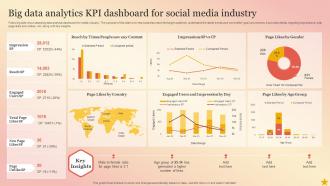
Following slide showcases big data analysis dashboard for media industry. The purpose of this slide is to help business reach the target audience, understand the latest trends and have better goal conversions. It provides details regarding impressions, total page likes and unlikes, etc. along with key insights.
People who downloaded this PowerPoint presentation also viewed the following :
Big Data Analytics Kpi Dashboard For Social Media Industry with all 10 slides:
Use our Big Data Analytics Kpi Dashboard For Social Media Industry to effectively help you save your valuable time. They are readymade to fit into any presentation structure.









FAQs for Big Data Analytics Kpi Dashboard For
So structured data is your typical database stuff - rows, columns, spreadsheets, sales reports. Pretty organized. Unstructured data? That's the chaos - emails, social posts, videos, images. No real format to it. Here's what's wild though: like 80-90% of all data out there is unstructured. Makes it a pain to analyze but honestly more interesting. You'll need different approaches too. SQL handles structured data perfectly, but for the messy stuff you're looking at text analytics, NLP, maybe some machine learning. First step is just figuring out what you're actually working with.
Start with validation checks throughout your whole pipeline - ingestion, processing, storage, all of it. Automated data profiling will catch duplicates and missing values before they become headaches. I'd use checksums to make sure nothing gets corrupted during transfers. Document your data lineage too so you can actually track down where problems start. This stuff gets messy quick if you don't stay on top of it. Get your team aligned on clear governance policies first though - otherwise you'll be fighting different standards forever. Pick one dataset and build from there.
Think of machine learning as your data's personal detective - it spots patterns in massive datasets that would take you ages to find manually. We're talking millions of data points processed in minutes, which is honestly pretty wild. Your algorithms can predict trends, sort information, catch weird anomalies, and suggest what to do next based on past data. Plus it keeps getting better as you throw more data at it. My advice? Start simple with clustering or regression on your cleanest stuff first. You can always level up to fancier models later once you've got the basics down.
Interactive dashboards are honestly where it's at - your stakeholders can mess around and filter stuff themselves instead of bugging you constantly. Heat maps work amazing for correlations when you've got tons of data points. Scatter plots? Perfect for catching outliers fast. I swear people overuse basic bar charts when they're drowning in millions of rows. Oh, and if you're dealing with location stuff, choropleth maps are solid. My advice is figure out what story you're trying to tell first, then pick whatever visualization actually supports that message. Don't just default to the pretty one.
Look, big data analytics is basically how you track what customers actually do - their purchases, website clicks, support tickets, all that stuff. Netflix nailed this with their recommendations (though honestly, mine are still weird sometimes). The trick is pulling data from different touchpoints to see the full picture of each customer. Then you can predict what they want and fix problems before they even hit you up complaining. Real-time personalization is where it gets interesting. But don't go crazy - just pick one customer journey first and make that smoother. You'll learn a ton from that alone.
Honestly, your data's probably way messier than you expect - missing stuff, weird formats, duplicates everywhere. Finding people who actually know Spark? Good luck with that. Infrastructure costs can get crazy fast if you're not watching your cloud spending. Oh, and integrating with whatever ancient systems you already have is usually a total headache. Data governance and privacy rules will slow you down too, but you can't ignore them. My advice? Start with something small first - like a pilot project - before you dive headfirst into the deep end. Trust me on this one.
Dude, GDPR completely changes the game for analytics. You can't just grab whatever data you want anymore - need actual consent from users first. Data minimization is huge too, so only collect what you really need. The "right to be forgotten" thing? Total pain because you'll have to delete specific people from your datasets and models. Privacy impact assessments are mandatory now. Oh, and you should probably anonymize data before diving into analysis. Honestly, the biggest mistake is trying to add privacy stuff after you've already built everything. Start with it baked in from the beginning or you'll hate yourself later.
Python's your best bet to start - seriously, everything uses it. Hadoop handles the massive data storage stuff, then Spark processes it way faster than the old MapReduce. Most places run PostgreSQL or go cloud with BigQuery. Visualization wise, Tableau and Power BI are pretty much everywhere, though some teams get all hipster with Apache Superset. AWS, Azure, GCP all have solid data tools built in. Oh and R's still around if you're into stats. I'd just pick whatever cloud your company's already on and learn Python alongside it.
So predictive analytics is pretty cool - you feed it your old data and it spots patterns to forecast what's coming next. Think customer behavior, sales trends, when your equipment might break down. Honestly, it's way more reliable than just guessing. Start with clean data though, garbage in equals garbage out. Pick one thing to focus on first, like maybe figuring out which customers are about to bail or optimizing your inventory. Don't try to predict the whole universe right away - that's a recipe for frustration. Once you nail one area, you can expand from there.
Dude, healthcare, finance, and retail are getting completely transformed by big data. Doctors can now predict diseases way earlier and customize treatments for each patient. Banks? They're catching fraud so fast it's honestly kind of scary - like, transactions get flagged within seconds. Amazon basically runs on data at this point - everything from what they recommend you to how they stock warehouses. Oh, and if you're working in any of these areas, you should probably check what your competition's doing because they're likely way ahead already. The gap's widening fast.
Honestly, cloud computing is a game-changer for big data stuff. Your laptop just can't handle those massive datasets anymore - we're talking terabytes here. AWS and Azure let you fire up a whole cluster of machines, crunch your data, then shut it all down. Way cheaper than buying servers (and dealing with all that maintenance headache). They've also got tons of built-in analytics tools and ML services ready to go. I'd say grab a free trial account first and mess around with their analytics features. No point jumping into something expensive without testing it out.
Python or R are must-haves for programming, plus you'll need SQL and basic stats. Tableau's pretty solid for visualizations - makes your data actually look presentable. Machine learning is everywhere now, so might as well learn the basics. Honestly, the business side matters more than people think. If you can't explain why your analysis matters to someone's bottom line, you're just making pretty charts. SQL was probably the hardest for me to wrap my head around at first. Anyway, grab some public datasets and build something real for your portfolio. That's what actually gets you hired.
So you can catch problems right when they're happening instead of finding out way too late. Manufacturing companies spot equipment about to fail - saves them tons of money on downtime. Retailers adjust prices and inventory instantly based on what's selling. Healthcare is wild though, they're monitoring patient vitals 24/7 and it genuinely saves lives. Oh, and logistics companies reroute trucks around traffic jams in real time. The trick is setting up alerts that actually matter to your team. Nobody wants another dashboard full of charts that looks impressive but doesn't tell you when to act.
Honestly, privacy should be your first move - get consent and handle personal data right. Your algorithms can be super biased without you realizing it, so test for that constantly. People deserve to know what you're doing with their info, which means being transparent about everything. Security breaches are nightmare fuel, so lock that down tight. Also think about whether your analysis might accidentally screw over certain groups - that stuff matters more than people think. I'd start with a privacy assessment and build bias testing in from the beginning. It's tedious but you'll thank yourself later.
So basically, big data lets finance and insurance companies catch problems way before they blow up. They're crunching through tons of info - spending habits, market shifts, how people behave - to predict fraud or defaults ahead of time. Insurance folks especially love this stuff because they can price policies super precisely now. Like, they'll analyze your driving patterns or health data to figure out exactly what you should pay. Honestly, it's pretty impressive how accurate it gets. My advice? Pick one specific risk area in your company and start there. Don't go crazy trying to fix everything at once - you'll just overwhelm yourself.
-
Enough space for editing and adding your own content.
-
Great product, helpful indeed!