Biotech pitch deck determine profitable business model for biotech platform

Rating:
100%
Biotech pitch deck determine profitable business model for biotech platform
Slide 1 of 6
Favourites Favourites

Try Before you Buy Download Free Sample Product

Audience Impress Your
Audience
Editable 100%
Editable
Time Save Hours
of Time
The Biggest Sale is ending soon in
0
0
:
0
0
:
0
0
AI-Ready
Upload this template to AI and ask it to make any changes to content or color
100% editable Powerpoint Template for AI-assisted presentations. Finish your work in less time. Download Prompt Kit ​
Works with
Microsoft PowerPoint
Microsoft 365
Claude for PowerPoint
ChatGPT
Google Slides
Microsoft Copilot
Rating:
100%
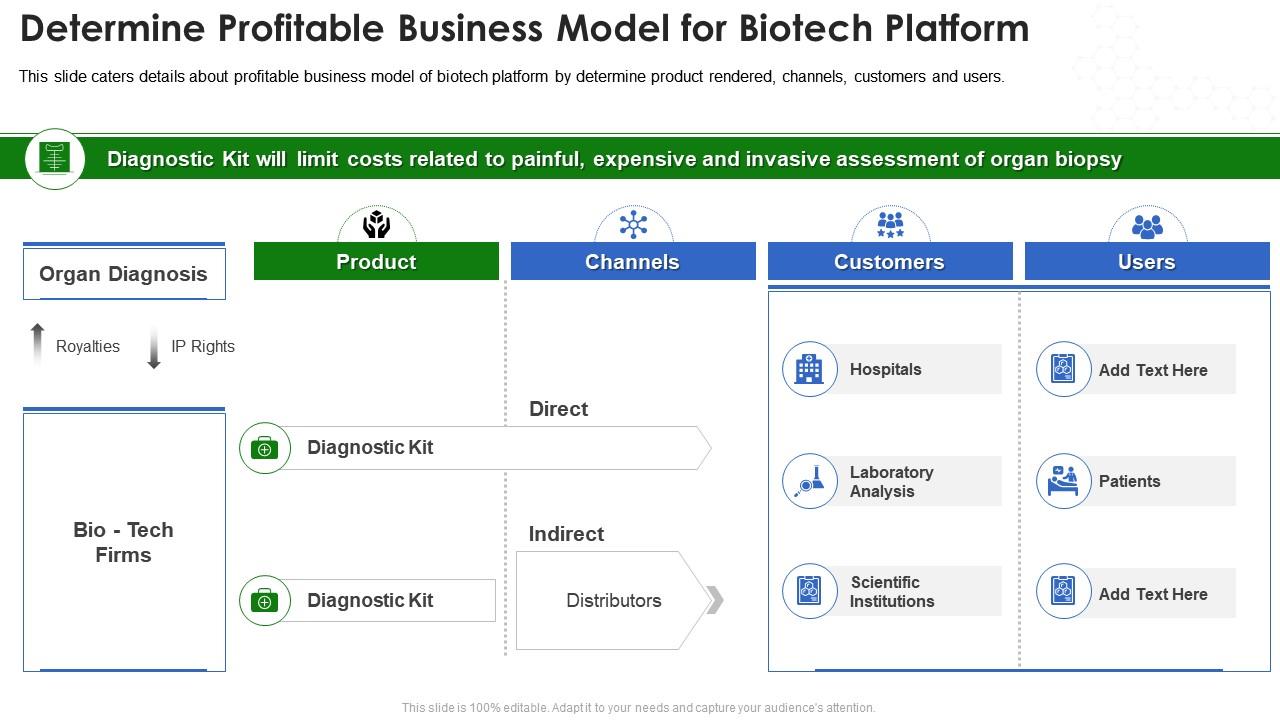
This slide caters details about profitable business model of biotech platform by determine product rendered, channels, customers and users. Present the topic in a bit more detail with this Biotech Pitch Deck Determine Profitable Business Model For Biotech Platform. Use it as a tool for discussion and navigation on Determine Profitable Business Model for Biotech Platform. This template is free to edit as deemed fit for your organization. Therefore download it now.
FAQs for Biotech pitch deck determine profitable business model

Honestly, partnerships will make or break you here - way more than people realize. Get your IP locked down tight first. Map out the regulatory pathway early because FDA stuff takes forever. You'll need an experienced team who's done this before, trust me on that one. Cash runway is huge since you're burning money for years before seeing a dime. Try to build multiple revenue streams - licensing deals, milestone payments, whatever you can get. Oh and really dig into your competitive landscape first. That'll show you which funding sources actually make sense for your specific situation.

Dude, you've gotta hoard cash like crazy in this industry. FDA approval phases eat up millions each, and half the time they don't even work out. We're talking 10+ years sometimes just to get one product to market - it's honestly insane. Your revenue predictions? Forget about it. There's no way to know when (or if) you'll actually make money. I learned this the hard way watching startups burn through funding. You can't plan like a normal business here. Build those regulatory delays and costs into your model from the start, or you'll be scrambling for more funding every six months.

Look, IP is literally make-or-break for biotech. Without solid patents, you can't raise money or justify those insane R&D budgets. Plus investors won't touch you. It also determines your whole partnership strategy and what deals you can actually negotiate. The competition is absolutely ruthless - I've seen companies with great tech get crushed because they ignored IP early on. Patent landscapes shift constantly too, which makes it even trickier. My advice? Get a good IP attorney involved from the start. Build your patent portfolio around whatever core tech you're developing. Don't wait on this stuff.

Look, licensing is probably your best bet to start - pharma companies will pay upfront plus royalties, and you don't deal with manufacturing headaches. Partnerships are solid too if you find the right company to bankroll development. Full product development? That's where the real money is, but honestly it's a nightmare financially and super risky. Government grants are out there too - might as well grab that free research money while you can. I'd figure out which project you've got that's closest to actually making it to market, then just work backwards from there. Way easier than trying to juggle everything at once.

So you've got a few main ways biotech makes money. Product sales are the obvious big one. Licensing deals where you basically rent out your IP to other companies. Milestone payments when you partner with big pharma on drug development - those can be decent chunks of cash. Research collabs with the giants too. Oh, and contract research is pretty common - you're basically doing lab work for hire while developing your own stuff on the side. Platform companies sometimes do subscription models, which is honestly kind of smart. Most companies mix several of these since drug development takes years and hemorrhages money. Really depends on what stage you're at.

Biotech partnerships are huge - you can't really survive without them anymore. They help split those crazy R&D costs and give you access to expertise your team probably doesn't have. Companies partner with universities for early research, then later do licensing deals with Big Pharma for the expensive clinical trials and marketing stuff. Going solo is pretty much financial suicide at this point. Plus investors love seeing strategic partnerships because it validates your science. My advice? Find partners who actually fill your knowledge gaps, not just whoever has the most money sitting around.

Honestly, I'd start by mapping out the regulatory mess in different regions - FDA can be a nightmare but maybe EU or other markets are easier for your specific thing. Market size matters too obviously. Can people actually afford what you're building? Competition is huge - you need something that actually stands out, not just "we're better." Oh and don't sleep on finding local partners early, distribution is harder than you think. Pick like 2-3 target markets max and compare their approval timelines. Way easier to focus than trying to boil the ocean everywhere at once.

Honestly, you gotta watch both your money and your science progress. Burn rate and runway are obvious ones to track. But pipeline metrics matter just as much - like how fast your compounds move through trials and success rates at each phase. Patent filings are huge, and pharma partnerships can literally save your company (or sink it if they fall through). Once you're making money, revenue per employee gets interesting. The hard part? Balancing immediate cash needs with long-term R&D spending. I'd set up monthly tracking so you can course-correct quickly when things go sideways.

Dude, biotech is rough - you're basically asking people to throw money at science that might not work for years. Your value prop has to be bulletproof. What problem are you fixing? Why's your method better? How big is the market? I've watched amazing research get zero funding because the team couldn't explain why it mattered to regular people. Honestly, competition for cash is insane right now. Non-scientists need to "get it" immediately when you pitch. Work on that elevator speech until it's perfect - everything else builds from there.

Dude, biotech's getting turned upside down right now. AI is cutting R&D costs like crazy, so that whole "spend a decade and billions on one drug" thing? Not sustainable anymore. Companies are pivoting to platform models instead - basically licensing their tech rather than grinding through drug development themselves. Personalized medicine is opening up totally new ways to make money too. Honestly, I think you either need to go full platform or stick with products. The companies trying to do both are gonna get squeezed out. Digital health integration is huge right now if you can figure out how to monetize it properly.

Honestly, it comes down to three things. First, your science has to be solid - investors want compelling data even at early stages. Second, figure out your path to market. Are you partnering with pharma companies or going direct? They need to see how you'll actually make money. Third - and this is huge - get experienced people on your team or as advisors. Industry track records matter way more than you'd think. Oh, and start networking with biotech VCs early, not when you're desperate for cash. They're actually pretty helpful for guidance too.

Look, biotech pricing is all about rolling with the punches. Got a breakthrough drug with zero competition? Price it high while you can. But once biosimilars show up or regulators start breathing down your neck, you'll need to adjust quickly - and I mean *quickly*. Patent cliffs will absolutely wreck you if you're not prepared. You've gotta think about dev costs, how long regulatory approval takes, and what insurance companies will actually pay for. Honestly, the smartest thing is mapping out different pricing scenarios right from the start. That way you're not panicking when everything changes. Trust me, always have backup plans ready.

Look, the big issue is accessibility vs profit. Patents create monopolies that price people out - remember the whole insulin mess? That was brutal. Open-source stuff is way more ethical since it focuses on getting treatments to everyone, but then who pays for the research? Platform models help democratize things, though privacy becomes sketchy. Funding innovation while keeping medicine affordable is genuinely tough. My advice? Don't try to slap ethics onto your business model later - bake it in from the start or you'll regret it.

Honestly, start with something simple like predicting enrollment for your next trial - way easier than trying to boil the ocean right away. Data can save you serious cash by helping you figure out which compounds won't flop before you dump millions into them. Patient outcomes, trial optimization, pricing strategies - it all connects when you pull data from clinical studies, market research, and real-world evidence. I'd focus on one specific problem first though, maybe identifying your best patient populations? Once you nail that, expanding to competitive intelligence and other areas becomes pretty straightforward. The ROI is usually worth it.

Platform models are huge right now - build one tech, hit multiple diseases with it. Way smarter than the old one-drug approach if you ask me. Biotech + AI partnerships are everywhere too, which makes sense given how much data we're drowning in. Risk-sharing deals are getting popular where companies only get paid if stuff actually works (novel concept, right?). Oh, and subscription models for diagnostics are taking off. Bottom line - think about how your platform scales instead of putting all your chips on one product. That single-bet strategy feels pretty risky these days.

Ratings and Reviews

100% of 100
Review Form
Write a review
Most Relevant Reviews
  1. 100%

    by Cole Butler

    Perfect template with attractive color combination.
  2. 100%

    by Davis Gutierrez

    Nice and innovative design.

2 Item(s)

per page: