





 0 Comment
 Customer Reviews

Are you into software application development? If yes, you must already have an idea of the risks involved. Want to evaluate the potential risks earlier in the application development stage? Conducting an application audit and risk evaluation is the key.
Improve your application vulnerability assessment with our professional software risk assessment templates.
The business application risk review can uncover the vulnerabilities and enable you to take the right action to prevent them from affecting user experiences. Ready to perform software risk evaluation? Counting on the content-ready templates of SlideTeam is a smart move.
Click here to discover our SaaS risk assessment templates.
Our templates are designed with keen attention to detail. The application threat assessment template covers all the essential aspects and facilitates a thorough analysis of the vulnerabilities. The best part is that each and every slide is editable, giving you the flexibility to make the desired changes as and when required.
Explore our project risk status templates by clicking here.
This blog will take you through the application risk assessment templates. Let’s dive in!
Template 1: Threat Modeling and Risk Assessment in Application Development
Enhance your application development process with our expertly crafted threat modeling and risk assessment templates. This comprehensive deck will provide you with essential frameworks, insights, and practical examples to identify threats and mitigate risks effectively. The core aim is to enable organizations to implement appropriate security measures and prevent risks. This template deck is suitable for professionals who want to improve their security protocols.
[product_image id=1566721]
Template 2: Importance of Threat Modeling
Use this template to educate your target audience about the significance of threat modeling. The key aspects covered in the template are proactive prevention, informed decisions, resource allocation, compliance assurance, stakeholder engagement, and continuous improvement. Provide a brief about each of the points and ensure effective understanding by the target audience.

Template 3: Core Concepts of Risk Assessment
This template is designed to shed light on the core concepts of risk assessment. The main points outlined in the template are risk awareness, proactive measures, resource allocation, and stakeholder trust. On the other hand, the opportunities highlighted are growth areas, innovation, collaboration, and market demand. The simplicity of the template makes it suitable for professional use.

Template 4: Identifying Assets and Their Value
When it comes to IT application risk analysis, identifying the key assets that can be affected is crucial. This template outlines assets like data, infrastructure, personnel, and reputation. The template also categorizes the assets into different types, sheds light on the value, and evaluates the impact. The core aim is to enable organizations to determine the assets that are at high risk and plan strategies to effectively handle them.

Template 5: Vulnerability Identification Techniques
Want to identify application vulnerabilities effectively? Use this template to shed light on the key techniques. This template sheds light on a flowchart outlining the steps to be followed. It includes identification of the risks, assessment of the impact, and taking the required action. The graphical representation makes it easier for users to understand the steps for vulnerability identification.

Template 6: Risk Assessment Approaches
Want to conduct application reliability analysis? Having an idea of the key risks matters. Use this template to highlight the risk assessment approaches, like qualitative, quantitative, and hybrid. Provide a brief about each of the approaches and ensure a comprehensive understanding by the target audience. Download this template and prevent risks effectively.

Template 7: Prioritizing Risks Effectively
Critical application risk prioritization has become more vital than ever before. This template sheds light on the key steps to prioritize risks effectively. It involves identifying risks, assessing impact, evaluating likelihood, prioritizing risks, mitigating strategies, and monitoring progress. The visual representation of the steps allows for easy understanding by the stakeholders.

Template 8: Mitigation Strategies and Planning
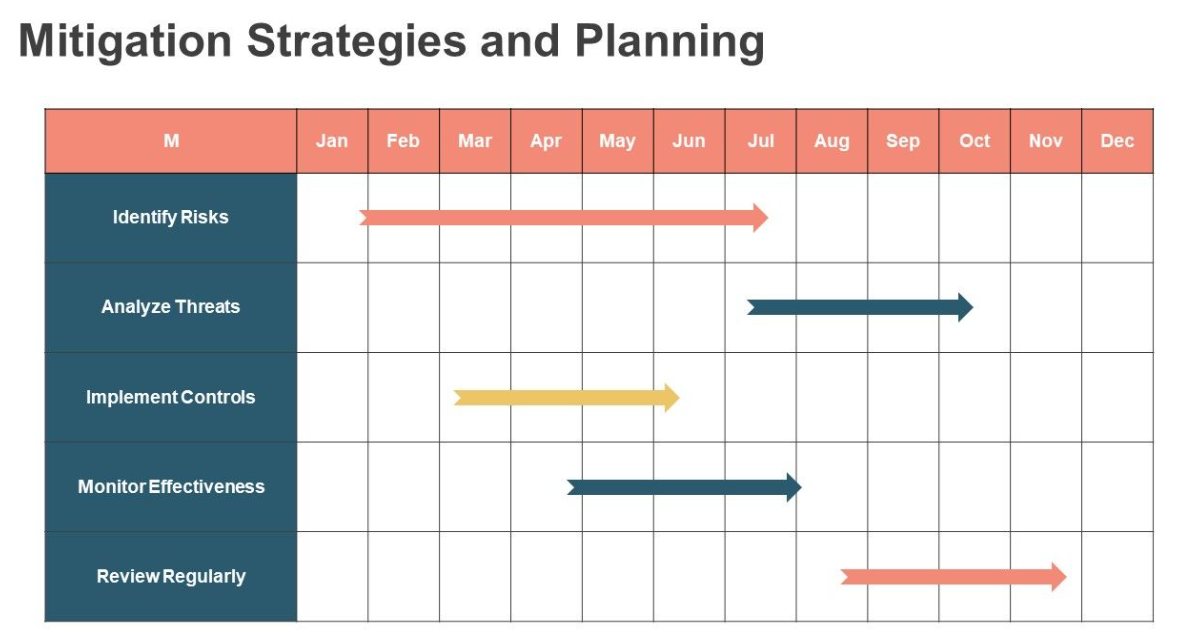
Use this template to list effective mitigation strategies along with the time required to implement them. The strategies outlined in the template are identifying risks, analyzing threats, implementing controls, monitoring effectiveness, and reviewing regularly. The simple layout and graphical presentation allow the communication of the desired messages conveniently.
Template 9: Best Practices for Risk Assessment
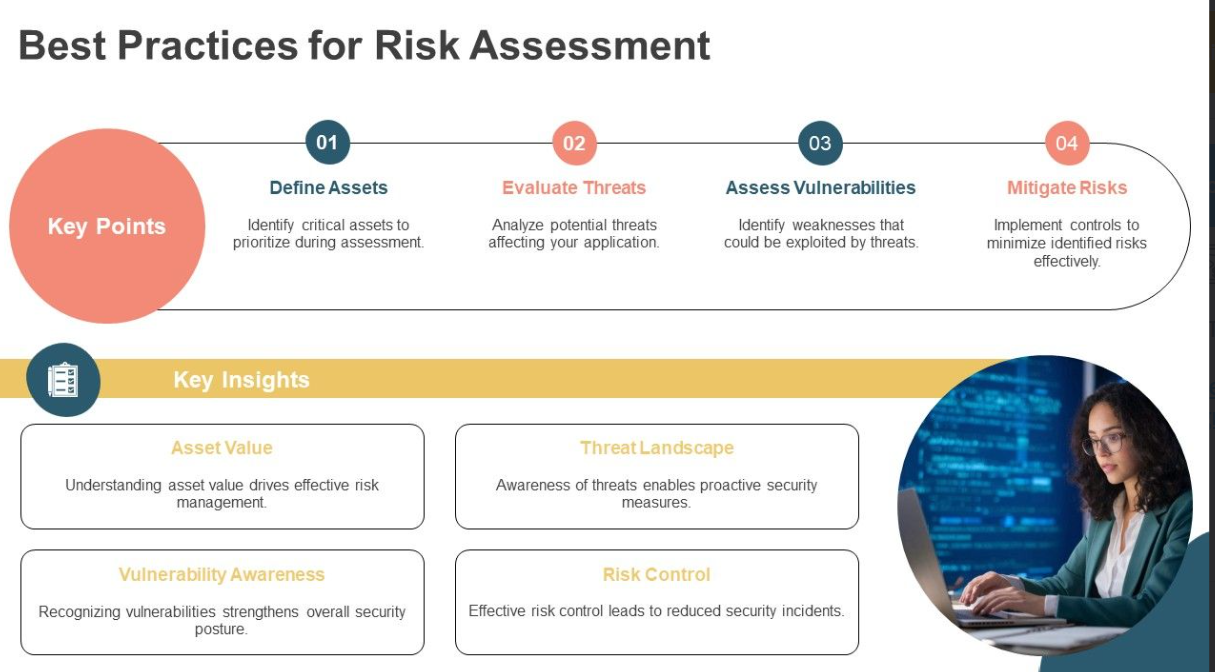
Want to conduct a cloud application risk assessment? Understanding the risk assessment best practices can help. The key points covered in the template are defining assets, evaluating threats, assessing vulnerabilities, and mitigating risks. Other aspects outlined are asset value, threat landscape, vulnerability awareness, and risk control. Download this template and improve risk assessment.
Template 10: Future Trends in Threat Modeling
Get this template to gain an idea of what the future of threat modeling will look like. The prominent trends outlined in the template are the use of automated tools, AI integration, collaboration frameworks, and real-time analysis. This template lets you add a brief about each of the trends and ensures a comprehensive understanding.

Conclusion
Application vulnerabilities have significantly increased over the years. Therefore, performing risk assessments matters a lot. Whether you are looking for an application compliance evaluation template or an application control assessment template, SlideTeam can offer you everything. All our slides are designed by industry experts and focus on making your task easier. Moreover, they are 100% customizable. Download the templates of SlideTeam and address the potential vulnerabilities earlier.
Application Risk Assessment FAQs
1. Why is application risk assessment important for organizations?
Application risk assessment is indeed crucial for an organization as it helps identify and address vulnerabilities proactively, before the attackers can exploit them. As a result, you do not have to worry about security incidents and costly data breaches. Moreover, it also plays a vital role in improving security posture, safeguarding the reputation of the organization, and ensuring regulatory compliance.
2. What are the key objectives of conducting an application risk assessment?
The key objective of an application risk assessment is to identify threats and vulnerabilities, mitigate risks proactively, ensure regulatory compliance, evaluate business impact, and inform security investments. Apart from these, the assessment also aids in the development of mitigation strategies, supporting business continuity, and enhancing customer trust.
3. What steps are involved in performing an application risk assessment?
An application risk assessment indeed includes various steps. The key steps are defining scope, identification and prioritization of assets, analysis of risks, implementation of appropriate controls, and monitoring and reviewing. Following these steps will ensure enhanced outcomes and help in the effective mitigation of the risks.


