




 0 Comment
 Customer Reviews

Every organization faces times when employee conduct raises concerns. Whether due to insubordination, policy violations, or misuse of authority, such situations demand structured, thoughtful intervention to restore trust, maintain employee discipline, and restore organizational balance. Often, this begins with informal counseling or verbal warnings. When issues persist, they escalate to formal disciplinary action.

In some cases, a Performance Improvement Plan (PIP) is used to realign behavior and performance with expectations. In others, a disciplinary action plan becomes essential—not as a punitive tool, but as a framework for fairness, consistency, legal compliance, and clear documentation.
A well-crafted disciplinary action plan defines investigation processes into alleged misdemeanors, escalation levels, timelines, responsibilities, and appeal mechanisms. It protects the organization while offering employees clarity, due process, and opportunities for correction.
At SlideTeam, we understand the sensitivity of these decisions. Our disciplinary action plan templates provide structured, 100% editable, and customizable PPTs to help HR teams and leaders act decisively, responsibly, and humanely—turning difficult moments into opportunities for alignment and accountability.
Let’s explore what makes these templates indispensable.
Template 1: Disciplinary Action Plan Templates
Explore this comprehensive guide featuring disciplinary action plan templates. This customizable PPT deck helps management and employees understand the circumstances that lead to disciplinary action. From behavioral complaints to policy violations, the presentation delivers a reality check on issues such as insubordination, abuse of power, exploitation, and other forms of workplace misconduct.
The ready-made PPT includes dashboards, graphs, and charts to track progress, assess impact, and identify patterns of misconduct or underperformance.
Act proactively and prevent issues from escalating by using this structured PPT framework as your go-to aid for disciplinary management.
[product_image id=1695816]
Template 2: Common Reasons for Disciplinary Actions
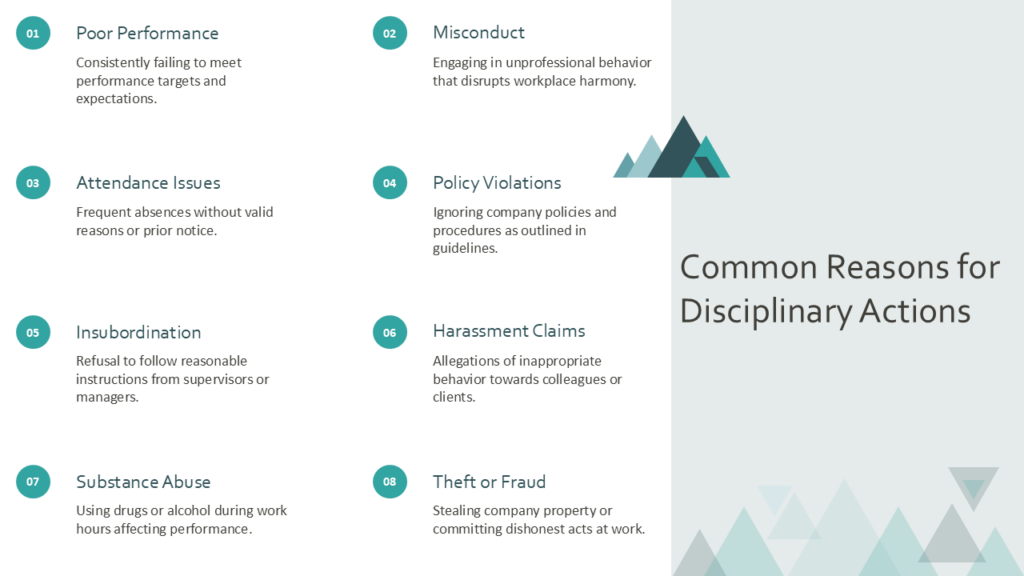
Use this PPT template to educate HR managers, compliance officers, and employees about the most common reasons that warrant disciplinary action. From poor performance to policy violations, this slide helps alert staff to behaviors that may expose them to corrective measures. Additional reasons highlighted include insubordination, harassment claims, substance abuse, theft, and other forms of workplace misconduct.
Template 3: Identifying Stakeholders
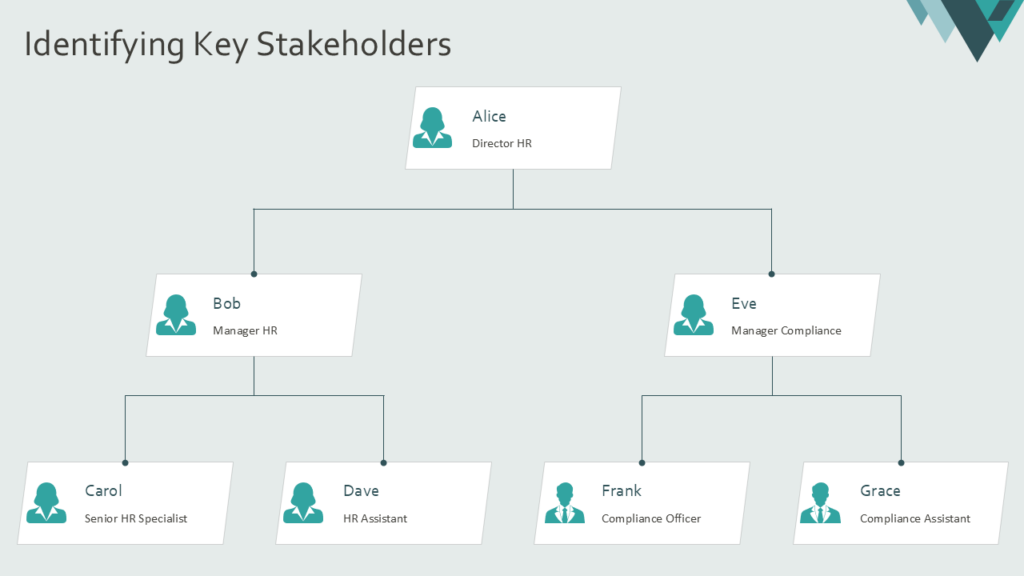
As part of designing an effective disciplinary action plan, clearly communicate the key stakeholders involved to employees. This flowchart diagram maps the hierarchy of personnel responsible for overseeing workplace misconduct and disciplinary procedures. From directors to HR specialists and compliance managers, organizations can employ this PPT to label stakeholders by name and profile. The slide also defines responsibilities in implementing and monitoring a progressive discipline plan.
Template 4: Root Cause of Disciplinary Issues PPT
Disciplinary incidents disrupt trust, collaboration, and workplace harmony. To maintain a productive and respectful work environment, organizations must focus on preventing such situations by identifying their underlying causes.
Common triggers include unclear HR policies, insufficient training, and inconsistent supervision, all of which leave employees uncertain about expectations and accountability.
Ineffective feedback mechanisms and a negative work culture aggravate these challenges, leading to frustration, resistance, and policy violations. This PPT helps stakeholders analyze the root causes of disciplinary issues, enabling proactive interventions that strengthen communication, reinforce standards, and foster a culture of clarity and compliance.

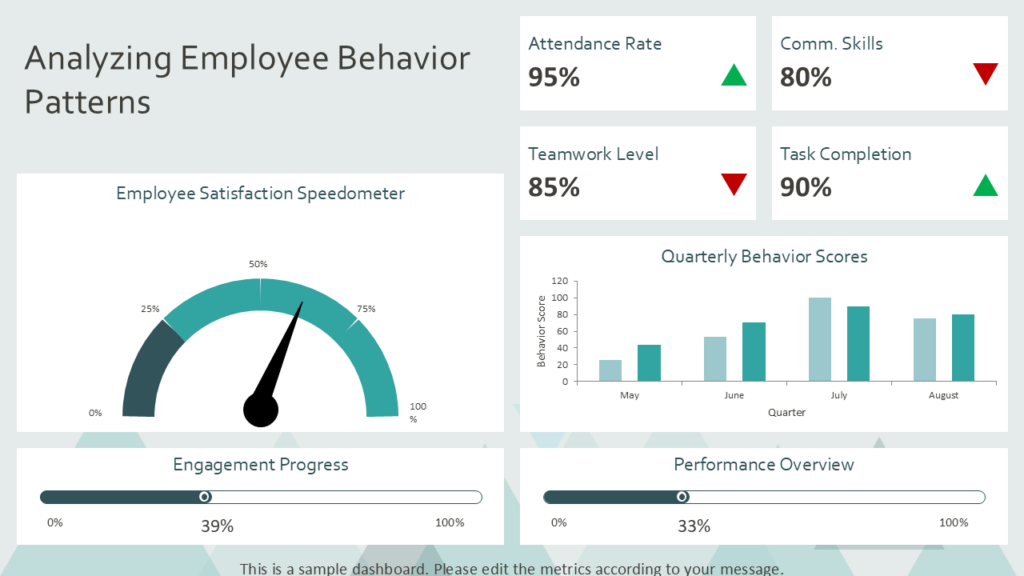
Template 5: Analyzing Employee Behavior Patterns
To anticipate workplace misconduct or behavioral deviations, analyzing employee behavior patterns is essential. This PPT dashboard enables organizations to monitor employee discipline and identify early signs of misconduct or disengagement.
It tracks parameters, such as attendance rates, teamwork levels, task completion, and communication skills, all of which can be customized as needed. Employee satisfaction is also monitored to gauge morale.
Additionally, an editable meter for quarterly behavior scores and performance trends helps management better understand employee mindsets, tendencies, and emerging risks.
Template 6: Best Practices for Documentation PPT Templates
Every disciplinary action should be accurately documented and securely stored. This PPT helps compile and organize information related to each incident, creating a reliable repository for reference and learning. To ensure that the documentation serves its purpose as an official record, it must be specific, objective, timely, well-structured, and securely maintained.
This PPT layout highlights these best practices and demonstrates how consistent documentation strengthens accountability, supports compliance, and builds a valuable organizational knowledge base.

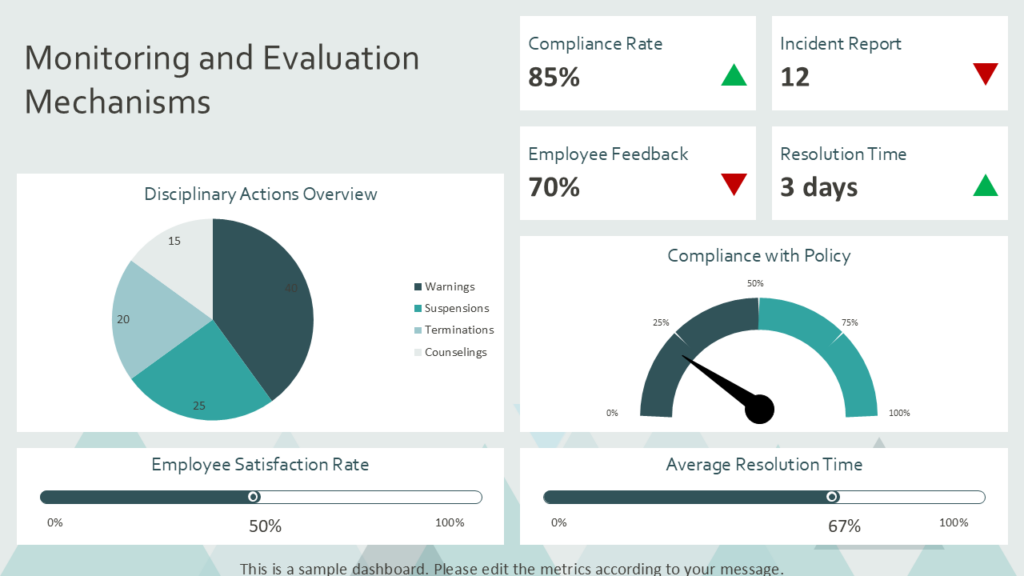
Template 7: Monitoring and Evaluation Mechanisms PPT Template
Monitoring and evaluating the effectiveness of disciplinary actions is essential for organizations to identify areas for improvement and retain practices that deliver the best outcomes.
This PPT dashboard enables supervisors to track disciplinary actions taken over a defined period. It helps management review metrics, including compliance rates, incident reports, employee feedback, and resolution times.
Additionally, policy compliance can be monitored to assess whether corrective measures and reinforcement strategies are achieving the desired behavioral compliance.
Template 8: Using Disciplinary Actions as Learning Tools PPT
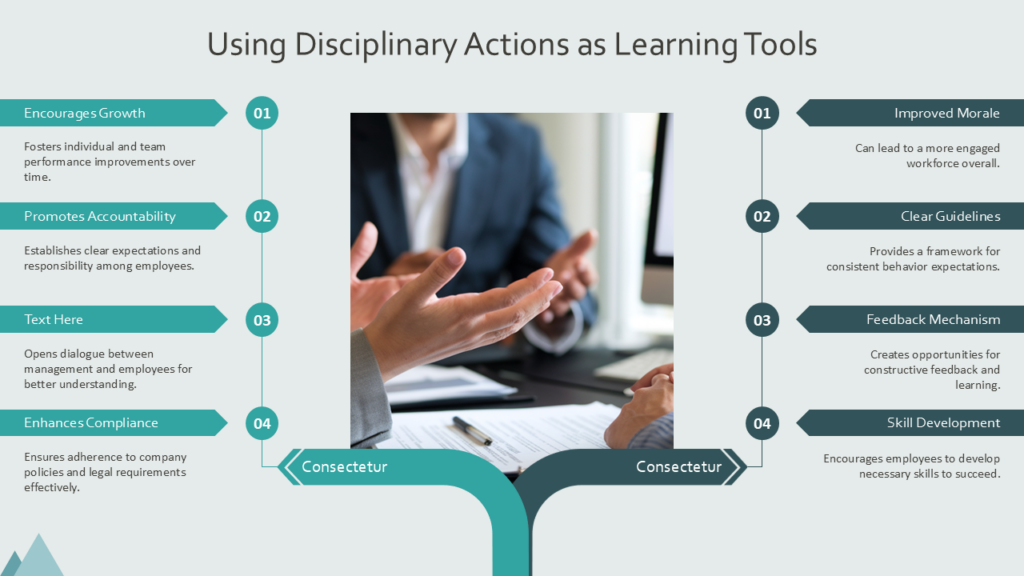
Disciplinary actions, such as warning letters, workplace misconduct management, corrective measures, or even termination, may seem extreme. Yet the process itself is a great learning tool.
This practice of recording employee responses, evaluating outcomes, and reinforcing accountability and consequences for policy violations helps organizations strengthen compliance and alignment.
Additionally, management can invite employee feedback and use these incidents as opportunities to review, refine, and update workplace rules and guidelines.
Template 9: Pitfalls to Avoid Disciplinary Action
Confrontation and corrective actions can easily go south if not handled well. This PPT highlights pitfalls that management should avoid when addressing policy violations and workplace misconduct. It underscores the risks of miscommunication—or the absence of communication altogether—and emphasizes the importance of keeping HR involved to prevent legal complications.
The presentation emphasizes the need for proper incident documentation to support fair resolution and organizational learning. Additionally, it reinforces the consistent and unbiased application of rules to avoid employee resentment and maintain trust.

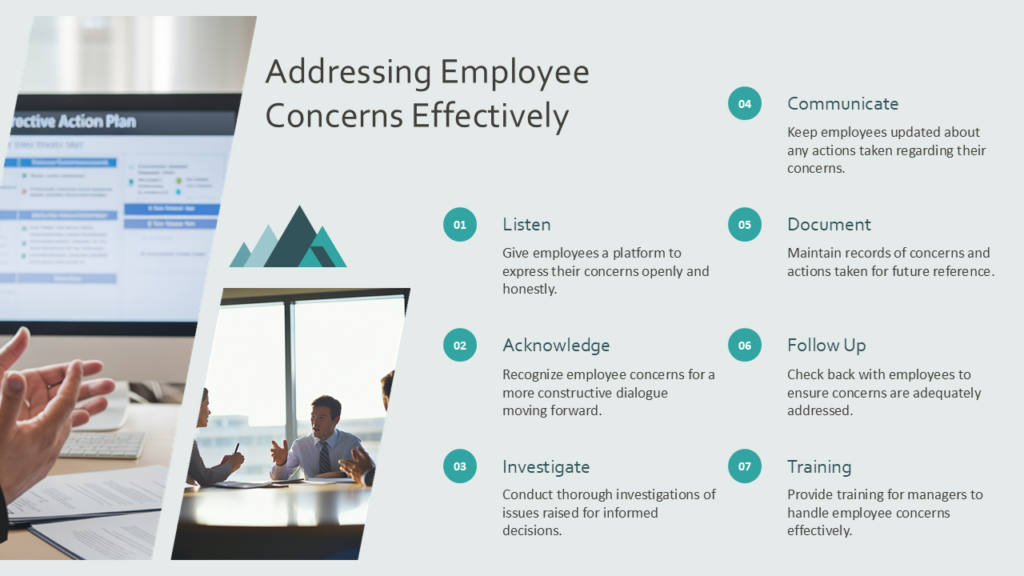
Template 10: Addressing Employee Concerns Effectively
Issuing disciplinary action should always balance organizational accountability with employee consideration. This implies that scrutiny and review must be conducted transparently, and any corrective action should be determined fairly and objectively.
This PPT highlights practical approaches management can adopt to ensure employee concerns are acknowledged rather than overlooked during disciplinary proceedings. It emphasizes listening, acknowledging fears, investigating issues, communicating decisions, documenting actions, following up, and providing training.
Template 11: Future Trends in Disciplinary Procedures
Disciplinary procedures are remedial actions that continue to evolve as organizations strive for greater fairness, consistency, and effectiveness. This PPT layout explores trends shaping the future of workplace discipline and corrective practices. It sheds light on open communication, data-driven decision-making, proactive preventive measures, and remote monitoring as key enablers of modern disciplinary frameworks.
Thus, by adopting these approaches, organizations can strengthen compliance, ensure transparency, and manage workplace discipline more effectively

Be Tough. Be Compliant. Be Resolution-Ready
Inform staff and stakeholders about the repercussions of workplace misconduct while equipping managers and officers to handle situations that warrant disciplinary action.
From disruptions and policy violations to persistent underperformance, this structured approach ensures issues are addressed firmly—after all the informal measures have been exhausted. Empower your organization with these disciplinary action plan templates and lead every day with clarity, confidence, and compliance.
PS: Clear rules = fewer offenses. Explore SlideTeam's most-downloaded code-of-conduct templates that define acceptable behavior from the start!
FAQs on Disciplinary Action Plan
What is a disciplinary action plan?
A disciplinary action plan is a structured document that outlines how organizations address employee misconduct or underperformance. It defines rules, consequences, corrective steps, and timelines to ensure fair treatment, legal compliance, and consistent workplace discipline.
When should a disciplinary action plan be used?
A disciplinary action plan should be deployed when informal warnings or coaching fail to correct behavior. It applies to repeated policy violations, misconduct, poor performance, or compliance issues requiring documented, formal, and consistent corrective action.
What are the steps in a disciplinary action plan?
Key steps include identifying the issue, documenting evidence, communicating expectations, issuing warnings, defining corrective actions, monitoring progress, and recording outcomes. This structured process ensures transparency, accountability, and fair enforcement across the organization.