




 0 Comment
 Customer Reviews

Let’s get real—no one is waking up, running to the "office" (whether literally or virtually) and feeling excited about engaging in a place that acts like a checklist.
Yet every day, dedicated employees show up and punch the clock as they mentally count down the hours—not because they hate the work—but because they have disengaged from the work. Disengagement creeps in when organizations speak about culture and collaboration but lack a coherent plan to undergird it.
That's why an Employee Engagement Roadmap is not just useful, it's a necessity.
Because here's the truth: Employees do not want more perks. Employees want purpose. Employees want to feel like they are progressing. Employees want real communications. But creating a plan that supports this is easier said than done.
Visit our blog Top 10 Employee Engagement Analysis Templates to examine employee satisfaction and engagement from gap analysis for action planning.
Most leaders begin with enthusiasm, and then back off because of vague or unclear goals, lack of accountability or no idea where to start or what to do. The outcome; a mediocre plan that sounds great to all of the participants in the meeting; only to find out it is dead on the floor.
Here is the spot you need SlideTeam’s “Top 10 Employee Engagement Roadmap Templates” for better workplaces, less guesswork and more clarity.
These are not simply slides. These are purposeful frameworks to connect and develop employee satisfaction, strengthen team collaborations, time for motivation, and much more. Each slide has been developed for real activities, tracking engagement milestones and planning exciting activities (while not just plastering the company logo on useless gifts).
In addition our frameworks are completely customizable, user and content-friendly. You want them in PNG or JPG, done.
So just scroll to know how our presentation slides help you organize, present, and use employee engagement data with authority.
Get to our blog on Top 7 Employee Engagement Model Framework Templates to drive productivity, transparency, retention, and innovation.
Template 1: Engaging Training Roadmap Template For Enhanced Employee Skills
This framework helps the HR teams and managers plan the employee training systematically. It identifies skill gaps, defines a set of training objectives and demonstrates how to assess the achievement of the learning objectives. It also explores developing an inclusive fFramework, choosing the right modalities, employee engagement strategy and blending old with the new. It helps in making a targeted, objective-oriented skill up-gradation map. Get now.
[product_image id=1427584]
Template 2: Roadmap For Employee Engagement PPT Powerpoint Presentation Show Slide Download
This presentation slide provides you with a roadmap to go back to your results and adjust the step-by-step plans for taking action as needed based on the employee feedback and performance data. It includes employee relations consultants and leadership development consultants who help push engagement strategies forward. Useful for HR teams, departments to create a more engaged workforce. Download now.

Template 3: Timeline for Implementing Employee Engagement Employee Engagement Action Plan
Comprehensive yet data - driven it identifies the most important themes of improvement and specific areas of improvement, like communication, trust, learning & development, appreciation, and collaboration and teamwork. Aligning activities to specific time frames under each area of improvement allows teams to remain organized and on-point. This HR best practice takes HR professionals and managers to ensure strategic engagement happens on time. Get now.

Template 4: Five Years Employee Engagement Roadmap with Performance and Recognition
This PPT Template covers important aspects like tracking performances, engaging employees and recognition of jobs well done. It charts the roadmap to employee empowerment through incentives and gamified objectives and performance-based rewards. Additionally, it stresses aligning employee recognition programs with employee contributions and using KPIs as a gentle nudge to self-improve. It makes sure your recognition efforts deliver long-term loyalty leverage. Download now.

Template 5: Mountain Roadmap Showing Steps for Improving Employee Engagement
Feature rich yet detailed this roadmap identifies incremental activities like providing relevant projects, placing employees in the right seat. It also highlights the need for frequent internal communication, where once in a day updates are taken to keep a tab on how employees are faring and what challenges they are facing. It helps HR teams and managers to easily track and communicate every engagement milestone. Get now.

Template 6: Monthly Timeline Roadmap for Employee Engagement
This presentation theme reminds readers of the month, day or season of the year roadmap to engage the workforce. It talks about employee rewards, empowerment programs, and career leadership development. It includes cultivating a healthy workplace environment, building social ties and nurturing employee health well-being. It helps organizations stay consistent and focused at each step of rolling engagement strategies over the year. Download now.

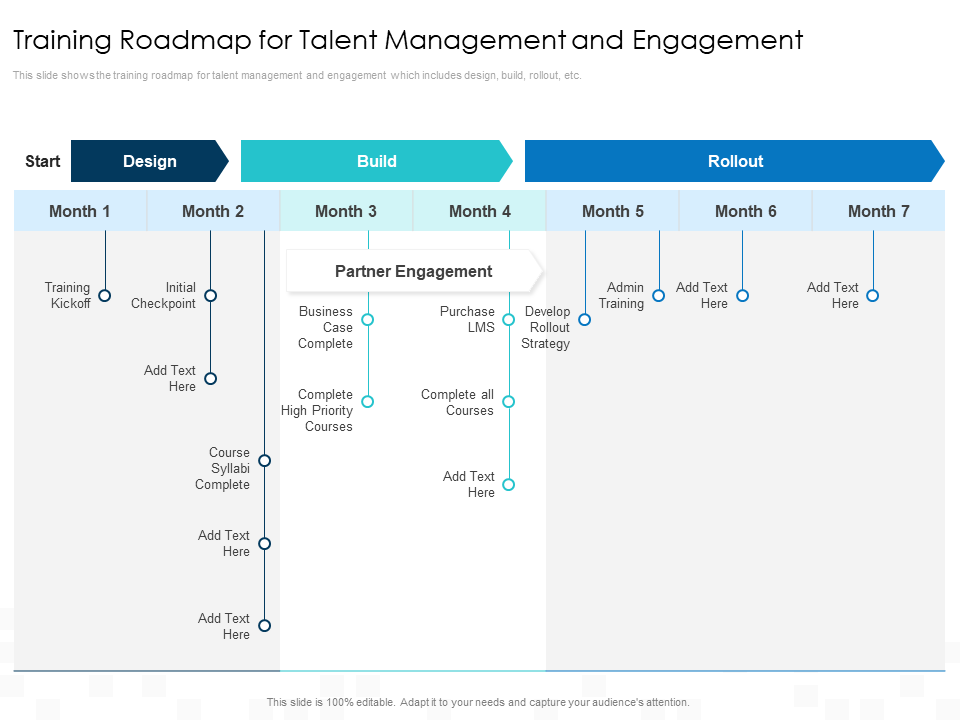
Template 7: Training Roadmap for Talent Management Impact of Employee Engagement on Business Enterprise
This training roadmap dashboard highlights design, build, and rollout of training programs are all part of a structured approach to talent management. It further outlines aspects such as building a business case, assessing the highest priority learning aligned with the needs of the organization. It allows HR leaders to align employee engagement initiatives with quantifiable and reliable business impact. Download now.
Template 8: Roadmap for Employee Engagement Progress PPT Powerpoint Presentation Portfolio Icon
It starts with developing the plans around what you are learning to ensure employee retention strategies align with actual needs. Then the action plans get rolled out across departments to create a cohesive engagement push. The last step illustrates the necessity of monitoring and communicating progress. It is best to monitor and communicate progress in engagement over time. Get now.

Template 9: Develop Employee Engagement Action Plan Effective Employee Engagement
This employee performance management tries to resolve any of the workforce obstacles to raising and maintaining good levels of employee satisfaction. Instead, it starts by highlighting significant areas for enhancement to help teams prioritize. It highlights what we can do about each challenge, what success looks like, and who is accountable for completing the task. You can use this for a connected, productive workplace. Download now.

Template 10: Best Practices for Employee Development
Are you looking for ways of organizational development? It provides a comprehensive approach to developing talent and improving performance in the workplace. It encourages continuous learning by creating actionable, quantifiable goals and providing long-term training after onboarding. Weekly feedback for improvement and formal evaluations to assess skill development. Perfect for HR and team leaders who want to introduce people-centered development plans. Get now.

Create Permanent Culture One Roadmap at a Time
An employee engagement roadmap is not a piece of paper; it is a strategic device. For an HR leader architecting engagement programs, a manager boosting team spirit, or a consultant assisting organizations in work-life balance, a lucid pathway will guarantee you not only aim at achieving but also attain the risk of not achieving your goals.
Our top 10 employee engagement roadmap templates not only align those in your team in terms of purpose-process-people from onboarding to recognition programs to employee experience, feedback cycles to long-term workplace culture -building strategies.
Our templates all share the intention to convert lofty concepts into concrete plans for change with deadlines. The result? Better outcomes, higher accountability and quantifiable progress on your employee engagement journey.
Ready to lead with impact? Download our next - gen templates to focus on what matters most, providing an environment in which people will thrive.
PS: Read our blog on Top 10 Employee Engagement HR Communication Plan Templates to guide you through the process of planning to achieve better communication and engagement.
FAQs on Employee Engagement
1. What is an employee engagement roadmap, and why is it important?
Employee engagement roadmap is an employee engagement plan that ladder out the way forward to developing and retaining the presence of employee engagement over a period of time. This tells us about the present position of the organization in terms of engagement, and the direction it aims to head towards with a concrete action plan over the years. Engaged employees are more productive, loyal, and motivated, all of which tie directly to success for any business, making it an important consideration.
2. What are the key phases in building a successful engagement roadmap?
The typical phases that make up a successful employee engagement roadmap include:
Assessment & Discovery: Measuring current engagement levels with surveys (we prefer anonymous ones), interviews, and performance data.
Goal Setting: Determining specific and measurable goals with a business focus and employee relevancy.
Strategy Development: Determine target areas (such as recognition, communication, leadership development), and plan initiatives that address them.
Deployment: Bringing engagement metrics into the organization with backing from leaders and human resources.
Tracking impact: Continually gathering feedback, analysing results, and monitoring KPIs.
Adapt & Adjust: Triaging based on the current understanding of improvement for sustainable results over time.
3. How do you assess the current state of employee engagement in your organization?
Here are some common approaches:
Employee Surveys: It helps gather information related to how motivated or satisfied your employee base is as well as feedback about leadership, communication, etc.
One-on-One Interviews or Focus Groups: This digs into the deeper feedback and emotional drivers behind employee sentiment.
Pulse Surveys: A type of survey that is both short-term and done quite frequently; monitors engagement patterns over a certain period
Turnover and Retention Data: When turnover is high, it may be a sign of disengagement.
Performance Metrics: Trends in productivity, absenteeism, and innovation rates can indicate levels of engagement
Exit Interviews: These can provide useful perspective as to why employees may not feel attached or engaged.


