


 0 Comment
 Customer Reviews

A small fire can lead to sudden turn of events and become deadly in less than five minutes. In order to control such situations, you must be trained with the right strategies. That is where a fire protection/safety lesson plan comes into the picture. With clear emergency preparedness and evacuation procedure training plans, you can easily train your people. You can teach them how to handle risks before fire incidents escalate into something big.
Schools, offices, and industries often take the help of a fire prevention education plan that reduces risk by changing daily habits. Also, if you conduct practical fire drills/training regularly, you can see the real difference when the day comes.
Click here to learn about the Fire Behavior PowerPoint Templates.
Note that adding a disaster preparedness lesson plan can prepare staff and students for larger risks beyond just fire. With a structured hazard awareness lesson plan, you can make these topics understandable. Also, you must enforce a fire emergency communication plan for clarity. Further, along with a fire awareness education framework and fire hazard management plan, you can make all these efforts easy and ultimately save lives.
Top 10 Fire Training Lesson Plan Templates.
For better outcomes, use our templates and make sure your training roadmap is simple and professional for presentations, workshops, etc. You can simply make necessary changes and prepare your safety protocol training plan as you like. These documents support better engagement and can even save preparation time for managers and safety officers. In simple words, they can make fire drills and safety audits easier to present.
Let us begin and go through the Fire Training Lesson Plan Templates.
Template 1: Fire Training Lesson Plan Template PPT Sample
Add this simple yet complete template to your list and highlight critical aspects of the fire training lesson plan. It includes the importance of the training sessions, fire hazards, risks, types of fire, etc. It shows fire prevention strategies and techniques, equipment, tools, and types and uses of fire extinguishers. The template also covers emergency evacuation procedures, how to create an effective drill, and fire alarm systems. It describes first aid care measures, fire safety action plan, training delivery methods, budgeting details, monitoring and reporting safety incidents. Get the template now and feed your data easily!
[product_image id=1486957]
Template 2: Types of Fire: Classifications Explained
Understanding fire types is important because each fire behaves differently and needs unique handling methods. Also, learning these categories can help people select the right extinguishers and techniques. You can use this template and outline types of fire in a structured way. Here, you can cover Class A, Class B, Class C, and Class D categories. You can organize them based on fuel, extinguishing agent, common sources, risk level, etc. Also, discuss how to prevent types of fire and their relevant solution to improve safety in homes, schools, and workplaces.

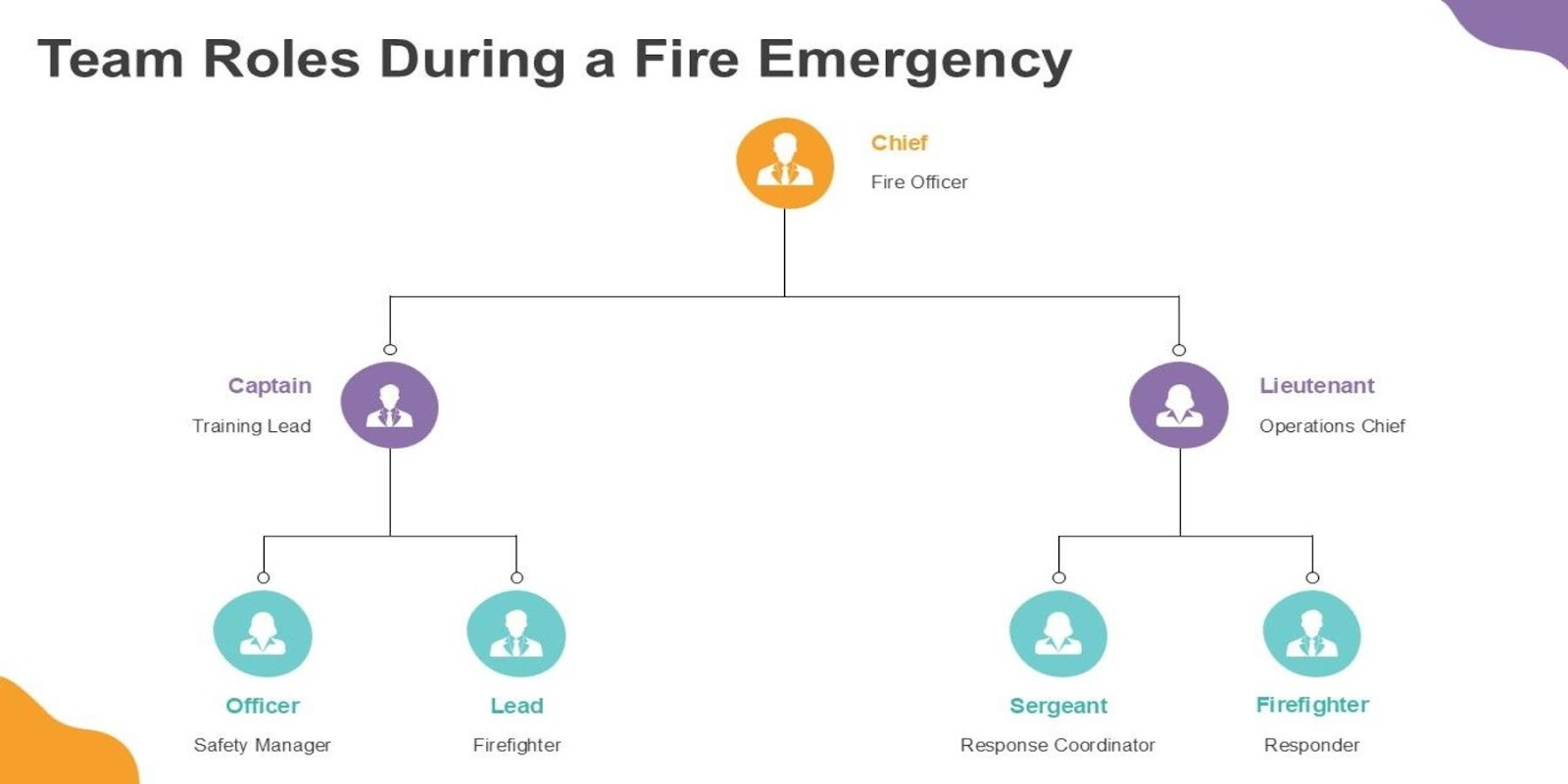
Template 3: Team Roles During a Fire Emergency
Every fire emergency needs proper teamwork, where each person has a defined role to ensure safety. This reduces panic and delays during emergencies. You can add this simple template to your presentation bundle and discuss team roles during a fire emergency situation. It includes an organizational structure consisting of roles such as Chief Fire Officer, Captain (training lead), Operations Chief, Safety Manager, Firefighter, etc. Also, based on your system, you can rearrange the structure and add roles and basic information accordingly. Download the template and prepare coordinated action plans.
Template 4: Fire Alarm Systems: Overview and Operation
Fire alarm systems are important to alert people to danger and guide evacuation plans. You can use the following template and illustrate the different alarm systems in clear words. It covers an overview of the system components, operation protocols, emergency procedures, regulatory compliance, etc. With this format, you can explain system operation steps clearly and improve technical understanding for non-experts. So, get it now and modify it as per your training program.

Template 5: First Aid Measures for Fire Injuries
Fire injuries require immediate and correct first aid to reduce damage and save lives. This can equip people to act before medical help arrives. Now, consider the following template as an option to describe important measures in an organized way. It includes basic information about first aid measures such as cooling burns, removing clothing, covering burns, seeking help, monitoring the victim, etc. Also, highlight other important dos and don'ts related to fire injury prevention and provide examples as well. Download the template now and simplify medical instructions. It can support quick learning and make training engaging for participants.

Template 6: Creating a Fire Safety Action Plan
You can use the following template and prepare a proper fire safety action plan. It can help identify weak points in safety procedures and make sure organizations always stay prepared. The template includes required details about action steps such as
- assessing risks, developing policies,
- creating escape routes, installing alarms,
- conducting drills, training staff, reviewing regulations, and monitoring procedures.
With this structured layout, you can provide clear guidance in emergencies and increase employee confidence in safety. You can also make sure recovery is quicker after fire incidents. So, click on the link and save it right away.

Template 7: Fire Training Delivery Methods
Choosing the right training method depends on the audience size and the learning goals of the training. You can include this simple template in your deck and describe each and every fire training delivery method in clear and concise language. Here, you can cover methods for hands-on practice, virtual, classroom, and field drills. You can mention the advantages of each method and make a comparison for better understanding. Also, try to cover all digital modules and help trainers reach larger audiences easily. Get the template from the link and make necessary modifications!

Template 8: Budgeting for Fire Training Programs
A proper budget can make sure your fire training program is funded and sustainable. It can balance fire safety needs, improve planning, and can help prevent overspending. Also, training quality improves with planned funding. Now, check out the template, which shows budgeting details for different fire training programs. It displays yearwise estimates for total cost, training frequency, equipment needs, funding sources, etc. Download the template now and simplify cost breakdowns in a structured way. It can help you justify the cost of different categories to your investors and support financial reporting.

Template 9: Scheduling Regular Fire Training Sessions
The following PPt document shows regular fire training sessions in a tabular format. It can improve communication and coordination across departments. Also, emergency response becomes faster and smoother if you follow a proper plan. Here, you can cover weekly plans for stages of fire training, such as planning, scheduling, conducting, evaluating, reporting, updating, etc. Here, you can add relevant data, diagrams, charts, tables, etc., and track progress. Save the template now and customize it as per the needs of your organization.

Template 10: Future Trends in Fire Safety Training
You can utilize this colorful template to describe the future trends in fire safety training. It can assist your institution in preparing for upcoming challenges according to the situation. Also, it builds forward-thinking safety strategies, which are critical during fire emergencies. The template includes relevant details about virtual reality, data analytics, remote training, gamification, etc. It can help you simplify complicated topics and compare traditional and modern methods. Grab the document now and save time in research.

Conclusion
A fire training lesson plan can teach people how to act during fire incidents. It is important because it builds awareness among everyone and ensures safe evacuation. A complete plan describes all aspects of drills, rules, regulations, and communication steps. And with the right templates, you can simplify the training process for your team. These documents can help you design structured schedules as per your requirements. They will save your time, improve clarity, and make sure no important point is missed.
Whether for a fire response training roadmap and evacuation procedure training plan, they are perfect to deliver life-saving knowledge. So, what are you waiting for? Get the templates now and reap their benefits!
Fire Training Lesson Plan FAQs
Why is a structured lesson plan essential for fire safety training?
A structured lesson plan makes sure your fire safety training is consistent and easy to follow for everyone. It can lower confusion, delays, and panic during emergencies. The lesson plan provides stepwise guidance on fire risks, prevention, and evacuation plans. Without a plan, your training can miss important safety areas. Also, these safety lessons allow trainers to measure progress and repeat training as needed. This can build lasting awareness and improve community safety.
What are the key objectives of a fire training lesson?
The main objectives are- to teach hazard awareness, evacuation methods, and proper use of fire equipment. The lesson should outline goals such as-
- preventing burns/injuries,
- protecting property, and
- ensuring safe communication.
It even teaches people how to stay calm, follow protocols of fire response training roadmap, and avoid mistakes. Also, teamwork plays a huge role in building confidence during emergency situations. Thus, all these objectives make sure each and every safety worker and manager always stay prepared.
How can fire prevention knowledge be incorporated into the lesson plan?
You can take the help of theory/practical concepts, real time demonstrations, and a regular fire drill schedule. You can focus on identifying fire hazards, electrical safety, etc. Also, explain causes of fire and how small actions can prevent accidents. You can even cover different hazard spotting exercises. Note that with regular reinforcement through fire prevention education plans, you can build more confidence in the process. Thus, the combination can reduce risks and promote long-term safety habits.