





 0 Comment
 Customer Reviews

Strategic planning has evolved from a static document to a dynamic execution roadmap, enabling organizations to design their way into the future. According to a 2024 report by McKinsey & Company, a leading global management consulting firm, when organizations execute their business plan within a timeline, they consider their plans complete. They are 70% more likely to enhance revenues and achieve operational excellence than their competitors.
SlideTeam offers a comprehensive and proven approach to capturing the complexity of execution and implementation timelines through business plan templates. These templates, designed for various phases of implementation are adaptable tools that can be tailored to the specific needs of an organization. Whether documenting milestones for business plan development, maintaining discipline in executing challenges, or working with multiple teams, every template is suited for implementation phases. By having these slide decks, you are empowered to create a structured visual that is critical in business plans.
Template 1 - Importance of Strategic Business Planning Template
This slide provides a concise summary of strategic business planning. It states that goals must be aligned so that all team members are directing their energy toward similar business objectives. The slide also illustrates how correct resource utilization enhances operational efficiency and presents performance reviews and feedback. Whether you're working through a business strategy timeline for initiating your newly approved business strategy or scheduling a project implementation, this template gives you a sense of control and confidence, providing a clear pathway to achieve all your important business goals.

Template 2 - Risk Management in Strategic Implementation Template
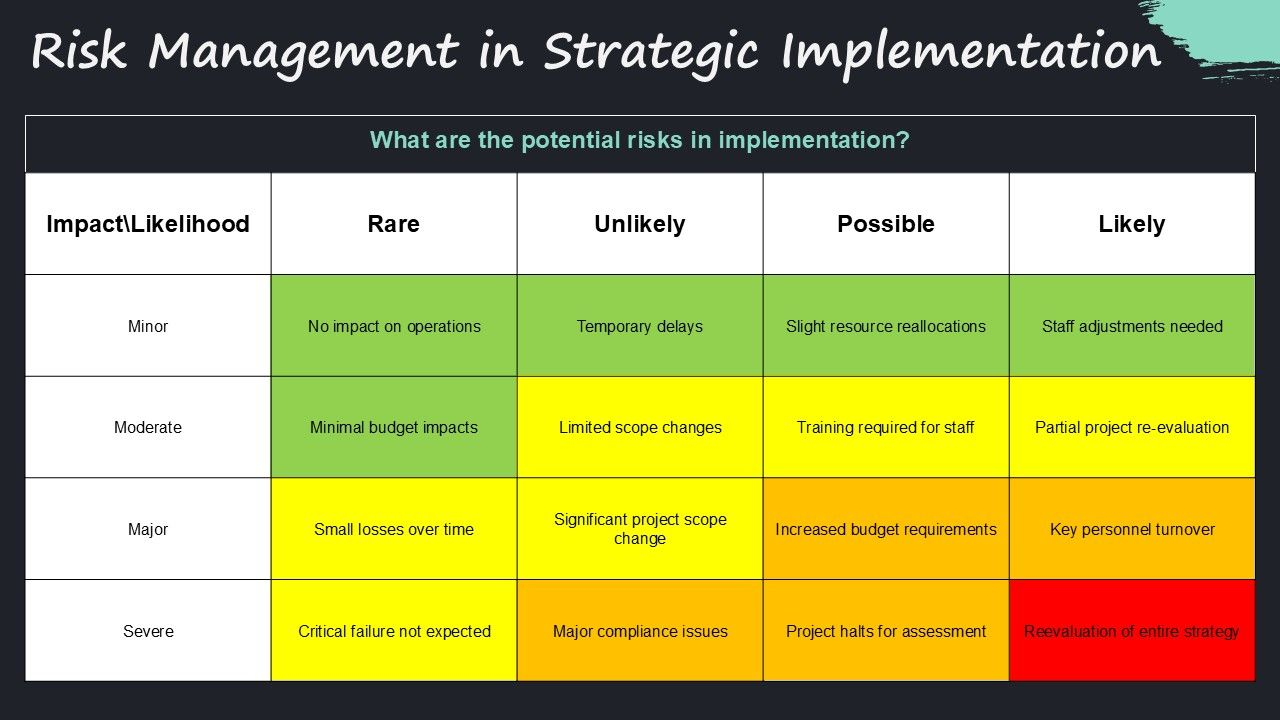
This slide presents a systematic design view depicting risk management within the implementation strategy of any business plan timeline. It displays the various projected risk levels—minor, moderate, significant, and severe—and how they intersect with their corresponding probabilities in a detailed matrix. This matrix enables teams to consider risks ranging from temporary delays to a comprehensive reevaluation of a strategy. Download now!
Template 3 - Communication Plan: Keeping Stakeholders Informed Template
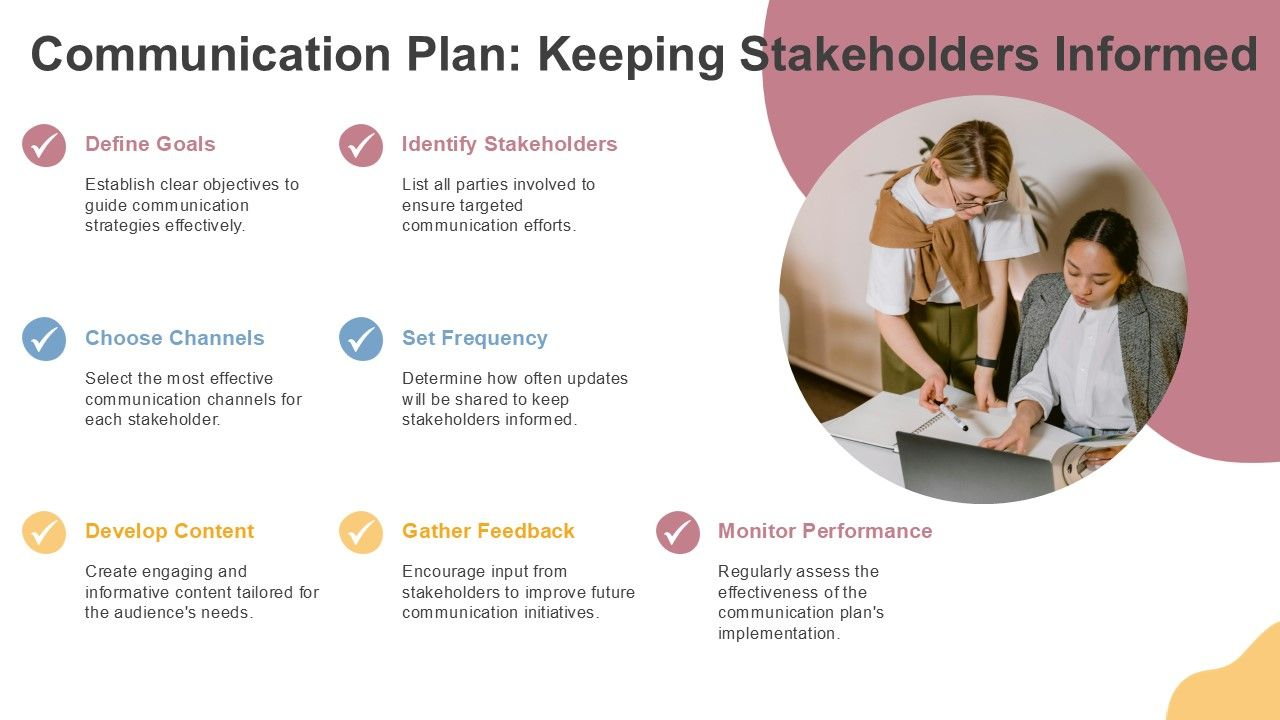
This slide represents a formal communication plan that needs to be in place for a successful implementation schedule and business plan. The definitions of roles, identifying stakeholders, identifying channels, and defining the frequency of updates are just some of the key actions that all stakeholders need to fulfill to maintain continuous contact with everyone through their execution timing. This framework is not just a plan, but a tool to foster effective stakeholder engagement throughout each stage of the implementation step in the business plan, aligning with the timing and aiming to lead to better-informed decision-making.
Template 4 - Key Components of a Business Plan Template
This slide provides a detailed breakdown of the key components necessary for a well-structured implementation process.. It presents the executive summary for establishing the vision, followed by a detailed market analysis to support fact-based decisions throughout the business plan timelines. It helps to structure each period of the implementation schedule into focused content and track the milestones of the business plan. It is a good fit to lay out the strategic planning timeline and the implementation timeline accurately for stakeholders and decision-makers.

Template 5 - Step-by-Step Timeline Creation Template
This slide presents a logical five-step method of creating a timeline within the development of a business plan. The slide presents steps such as defining goals, identifying tasks, assigning responsibilities, setting deadlines, and monitoring progress. Each of these five steps allows teams to track the strategic plan timeframe, milestones in business plan execution, and the action plan timeline. Download now!

Template 6 - Project Management Methodologies Template
This slide identifies three key project management methods to follow as you develop a timeline and consider the implementation of your business plan. It begins with agile, which allows for iterative progress and flexibility over the execution timeline. Each method complements the implementation roadmap, enabling you to carry out specific tasks, align resources appropriately, and deliver on time. Download now!

Template 7 - Addressing Challenges During Implementation Template
This slide outlines three critical challenges that may affect the ability to implement a business plan. It states that inadequate engagement from participants can cause resistance to change due to communication shortcomings and deficient training. The second challenge is the unclear cycle elements of a business plan, which can adversely affect the overall project timeline through missed deadlines or poorly defined milestones, as well as the complicated nature of dependencies. The third challenge involves budget overruns resulting from poor cost estimation and unknown resources. Download now!

Template 8 - Stakeholder Engagement: Communication Strategies Template
This slide presents a specific framework for enhancing stakeholder engagement during the implementation of the business plan. Regular updates provide clarity on milestones and help keep stakeholders engaged throughout the implementation timeframe of the business strategy. Additionally, the framework presented utilizes surveys and meetings as channels to assess stakeholder feedback, allowing the implementation team to gather and solicit feedback from diverse perspectives, thereby gaining a deeper understanding and valuable insights for the decisions made throughout the implementation stages. This framework serves as a template to facilitate communication across the project implementation schedule.

Template 9 - Common Pitfalls and How to Avoid Them Template
This slide highlights four common pitfalls that can derail an implementation plan and guides how to avoid them in your business planning timeline. Lack of clarity is resolved by defining roles at the start of the action plan timeline. Disregarding feedback is resolved by checking in regularly, which keeps the project timeline flexible and adaptable. Unreasonable goals are moderated with realistic milestones in the business plan's Gantt chart, thereby maintaining the project's momentum throughout the implementation phases.

Template 10 - Cultural Considerations in Strategy Template
This slide comes to the forefront, presenting important cultural considerations when executing business plans. First, understand that plans should align with local values and priorities. Second, there is a cultural aspect in communicating with the plan. Third, diversified teams will develop diversified strategies. The template here also includes an important recommendation to identify cultural risks early on, which will better inform the implementation roadmap. It reinforces all layers of the execution timeline, positioning cultural sensitivity in the business, execution plan, implementation schedule, and business plan Gantt chart.

Conclusion
In summary, incorporating strategic planning tools that involve stakeholder communication, risk management, cultural fit, and realistic timelines is essential to ensuring the successful execution of a business plan. SlideTeam's professionally produced templates help organizations visualize phases of implementation, track milestones, and monitor progress within business plans or timelines, offering depth in following a precise schedule for project implementation. The SlideTeam templates can help navigate each stage of the implementation roadmap, empowering leaders to execute their projects by strategically providing clarity and agility.
FAQs on Implementation Timeline
-
What is an implementation timeline in a business plan?
An implementation timeline in a business plan is a calendar that details when and how specific tasks, goals, and milestones will be accomplished as the plan is executed. The timeline should outline the key activities of the plan, who is responsible for them, when they need to be completed, and what resources are required to execute the tasks related to the business's strategic plan.
-
Why is it crucial for executing business goals?
Implementing business objectives is a critical process because it connects the strategic planning phase to being able to measure results. A solid plan, when executed correctly, will enable you to allocate resources efficiently, designate roles appropriately, schedule projects promptly, and address any potential risks proactively.
-
What key activities or milestones should be included?
It is essential to include key activities or milestones when defining key performance indicators (KPIs), identifying tasks, determining responsibilities, outlining timelines and reporting structures, and tracking all activities. Other strategic phases, which, although not key activities, also need to be addressed, include workflow for stakeholder communication, culture fit, resource planning, and risk mitigation. Key milestones within a business plan implementation timeline may include project initiation, task budgeting, team orientation, issue tracking, and priority reporting.


