





 0 Comment
 Customer Reviews

When giants like Google, Microsoft, and Deloitte invest millions into performance management systems, it’s not just HR jargon—it’s strategy. A study by Gallup revealed that companies with strong performance management practices are 21% more profitable and 17% more productive than those without them. Numbers like these make it clear: a well-structured Performance Management Roadmap isn’t optional; it’s the secret weapon behind thriving organizations.
Fundamentally, a performance management roadmap aligns purpose with performance, encourages accountability, and guides employees to maximize their efficiency (not just their effort!) towards achieving company goals. But for all its benefits, so many organizations fail to create one that really works. Here lies the challenge of competing fair staff evaluations with the expectations of realistic and high targets, implementing open evaluation procedures, and maintaining an ever-developing workforce!
Get an insight into our blog on Top 10 Performance Management Plan to ensure the best outcome for supervisees’ abilities.
Here is when SlideTeam’s Top 10 Performance Management Roadmap Templates come to your rescue. Instead of building from square one, you get instant access to world-class frameworks that make your strategy clear and organized. From employee appraisal roadmaps that monitor performance to staff development strategies that develop talents to employee success roadmaps that track the results—these have got you all covered.
All the templates are fully editable, content friendly, easy to use, and come in PNG and JPG formats.
Looking for a more intelligent method of measuring success and giving power to your teams? Check out our blog to see how our frameworks make performance management easy like never before.
Refer to our blog on Top 10 Employee Roadmap Templates to offer structured plans on onboarding, skill development, and career progression.
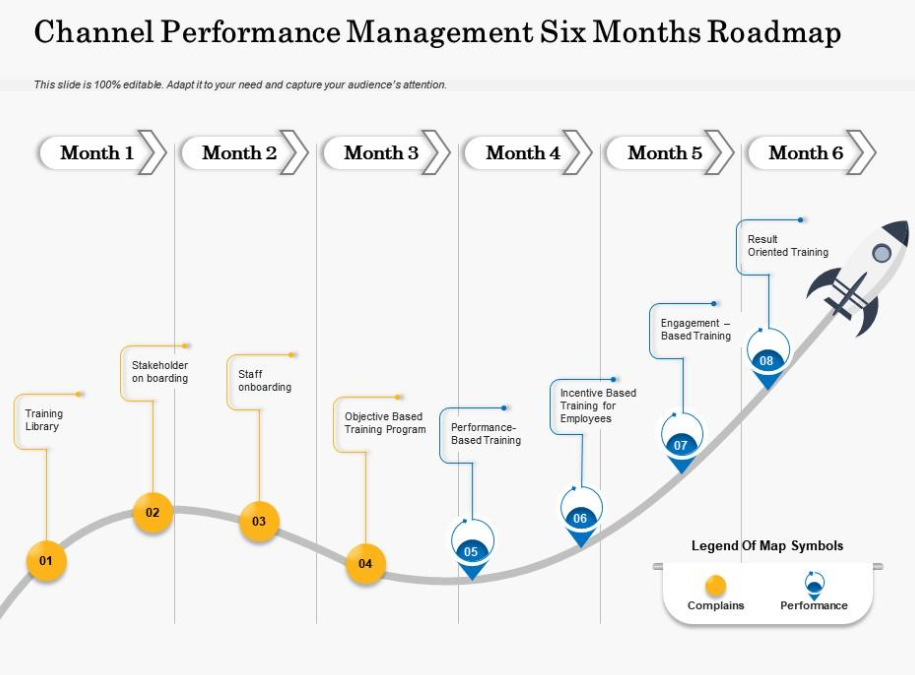
Template 1: Channel Performance Management Six Months Roadmap
This PPT Slide is best to track the best training and performance improvement plan boosting process in a half-year cycle. It builds a foundational training library and stakeholder onboarding, impacting staff onboarding and ensuring all team members are ready for progression. Months 2 and 3 to ensure staff's practice efforts are aligned. The final outcome-driven training of Month 6 will reflect on targeted outcomes and general workforce development. It ensures constant increment in skills. Get it now.
Template 2: Five-Yearly Business Unit Performance Management Roadmap
It shows a systematic plan for continuous improvement and strategic alignment over a 5-year period. Each year, the theme targets different components: vision & mission, strategies & goals, measure & implement, and report & check. This talent management roadmap allows business units to progress systematically and holistically. Such a holistic approach enhances the scales of growth and operational efficiency and ensures transparency in accountability in performance over the long haul. Download now.

Template 3: Six-Month Training Implementation Roadmap to Increase Manager Performance
It starts with initiating the Go Safe with lean-agile change agent training. Month 2 progresses with implementing training for Safe teams, scrum masters, and a strong training management team. Furthermore, executing ARTs and new value streams is a priority. Month 4 focuses on The fifth month focuses on guiding Safe for stakeholder engagement. Month 6 focuses on continuous improvements. This KPI management roadmap helps to develop consistent performance improvement. Download now.

Template 4: Performance Management and Assessment Three-Month Roadmap
This presentation theme consists of discovery, a readiness check, and an initial assessment that takes stock of the current state. It establishes a time-bound framework to determine needs, enabling ongoing project success. Get it now.

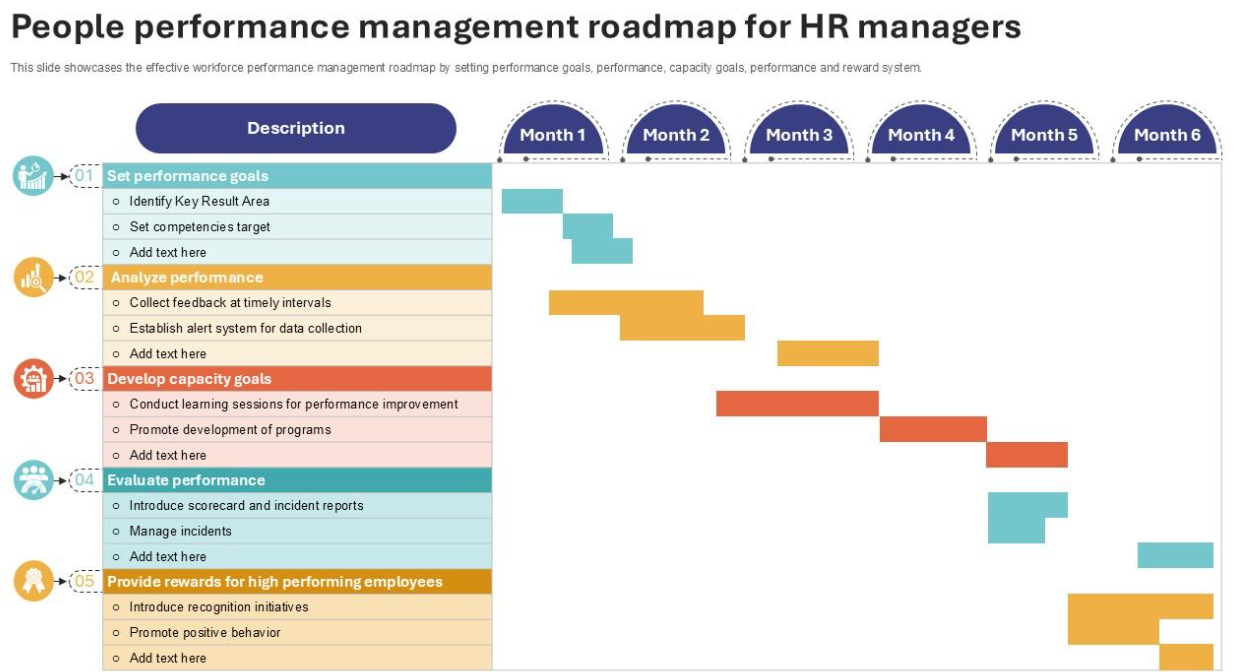
Template 5: People Performance Management Roadmap for HR Managers PPT Slides
It covers a six-month long comprehensive employee performance roadmap. It begins with creating performance standards, defining areas of results, and practicing competencies. Months 2–4 transition to performance analysis. The next step is setting capacity goals based on learning sessions. In Months 4-6, performance is measured using scorecards. This timeline tool helps HR leaders to roll out, track, and streamline workforce performance seamlessly. Get now.
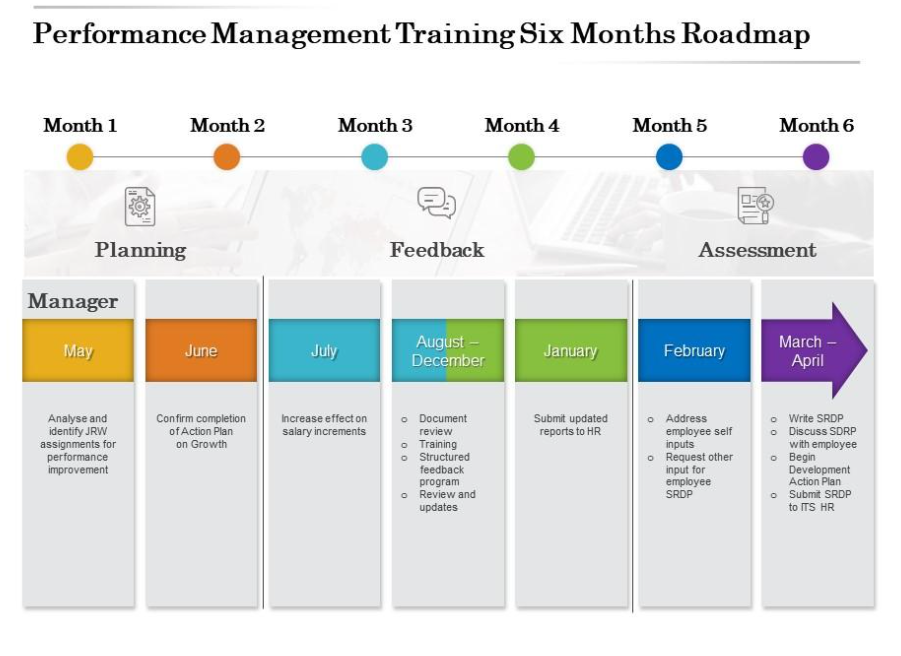
Template 6: Performance Management Training Six Months Roadmap
This presentation theme shows how managers prepare for workforce planning, and assessment phases to develop the workforce. Planning takes up the first two months, with growth action plans being analysed. In Months 3 and 4 feedback is the main focus. The last two months, assessment, consists of updated reports due in January. Having a structured performance enhancement roadmap offers empowerment to both managers and employees alike. Download now.
Template 7: Performance Improvement and Management Three Months Roadmap
It focuses on laying out the ground rules of what is expected from employees and how success is measured. It includes recognizing poor performance and deciding whether a performance improvement plan (PIP) is necessary. It identifies mission-critical objectives and provides continuous coaching. Lastly, Month 3 is for performance evaluation, where managers and employees do continuous monitoring to accomplish goals. This performance development roadmap makes the workforce better. Download now.

Template 8: Six Months Business Intelligence Performance Management Roadmap
It helps organizations to plan their BI set-up, maintenance, and optimization to achieve improved business performance. Month 1 puts extra focus on static BI structures. Month 2 focuses on strengthening the information architecture by establishing a data-warehousing environment. Months 3 and 4 focus on maintaining/growing the organization. This performance optimization plan helps businesses organize in a way that yields profit, optimizing workforce and efficiency. Download now.

Template 9: Five Years Continuous Performance Management Roadmap with Smart Goal
It illustrates the five year continuous workforce performance strategy roadmap with smart goals, a process that sets long-term plans to help raise employee engagement. It rolls out a combination of measures over the course of 5 years BI-weekly check-in tools, weekly self-reflection for both supervisor and employee. Quarterly check-ins to drive moderate engagement. This approach helps to achieve incremental improvement and a culture of continuous impact. Get it now.

Template 10: Implementing Corporate Performance Management Process Roadmap
This workforce development roadmap achieves sustainable organizational success. This systematic pathway helps in driving predictable corporate performance improvement from vision to execution. Download now.

Drive Performance with Precision!
Organizations cannot afford to neglect performance management in a competitive ecosystem. To get your team in line with what you want to achieve, drive productivity, and help sustain growth long-term, you need a clear roadmap with implemented initiatives. Templates from SlideTeam are a strong visual aid to plan your strategies, track milestones, roadmaptowards success, and ensure accountability across teams and processes.
Our organizational performance roadmap helps accountable leaders define measurable objectives, track progress, and adapt as necessary to shifting business priorities. These talent performance roadmaps, also known as HR performance roadmaps, provide clarity and guidance for enhancing team efficiency and helping business leaders achieve organizational success.
Today is the day you spend less time on performance management.
Download now to give a clear, focused direction and measurable success to your team.
Look out our blog on Top 10 Performance Management Framework Templates to consider every aspect of the performance parameters.
FAQs on Performance Management Roadmap Templates
-
What are the essential stages in a performance management roadmap?
There are five stages in a performance management roadmap and they are goal-setting, performance planning, on-going feedback, evaluation, and development. This begins with defining the exact organizational criteria and milestones, followed by a measurable plan to achieve them. Ongoing feedback and coaching helps them track their progress, and periodic evaluations measure the individual against established benchmarks. Finally, development programs such as training or mentorship aid in long-term growth and progression in one´s career.
-
How should organizational goals align with performance management objectives?
Performance management is built on the base of organizational goals. Personal objectives must roll up to achieve larger business goals to keep people doing things aligned with long-term success (which also ensures they know exactly what needs to be done every day). Putting top-level goals into cascades for departments, teams, and individuals is how alignment happens. It is facilitating accountability, collaboration and deliverables from every employee to the organizational deliverables.
-
What best practices ensure alignment across departments and teams?
Organizations tend to be more transparent if they communicate organizational vision clearly, use performance metrics consistently, and have robust reporting systems. Frequent meetings across departments will help break down the siloes and create a culture of collaboration. Secondly, it keeps teams aligned to the same processes and on the right track through templates for employee growth roadmap. Also giving feedback on a regular basis and creating a culture of appreciation reinforces alignment and promotes employee engagement in the organization.