





 0 Comment
 Customer Reviews

The meeting’s Tuesday at 2 PM. The calendar invite is already out.
Everyone knows what happened last week.
Not the polished version that will eventually make it into the official report. The real version. The feature that shipped broken. The client email that quietly escalated. The Slack thread that stopped getting replies.
You open a draft titled “Quality Assurance Meeting” and hesitate. Because you don’t just need a meeting—you need QA meeting agenda templates that create an effective QA meeting structure before the conversation turns defensive.
QA meetings weren’t supposed to feel like this. They were meant to protect product quality, prevent regressions, and strengthen workflows. Instead, they often become damage control disguised as process improvement. Someone brings up testing protocols. Someone references timelines. The conversation circles around accountability without ever landing on clarity.
The worst part isn’t the failure. Failures happen. The worst part is when everyone already knows what went wrong—but no one knows how to talk about it productively.
This is where structure changes everything.
A structured quality assurance meeting agenda separates urgency from blame. It defines QA Meeting Objectives before emotions take over. It prioritizes Quality Assurance Processes and Root Cause Analysis without turning them into finger-pointing exercises. It ensures Performance Metrics Review, Audit Findings Review, and Action Items from QA are discussed with purpose—not as formalities.
Because good QA meetings don’t happen by accident. They follow patterns. They create space for transparency without hostility. They end with direction instead of lingering tension.
SlideTeam’s quality assurance meeting agenda templates are built for exactly this moment. Pre-designed, content-ready frameworks that keep discussions focused on systematic improvement rather than reactive explanations. These give you the structure when everyone else is bringing stress into the room.
Here’s what’s available when Tuesday afternoon actually needs to get something done.
Template 1: Quality Assurance Meeting Agenda Template PPT Outline
This Modern QA Meeting Template is a strong choice with its sophisticated blue-purple gradient design and comprehensive feature set. Clean typography ensures crystal clear communication during critical quality assurance discussions. Versatile layouts seamlessly accommodate timelines, organizational charts, SWOT analysis, and performance dashboards. High-contrast elements ensure optimal readability across all presentation environments. Customizable placeholders streamline preparation, while structured workflows guide comprehensive coverage of Quality Assurance Processes, QA Meeting Objectives, and Performance Metrics Review. Transform your QA presentations with professional polish. Download this essential template today and immediately elevate your quality assurance meetings.
[product_image id=1604721]
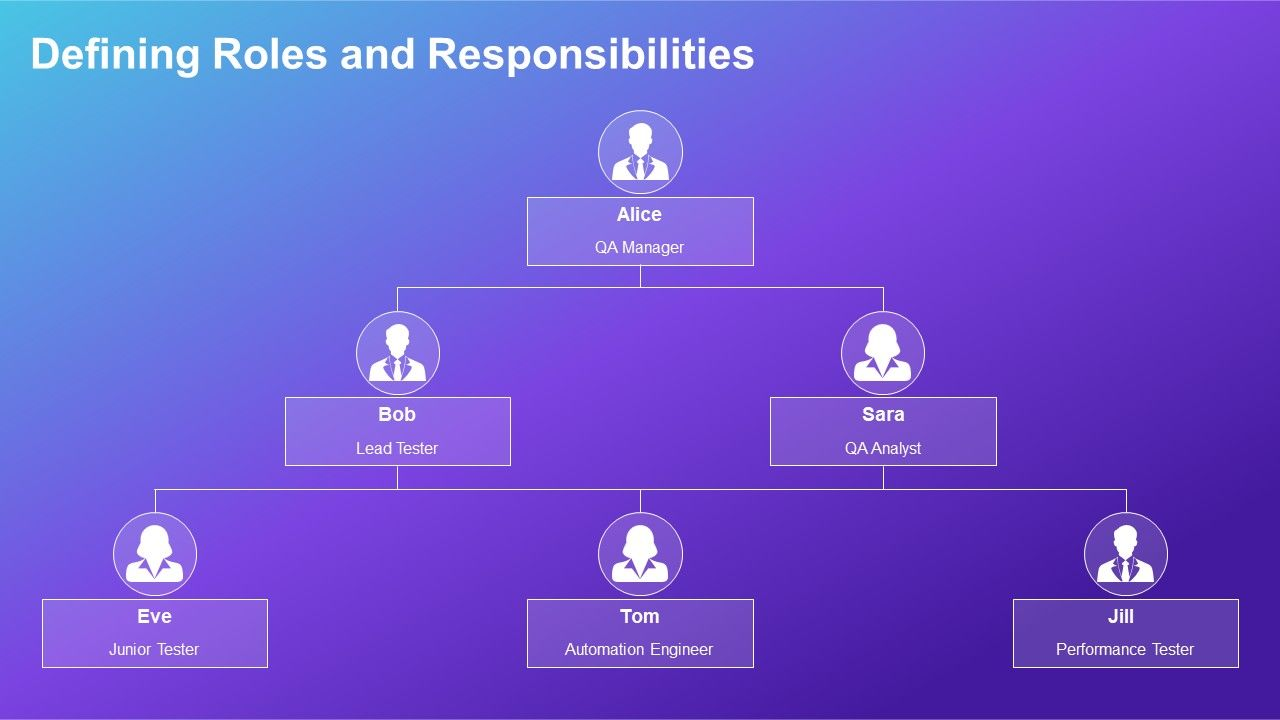
Template 2: Defining Roles and Responsibilities PPT Template
This meticulously crafted organizational chart transforms complex team structures into crystal clear visual communication. The sophisticated blue-to-purple gradient creates professional appeal while maintaining exceptional readability. Circular avatars and strategic white borders ensure each team member stands out distinctly. The symmetrical layout guides viewers effortlessly through hierarchical relationships, from leadership position to the three-tier structure below. Perfect typography balance and high contrast guarantee accessibility across all presentation environments. This template eliminates confusion about QA roles, responsibilities, and accountability. Download now to establish clear organizational clarity for your team.
Download this PowerPoint Template
Template 3: Measuring Meeting Effectiveness PPT Template
This comprehensive slide transforms complex meeting data into clear, actionable insights through three powerful visualization methods. The bar chart tracks monthly KPI trends, while the pie chart reveals distribution patterns across key metrics. Real-time metric cards display critical performance metrics and review indicators with intuitive up/down arrows for instant status recognition. The modern gradient design ensures professional presentation quality. Essential for managers seeking data-driven meeting optimization and stakeholder reporting. Download this slide now to elevate the effectiveness of your meeting presentations.

Download this PowerPoint Template
Template 4: Common Challenges in Quality Assurance PPT Template
This slide masterfully transforms complex QA challenges into digestible visual insights. The radar-style layout with numbered callouts creates instant clarity, while the gradient tech aesthetic commands attention. Six strategically placed challenges surround the central focus, making it easy to retain information on quality improvement strategies and QA meeting objectives. Bold typography ensures maximum readability across all presentation formats. The concentric ring design guides viewers naturally through each quality assurance pain point. This isn't just another bullet-point slide; it's a comprehensive QA roadmap that speaks directly to technical audiences. Download now to elevate your quality assurance presentations with professional-grade visual storytelling.

Download this PowerPoint Template
Template 5: Best Practices for Engaging Participants PPT Template
This slide presents clear participant engagement strategies with a well-designed visual framework. The segmented arc design presents four critical statistics with measurable outcomes, making complex data instantly digestible. The integrated timeline transforms Quality Improvement Strategies into actionable steps, ensuring immediate implementation. Modern gradient aesthetics combined with clean typography enhance professional credibility while maintaining visual appeal. Each element works synergistically to maximize retention and understanding. Download this slide to elevate your engagement presentations with proven metrics and clear implementation pathways.

Download this PowerPoint Template
Template 6: Objectives for Quality Assurance Meetings PPT Slide
This slide masterfully transforms quality assurance objectives into a compelling visual narrative. The target-like centerpiece brilliantly reinforces the concept of focused goals and precision. Four thoughtfully placed callouts clearly show a clear path from quality assurance to continuous improvement. The gradient background adds professional depth while maintaining readability. Clean typography ensures your message stays sharp and accessible. The balanced layout guides viewers naturally from visual impact to actionable content. This design elevates standard meeting materials into engaging presentations that command attention and drive results. Download this slide to transform your quality assurance discussions today.

Download this PowerPoint Template
Template 7: Importance of Quality Assurance Meetings PPT Slide
This slide masterfully transforms quality assurance meetings from mundane discussions into strategic visual roadmaps. The semicircular process with six milestones creates a clear path through key QA steps, from team alignment to performance tracking. Bold subheadings and concise descriptions ensure immediate comprehension, while the gradient background adds professional sophistication. The central team photo reinforces a collaborative essence. Each content block provides practical insights for implementing quality assurance processes, meeting QA meeting objectives, and advancing the Continuous Improvement Agenda forward. Perfect for training sessions, stakeholder presentations, or process documentation. Download this slide now to elevate your quality assurance communication and drive meaningful meeting outcomes.

Download this PowerPoint Template
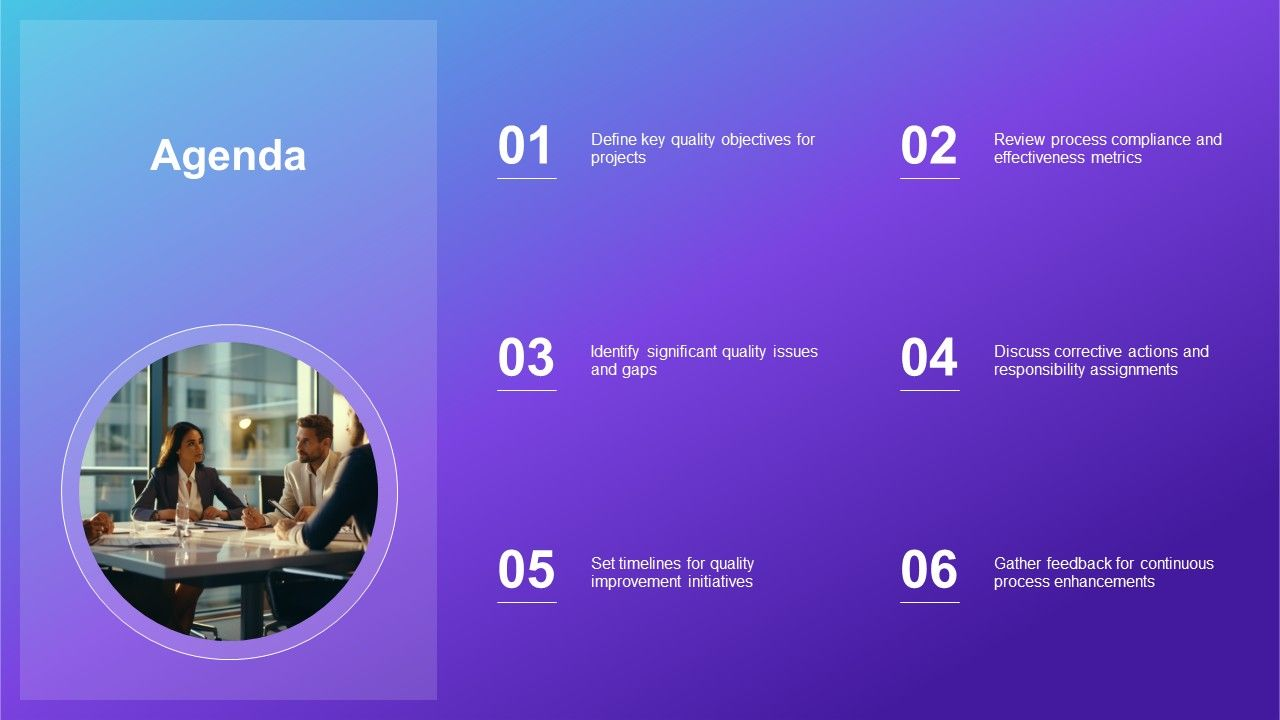
Template 8: Agenda of Quality Assurance Meeting Agenda Template
This elegant two-column agenda slide transforms your presentation structure into a visual masterpiece. The sophisticated blue-to-purple gradient adds professional depth while maintaining crystal-clear readability. Six numbered timeline items are perfectly organized in a clean grid format, ensuring your audience follows every key point effortlessly. The strategic typography and white accents make a strong visual impact against the cool-toned background, making it perfect for quality control agendas, QA discussion topics, and Continuous Improvement Agenda presentations. Your corporate presentations deserve this level of polished design excellence. Download this stunning agenda template now and elevate your next presentation.
Download this PowerPoint Template
Template 9: Collecting and Analyzing Feedback PPT Template
This expertly crafted slide transforms feedback collection into a visual roadmap. The branched layout guides your audience from concept to action through four sets of questions. The modern gradient backdrop and clean typography ensure maximum readability during presentations. White connector lines create logical flow, making complex feedback processes instantly digestible. Each callout box provides focused quality improvement strategies and QA discussion topics that lead to meaningful responses through effective feedback channels. Perfect for training sessions, workshops, or strategic planning meetings. Download this slide to elevate your feedback collection methodology today.

Download this PowerPoint Template
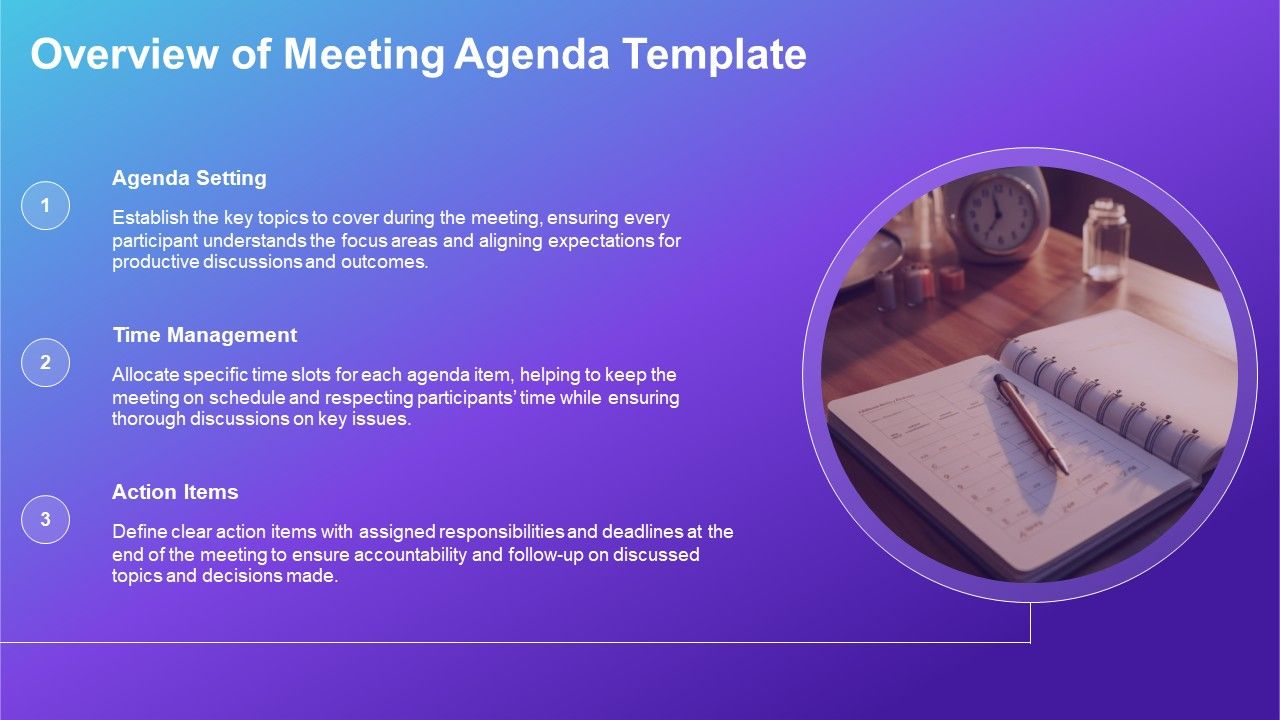
Template 10: Overview of Meeting Agenda Template
This Meeting Agenda Template helps you stay organized with its three-point structure. The modern gradient design commands attention while maintaining corporate professionalism. Key features include numbered agenda setting, time management protocols, and actionable item tracking with Quality Control Agenda integration. The dual-column layout maximizes information flow without overwhelming viewers. High-contrast typography ensures optimal readability across all presentation environments. The circular imagery reinforces productivity themes perfectly. Transform your meetings from chaotic discussions into structured, results-driven sessions. Download this template now and immediately elevate your meeting effectiveness!
Download this PowerPoint Template
Elevate Your Quality Assurance Meetings to Achieve Excellence with SlideTeam
SlideTeam's PowerPoint templates are the best in the industry for quality assurance meeting agendas. These content-ready slides provide structured frameworks that ensure comprehensive coverage of QA topics while maintaining professional presentation standards. Our ready-made quality assurance meeting agenda templates streamline your meeting preparation process and enhance team communication effectiveness. Deploy these PowerPoint slides to conduct more productive quality assurance meetings featuring quality improvement strategies and continuous improvement agenda items that drive operational excellence.
FAQs on Quality Assurance Meeting Agenda
What are the key objectives to include in a Quality Assurance Meeting Agenda?
Key objectives include reviewing quality metrics and KPIs, analyzing recent defect trends, discussing process improvements, evaluating testing procedures, and planning corrective actions. These QA meeting objectives help organizations streamline quality processes, enhance product reliability, and reduce operational costs. Manufacturing and software companies even associate structured QA meetings with improved customer satisfaction and competitive advantage.
How can team roles be clearly defined to enhance meeting effectiveness?
Team roles can be clearly defined by assigning specific responsibilities like meeting facilitator, timekeeper, note-taker, action item tracker, and quality reviewer before each session begins. This structured approach makes discussions more efficient, keeps everyone accountable, and boosts productivity. Effective communication in QA teams finds that defined QA roles and responsibilities cut meeting time by 30% and improve follow-through on action items from QA deliverables.
What metrics should be reviewed during the Quality Assurance meeting?
Quality assurance meetings should review defect rates, test coverage percentages, customer satisfaction scores, resolution times, and adherence to compliance metrics. These measurements enable teams to identify quality improvement strategies, track testing effectiveness, and maintain product standards. With regular metric analysis, quality processes are streamlined, costs are reduced, and the customer experience is enhanced.
How can we ensure that feedback from previous meetings is addressed?
Ensuring feedback from previous meetings is addressed requires systematic tracking through documented action items, assigned ownership with clear deadlines, and regular follow-up reviews. Organizations streamline this process by implementing feedback management systems, conducting quarterly review sessions, and integrating QA action items into current agendas through a robust feedback mechanism that supports continuous improvement. This ultimately leads to greater accountability and continuous improvement across quality assurance initiatives.
What tools can be utilized to track actionable items from the meeting?
Project management platforms like Asana, Trello, and Monday.com, along with collaborative tools such as Microsoft Teams, Slack integrations, and shared spreadsheets, can effectively track action items from QA, meeting minutes documentation, and the continuous improvement agenda. These solutions streamline follow-up processes by assigning responsibilities, setting deadlines, and monitoring progress in real time. As many QA teams have noted, automated notifications and centralized dashboards significantly enhance accountability and ensure critical quality initiatives maintain momentum across development cycles.
How often should Quality Assurance meetings be scheduled for optimal results?
Quality assurance meetings should be scheduled weekly for active projects, with monthly strategic reviews and quarterly comprehensive assessments to maintain strong oversight. This frequency enables teams to address immediate issues, track progress consistently, and implement corrective measures promptly. Regular meetings with clear QA goals lead to better product quality and faster resolution times.
What strategies can be applied to encourage participation and engagement during the meeting?
Strategies include rotating speaking roles, using interactive polls, implementing structured brainstorming sessions, creating breakout groups for focused discussions, and establishing clear action items with ownership. These approaches help engagement by encouraging diverse perspectives, reducing the dominance of any one voice, and making sure all team members contribute meaningfully through effective stakeholder involvement and proven team collaboration techniques. Many quality assurance teams even find that structured participation ultimately finds more issues and resolves them faster.
How can we incorporate risk management discussions into the Quality Assurance agenda?
Incorporate risk management by dedicating agenda sections to risk assessment in QA reviews, quality improvement strategy updates, compliance monitoring discussions, and cross-functional impact analysis. These discussions enable teams to proactively identify quality threats, evaluate control effectiveness, and align preventive measures across departments. Setting such integrated risk-quality agendas ultimately delivers enhanced operational resilience and regulatory compliance.
What are the best practices for documenting meeting minutes and decisions?
Best practices for documenting meeting minutes include recording key decisions, action items with owners and deadlines, discussion summaries, and attendee information. Effective Meeting Minutes Documentation streamlines follow-up processes and ensures accountability among team members, while QA action items require clear tracking to enable effective communication within QA teams and maintain institutional knowledge. Many organizations find that structured templates and real-time note-taking ultimately enhance project continuity and operational efficiency.
How can we evaluate the effectiveness of our Quality Assurance initiatives during the meeting?
Quality assurance initiatives can be evaluated through performance metrics analysis, stakeholder feedback review, compliance audit results, process improvement tracking, and ROI assessment. These evaluation methods enable organizations to identify gaps, measure operational efficiency, and demonstrate value delivery. A systematic QA assessment supports ongoing improvement, reduces defects, and improves customer satisfaction while strengthening your competitive position.