





 0 Comment
 Customer Reviews

In Human Resource Management (HRM), the process of recruitment is defined as the systematic process of attracting, selecting and appointing suitable candidates for jobs within an organization. Recruitment is the process of selecting the right person for the right job and matching talent to the needs of the business. It includes identifying needs, advertising jobs, screening applicants, interviewing applicants and hiring. Recruitment aims to ensure the right "fit" of candidates with organizational goals and culture.
What role does recruitment play in building a high-performance team? Check here Top 10 Recruitment Process Templates With Samples and Examples.
A well-designed recruitment process will identify, attract, and hire candidates who have the required skills and qualifications that are also a good cultural fit with the organization. By implementing an effective recruitment process, HR can improve the quality of workforce, reduce employee turnover, and reduce the cost of hiring. Further, it will help HR support the organization's strategic plan by predicting the need for employees and filling gaps in talent with forecasted needs.
Explore here Top 10 Recruiting Process Templates with Samples and Examples
An effective recruitment process increases employer branding with candidates and gives a good impression that signals an organization is a desirable place to work. Recruitment involves multiple steps whether the process is simple or the most complex, which will look at job analysis, sourcing, screening, interviewing and onboarding that support a seamless hiring experience.
To this end, SlideTeam is the go-to resource as we have curated expert-level, 100% editable, customizable, and content-ready presentations on Recruitment Process.
Let’s explore…..
Template 1: Recruitment Process In HRM Powerpoint Presentation Slides
This slide is a methodical guide to rationalizing hiring practices within organizations. It details essential aspects of the company’s current hiring challenges, how to improve the selection process, timing, costs, and key performance indicators. This slide takes a step-by-step approach from planning the recruitment streamlining through budgeting, through impact evaluation to effectively support HR professionals to attract, evaluate, and retain top talent. The detailed overview assists decision-making on constructing a strategy, an optimized hiring phase, and eventually connects organizational strategy with talent acquisition successful execution featuring a central focus, certainly a unique opportunity for HR professionals. Download template now.
[product_image id=569455]
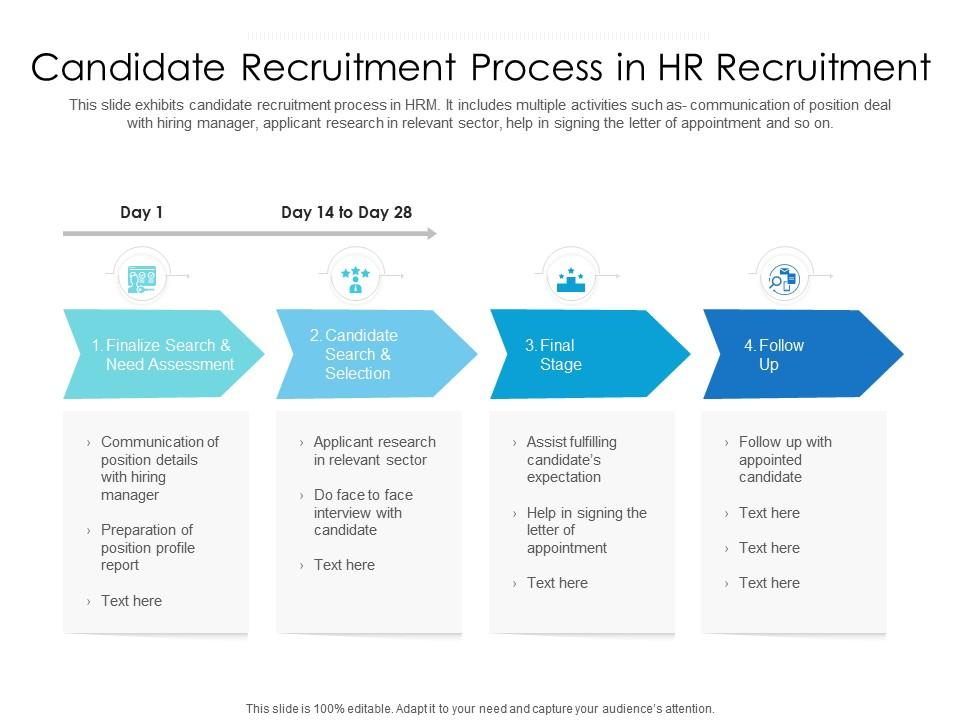
Template 2: Candidate Recruitment Process In HR Recruitment
This PPT is a well-structured framework and offers a clear path to hiring. It splits the recruitment journey into four distinct stages: Finalize Search & Need Assessment, Candidate Search & Selection, Final stage, and Follow Up. Its easy to follow from Day 1 to Day 28 and encompasses all notable actions such as profiling the role, interviewing candidates, facilitating appointment letters and the onboarding process. This template also aids HR and hiring managers in communicating each action along the journey. It enables HR teams to have a good and timely candidate experience centered around a good recruitment process. Download template now.
Template 3: Recruitment And Selection Process For HR Department
This template simplifies the entire hiring process through a visual flow. It begins with identifying vacancies, which is followed by planning the recruitment campaign and obtaining approvals. The flow displays key aspects in recruitment, including advertisements, applicant screening, interviews, pre-offer checks, and appointment decisions. The flow continues to show candidate resolution, offer communication, and onboarding plans. The template ensures an effective recruitment process, as well as giving candidates transparency and a legally justified experience during recruitment and selection. Download template now.

Template 4: 5 Components Of HR Recruitment Process
The slide provides a detailed view of important features of HR and includes 5 Components Of HR Recruitment Processes, which are: Core HR, Workforce management, Talent Management, Recruitment Applicant Tracking System, and Learning Management. Despite the fact that this slide is just a simple outline of these five categories, it presents a clear framework and structure for HR people to follow in managing the recruitment lifecycle, improving operational efficiency, and sharing the talent strategy in alignment with organizational goals. Grab template now.

Template 5: Current Challenges Faced By Recruiters
This slide outlines the contemporary challenges faced by organizations as they go through a talent acquisition process. It points out high-level concern areas in the recruitment process, including issues around attracting candidates who fit organizational needs, not enough qualified applicants, poor sourcing methods, and old talent pool information. This slide also provides statistics to help portray job descriptions that are not clear, poor employer branding, and limited tools to source hinder recruitment practice. It prompts organizations to revisit consideration of recruiting passive candidates as part of their recruitment strategies to help HR teams seeking to improve recruitment experiences into action.

Template 6: Key Issues Associated With Employment Process
This slide identifies issues like increased employee attrition and external hiring costs and related issues such as outdated recruitment and onboarding processes. The rising rates of turnover and the rising cost per hire (even more for agency fees or training costs) both demonstrate that employment processes are ineffective or must improve towards efficiency. This is an informative slide that is valuable for HR Teams to evaluate and determine changes that need to be made to their employment process. This gives teams a visual representation of their process and also allows a logical comparison of job analysis, recruiting, hiring and onboarding practices. Grab template now.

Template 7: Why Do We Need Recruitment And Selection Policy?
This slide illustrates the key rationale for having an organized recruitment policy. For one, it may define "fit" by linking job requirements to the skills and abilities of candidates, provide consistency regarding hiring decision making by identifying predetermined criteria, provide legality in terms of non-discrimination, build credibility for candidates in seeing a trustworthy process develop, facilitate transparency on the part of the stakeholders, and more. The slide is a helpful checklist for HR professionals in providing better fairness, organizational efficiency, and trust with recruitment decisions while promoting an employment brand as an organization, taking positive steps through a consistent process. Download template now.

Template 8: Roles And Responsibilities Of Recruitment Team
This slide shows the RACI matrix to identify each teammate’s responsibilities throughout the recruitment process. The major categories of housecleaning responsibility shown in the table include identifying if we need to recruit, job design, establishing standards, contacting interviewees, and documenting the entire process. Ensuring everybody is aware of their responsibilities helps put into context how many people are assisting in the process, thus ensuring an efficient workflow among recruiters, the HR head, the hiring resources and/or supervisors. The slide aids in reducing confusion and ensuring transparency, ensuring a well-organized and effective recruitment process within the HR department overall.

Template 9: Recruitment Plan To Attract Potential Applicants
This PPT provides a systematic framework for determining hiring needs throughout departments. The hiring needs include the number of positions, work experience, skills, and roles. For example, candidates applying for IT roles would want to have no more than a couple of years of experience, be proficient in communication and have good problem-solving skills, while the HR department will want a candidate with over three years' experience. Overall, this template retains the ability to help HR teams create narrowly planned recruitment strategies in order to attract appropriate candidates. Download template now.

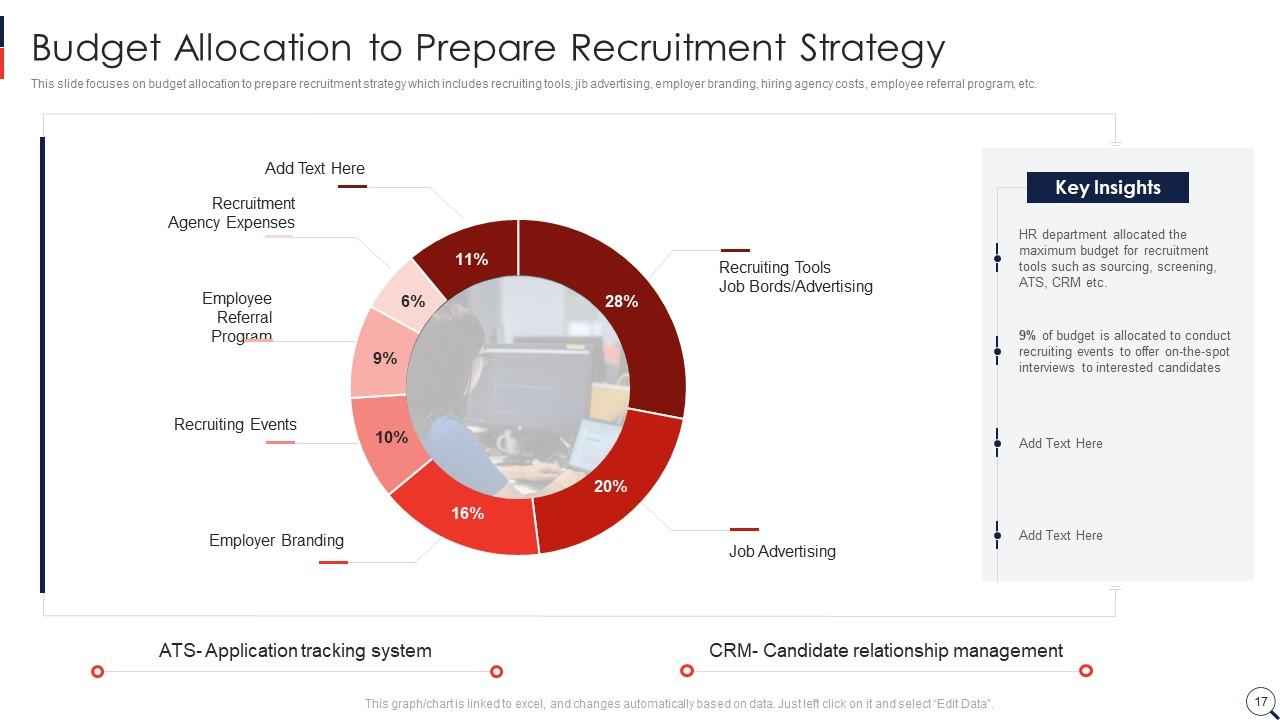
Template 10: Budget Allocation To Prepare Recruitment Strategy
This powerpoint presentation visually details critical investment areas. It highlights that the largest portion is dedicated to essential recruiting tools, job boards, and advertising, ensuring maximum reach. Some portion has also been allocated to direct job advertising, employer branding, recognizing their importance in attracting top talent, to employee referral programs and funds recruiting events, proving companies commitment to diverse sourcing channels for a comprehensive and effective recruitment strategy. Download template now.
HIRING THE RIGHT WAY: WHY RECRUITMENT MATTERS IN HRM
Recruitment process is a key function of any organization. It directly impacts the kind of talent that enters the workforce. A recruitment process that is managed strategically is designed to hire the right person with the right fit, right skills, and right experience, quickly and efficiently. This process is important to help organizations create excellent teams, create quality productivity, and finally lower the turnover and churn rate. Furthermore, if candidates have a positive experience during the recruitment process, it can increase the employer brand.
Recruitment is more than just filling a vacancy; it is about recruiting individuals who would like to innovate, who are aligned with organizational goals, and who can sustain success over time. A strong recruitment process consists of job analysis, sourcing approaches, assessment process, and interview techniques for the needs of the organization. A strategic recruitment process allows organizations to be innovative, productive, and to be a competitive force in their marketplace while continuing to grow and sustain success.
FAQs
-
What is the recruitment process in HRM?
In Human Resource Management (HRM), recruitment is the process of looking for job vacancies, attracting qualified candidates, screening applications, interviewing, and selecting the right candidate to fill the position that was vacant. Recruiting in HRM ensures that organizational hiring builds knowledge and skills for the organization. This process also ensures qualified hires fit into the organization's goals. Recruitment is a major determinant of a strong workforce being developed and the ongoing development of organizations for growth and efficiency.
-
Why is recruitment important in human resource management?
Recruitment is an essential part of Human Resource Management because it helps an organization source, attract, and hire suitable talent to fulfil the business's objectives. Recruitment is also the first step in creating a skilled and capable workforce, increasing productivity, and promoting employee retention. Moreover, successful recruitment of the right employees positively affects workplace climate, enhance the company's culture, and give the business a competitive advantage in an unprecedented changing environment.
-
What is the objective of the recruitment process?
The recruitment process focuses on the identification, attraction, and hire of suitable candidates to fill identified job roles in an organization. The process seeks to build a workforce with the skills and knowledge needed for a changing workforce that are aligned with the company's aims, beliefs, and future development. The recruitment process seeks to ensure a fair and effective hiring process that is completed satisfactorily by complying with timelines, cost, and fulfilling organizational staffing needs.


