


 0 Comment
 Customer Reviews

The deck's already built. Reviewed twice. Someone's still not sure the team actually gets it.
That's the gap nobody talks about in balanced scorecard rollouts. Not the framework itself—most managers can read a diagram. The problem is the space between reading it and using it. Between knowing what financial, customer, internal process, and learning perspectives mean on paper, and actually tracking them week to week in a way that changes behavior.
And it's not a comprehension problem. People aren't confused. They're just not bought in—because nobody walked them through why this particular framework, why these KPIs, why now. The training got skipped, or it happened once and never again, or it was a PDF sent at 5 PM on a Friday.
Balanced scorecard training tends to get treated as a one-time event. A workshop, maybe a certification course, then everyone's supposed to just know. But organizations that actually get traction treat it differently—ongoing, layered, tied to real performance conversations. The methodology doesn't change. But the way people internalize it has to be built over time.
What makes it worse is that the same training content rarely works across levels. A strategy execution briefing for a CFO looks nothing like a KPI training session for a front-line supervisor. The framework is identical. The language, the examples, the depth—completely different. Building that from scratch every time is the part that quietly exhausts the people running these programs.
That's why these templates exist. Not because balanced scorecard implementation is new—it isn't—but because translating it into slides that actually train people, at the right level, in the right format, is genuinely hard work most teams don't have time for.
SlideTeam's balanced scorecard training templates were built for exactly this moment—when you know the content but can't afford to lose a week formatting it. Pre-designed, content-ready, and structured around real training scenarios, they handle the architecture so you can focus on the conversation.
Here's what's available.
Template 1: Restaurant Balanced Training Scorecard with Initiatives
Tracking restaurant staff performance across training initiatives is often messier than it looks. This PowerPoint slide gives HR managers and operations leads a clean view of worker KPIs tied directly to training outcomes. It covers strategic objectives, learning metrics, and internal process scores in one structured layout. Whether you're running a Balanced Scorecard workshop for floor staff or reporting upward on training budget utilization, this PPT organizes the data clearly. The template is 100% editable and customizable.

Download this PowerPoint Template
Template 2: Balance Scorecard for Employee Growth and Training Slides
Employee growth tied to balanced scorecard methodology is hard to present without the right structure. This deck gives HR leads and learning managers 18 slides built around that exact need. It covers growth tracking, training alignment, and performance benchmarking in a coherent flow. For anyone running a Balanced Scorecard training program at scale, this PPT preset reduces build time significantly. The template is 100% editable and customizable.

Download this PowerPoint Template
Template 3: Balance Scorecard for Employee Growth and Training PPT Example
Clarity in employee growth presentations starts with a well-organized framework. This deck merges balanced scorecard methodology with training performance data. Structured layouts let you highlight skill development timelines and KPI benchmarks without starting from zero. The visual design captures attention immediately while keeping the focus on content. Use this to build compelling Balanced Scorecard for Beginners decks or internal performance reviews. Transform your employee training presentations today. Download this dynamic template now and unlock structured growth communication.
[product_image id=1401771]
Template 4: Balanced Scorecard with Employee Growth and Training Evaluation Form
Evaluation forms rarely make it into balanced scorecard decks, but they should. This PPT slide captures employee self-assessment data—agreement levels, communication scores, and participation metrics—within a scorecard format. It's useful for HR leads running post-training reviews or structured feedback sessions. The single-stage layout keeps the data readable without overwhelming the audience. The template is 100% editable and customizable.

Download this PowerPoint Template
Template 5: Assessment Scorecard PPT Presentation
Scoring and assessing performance needs a visual format that makes decisions easy. This deck delivers a structured Assessment Scorecard layout built for boardroom reviews and client-facing presentations. Compelling visualisations translate raw assessment data into persuasive, at-a-glance summaries. The professional design builds instant credibility with any audience. Use this to anchor your Performance Management Training or corporate evaluation sessions with confidence. Transform your assessment presentations today. Download this dynamic template now and unlock sharper performance communication.
[product_image id=1398670]
Template 6: Organizational-Level Balance Scorecard System for Improved Decision Making
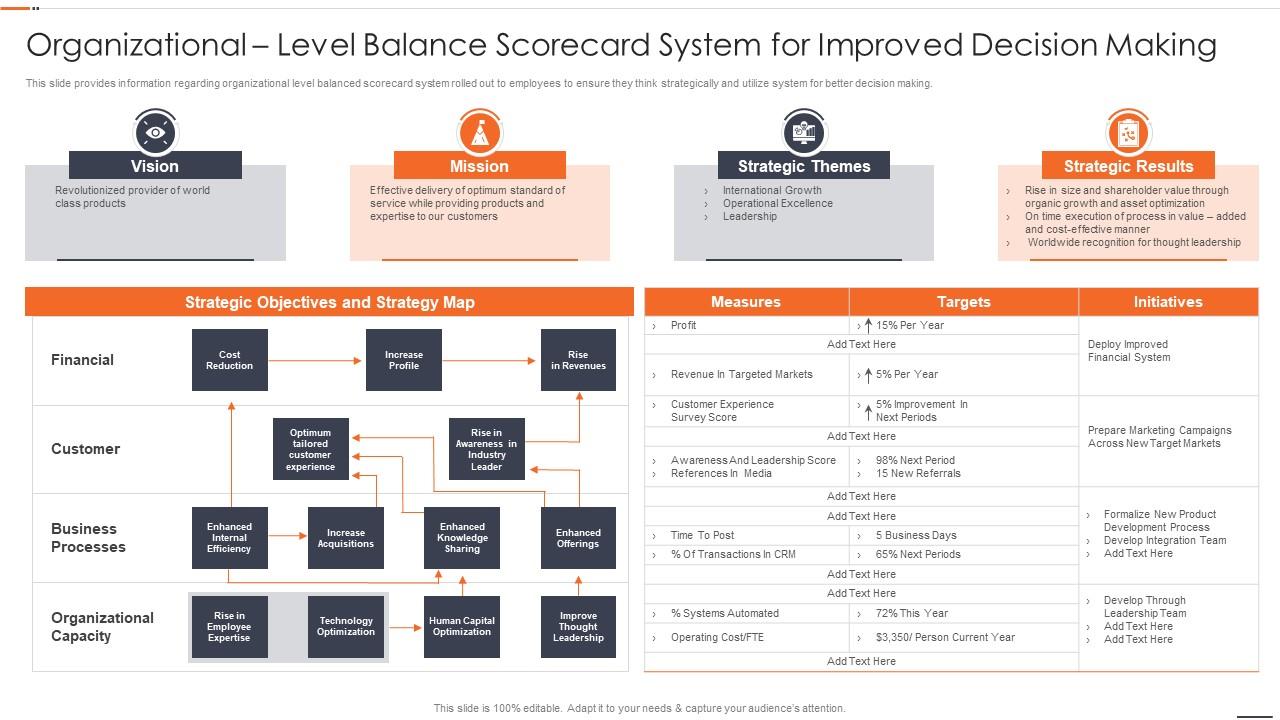
Getting employees to think strategically—not just react to tasks—is the real goal of any balanced scorecard rollout. This PowerPoint slide shows how an organizational-level scorecard system gets deployed to build that habit. It's built for Chief Strategy Officers and HR leads walking leadership teams through Balanced Scorecard Implementation. The layout connects vision, decision-making behavior, and scorecard outputs in one readable view. The template is 100% editable and customizable.

Download this PowerPoint Template
Template 7: Level-Balance Scorecard System for Improved Decision Making
A Chief Strategy Officer presenting a balanced scorecard system needs a slide that matches the seniority of the room. This PPT preset covers organizational-level scorecard deployment—how it gets rolled out, what it changes, and why it matters for better decisions. It's suited for executive briefings on Balanced Scorecard strategy and Corporate Strategy Training sessions. The structure keeps the argument tight without losing the nuance. The template is 100% editable and customizable.
Download this PowerPoint Template
Template 8: Organizational Level Balance Scorecard Effective Strategy Formulation
Strategic thinking at the organizational level requires a scorecard framework that teams can actually act on. This template drives clarity across Strategic Themes, decision-making structures, and employee alignment. The professional layout creates instant visual logic for complex strategy content. Compelling data displays translate organizational goals into actionable departmental priorities. Use this to anchor your Strategic Planning Training or Strategy Execution workshops for leadership teams. Transform your strategic framework presentations today. Download this dynamic template now and unlock organizational alignment.

Download this PowerPoint Template
Template 9: Balance Scorecard System for Strategy Execution Playbook
Strategy execution fails when employees can't connect their daily work to the bigger picture. This deck addresses that gap at the organizational level, showing how a balanced scorecard system ties Vision and Mission to Strategic Themes and measurable results. It's a practical tool for Balanced Scorecard implementation discussions with department heads or cross-functional teams. The layout supports honest navigation conversations, not just top-down reporting. The template is 100% editable and customizable.

Download this PowerPoint Template
Template 10: Skill Improvement Scorecard Post-Training Blueprint Enhancement
Post-training gap analysis is where most learning programs either prove their worth or lose credibility. This template drives clear visibility into Communication Skills and Client Handling Skills at the department level. The visual gap mapping captures skill deficiencies immediately, making scoring decisions straightforward. An intuitive layout empowers managers to evaluate training outcomes with precision. Use this to build compelling Skill Improvement Scorecard reviews for your KPI Training sessions. Transform your post-training evaluations today. Download this dynamic template now and unlock sharper workforce development decisions.
[product_image id=1184708]
Template 11: Balanced Scorecard Overview PowerPoint Template
A clean, well-structured balanced scorecard overview slide matters more than most teams admit. This PPT is built for HR and management staff who need a reliable, presentable scorecard format without starting from scratch. It works for both internal performance reviews and Balanced Scorecard for Beginners sessions where clarity is the priority. The layout is straightforward and readable across team sizes. The template is 100% editable and customizable.
[product_image id=27581]
Template 12: Employee Training Performance Valuation Scorecard
Tracking how employees perform during training—not just after—gives organizations a sharper picture of learning quality. This PowerPoint slide covers performance percentages, measurement values, and training outcomes in one scorecard view. HR teams and learning managers use it to run honest evaluations tied to real Training Strategy goals. It's especially useful for Performance Management Training programs where accountability is built into the process. The template is 100% editable and customizable.

Download this PowerPoint Template
Template 13: Organizational Level Balance Scorecard System for Strategy Planning Playbook
Strategic planning at scale needs a scorecard system that teams across the organization can follow. This template empowers leadership to communicate International Growth goals, Operational Excellence priorities, and Leadership development tracks simultaneously. Structured layouts deliver clarity across multiple strategic dimensions without losing coherence. The professional design ensures your planning deck commands attention from the first slide. Use this to anchor your Strategic Management Training or Balanced Scorecard Implementation planning sessions. Transform your organizational strategy presentations today. Download this dynamic template now and unlock cross-functional alignment.

Download this PowerPoint Template
Template 14: Balance Scorecard for Employee Growth with Training Effect Assessment
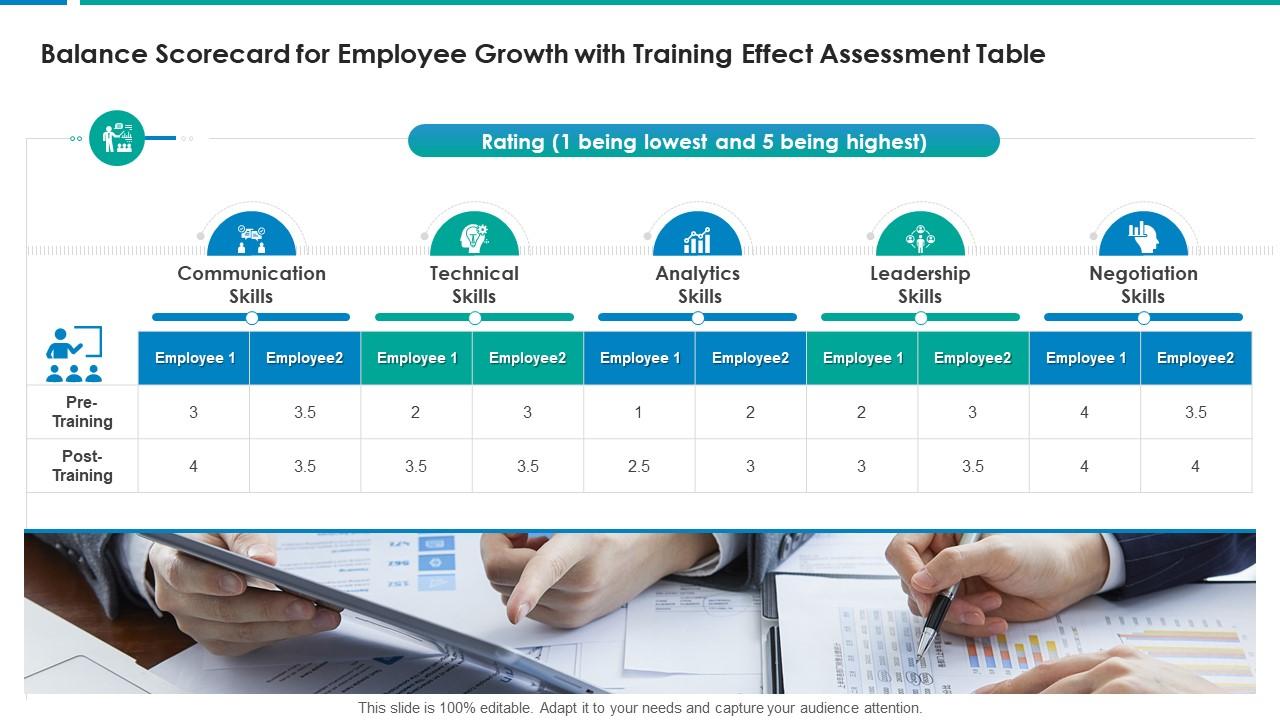
Measuring training effect by skill category—Communication, Technical, Analytics, Leadership, Negotiation—is something most scorecards skip. This PPT slide brings it into a single, structured assessment table. Learning managers and HR leads use it to show exactly where training moved the needle and where gaps remain. For Balanced Scorecard model practitioners, this deck adds a layer of employee-level granularity that broad scorecards miss. The template is 100% editable and customizable.
Download this PowerPoint Template
Template 15: Balanced Scorecard for Business Case Evaluation
Business case evaluation needs a scorecard format that cuts through complexity fast. This slide organizes Market, Service, and Business dimensions into a readable, decision-ready layout. Strategy teams and consultants use it to present business case assessments with clarity and authority. It fits naturally into Balanced Scorecard consulting engagements or corporate evaluation reviews. The template is 100% editable and customizable.

Download this PowerPoint Template
Template 16: HR Metrics Scorecard to Measure Training Effectiveness
HR KPI tracking without a clear scorecard tends to produce reports nobody reads. This template captures training effectiveness, absence rate and cost, benefits satisfaction, productivity rate, and net promoter score in one structured view. The intuitive layout delivers instant visual clarity on which HR metrics are on track. Compelling data visualisations make complex workforce performance persuasive and presentable. Use this to anchor your HR Balanced Scorecard Training or Performance Indicator Training reviews. Transform your HR metrics presentations today. Download this dynamic template now and unlock measurable training ROI.

Download this PowerPoint Template
Template 17: Strategy Balanced Scorecard Strategy by Robert Kaplan and David Norton
Robert Kaplan and David Norton's original balanced scorecard framework still needs to be explained clearly—even to experienced managers. This PPT preset covers the Financial Perspective linkage and the foundational strategy connection in a structured, credible format. It's built for Balanced Scorecard certification sessions or Strategic Management Training programs where theory meets application. The Balanced Scorecard strategy map connection is made explicit, giving audiences a complete picture. The template is 100% editable and customizable.

Download this PowerPoint Template
Template 18: Elements of Balanced Scorecard Training PPT
Explaining the four elements of a balanced scorecard to a mixed audience requires a slide that's structured and approachable. This PPT deck was built by experts and covers each element with appropriate depth—useful for Balanced Scorecard workshops, onboarding sessions, and Balanced Scorecard E-Learning modules alike. Managers, employees, and organizations at any level can follow the content without prior training background. The layout keeps the audience focused without oversimplifying the methodology. The template is 100% editable and customizable.
[product_image id=1150651]
Template 19: Business Management Trainee Training Scorecard
Intern and trainee progress tracking often falls through the cracks of formal scorecards. This template captures training topics, completion status—Pending, Trained, or Very Competent—and Process Flow in a clear, trackable layout. The structured design delivers instant visibility into where each trainee stands across subject areas. An intuitive status system empowers managers to make timely intervention decisions. Use this to build compelling Business Management trainee review decks for your corporate onboarding programs. Transform your trainee tracking presentations today. Download this dynamic template now and unlock structured talent development.

Download this PowerPoint Template
Template 20: Balance Scorecard for Employee Growth and Training Skill Gap Assessment
Skill gap assessment tied to a balanced scorecard gives learning programs actual teeth. This template captures Technical Skills, Teamwork, Innovation, Creativity, Project Management, and Process Improvement gaps in one Excel-linked chart that updates automatically. The live data connection means the slide is always current—no manual reformatting between reviews. Use it for KPI Training sessions or Strategic Planning Training workshops where real numbers matter. Transform your skill gap presentations today. Download this dynamic template now and unlock data-driven workforce planning.

Download this PowerPoint Template
Elevate Your Balanced Scorecard Training with SlideTeam
SlideTeam's PowerPoint templates are the best in the industry for balanced scorecard training. These content-ready slides cover every layer—from organizational strategy execution to individual skill gap assessment—saving your team hours of design work. Use these ready-made frameworks to run sharper KPI training sessions, performance reviews, and scorecard workshops that actually move the room. Deploy these PowerPoint slides and turn your next training program into a measurable business outcome.
FAQs on Balanced Scorecard Training
How does balanced scorecard training differ across hierarchical levels within an organization?
Training content must match the decision scope of each level. Executives focus on strategy maps, financial outcomes, and cross-functional alignment. Middle managers work on departmental KPIs and initiative tracking. Front-line staff need simple, task-linked metrics. One-size-fits-all training fails because the scorecard looks different from each chair. Build three distinct content tracks—one per level—and align the language to each audience's actual accountability.
What are the most common pitfalls organizations face when implementing balanced scorecard training programs?
The biggest pitfall is training without context—teaching the framework before linking it to real business goals. Teams also struggle when scorecard KPIs aren't owned by anyone specific. Training that stops after one session rarely sticks. The fix: tie every metric to a named owner, run follow-up sessions quarterly, and make scorecard reviews part of existing management meetings—not separate events.
How can balanced scorecard training be effectively integrated into an organization's existing performance management system?
Map the balanced scorecard's four perspectives directly to existing appraisal and reporting cycles. Replace orphaned KPI reports with scorecard views. Train managers to use scorecard data in their regular one-on-ones. The goal is zero new meetings—scorecard conversations should replace low-value status updates, not add to the calendar. Integration works best when the scorecard becomes the language of existing performance conversations.
What role does leadership play in driving successful balanced scorecard training adoption?
Leadership sets the signal. If senior leaders don't reference scorecard data in decisions, the training loses credibility fast. The most effective approach: have the CEO or department head present the scorecard in the first training session. When leaders ask scorecard questions in reviews, teams learn quickly that the framework is real—not just a HR compliance exercise.
How do you measure the ROI of a balanced scorecard training initiative?
Measure three things: behavior change, performance shift, and cost comparison. Track whether managers actually use scorecard data in decisions post-training. Compare KPI hit rates before and after the program. Calculate the cost of training against the value of improved performance or reduced decision errors. ROI doesn't need to be complex—it needs to be tied to specific, pre-agreed metrics from day one.
What are the key differences between training employees on a strategy map versus a balanced scorecard?
A strategy map shows cause-and-effect links between objectives across the four perspectives. A balanced scorecard tracks whether those objectives are being met, using KPIs and targets. Training on strategy maps is about thinking—understanding why objectives connect. Training on scorecards is about doing—reading metrics, owning targets, and taking corrective action. Most programs need both, in that order.
How should balanced scorecard training content be tailored for non-financial managers?
Drop the financial jargon. Replace 'return on equity' with 'revenue per customer' or 'cost per service.' Focus non-financial managers on the Customer and Internal Process perspectives first—those connect directly to their daily work. Use real examples from their department, not hypothetical business cases. The framework stays identical; the examples and language shift entirely to what that manager actually controls.
What metrics should be used to evaluate the effectiveness of a balanced scorecard training program?
Track four metrics: KPI adoption rate (are managers using scorecard data?), score accuracy (are targets being set realistically?), review frequency (are scorecard check-ins happening?), and performance delta (did results improve post-training?). Avoid measuring training satisfaction alone—it tells you almost nothing about whether the program changed behavior. Tie at least one metric to a business outcome, not a training output.