





 0 Comment
 Customer Reviews

The deck's been sitting in the shared drive for a week. Three slides. A box labeled "Business Model" with nothing inside it.
Not because nobody knows what the business does. They do. But somewhere between "we charge customers for X" and "here's how we actually make money," something gets lost. The logic is there. The clarity isn't.
This is the part nobody talks about—the gap between having a working business and being able to show how it works. Founders know their customers. They know their costs. They've got a revenue number in their heads. But when someone asks them to put it on a slide, it all sort of collapses into bullet points that don't connect.
And it's not a knowledge problem. It's a structure problem.
Business model generation frameworks—the Canvas, value proposition mapping, revenue stream breakdowns—exist because this gap is universal. Every company, at some point, has to make its internal logic visible. To investors, to new hires, to partners, to the board. The structure matters more than the content sometimes. A well-organized model makes a mediocre idea look credible. A messy one makes a great idea look half-baked.
The templates exist because most people aren't starting from zero—they're starting from a conversation that already happened, decisions that were already made. What they need is a frame. Something to drop the information into so it reads like a plan instead of a paragraph.
SlideTeam's business model generation templates handle exactly this. Pre-designed layouts built around the frameworks that actually get used—Canvas structures, revenue models, MVP planning, value creation maps. Ready-made, so you're not designing and thinking at the same time.
Here's what's in the collection.
Template 1: Business Model Generation Value Proposition PowerPoint Presentation Slides
Value proposition design is where most business models either hold together or fall apart. This PowerPoint slide is built for founders, analysts, and strategists who need to present the full value logic of their business clearly. It uses Venn diagrams and charts to map how customer needs align with offerings. For context, this PPT works well across stakeholder reviews and investor briefings alike. The template is 100% editable and customizable.
[product_image id=83119]
Template 2: Three Pillars of Business Value Generation Strategy
Most organizations struggle to show how their product, supply chain, and communication choices connect to actual social impact. This PPT template gives practitioners a clean three-pillar structure to present value creation logic to leadership or external stakeholders. It's the kind of slide that works in a CSR review or a strategic business planning session where alignment across functions matters. The template is 100% editable and customizable.
[product_image id=1171200]
Template 3: Our Business Model Example PPT Presentation
Presenting a business model to a mixed audience—investors, partners, new hires—requires a structure that holds across different levels of context. This PowerPoint slide covers five core stages, giving practitioners a ready frame for business model examples across industries. It fits naturally into a company overview deck or a market entry strategy presentation. The template is 100% editable and customizable.

Download this PowerPoint Template
Template 4: Strategic Value Generation Business Model
A business model only creates value if the inputs, processes, and outputs are clearly mapped and connected. This PPT template is built for strategists who need to show how human resources, technology, and financial investment translate into market reputation. It covers five stages—from resource inputs through to impact—making it useful in board reviews and competitive advantage framework discussions. The template is 100% editable and customizable.
[product_image id=1171197]
Template 5: Growth in Revenue Generation from Business Model Icon
Revenue growth visuals need to be immediate and unambiguous. This four-stage icon-based slide captures growth, revenue generation, and business model momentum in a single, scannable frame. Structured layouts deliver instant visual clarity on each revenue milestone. The striking design commands audience attention in financial reviews and investor presentations. Elevate your revenue generation presentations today. Download this dynamic template now and unlock clear, confident financial storytelling.

Download this PowerPoint Template
Template 6: Building Career Growth Paths PPT Outline
Career growth frameworks deserve a presentation that matches their ambition. This engaging deck captures audience attention from the first slide with a polished, professional design. Structured layouts deliver clear, compelling career pathway narratives. You can build comprehensive career development roadmaps with strategic milestones and actionable growth plans effortlessly. Transform your career planning presentations today. Download this dynamic template now and unlock the full impact of your growth story.
[product_image id=1779596]
Template 7: Improving Business Models through Unit Economics Evaluation PPT Presentation
Unit economics is where scalable business models are actually tested—not in pitch decks, but in the numbers behind each transaction. This PPT deck is built for analysts and operators who need to present cost structure optimization and business model evaluation findings to decision-makers. Explore more business model generation PPT templates with examples and samples to find the right frame for your unit economics story. The template is 100% editable and customizable.
[product_image id=1775280]
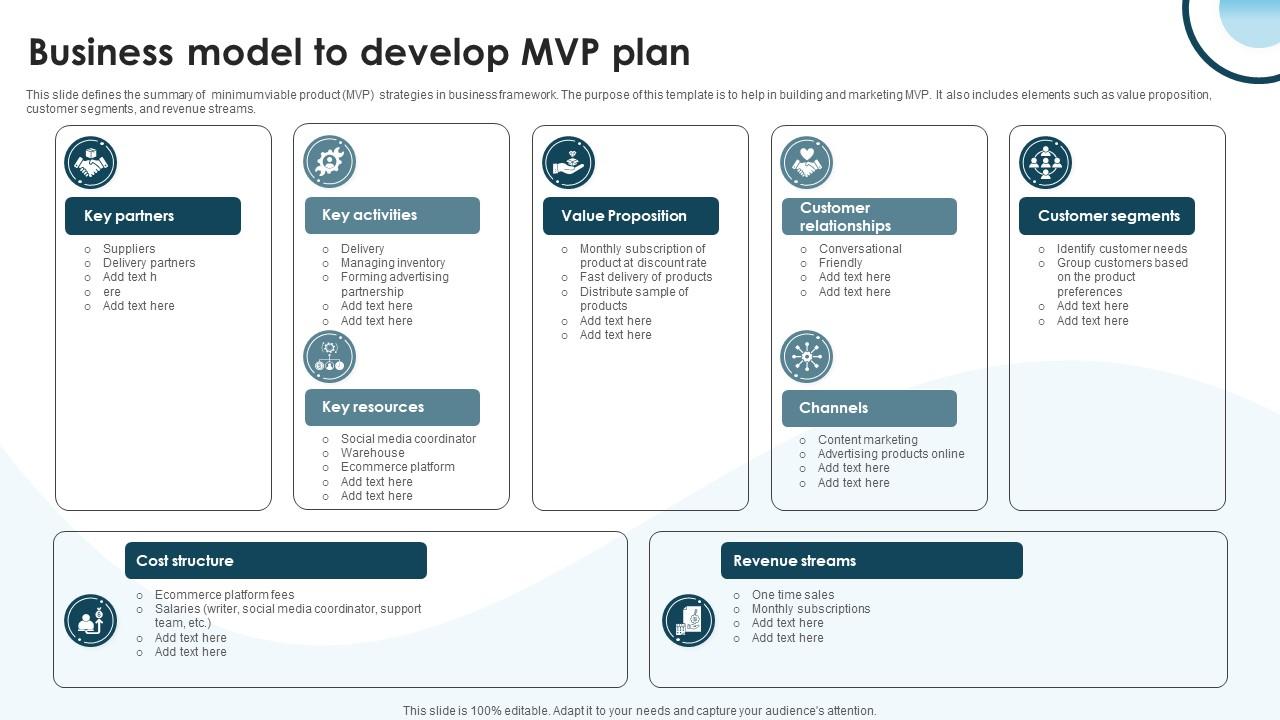
Template 8: Business Model to Develop MVP Plan
MVP planning conversations tend to get messy when value proposition, customer segments, and revenue streams aren't shown together in one place. This PPT slide is built for product managers and startup founders who need to present a lean startup methodology framework clearly and credibly. It covers seven stages, from customer relationships through to cost structure, making it a strong fit for pre-launch reviews or investor readiness sessions. The template is 100% editable and customizable.
Download this PowerPoint Template
Template 9: Business Idea Generation Conceptual Framework
Idea generation in a business context isn't a creative exercise—it's a structured process from proof of concept through to deployment. This PowerPoint slide helps practitioners map that process across five stages, including business process workshops and final documentation. It works well in innovation sprints, entrepreneurship strategy sessions, or business model prototyping workshops where a shared visual keeps everyone aligned. The template is 100% editable and customizable.

Download this PowerPoint Template
Template 10: Social Value Generation Model of Business
Social value creation is harder to communicate than financial value—the logic is less linear and the stakeholders are more varied. This PPT template gives practitioners a clear three-stage structure covering organizational mission, focus areas, materialities, and regional contribution. It's a practical slide for CSR reporting, impact investor briefings, or any business growth framework presentation that includes a social dimension. The template is 100% editable and customizable.
[product_image id=1171195]
Template 11: AIDA Model Sales Generation Funnel for the Company Overview with Detailed Business Model
Sales funnels are only useful when each stage—Awareness, Interest, Desire, Action—is clearly tied back to the business model it serves. This PPT slide uses the AIDA model to map lead conversion across four stages, connecting funnel logic directly to company overview and revenue stream strategy. It's the right slide for a sales leadership review or a business model generation deck aimed at commercial stakeholders. The template is 100% editable and customizable.

Download this PowerPoint Template
Template 12: Four Key Ecommerce Business Revenue Generation Model
E-commerce revenue models aren't interchangeable—advertising, subscription, transaction fee, and sales revenue each carry different margin profiles and customer dynamics. This four-stage slide captures those distinctions clearly, giving product and finance teams a shared frame for revenue stream strategy discussions. Structured layouts deliver immediate visual contrast between models, making trade-offs legible at a glance. You can build rigorous revenue model comparisons for e-commerce strategy reviews effortlessly. Transform your revenue presentations today. Download this dynamic template now and unlock sharper commercial decision-making.

Download this PowerPoint Template
Template 13: One Page Addressing Value Generation through Business Model for Firm Contd Infographic PPT PDF Document
Sometimes a single-page view is all you need to show how a business generates and delivers value. This one-pager PPT is built for practitioners who need to present a complete business model framework without overwhelming their audience. It handles complex data clearly, making it a strong fit for board briefings, client proposals, or business model validation checkpoints where brevity matters most. The template is 100% editable and customizable.

Download this PowerPoint Template
Template 14: Model for Generation of Revenue
Revenue generation models work best when the logic from activity to business growth to profit is shown in sequence. This three-stage PPT slide is built for finance leads and business owners who need to present a clean, connected revenue narrative. It fits naturally in quarterly business reviews or strategic business planning sessions where the audience needs the full picture fast. The template is 100% editable and customizable.

Download this PowerPoint Template
Template 15: Four Business Revenue Generation Models for Entrepreneurs
High-revenue models for entrepreneurship—featured listings, sponsored emails, affiliate deals, key partnership strategy—rarely get presented in a way that shows how they compare. This four-stage PPT slide gives entrepreneurs and growth leads a structured frame to present and evaluate multiple revenue approaches side by side. It's well suited for investor pitches, accelerator reviews, or entrepreneurship strategy guide presentations. The template is 100% editable and customizable.

Download this PowerPoint Template
Template 16: Business Model Development Our Business Model
Business model development presentations often lose the audience when the logic across five stages isn't visually connected. This PPT slide is built for strategists and team leads who need to walk stakeholders through a business model clearly and methodically. It's a practical choice for internal planning sessions or partner briefings where the audience needs structure more than detail. The template is 100% editable and customizable.

Download this PowerPoint Template
Template 17: Business Model Development Our Business Model Stream PPT
Revenue stream logic across five business model stages needs a visual that holds up under scrutiny. This slide captures the full arc of business model development with professional, structured layouts that deliver instant credibility. Compelling visualisations make complex revenue relationships persuasive and easy to follow. You can build clear, executive-ready business model stream presentations with precision and confidence. Transform your business model presentations today. Download this dynamic template now and unlock audience alignment from slide one.

Download this PowerPoint Template
Template 18: Business Model Development PPT Presentation Examples
Multiple node layouts give practitioners flexibility when presenting business model examples across different contexts and audience types. This deck provides professional design with a polished aesthetic that builds instant credibility with investors and leadership teams. Structured layouts deliver comprehensive business model development narratives that are easy to navigate and adapt. You can build authoritative business model presentations with strategic depth and visual clarity effortlessly. Transform your presentation approach today. Download this dynamic template now and unlock impactful business model storytelling.

Download this PowerPoint Template
Template 19: Business Model Development Business Model Archtypes PPT Demonstration
Business model archetypes—platform, subscription, disruptive—are easier to evaluate when they're placed side by side in a consistent visual structure. This three-stage PPT deck gives strategists and consultants a clean frame for presenting and comparing business model innovation options. Structured layouts deliver immediate clarity on each archetype's distinguishing logic. You can build rigorous business model archetype analyses for leadership and investor audiences with confidence. Transform your strategic presentations today. Download this dynamic template now and unlock sharper business model thinking.

Download this PowerPoint Template
Template 20: Company Strategic Model for Business Planning
Strategic business planning works best when vision, long-term strategy, annual objectives, and action items share the same visual frame. This PowerPoint slide is built for leaders and planning teams who need to present a company strategic model that connects intent to execution. So, whether you're running a business planning offsite or briefing the board on annual direction, this PPT holds the full structure together clearly. The template is 100% editable and customizable.

Download this PowerPoint Template
Transform Your Business Model Presentations with SlideTeam
SlideTeam's PowerPoint templates are the best in the industry for business model generation. These content-ready slides save you hours of structuring, so you can focus on the thinking—not the formatting. Whether you're mapping a Business Model Canvas, presenting revenue stream options, or walking stakeholders through a value creation framework, these ready-made layouts give you professional clarity from slide one. Deploy these PowerPoint slides to communicate your business model with confidence and drive the decisions that matter.
FAQs on Business Model Generation
How does the Business Model Canvas differ from a traditional business plan in terms of strategic flexibility?
A traditional business plan is a fixed document—written once, updated rarely. The Business Model Canvas is a one-page visual that teams can revise in real time as assumptions change. It separates nine building blocks clearly, so you can adjust one element—say, customer segments—without rewriting the whole plan. This makes it far more useful during early-stage pivots or market entry decisions where conditions shift quickly.
What role does customer segmentation play in determining the value proposition of a business model?
Customer segmentation tells you who you're solving for. Without it, your value proposition is generic and easy to ignore. When you know exactly which segment has the sharpest pain point, you can tailor the offering, the price, and the channel to match. Most strong business models start here—not with the product, but with a specific customer who has a specific problem worth solving.
How can startups use business model generation frameworks to pivot without losing core value?
A pivot doesn't mean starting over—it means changing one or two elements of the model while keeping what works. Frameworks like the Business Model Canvas make this visible: swap the customer segment or revenue stream, leave the value proposition intact. Test the new assumption fast and cheaply. The lean startup approach of build-measure-learn keeps core value preserved while the surrounding model adapts.
What are the key differences between a freemium and a subscription-based revenue stream model?
Freemium gives users a free tier and charges only for premium features. Subscription charges all users a recurring fee from day one. Freemium scales user numbers fast but converts slowly. Subscription generates predictable revenue but requires upfront value proof. The right choice depends on your conversion cost, retention rate, and how quickly users reach the value threshold that makes them willing to pay.
How does the concept of key partnerships influence cost structure in a business model?
Key partnerships reduce costs by outsourcing activities you don't need to own. A logistics partner removes the need for a warehouse. A technology partner cuts R&D spend. When you map partnerships carefully, you shift fixed costs to variable ones and reduce operational risk. The cost structure in your business model should reflect which activities you handle internally and which partners handle more efficiently.
In what ways can a multi-sided platform business model create network effects to drive growth?
A multi-sided platform creates value by connecting two or more distinct user groups—buyers and sellers, creators and audiences. As one side grows, it attracts the other, compounding network value. The key is reducing friction for early adopters on the harder-to-recruit side, often through subsidies or free access. Once both sides reach critical mass, growth becomes self-reinforcing and the platform's competitive position strengthens significantly.
How should a company reassess its channels when transitioning from a B2B to a B2C model?
B2B channels are direct—sales teams, account managers, long contracts. B2C channels are broader and faster—retail, digital ads, social platforms. When transitioning, audit which existing channels reach individual consumers cost-effectively. Build for shorter purchase cycles and higher volume. Invest in digital discovery early. The biggest mistake is keeping a B2B sales structure while trying to serve a B2C customer who buys differently and expects more immediacy.
What are the most common mistakes entrepreneurs make when defining their customer relationships in a business model?
The most common mistake is treating customer relationships as a single category when they vary widely by segment. Entrepreneurs often default to personal assistance for all customers—expensive and unscalable. Others automate too early and lose trust. Map the relationship type each segment actually needs: self-service, community, dedicated support. Then design the model around what the segment will accept and what the cost structure can sustain.