




 0 Comment
 Customer Reviews

The business plan's been sitting in a folder for three weeks. Open, close, open again.
Not because the idea isn't solid. Discount retail is one of the few models that actually holds up when consumer spending tightens—people don't stop buying, they just start buying smarter. The idea makes sense. The numbers, probably, make sense. But somewhere between "I want to open a discount store" and "here is our five-year revenue projection, our target market breakdown, and our competitive positioning," something stalls.
It's the blank slide. Or the blank section. The one that says "Executive Summary" at the top and nothing underneath.
Most people who want to start a discount store know the business intuitively. They know margins are thin. They know volume is the game. They know location matters more than advertising, and that inventory turnover is the metric that actually tells you whether you're surviving or just busy. They know all of that. What they don't know is how to put it on a slide that makes a bank officer or a potential investor sit up straighter.
That gap—between understanding a business and presenting it credibly—is where plans die. Not because the business is bad. Because the document isn't doing the work it needs to do.
There's also the time problem. Building a retail store business plan from scratch, when you're simultaneously sourcing inventory, scouting locations, and figuring out operating costs, is a particular kind of exhausting. The deck becomes the thing that never gets finished.
So templates exist. Specifically for this. Not generic business plan templates that could be for anything—but structured, section-by-section frameworks designed for discount retail, supermarket models, ecommerce store extensions, and everything adjacent.
SlideTeam's discount store business plan templates are built for exactly this moment—when you know what you're building but need the structure to show it clearly. Pre-designed, content-ready slides that handle the hard part: organizing what you know into something another person can follow.
Here are the templates worth looking at.
Template 1: Discount Liquor Store Business Plan PowerPoint Presentation Slides
Running a discount liquor store demands clear, investor-ready documentation. This PPT deck is built for founders who need to present a full business case—covering market positioning, pricing logic, and growth opportunity—without starting from zero. Whether you're walking a lender through your discount store business model or pitching a regional rollout to partners, this slide handles the structure. It keeps your argument tight and your numbers visible. The template is 100% editable and customizable.
[product_image id=1102194]
Template 2: Discount Store Business Plan PowerPoint Presentation Slides
Getting a discount store off the ground means convincing people—investors, lenders, partners—before the first shelf is stocked. This PPT deck gives founders a credible, structured framework for that conversation. It covers the core sections any serious plan needs: market context, competitive positioning, and financial logic. Reach for this when you need to present a discount store business plan that holds up to scrutiny. The template is 100% editable and customizable.
[product_image id=1119382]
Template 3: Retail Store Business Plan PowerPoint Presentation Slides
A retail business plan that answers every hard question before the audience asks them is what this deck delivers. Structured layouts capture your market positioning, operational model, and financial projections with clarity. The pre-designed framework saves hours you'd otherwise spend on formatting from scratch. Use it to present compelling Retail Business Startup Costs and growth roadmaps with confidence. Transform your retail store pitch today. Download this dynamic template now and unlock investor-ready presentation quality.
[product_image id=788291]
Template 4: Business Plan for Online Store PowerPoint Presentation Slides
Capturing venture capital or partnership interest for an online store demands a plan that reads as clearly as it presents. This deck merges structured narrative with visual clarity, guiding your audience through every business plan component. The pre-designed layouts translate complex e-commerce models into persuasive, digestible slides. Built for founders pitching digital-first discount retail concepts, it accelerates the path from idea to funded. Transform your online store presentations today. Download this dynamic template now and drive the funding conversations that matter.
[product_image id=658577]
Template 5: Provisional Store Business Plan PowerPoint Presentation Slides
Provisional store planning requires answering questions about product mix, supplier terms, and margin management—all before opening day. This deck structures those answers into a professional, board-ready presentation that commands credibility. Every layout converts operational complexity into visual clarity, so your audience follows the logic without effort. It empowers founders to present discount store inventory management plans and startup cost breakdowns with precision. Transform your provisional store pitch today. Download this dynamic template now and unlock a presentation that reflects your business's real depth.
[product_image id=872568]
Template 6: Sample Business Plan for Natural Products Store PPT Slides
Natural products retail is a specific pitch—health-conscious buyers, clean sourcing claims, margin pressure from specialty competitors. This PPT preset gives practitioners a visually grounded framework for presenting that case. It works for client pitches and investor briefings alike, covering the business model components a natural products startup needs to address. When your audience wants proof, the concept is sound, this deck does the organizing. The template is 100% editable and customizable.
[product_image id=1465772]
Template 7: Agenda Discount Store Business Plan PowerPoint Template
Agenda slides often get skipped or thrown together last. This PPT template makes them do real work—covering six structured stages including financials, marketing, and sales growth for a discount store business plan. It gives an audience immediate orientation, so the rest of the presentation lands with more clarity. Use it when the room needs to know exactly where the conversation is going before it starts. The template is 100% editable and customizable.
[product_image id=1121359]
Template 8: Business Plan for E-commerce Store
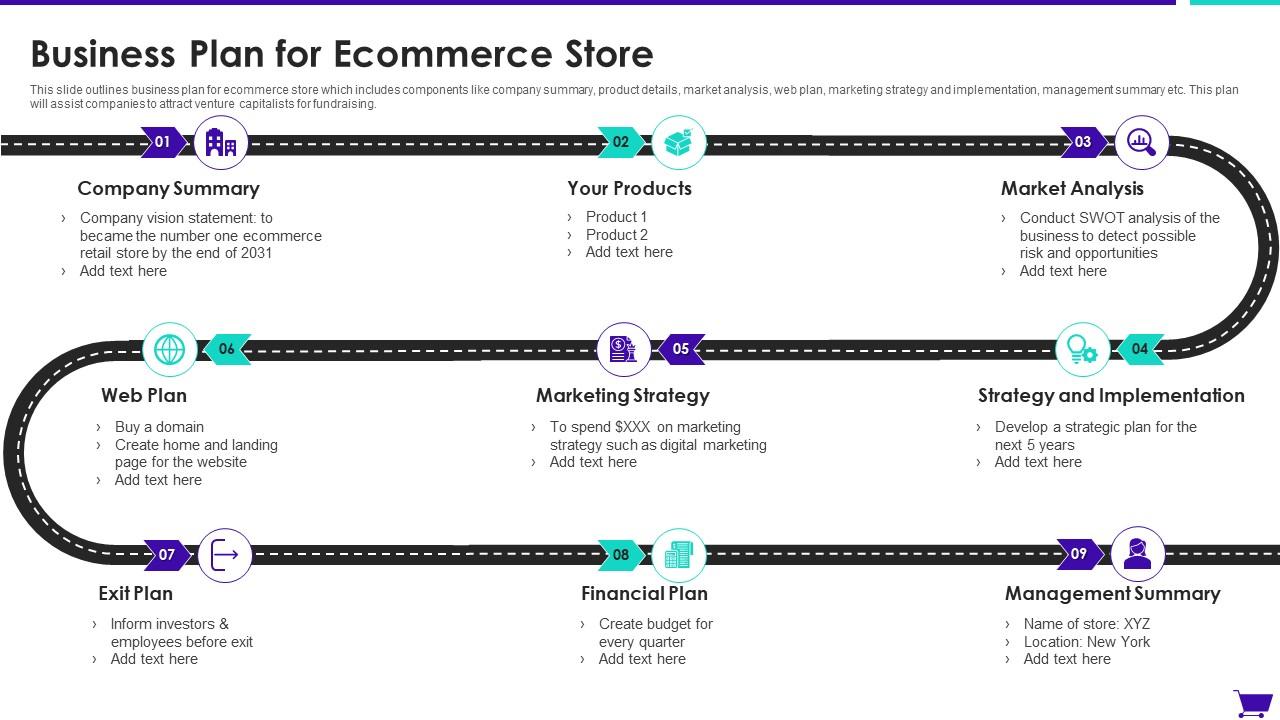
Attracting venture capital for an ecommerce store starts with a plan that covers all nine critical components clearly. This PowerPoint slide walks through company summary, product details, market analysis, web plan, and management summary in one structured deck. It's built for founders who need to present a discount store revenue model in a digital context. For teams preparing a convenience store business plan with an online extension, this PPT offers a ready scaffold. The template is 100% editable and customizable.
Download this PowerPoint Template
Template 9: Strategic Business Model for Supermarket Discount Store Business
Business model clarity is what separates a fundable supermarket plan from one that gets shelved. This PowerPoint slide maps partners, activities, resources, value propositions, channels, and revenue streams into one coherent visual. Operators and investors both need to see how the discount store business model generates and retains value. This deck makes that argument without overloading the slide. The template is 100% editable and customizable.
[product_image id=1121393]
Template 10: Executive Summary of Supermarket Start-Up Discount Store Business
A strong executive summary frames the entire pitch before a single financial slide appears. Built for supermarket startups, this deck captures the current market status, growth opportunities, and organizational goals in one focused visual. It gives investors a fast read on why the discount store opportunity exists now. Every slide section drives toward a single, clear answer: why this business, at this moment. Deploy this Discount Store Executive Summary to set the tone before the first question is asked. Download this dynamic template now and unlock a pitch-opening that commands the room.
[product_image id=1121370]
Template 11: Highlighting Challenges Faced by Supermarket Discount Store Business PPT Slide
Retail investors and operators expect founders to name the hard problems—not discover them mid-pitch. This PPT preset covers six real supermarket challenges: fierce competition, inefficient processes, operation management issues, inventory loss, and more. It's built for practitioners who need to show they've done the honest work of a discount store market analysis. Naming the problems before the audience does builds credibility fast. The template is 100% editable and customizable.
[product_image id=1121374]
Template 12: US Food and Grocery Retail Market Discount Store Business
Market sizing slides either earn credibility or lose it in the first 30 seconds. This deck delivers a detailed assessment of the US food and grocery retail market, giving investors the context they need to evaluate a supermarket's growth projections. It surfaces the numbers that matter—market scope, consumer reach, and brand positioning opportunity. Use it when your discount store market analysis needs to go beyond general claims into evidence. Transform your market analysis presentations today. Download this dynamic template now and unlock the data clarity that moves investors.
[product_image id=1121396]
Template 13: Effective Revenue Generation Model for Supermarket Start-Up Discount Store Business
Revenue model slides need to show exactly where the money comes from and when. This deck maps a supermarket startup's revenue generation from 2023-2027, calculated against population capture rates and income sources. It gives CFOs and investors a precise view of the discount store profit margin trajectory over time. The layout makes multi-year financial logic readable without a separate explainer. Transform your revenue model presentations today. Download this dynamic template now and unlock financial projections that measure up to investor scrutiny.
[product_image id=1121368]
Template 14: Icons Slide Discount Store Business Plan Explained Complete Deck
Icon-sets sound minor until you're mid-deck and the visual language falls apart. This PPT preset gives discount store business plan presentations a full library of fully editable icons, purpose-built for retail and business plan contexts. Practitioners use it to maintain visual consistency across all slides—from market analysis to org charts. It's a quiet but real time-saver for anyone building a complete presentation. The template is 100% editable and customizable.
[product_image id=1121375]
Template 15: Professional Summary of Supermarket Start-Up Founder Discount Store Business
Investors fund people as much as they fund businesses. This PowerPoint slide puts the founder's professional record—education, work history, key skills, and leadership approach—into a structured, credible format. For a supermarket startup pitch, showing that the founder brings real commercial experience in sales, customer service, and decision-making matters. This deck does that work without requiring a resume attached as an appendix. The template is 100% editable and customizable.
[product_image id=1121387]
Template 16: Discounted Cash Flow Valuation for Supermarket Start Up Discount Store Business
Discounted cash flow valuation is the number most investors will calculate anyway. This PPT slide makes it part of the pitch instead of an afterthought — covering risk-free return, free cash flow to the company, NPV of FCFF, and terminal year value. It's built for supermarket startup founders who need to show they understand what an investor actually gets back. For a retail business plan for investors, this is one of the slides that signals seriousness. The template is 100% editable and customizable.
[product_image id=1121367]
Template 17: Product and Services Offered by Supermarket Discount Store Business
Product range clarity matters more than most founders realize in a retail pitch. This deck details the full scope of supermarket offerings—pharmacy products, skin and healthcare, packed and cooked food—across US and international customer segments. It converts a broad product list into a structured visual that tells a market reach story. Built to help investors see how product breadth supports margin diversification in a discount retail context. Transform your product portfolio presentations today. Download this dynamic template now and unlock a product slide that earns serious attention.
[product_image id=1121386]
Template 18: Possible Exit Strategies for Supermarket Discount Store Business
Exit strategy slides are rarely included early enough in a business plan. This PowerPoint slide covers five options—private offerings, venture capital, acquisitions, mergers, and IPOs—with enough structure to show founders have thought beyond launch. It's built for supermarket entrepreneurs who need to address investor liquidity questions before they're asked. Including this in a discount store business plan signals long-term commercial thinking. The template is 100% editable and customizable.
[product_image id=1121385]
Template 19: Organizational Structure for Effective Business Operations in Discount Store Business
Org chart slides often get treated as filler. This PPT preset treats them as evidence—mapping the full hierarchy from CEO through finance, distribution, PR, merchandising, regional management, and administration. For a discount store business plan, showing that the operating structure is already defined reassures investors that execution is planned, not improvised. This deck makes that argument visually and clearly. The template is 100% editable and customizable.
[product_image id=1121383]
Template 20: Key Market Trends Shaping Supermarket Discount Store Business
Market trends slides earn their place when they connect directly to the company's plan. This deck covers seven trends shaping supermarket discount retail—including AI adoption, multiple delivery channels, and omnichannel expansion—with each trend tied back to competitive opportunity. It's built for founders who want to show they're not just aware of change, but positioned ahead of it. Use it to anchor the forward-looking section of a retail store SWOT analysis or competitive positioning argument. Transform your market trends presentations today. Download this dynamic template now and unlock a slide that makes your business look built for what's coming.
[product_image id=1121380]
Get that Check After Every Investor Meeting with SlideTeam
SlideTeam's PowerPoint templates are the best in the industry for discount store business planning. These content-ready slides save hours of formatting work while delivering the professional structure investors and lenders actually expect. From discount store market analysis to revenue models and org charts, each ready-made slide handles a section that typically stalls founders. Deploy these PowerPoint slides to present your discount retail vision with the confidence and clarity that drives real funding decisions.
FAQs on Discount Store Business Plan
What are the key financial metrics that distinguish a profitable discount store from one that fails within the first two years?
Profitable discount stores typically hit inventory turnover above 8x annually and keep gross margins between 25–35%. Stores that fail usually carry too much slow-moving stock and underestimate shrinkage costs. Watch three numbers closely: gross margin per SKU, weekly cash conversion, and operating expense as a percentage of revenue. If operating costs exceed 20% of revenue in year one, the model is under pressure.
How does a discount store business plan differ structurally from a traditional retail business plan?
A discount store plan puts far more weight on sourcing, inventory turnover, and shrinkage control than a traditional retail plan does. Traditional retail leads with brand and customer experience. Discount retail leads with cost structure and volume assumptions. The financial model also differs—thin margins mean the break-even unit count is much higher, so the plan must show how volume is achieved, not just assumed.
What sourcing strategies should a discount store owner prioritize to maintain consistently low price points without sacrificing product quality?
Three sourcing approaches work consistently: buying closeout and overstock inventory from wholesalers, direct relationships with manufacturers for off-season or surplus goods, and joining a retail buying group for volume pricing. Prioritize suppliers who can deliver consistently, not just cheaply once. Quality failures kill repeat traffic faster than price increases do.
How do you calculate the ideal inventory turnover rate for a discount store operating on thin margins?
Divide your annual cost of goods sold by average inventory value. For discount stores, target a ratio of 8–12 turns per year. Below 6 turns signals too much dead stock eating your cash. Above 12 may mean stockouts are costing you sales. Run the calculation monthly, not annually—thin margins mean problems compound fast.
What role does location analysis play in the success of a discount store, and which demographic factors carry the most weight?
Location drives foot traffic, and foot traffic drives volume—the core of any discount model. Prioritize areas with high population density, lower median household income (typically under $50,000), and proximity to public transit. Visibility from a main road and parking access matter more than the neighborhood's retail prestige. A good location can offset weak marketing; a bad one rarely recovers.
How should a discount store business plan address shrinkage and loss prevention given the high-volume, low-cost nature of the model?
Shrinkage in discount retail typically runs 1.5–3% of revenue—higher than traditional retail because of high product volume and lower per-item tracking. The business plan should budget for this explicitly and include three controls: organized store layout that limits blind spots, electronic article surveillance on higher-value items, and staff scheduling that keeps the floor covered during peak hours.
What competitive positioning strategies can a new discount store use to differentiate itself from established players like Dollar General or Family Dollar?
Don't compete on price alone—Dollar General and Family Dollar have supply chain advantages you can't match early. Instead, differentiate on product curation (carry what they don't), local brand relationships, or a specific category focus like natural products or ethnic groceries. Speed of restocking and staff familiarity with regular customers are real advantages a small operator can build that a chain cannot replicate.
How does a discount store business plan account for seasonal demand fluctuations while maintaining a lean cost structure?
Plan inventory purchases 8–12 weeks ahead of seasonal peaks and negotiate return windows with suppliers where possible. Keep a lean base inventory year-round and use seasonal buys as additions, not core stock. On the cost side, variable staffing tied to weekly sales volume is more effective than fixed headcount. The goal is to absorb demand spikes without carrying the cost when demand drops.