





 0 Comment
 Customer Reviews

The deck's been built. Forty slides, clean layout, logo in the right corner.
But somewhere between "platform business model" and the actual pitch, something goes missing. Not the content—the content's usually fine. It's the structure. The way the business works, who creates value and for whom, why producers show up, why consumers stay—none of that is easy to put on a slide without it turning into a wall of text or a vague diagram that means nothing to anyone in the room.
Platform businesses are genuinely different from traditional ones. There's no single flow of goods from supplier to customer. Value moves in multiple directions. The company doesn't always own what it sells. Users are sometimes both the product and the customer. Explaining that to a board, an investor, or even an internal team takes real thought—and real structure.
And then there's the canvas. Everyone's heard of the business model canvas. Far fewer people know what a platform-specific canvas looks like, how it maps consumers against producers, how it surfaces the roles of owners and partners, how it represents network effects without sounding like a textbook. Most people default to the standard template and then wonder why it doesn't quite fit.
That's not a knowledge gap. It's a format gap.
The templates exist because this problem is recurring. Every team that works on a platform—whether it's a two-sided market, a SaaS platform model, a gig economy platform, or something more complex—eventually needs to explain the architecture in a way that doesn't require a fifteen-minute preamble. A pre-designed framework handles the hardest part: the structure you'd otherwise spend hours arguing about.
SlideTeam's platform business model templates were built for this. Content-ready slides that cover everything from the canvas to feedback loops to monetization to competitive positioning. No starting from scratch. No reformatting at midnight.
Here's what's in the collection.
Template 1: Implementing Platform Business Model Company Platform Business Canvas Model
Mapping all the moving parts of a platform business onto one canvas is harder than it sounds. This PowerPoint slide is built for strategists who need to present consumer, partner, producer, and owner relationships in a single coherent view. The nine-stage structure covers Key Resources, Value Proposition, and Customer Relationships without leaving gaps. It's the kind of slide that makes a platform's logic visible to a room that hasn't seen it before. The template is 100% editable and customizable.

Download this PowerPoint Template
Template 2: Implementing Platform Business Model in the Company Understanding Feedback Loops Drive Business Agility
Awareness, balance, and agility are the three feedback loops every platform business depends on to stay alive. This six-stage layout transforms those loops into a clear visual argument for why business agility isn't optional. Each loop is mapped to a concrete outcome, making cause-and-effect relationships impossible to misread. You can use this to anchor platform strategy conversations or internal alignment sessions. Deliver compelling Platform Growth Strategy presentations with professional clarity and zero design time. Download this dynamic template now and unlock your platform agility framework.

Download this PowerPoint Template
Template 3: Capturing Rewards of Platform Business Platform Business Canvas Model
The rewards of a platform business only become clear when all sides of the model are visible at once. This PPT preset is built for founders and analysts who present to stakeholders unfamiliar with platform logic. It maps Key Partners, Key Activities, Value Proposition, and Customer Relationships across a single structured view. Explore more platform business model templates and examples to find the right fit for your presentation context. The template is 100% editable and customizable.

Download this PowerPoint Template
Template 4: Implementing Platform Business Model in the Company PowerPoint Presentation Slides
Some platform presentations need to cover the full picture—model, mechanics, competition, and growth in one deck. This comprehensive PPT template spans fifty-two slides, giving teams the space to tell a complete platform story. It works for investor decks, internal strategy reviews, and stakeholder briefings alike. Every slide can be adjusted to reflect your specific platform context and audience. The template is 100% editable and customizable.
[product_image id=462686]
Template 5: Cloud Platform Provider Business Model PPT Presentation
Cloud platform economics demand precision across financial projections, break-even analysis, and payback periods. This deck captures all five-year projections in a structured, sector-oriented format that answers investor questions before they're asked. The financial statements and valuation slides give your Business Model Canvas real numbers to stand behind. Stakeholders can track the Platform Revenue Model from assumptions through outcomes with complete clarity. Transform your cloud platform provider presentations into persuasive funding narratives today. Download this dynamic template now and unlock your financial storytelling advantage.
[product_image id=1280973]
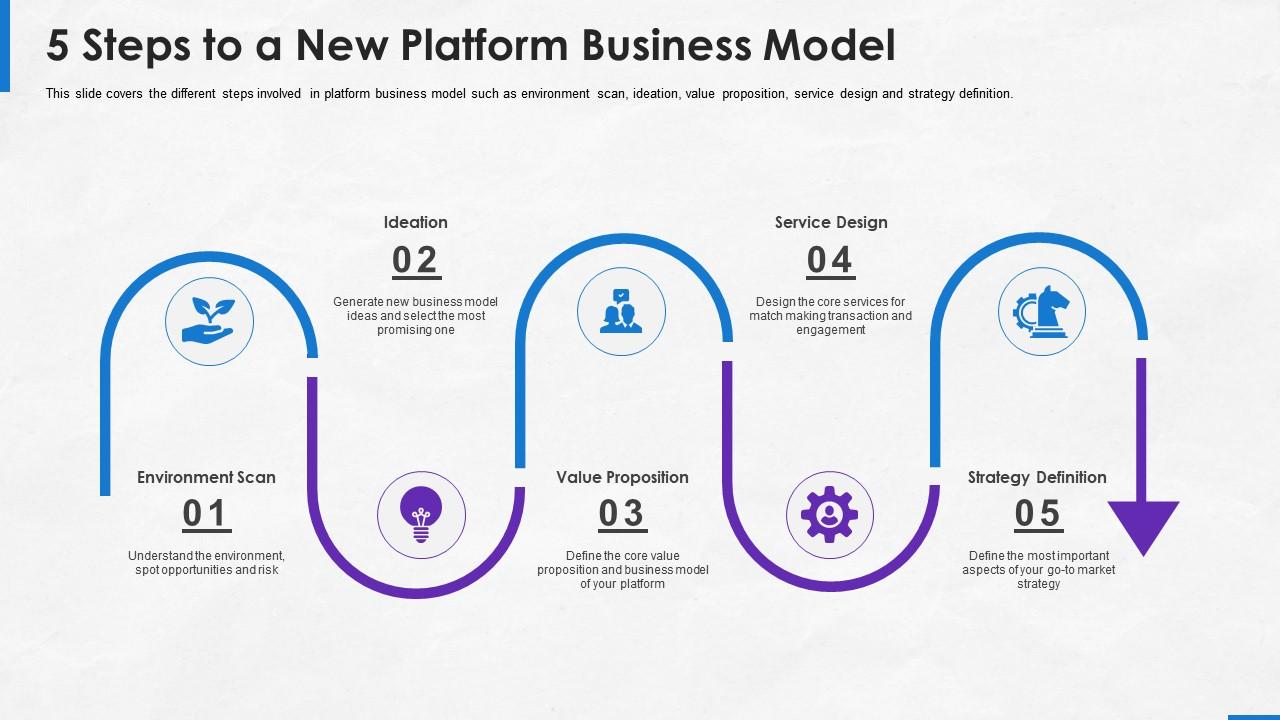
Template 6: Implementing Platform Business Model in the Company 5 Steps to a New Platform Business Model
Getting from a platform idea to a working model means moving through five distinct steps. This deck is built for teams walking leadership through the environment scan, ideation, value proposition, service design, and strategy definition phases in sequence. Each step is presented as a discrete stage, so the audience always knows where they are in the process. It's a practical tool for platform design workshops and executive briefings. The template is 100% editable and customizable.
Download this PowerPoint Template
Template 7: Platform Business Canvas Model Implementing Platform Business Model in the Company
A platform canvas built for four-stage presentations puts consumers, producers, partners, and platform owners into one structured argument. This layout drives instant comprehension of how your Platform Ecosystem connects each participant to the value created. The visual hierarchy ensures no relationship is buried or overlooked during a live presentation. Presenters can adapt each stage to reflect real business configurations without rebuilding from zero. Elevate your platform model presentations with a structure that commands immediate audience attention. Download this dynamic template now and unlock a canvas that works for every platform conversation.

Download this PowerPoint Template
Template 8: E Commerce Platform Business Model PPT Example
E-commerce platform models live or die on how clearly the business logic is presented to buyers and backers. This deck captures the full Digital Marketplace model—revenue flows, participant roles, and competitive positioning—in a visually compelling format. The design adapts to any brand identity, ensuring your platform story feels native to your organization. Use it for investor pitches, partner onboarding decks, or internal B2C Marketplace strategy reviews. Transform your e-commerce platform presentations into high-impact narratives today. Download this dynamic template now and unlock a deck that turns browsers into believers.
[product_image id=1404238]
Template 9: Implementing Platform Business Model in the Company Comparison of Different Types of Businesses
Understanding where a platform fits among other business types helps stakeholders make faster decisions. This slide is built for analysts and consultants presenting a side-by-side comparison of manufacturing, pipeline, and platform businesses. The structured layout makes the differences between business models concrete rather than conceptual. It's a reliable anchor slide for any platform strategy deck that needs to establish context early. The template is 100% editable and customizable.

Download this PowerPoint Template
Template 10: Corporate Networking Platform Business Model PPT
Corporate networking platforms run on relationship capital, and presenting that model clearly matters as much as the model itself. This PPT template is built for business development leads and platform architects pitching a professional network's value logic. It covers how participants connect, what value they exchange, and how the platform captures a share of that value. See cloud platform business model templates for related infrastructure and SaaS Platform Model frameworks. The template is 100% editable and customizable.
[product_image id=1404387]
Template 11: Social Media Platform Business Model PPT Sample
Social media platforms generate value through attention, and explaining that model to non-technical stakeholders takes a clear visual structure. This PPT template is built for product managers and growth teams presenting a Creator Economy Platform or ad-supported social model to leadership. It maps participant roles, revenue flows, and engagement loops in one coherent deck. The design is striking enough to hold a room without overshadowing the content. The template is 100% editable and customizable.
[product_image id=1416628]
Template 12: Implementing Platform Business Model in the Company Four Components of Platform Value Propositions
Platform value propositions rest on four pillars: search, trust, financial transactions, and delivery. This PPT preset is built for product leads and platform designers who need to explain what their platform actually provides to each participant group. Mapping all four components visually prevents the common mistake of treating value proposition as a single, undifferentiated claim. It's a high-utility slide for canvas presentations and platform design reviews alike. The template is 100% editable and customizable.

Download this PowerPoint Template
Template 13: Multi Service Platform Business Model PPT
Multi-service platforms are complex by design, and presenting that complexity without losing the audience requires real structure. This deck is built for platform operators and consultants pitching a multi-sided service model to executives or investors. It handles the layered revenue logic, participant segmentation, and service interdependencies that single-service frameworks can't accommodate. The design adapts quickly to match your platform's specific configuration. The template is 100% editable and customizable.
[product_image id=1396425]
Template 14: Business Model for Professional Connection Platform PPT Example
Professional connection platforms run on trust and targeted matching—and both need to be visible in a pitch. This deck captures the full business model for professional network platforms, from User Acquisition Strategy through monetization and retention. The balanced design lets you present the participant logic and revenue model simultaneously without crowding either. Adaptable color themes ensure the deck fits your brand in minutes rather than hours. Transform your professional networking presentations into clear investment narratives today. Download this dynamic template now and unlock a business model framework that resonates with every stakeholder.
[product_image id=1407434]
Template 15: Social Networking Platform Business Model PPT Sample
Social networking platforms depend on participant density, and explaining that dependency clearly makes or breaks a pitch. This PPT template is built for founders and growth leads presenting a platform's network logic to investors or partners. It covers participant roles, engagement drivers, and the revenue model in a single visual flow. The deck works equally well for early-stage pitches and established platform reviews. The template is 100% editable and customizable.
[product_image id=1411581]
Template 16: Gaming Platform Business Model PPT Slides
Gaming platforms operate on a distinct economic logic—engagement loops, virtual goods, and community effects all drive revenue in ways traditional models don't capture. This deck translates that logic into a structured business model presentation built for gaming executives and platform strategists. Each slide is designed to make the relationship between engagement and monetization visually clear. Use it for publisher pitches, investor briefings, or internal platform planning sessions. Elevate your gaming platform business model presentations with a design that commands attention today. Download this dynamic template now and unlock a deck built for the platform economy's fastest-moving sector.
[product_image id=1405880]
Template 17: Online Engagement Platform Business Model PPT Sample
Online engagement platforms monetize attention and interaction—two things that are hard to quantify without the right visual framework. This deck gives product and marketing teams a structured way to present their engagement model, participant journeys, and Platform Monetization logic to any audience. The pre-designed layout balances data visualization and narrative flow without requiring design expertise. Customizable color schemes ensure the deck aligns with your brand in seconds. Transform your online engagement platform presentations into persuasive, audience-ready narratives today. Download this dynamic template now and unlock the structure your engagement model deserves.
[product_image id=1393638]
Template 18: Data Sharing and Collaboration Platform Business Model PPT Example
Data-Driven Platform models depend on showing how data flows between participants and how that flow creates compounding value. This deck is built for platform architects and data leads presenting a collaboration and sharing model to technical and non-technical stakeholders alike. The AI-Powered Platform framing helps contextualize data exchange as a strategic asset rather than a backend function. The innovation-forward design signals sophistication without sacrificing clarity. Transform your data platform presentations into compelling strategic arguments today. Download this dynamic template now and unlock a framework that makes data sharing a business story, not a technical one.
[product_image id=1408774]
Template 19: Employment Focused Social Media Platform Business Model PPT Example
Employment-focused social platforms sit at the intersection of the Gig Economy Platform and professional networking, making their business model harder to explain than most. This PPT template is built for HR tech founders and platform strategists pitching their participant model to investors or enterprise clients. It handles the dual-sided participant logic—job seekers and employers—and the revenue layer that connects them. The deck adapts to boardroom settings and client pitches with equal authority. The template is 100% editable and customizable.
[product_image id=1402828]
Template 20: Subscription Based Service Platform Business Model PPT Guidelines
Subscription-based service platforms have a predictable revenue story, but presenting it compellingly still requires the right structure. This deck is built for SaaS Platform Model teams and subscription business leads explaining their Platform Revenue Model to investors and boards. It covers pricing tiers, retention logic, and participant value in a clean, adaptable format. The ready-made design means the deck is presentation-ready without hours of formatting work. The template is 100% editable and customizable.
[product_image id=1404327]
Win Every Platform Pitch with SlideTeam
SlideTeam's PowerPoint templates are the best in the industry for presenting a platform business model clearly and convincingly. These content-ready slides cover everything from canvas frameworks to feedback loops, monetization logic, and multi-sided market dynamics — saving you hours of design work. Use these ready-made PowerPoint slides to structure your platform story for investors, partners, or internal teams. Deploy these templates today and make every platform presentation land with authority.
FAQs on Platform Business Model
How does a platform business model differ from a traditional pipeline business model in terms of value creation?
A pipeline model creates value by moving a product from producer to consumer in one direction. A platform model lets multiple groups — producers, consumers, partners — transact directly with each other. The platform doesn't own what's exchanged; it owns the rules and infrastructure of the exchange. Value is created by facilitating interactions, not by controlling the production chain.
What are the core components that define a successful platform ecosystem?
A working platform ecosystem needs four things: a clear participant structure (who produces, who consumes), a value proposition for each side, a governance model that sets the rules, and a mechanism for matching participants efficiently. Without all four, one side of the market won't show up. Most failed platforms miss at least one of these, usually the governance piece.
How do network effects drive growth and competitive advantage in platform businesses?
Network effects mean each new user makes the platform more valuable for existing users. More sellers attract more buyers; more buyers attract more sellers. This creates a compounding growth loop that becomes a real barrier for competitors over time. The key is crossing the minimum viable scale on both sides before the loop self-sustains — below that threshold, the effect runs in reverse.
What strategies can platforms use to solve the "chicken-and-egg" problem when launching?
The chicken-and-egg problem is a sequencing problem. Most platforms solve it by subsidizing one side first — usually the harder-to-acquire side. Some seed supply manually before opening demand (Airbnb listed properties before marketing to guests). Others create standalone value for one side so they join regardless of the other. Pick one side, make it work, then use that traction to attract the other.
How do platform businesses monetize without alienating producers or consumers on either side?
Platforms monetize through transaction fees, subscriptions, data access, or premium features — but the timing and targeting matter. Charging the side that gets more value, and keeping the other side free, is the standard playbook. The risk is over-monetizing either side until they leave. Monitor churn by participant type; if producers start exiting, the fee structure is wrong.
What role does trust play in facilitating transactions between strangers on a two-sided platform?
Trust on a two-sided platform is built through three mechanisms: identity verification, reputation systems (ratings, reviews), and dispute resolution. Without these, strangers won't transact. Ratings only work if they're hard to game. Verification only works if it's consistent. Most platform failures involving trust come from weak dispute resolution — users exit when they feel there's no recourse.
How should a platform balance openness and control to maintain ecosystem health?
Open platforms grow faster but attract low-quality participants. Closed platforms maintain quality but grow slowly. The practical answer is controlled openness: set clear rules for who can participate and what they can do, then enforce them consistently. Most healthy platforms tighten governance as they scale — looser at launch to build supply, stricter over time to protect participant trust.
What metrics best measure the health and growth of a platform business model?
The most useful metrics are interaction success rate (do matches lead to completed transactions?), liquidity (how quickly do participants find a match?), and net revenue retention by participant cohort. Vanity metrics like total registered users hide the real picture. A platform with 10 million inactive users is weaker than one with 500,000 who transact monthly.


