




 0 Comment
 Customer Reviews

The deck's been sitting in the shared drive for two weeks. Nobody's touched it.
Not because the thinking is wrong. The thinking is probably fine—market analysis, competitive positioning, monetization levers, network effects. All of it's there. But somewhere between knowing the platform model and presenting it convincingly, something gets lost. The slide shows up blank. Or worse, it's twelve bullet points stacked on a dark background that makes the whole thing feel like a court filing.
Platform strategy is one of those things that sounds clear in your head and looks terrible on a slide. You know the business logic—multi-sided markets, value chain integration, who subsidizes whom. But the moment you open a blank deck, you're not thinking about strategy. You're thinking about boxes. Arrows. Whether this should be a diagram or a table.
That's not where your head should be.
The discomfort isn't about the content. It's about translation. Getting a platform business model—the whole ecosystem logic, the developer relationships, the monetization tiers—onto a slide that someone in a boardroom can follow in four minutes. That's the hard part. That's what nobody admits when they say "just put together a deck."
And the stakes are real. A poorly structured platform strategy presentation doesn't just bore people. It makes a coherent idea look incoherent. Investors, partners, internal stakeholders—they're not reading your notes. They're reading your slides. If the structure's off, the strategy looks off.
Templates exist for this reason. Not because strategy is simple, but because the translation problem is common enough that people built frameworks around it. Decks that already know where the ecosystem diagram goes. Where the go-to-market phases sit. How to show customer acquisition alongside platform governance without the whole thing collapsing into a mess.
SlideTeam's platform strategy templates handle exactly this gap—pre-designed frameworks that take the structural problem off your plate. Content-ready layouts for the moments when you know what you want to say but can't figure out how to say it visually.
Here's what's available.
Template 1: Developing a Winning Strategy Platform for Your Business PPT Sample
Winning a platform market starts with a clear, credible story for stakeholders. This PPT template is built for strategists who need to present a platform business model with structure and conviction. It fits naturally into pitches where digital platform strategy, growth sequencing, and competitive positioning all need to live on the same deck. The slide handles the architecture so you focus on the argument. The template is 100% editable and customizable.
[product_image id=1502590]
Template 2: Adapting Your Strategy Platform for Changing Market PPT Demonstration
Markets shift, and platform strategies that looked solid last quarter can look fragile today. This PPT preset is designed for leaders who need to present a revised platform approach to boards or cross-functional teams—quickly and credibly. It suits discussions around platform differentiation, competitive platform analysis, and Go-to-Market pivots without requiring a rebuild from scratch. For context, this is the deck you reach for when the market has moved and your audience needs to see that you have too. The template is 100% editable and customizable.
[product_image id=1500602]
Template 3: Strategy Platform Overview and Goals PPT Information
Sharp platform thinking deserves equally sharp visual structure. This deck captures the full logic of a platform strategy presentation—from ecosystem mapping to value chain integration—with layouts that guide the audience naturally. Every slide drives clarity, ensuring your platform vision lands with precision. Customise the framework to reflect your brand's unique positioning and competitive context. Build compelling SaaS platform strategy or digital platform strategy presentations with professional structure already in place. Transform your platform presentations today. Download this dynamic template now and unlock your strategic communication potential.
[product_image id=1471907]
Template 4: Case Studies Successful Strategy Platform Implementations PPT Graphics
Real-world platform wins are the most persuasive slide in any boardroom. This PowerPoint slide is built for practitioners who need to present case studies of successful platform business model implementations—concisely and convincingly. Whether you're showing a B2B platform strategy rollout or a marketplace strategy that beat incumbents, this deck gives the narrative a clear frame. It works equally well in client pitches and internal strategy reviews. The template is 100% editable and customizable.
[product_image id=1500883]
Template 5: Platform Business Strategy for Competitive Advantage PPT Guidelines
Competitive advantage on a platform hinges on how clearly you can articulate your differentiation. This deck captures the full logic of a platform business strategy—from network effects to platform monetization—with visuals that command attention instantly. Every layout translates complex positioning into slides that resonate with executive audiences. Align your brand seamlessly through customisable colour schemes and design elements. Present marketplace strategy reviews or competitive platform analysis frameworks that drive decisive action. Transform your competitive strategy presentations today. Download this dynamic template now and unlock your platform differentiation potential.
[product_image id=1634177]
Template 6: Integrating Technology into Your Strategy Platform PPT Sample
Technology integration decisions are among the hardest platform strategy calls to communicate clearly. This PPT template is built for product and IT leaders who need to present API strategy, cloud platform adoption, or AI platform strategy to mixed audiences of technical and non-technical stakeholders. It gives the argument a visual backbone without demanding a design background. So yeah, this is the deck for when the tech is sound but the story still needs a structure. The template is 100% editable and customizable.
[product_image id=1503625]
Template 7: Team Communication Platform Go to Market Strategy PPT Example
A Go-to-Market launch for a team communication platform demands both precision and persuasion. This deck delivers both—mapping out phased rollout plans with visual clarity that keeps stakeholders aligned from day one. Customisable layouts let you tailor messaging for developer ecosystem audiences or enterprise buyers without starting from scratch. Every slide anchors a specific Go-to-Market milestone, turning strategy into a narrative that moves people to act. Present customer acquisition strategy and platform adoption roadmaps with confidence. Transform your Go-to-Market presentations today. Download this dynamic template now and unlock your launch execution potential.
[product_image id=1397424]
Template 8: Ultimate Social Media Platform Insights PPT Outline
Social media platform data means nothing without the right frame to present it. This deck turns raw platform insights into structured narratives—audience behaviour, user engagement strategy, content performance, and growth trends all presented with visual authority. Crisp layouts ensure your analysis commands attention and drives decisions in the room. Customise content sections to match your specific platform mix and reporting cadence. Build compelling social media platform strategy reviews and user engagement presentations effortlessly. Transform your social insights presentations today. Download this dynamic template now and unlock your platform analytics potential.
[product_image id=1860875]
Template 9: Transmedia Marketing Multi-Platform Advertising Strategy PPT Sample
Transmedia campaigns are complex to plan and even harder to explain to a client. This PPT preset is built for marketers and media planners who need to present a multi-sided platform advertising strategy across channels—clearly and without losing the audience halfway through. It suits campaign planning reviews, agency pitches, and cross-platform social media strategy briefings. Cross-platform social media strategy sessions benefit directly from its structured, channel-by-channel layout. The template is 100% editable and customizable.
[product_image id=1235561]
Template 10: Building a Strong Global Presence PPT
Global presence is not just a scale question — it's a platform governance and market entry question. This PPT template is designed for executives presenting international expansion plans, where platform scalability, regional partnerships, and platform adoption across geographies all need to be addressed in one cohesive deck. It gives leadership teams a clear visual framework to align on growth priorities across markets. The template is 100% editable and customizable.
[product_image id=1671380]
Template 11: Planning Timeline for Product Process Analysis Strategy Success PPT Outline
Execution without a clear timeline is just intention. This deck transforms product process analysis and platform growth planning into a structured, visual timeline that executives can follow and approve in one sitting. Every layout drives accountability—linking phases to owners, milestones to outcomes, and strategy to action. Crisp visual design ensures complex roadmaps read as clearly as simple ones. Build compelling platform scalability roadmaps and product strategy timelines with confidence. Transform your planning presentations today. Download this dynamic template now and unlock your execution potential.
[product_image id=1806386]
Template 12: Aligning Corporate Vision with Your Strategy Platform PPT Designs
Corporate vision and platform strategy only work when they point in the same direction. This PowerPoint slide is built for senior leaders who need to show how the company's long-term vision maps onto its platform business model—across teams, quarters, and stakeholder groups. It fits well in annual planning sessions and board strategy reviews where alignment, not just analysis, is the deliverable. The template is 100% editable and customizable.
[product_image id=1500635]
Template 13: Event Management Platform Go to Market Strategy PPT Structure
Event management platforms face a distinct Go-to-Market challenge—two-sided markets, seasonal demand, and enterprise sales cycles all at once. This deck addresses all three with structured layouts that walk stakeholders through phased market entry, platform adoption targets, and partnership milestones. Every slide elevates your positioning and reinforces the commercial logic of your platform strategy. Customise elements to reflect your brand identity and specific market context seamlessly. Present marketplace strategy and Go-to-Market frameworks that earn buy-in fast. Transform your event platform presentations today. Download this dynamic template now and unlock your Go-to-Market potential.
[product_image id=1397185]
Template 14: Facilitate Multi-Sided Platform Go to Market Strategy for Our Business
Multi-sided platform economics are genuinely difficult to present without a clear phased structure. This deck maps Go-to-Market phases—introduction, growth, maturity—onto a visual framework that makes the business logic of a multi-sided platform immediately legible to any audience. It's a practical tool for strategy discussions where the room needs to align on which phase the platform is in and what comes next. The slide is designed for practitioners, not theorists. Transform your multi-sided platform strategy presentations today. Download this dynamic template now and unlock your Go-to-Market clarity.

Download this PowerPoint Template
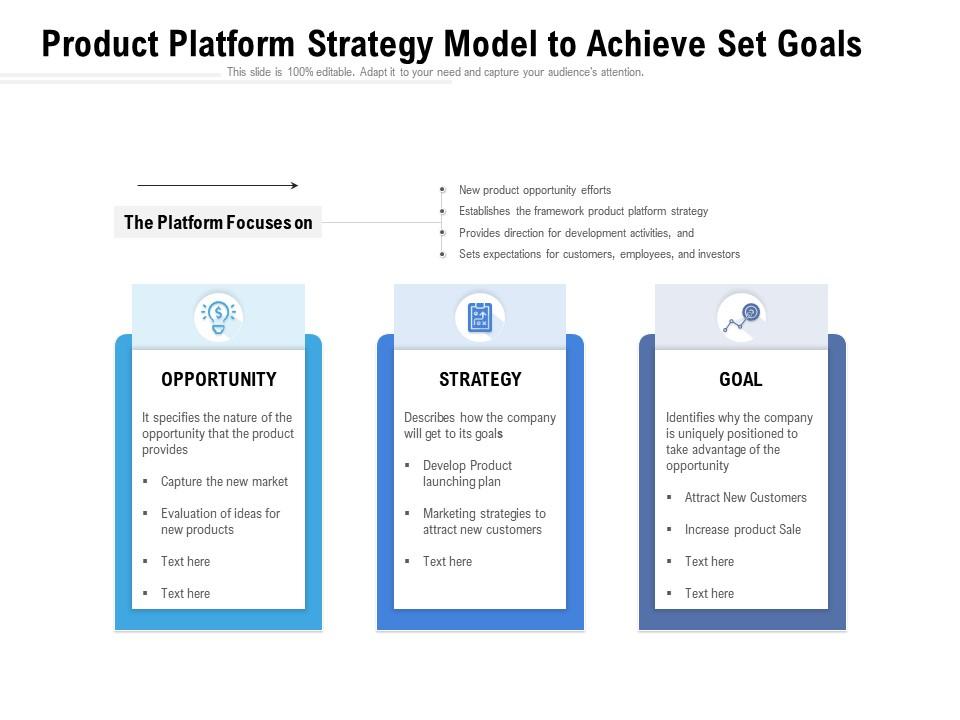
Template 15: Product Platform Strategy Model to Achieve Set Goals
Platform strategy only delivers when ideas move from evaluation to execution without losing momentum. This PPT preset is built for product and strategy teams who need to present a platform business model across three clear stages — opportunity identification, strategic planning, and goal setting. It suits product launch planning and platform revenue model reviews equally well. Real practitioners use this deck when the leadership team needs to see the full arc, not just the headline. The template is 100% editable and customizable.
Download this PowerPoint Template
Template 16: Implementing Platform Business Model Go to Market Strategy for Our Business
Implementing a platform business model inside an existing company is a change management challenge as much as a strategy one. This PowerPoint slide is built for practitioners who need to present the Go-to-Market phases of a platform transition — introduction, development, maturity — to internal stakeholders who control budget and roadmap. It's the deck for when you need the organisation to move, not just agree. The template is 100% editable and customizable.

Download this PowerPoint Template
Template 17: Capturing Rewards of Platforms Go to Market Strategy for Business
Platforms create real value only when that value is captured and redistributed effectively. This deck maps the rewards of a platform business model across audience segments, market position, pricing levers, and sales outcomes—all on one structured layout. Every slide captures the commercial logic of your platform monetization approach with visual precision. Customise audience-specific messaging and market data to match your exact platform context. Present platform revenue model frameworks that turn stakeholder scepticism into alignment. Transform your platform business presentations today. Download this dynamic template now and unlock your value capture potential.

Download this PowerPoint Template
Template 18: Social Media Platform Marketing Strategy Icon
Social media platform marketing decisions get made faster when the visual logic is already built. This PPT template is designed for marketers who need to present a platform marketing plan — covering social media platform selection, content approach, and campaign sequencing — in a clean, structured format. It works for agency briefings and in-house planning sessions alike. The template is 100% editable and customizable.

Download this PowerPoint Template
Template 19: Integrated Platform Sharing Media Strategy Presentation with Boxes
Shared media strategy only works when every channel and idea connects to a single plan. This deck presents integrated platform sharing across four structured stages—media strategy, media planning, and media ideation—with a clean box layout that makes interdependencies instantly visible. Every slide drives alignment, ensuring cross-functional teams stay coordinated on platform partnerships and shared content goals. Customise the framework to reflect your specific media mix and campaign priorities. Build compelling integrated platform strategy and media planning presentations effortlessly. Transform your media strategy presentations today. Download this dynamic template now and unlock your integrated platform potential.

Download this PowerPoint Template
Template 20: Software Platform Strategy PowerPoint Show
Software platform decisions involve real trade-offs — build vs. buy, open vs. closed, SaaS vs. on-premise. This deck gives product leaders and CTOs a clear visual structure for presenting a software platform strategy to boards or technology committees. It suits SaaS platform strategy reviews and cloud platform strategy assessments where the audience needs structure more than slides. The template is 100% editable and customizable.

Download this PowerPoint Template
Win Every Room with Slideteam's Platform Strategy Templates
SlideTeam's PowerPoint templates are the best in the industry for platform strategy communication. These content-ready slides give you professional structure—covering everything from platform business models to network effects and Go-to-Market planning—without the hours of formatting. Use these ready-made PowerPoint slides to present with clarity and authority in any boardroom. Deploy these pre-designed templates now and turn your platform thinking into decisions.
FAQs on Platform Strategy
How does a platform business model differ from a traditional pipeline business model in terms of value creation?
A pipeline business creates value by moving a product from producer to consumer in one direction. A platform creates value by facilitating interactions between two or more user groups — buyers and sellers, developers and users. The platform doesn't own the product; it owns the connection. Value grows as more participants join, not as the company produces more.
What are the key design principles that determine whether a platform will achieve network effects?
Three things matter most. First, each new user must make the platform more useful for existing users — that's network effects in practice. Second, the platform needs low friction for onboarding; a slow start kills momentum. Third, the core interaction must be repeatable and easy to match. Platforms that nail these three tend to scale; those that don't, stall early.
How should a company decide between a multi-sided platform versus a single-sided platform architecture?
Start with who pays whom and why. If your value depends on connecting distinct user groups — say, buyers and sellers, or developers and end users — a multi-sided architecture is the right call. If you're serving one type of customer with a single offer, single-sided is simpler and faster to build. Complexity without a clear matching problem is just overhead.
What strategies can platforms use to solve the chicken-and-egg problem during launch?
The most common fix is to subsidise one side heavily at launch. Bring in supply first — restaurants, drivers, sellers — then open demand. Alternatively, seed the platform yourself: create content, list inventory, or act as a market maker until organic supply follows. Some platforms solve this by targeting a single tight community first, then expanding outward once liquidity is established.
How do platform envelopment strategies threaten adjacent markets and how can incumbents defend against them?
Platform envelopment happens when a larger platform bundles a competing service into its own offering — often at zero marginal cost. Incumbents defend best by deepening switching costs: exclusive data, unique integrations, or community lock-in that the attacker can't replicate quickly. Fighting on price alone rarely works. The defensible position is the one where leaving costs the user more than staying.
What metrics best capture platform health beyond gross transaction volume?
Gross transaction volume tells you size, not health. Watch liquidity — the share of listings or requests that result in a completed match. Track repeat usage and cohort retention; a platform with high churn is fragile regardless of volume. Also monitor the ratio of active producers to active consumers. An imbalance there signals a matching problem before it shows up in revenue.
How does pricing asymmetry between different user sides affect platform adoption and long-term sustainability?
Most successful platforms charge one side heavily and subsidise the other. The subsidised side is usually the harder one to attract — often consumers or developers. If pricing is symmetric, you risk under-attracting the scarce side and breaking the network. Long-term, the pricing asymmetry must reflect real willingness to pay; artificial subsidies that can't be withdrawn create structural fragility.
What governance structures prevent platform participants from engaging in value-destructive behaviors?
Governance needs three things: clear rules on who can participate and on what terms, enforcement mechanisms that are visible and consistent, and an appeals process that participants trust. Without these, bad actors exploit the platform, trust erodes, and quality suppliers leave first. The lightest governance that keeps the core interaction clean is usually the right amount — over-regulating kills the openness that made the platform valuable.