



 0 Comment
 Customer Reviews

Did you know that every medicine you take goes on a long journey in your body? Well, that is the world of pharmacokinetics and pharmacodynamics.
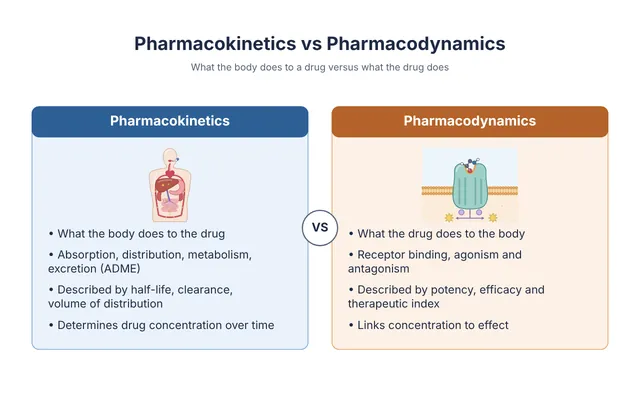
The science of pharmacokinetics is about how your body moves and handles the drug, and pharmacodynamics tells what the drug does to your body. The drug mainly goes through four main steps: drug absorption, drug distribution, drug metabolism, and drug elimination. These steps affect how the drug works, and together, these steps are called ADME.
Also, the measure of bioavailability tells if the drug reaches the bloodstream well. Things like drug interactions and toxicology can help prevent harmful side effects when taking more than one medicine.
Note that clinical pharmacology looks at real-world drug safety and effectiveness, and a good drug formulation can make medicine more useful. But, without good medication adherence, even the best drug can fail. So, to support better health, learning about these concepts is so important in healthcare today. And that is where SlideTech templates suit the situation. You can use these documents to simplify the intricacies of pharmacological concepts and their effects.
With these templates, you can easily explain complex drug behavior and help doctors choose the best drug and dose. You can make sure drugs reach the right place through proper drug distribution and improve the treatment process. In simple words, you can implement this deck to compare different drug formulations visually and boost patient safety with proper clinical pharmacology practices.
Also, feel free to add relevant texts, diagrams, graphs, charts, etc., and show step-by-step drug absorption, metabolism, and elimination processes. These documents can make it easier for you to train medical students and healthcare workers in clinical pharmacology studies. You can save time with these ready-to-use visuals and avoid drug risks.
Also, check out our Pharmacokinetics PPT Templates and choose the right pharmaceutical formats.
Now, let us explore our Top 5 Pharmacokinetics and Pharmacodynamics PPT Templates with Examples and Samples.
Template 1: Pharmacokinetics And Pharmacodynamics Paclitaxel PPT Template
Paclitaxel is a drug that is often used to treat many cancer conditions, including breast, lung, and ovarian cancer. Its pharmacokinetics tells you how this drug moves and breaks down in the human body. And the study of pharmacodynamics describes how paclitaxel fights infected cells in the body by stopping them from growing and dividing.
To understand the entire process and its relevant concepts, you must add this template to your list and highlight important points. This PPT layout can help in training healthcare teams on cancer drug handling and medication adherence. Here, you can discuss drug absorption, distribution, metabolism, and excretion alongside therapeutic mechanisms and clinical implications. So, download the template now and cover toxicology, side effects, and best practices in drug dosing.

Template 2: Pharmacokinetics And Pharmacodynamics Overview Paclitaxel Nanoparticles PPT Template
You can use the following template and discuss critical aspects of the Pharmacokinetics and Pharmacodynamics of Paclitaxel. It is totally editable and customizable, so you are free to include important drug-related concepts, mechanisms, and applications. Here, you can add data about dose optimization, controlled release, etc., and help professionals in the pharmaceutical field. Also, convey your thoughts on the science and clinical aspects of paclitaxel and understand how it interacts with other drugs to avoid harmful mix-ups. Now, click on the download link given below and get the template right away!

Template 3: Pharmacokinetics And Pharmacodynamics Bioanalysis PPT Template
Pharmacokinetics and Pharmacodynamics (PK/PD) Bioanalysis is the lab testing process that scientists and researchers can use to measure how much of a drug is in the body. It can tell what effect the drugs have on the body over time. So, include this template in your list and assist researchers know if the drug works well and how long it stays active. Here, you can describe the drug absorption process and help find the best dose for different age or weight groups. Also, you can use this document to compare bioavailability, dose-response, and other findings with visuals. Now, download it and customize it accordingly for any drug, project, or clinical trial stage.

Template 4: Pharmacokinetics And Pharmacodynamics Camptothecin PPT Template
Camptothecin, a natural compound used in cancer treatment, stops cells from copying their DNA, which eventually slows tumor growth. And to make this drug safe and effective, scientists study how it moves through the body and how it affects cancer cells. So, use this attractive template and present your data in a concise manner. It shows important points related to drug absorption, distribution, metabolism, etc., and explains the full process of how Camptothecin works. With this format, you can make complex cancer drug data easy to understand for students and new researchers. So, get the template now and create better versions of the drug with longer-lasting results.

Template 5: Pharmacokinetics And Pharmacodynamics Selection Antibiotics PPT Template
The science of pharmacokinetics and pharmacodynamics can help scientists and doctors choose the right antibiotic for critical conditions. It can tell you how the drug moves in the body and fights germs. This can reduce the risk of side effects by matching the right drug with the body needs of the patients. To understand the concept in a structured way, check out the following template and make the most of it. It can help people learn using real cases, visuals, and clear steps. It shows details about drug absorption, distribution, metabolism, and elimination, as well as drug interaction and patient factors. So, save the template from the link and add the necessary information to simplify the concepts.

Conclusion
Pharmacokinetics and Pharmacodynamics help us understand how drugs work and fight pain or infection inside the human body. This knowledge can help avoid drug risks, pick the best treatment, and make safe medicines. You can use these PPT templates and simplify the study of drug absorption, distribution, metabolism, and elimination steps. These PowerPoint documents can help you discuss your clinical pharmacology data in a structured manner. You can mention the drug formulation process in clear and concise language. So, download the templates now and reap their benefits.
With these ready to use PPT formats, you can explain complex terms in simple slides using graphics and examples. Also, make sure you include each and everything in your final presentation and impress your audience!
PS: Also, take a look at our Pharmacodynamics PPT Templates.
Pharmacokinetics and Pharmacodynamics FAQs
Q: What are the primary differences between pharmacokinetics and Pharmacodynamics?
Pharmacokinetics studies what the human body does to a drug over time, and on the other hand, Pharmacodynamics tells us what the drug does to the body.
Pharmacokinetics shows the process of how drugs move through the entire body, like blood flow and organs. And Pharmacodynamics explains how drugs affect cells or symptoms.
In simple terms, one tracks drug levels, and the other monitors drug effects and their responses on the human body. Together, they make it easier for doctors to choose the right drug and dose safely.
Q: How does the body absorb, distribute, metabolize, and excrete drugs (ADME)?
- First, drugs will enter the body by mouth, injection, or skin.
- Then, absorption happens, and it moves the drug into the bloodstream.
- Next, distribution spreads it to organs and tissues.
- The liver usually breaks it down through the process of metabolism.
- Finally, the body removes the drug or excretes it naturally.
These steps and their processes decide how long the drug works and stays inside the body.
Q: How are pharmacokinetic parameters like half-life, bioavailability, and clearance determined?
Doctors generally check blood samples at different times after giving a drug. This can help set proper dosages and timings for safe and steady treatment results.
- They measure half-life by knowing how long drug levels drop by half in blood.
- The measure of bioavailability explains how much of the drug reaches the bloodstream.
- Next, clearance will tell how fast the body removes or excretes the drug.