Business journey steps ppt images gallery
Try Before you Buy Download Free Sample Product
Audience
Editable
of Time
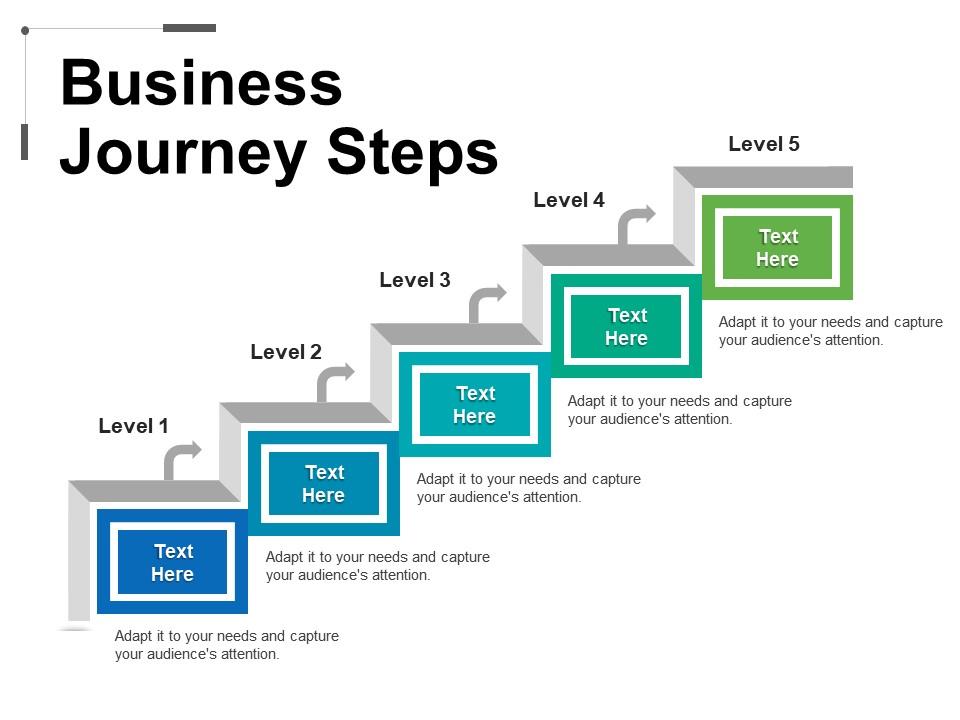
Use our Business Journey Steps PPT Images template and highlight the critical events of your business. Portray essential milestones you have accomplished with the business journey PPT timeline. Display the factors that led you to business development. It is a 5 stage journey timeline slide that will assist you in depicting the levels you need to go through to achieve the end goal. Guide your as to how they can plan activities for crossing each level. You can also use this PPT slide for illustrating the hurdles that you need to overcome to achieve success. Present a simple version of detailed information with this organized diagram. Showcase the obstacles that your business has already crossed. Express your time-sensitive data easily in this presentation. With a ready to use availability, this PPT template is easily accessible. Use it to create an impressive presentation in less time.
People who downloaded this PowerPoint presentation also viewed the following :
Business journey steps ppt images gallery with all 5 slides:
Appreciate efforts to be inventive with our Business Journey Steps Ppt Images Gallery. Give ingenuity a boost.
FAQs for Business journey steps
Honestly, start by actually talking to people who might buy your stuff - I can't stress this enough because so many people just guess what customers want. Research your competition too, even though it's boring as hell. Figure out who you're really targeting and make a simple business plan. Nothing fancy needed. Think about money early - where's it coming from? Start small with like a test version or pilot thing before you blow your whole budget. Oh, and don't try doing everything at once or you'll lose your mind. Pick one thing and nail it first.
Honestly, skip the "everyone will love this" mindset - that's usually BS. Survey real people, stalk your competitors' social media, maybe throw up a quick landing page to see if anyone actually bites. Demographics matter, but dig deeper into what problems you're actually solving. I'd start super small first though. Test with friends, random strangers, whoever will give you honest feedback. The sweet spot? Finding people who'll pay what you need AND who you can actually reach without blowing your budget. Don't scale until you know it works.
Okay so think of a business plan like your GPS - shows where you're headed and how to get there. You'll want market analysis, financial stuff, marketing strategy, and how you'll actually run things day-to-day. Honestly, most people write these massive documents that just sit there forever. Don't do that. Keep it focused so you'll actually look at it again. Each piece should connect to your main goals and timeline. Oh, and definitely think through what could go wrong and have backup plans. I learned that one the hard way lol.
Dude, it really comes down to three things: liability protection, taxes, and how much paperwork you can handle. Sole proprietorship is dead simple but your personal stuff isn't protected at all - kinda risky. Most people should just go LLC honestly. Protects your assets, taxes are flexible, and it's not a huge pain to set up. I did LLC for my thing and it was perfect. Skip corporations unless you're thinking big - like raising investor money or whatever. That's way down the road stuff. Oh and definitely talk to an accountant first! Worth every penny, trust me.
Dude, there are basically three routes: bootstrap with your own cash/revenue, pitch to angels or VCs, or go alternative like crowdfunding and small biz loans. Most founders I know bootstrapped first - shows you're not just throwing around other people's money, plus you keep more equity. Networking is huge though, way more funding happens through connections than cold emails. Oh and when you do pitch, your business plan better be bulletproof and you need to nail explaining your market opportunity. Start building those relationships now.
Honestly, you've gotta chop that big vision into bite-sized pieces you can actually measure. SMART goals are your friend here - like "boost monthly revenue by 20% by June" instead of just "make more money." I made this mistake SO many times when I started out, setting these crazy unrealistic targets. Pick 2-3 metrics that actually matter and check them monthly. Don't go overboard with goals either - I swear it's tempting but you'll just stress yourself out. Focus on your top priorities first, crush those, then add more stuff.
Skip the fancy marketing stuff for now - go direct and cheap. Content marketing is your friend here (blogs, social posts, basic SEO). Email's massive since you actually own those contacts. Paid ads? They'll eat your budget alive while you're still learning what works. Network like crazy, partner with other small biz owners, and if you're local definitely optimize that Google My Business listing. Oh and track literally everything from day one - you need to know what's converting before you throw more money at it. Test small, then scale what actually works for your people.
Yeah networking is honestly where most jobs come from, not those online applications that feel like shouting into the void. Coffee chats are your best friend here - even the virtual ones work. I'd start with LinkedIn and industry events, but don't be that person who just collects contacts. Actually help people out first before asking for stuff. Your old coworkers and college friends? Hit them up too. You'd be surprised what doors they can open. Try to have at least one real professional conversation each week and you'll see things start happening.
Honestly, most founders just overcomplicate the hell out of everything. Don't build some perfect product for six months - talk to actual customers first and see what they want. I've watched so many people waste time on features nobody cares about, it's painful. Keep your spending tight too. No fancy office, don't hire a bunch of people right away. Prove the business actually works before you go crazy with expenses. Oh, and pick a specific customer type instead of trying to sell to everyone. That never works. Test stuff constantly and keep costs low until money's coming in regularly.
Dude, you gotta start automating the tedious stuff - invoicing, data entry, all that mind-numbing work. Project management tools are clutch for keeping everyone on track. CRM systems will blow your mind honestly - no more forgetting to follow up with clients or losing track of conversations. Cloud storage means your team can grab files from literally anywhere, which is huge. The best part? Once you automate the boring tasks, you actually have headspace to think bigger picture. Oh and don't try to overhaul everything at once - pick whatever's driving you crazy right now and start there.
Honestly, start with figuring out who's actually gonna buy this thing and why they'd pick you over everyone else. Pricing is huge - make sure it works for your audience AND you can actually make money. Can you deliver if things take off? That's where a lot of people mess up. The legal stuff is boring as hell but deal with it now or it'll screw you later. Also, timing matters more than people think - are customers even ready for what you're selling right now? I'd probably start with talking to potential customers first, then work backwards from there.
Honestly, most people mess this up by collecting feedback but never doing anything with it. Set up different ways to get input - surveys after purchases, casual check-ins, whatever works for your business. The real magic happens when you actually tell customers "hey, we changed X because you said Y." Look for patterns instead of obsessing over one cranky review (trust me on this one). Build feedback review into your regular planning meetings so it becomes automatic. Otherwise you'll just end up with a bunch of data sitting in a spreadsheet somewhere gathering dust.
Focus on the basics: revenue growth, how fast you're getting new customers, profit margins, and whether you're grabbing more market share. I learned the hard way not to check numbers daily - that's a recipe for stress. Compare stuff month-to-month and year-over-year instead. Don't forget operational things like how productive your team is, customer retention, cash flow. Build a simple dashboard so you're not hunting for data later. Pick maybe 3-5 metrics that actually make sense for where you're at right now and stick with those.
Honestly, get your systems sorted before you even think about scaling - chaos just gets more expensive when it's bigger. The team thing is huge too. Find people who can actually own stuff so you're not micromanaging everything. I'd pick maybe one or two areas to focus on first (sales or ops usually make sense) instead of trying to fix everything at once. Oh, and document literally everything now while you still remember why you do things certain ways. Cash flow's probably the biggest thing though - scaling eats money way faster than you think it will.
Oh man, so much legal stuff to think about! Pick your business structure first - LLC or corp, whatever fits. Register it properly. Industry licensing is next, and honestly some of those requirements are absolutely brutal depending on what you're doing. If you're hiring people, employment law gets messy fast. Tax stuff obviously - federal, state, local, the whole nightmare. Privacy laws like GDPR might hit you too if you've got international customers. Seriously though, just bite the bullet and talk to a business lawyer upfront. Way better than scrambling to fix things later when you're already stressed.
-
Great designs, Easily Editable.
-
Great product with highly impressive and engaging designs.