Business philosophy ppt images gallery
Try Before you Buy Download Free Sample Product
Audience
Editable
of Time
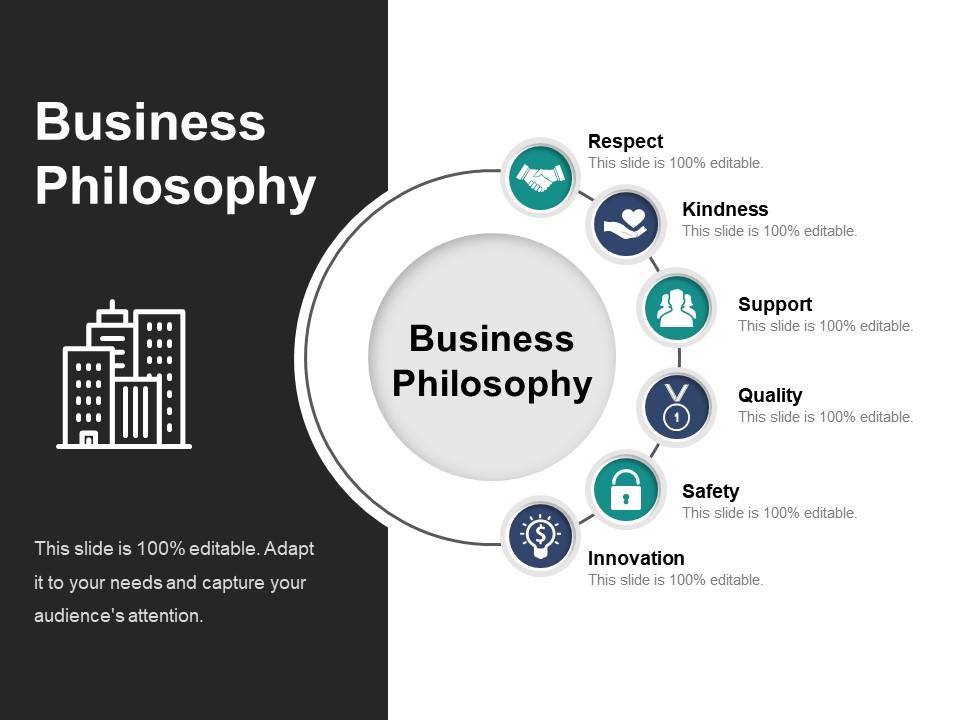
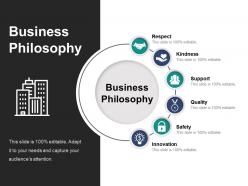
Highlight information about the core values of your company using our business philosophy example PPT slide. This PowerPoint template has been created with an innovative approach by our designing experts to assist corporate leaders to define their values in order to engage the consumer with their brand. A company philosophy is an epitome of its culture into a group of core values that shares all aspects of the business practices. By using this presentation layout, you can present details about core values of your business that makes you stand out in the crowd which are respect, kindness, support, quality, safety and innovation. Following best practices while delivering a quality product that can meet the needs of the consumers is what defines the values of the company. Our PowerPoint diagram gives you an opportunity to make an impression on your audience about your business by sharing core values. Apart from this, you can also use this PPT visual to let your employees understand the importance of business ethics and core values. Access it now. Our Business Philosophy Ppt Images Gallery are a catalyst for creating excellence. You will find the best ingredients.
People who downloaded this PowerPoint presentation also viewed the following :
Business philosophy ppt images gallery with all 5 slides:
Build the foundation for innovation to flourish with our Business Philosophy Ppt Images Gallery. Instil the desire to be inventive.
FAQs for Business philosophy
So we've got three main things: radical transparency, customer obsession, and sustainable growth. The transparency part means being brutally honest even when it sucks - trust wins over quick cash every time. Yeah, "customer obsession" sounds super corporate, but we literally ask "does this help them?" before every decision. Sustainable growth was honestly our biggest learning curve. Used to chase every random opportunity like idiots. Now we build stuff that'll actually last instead of burning everyone out. My advice? Pick one value first and just live it daily. Don't try to nail all three at once.
Think of your business philosophy as your go-to when you're stuck. Say your thing is "customer-first" - boom, now you know whether to cut costs or keep service quality high. Honestly saves so much time because your team isn't starting from zero on every decision. We used to debate everything to death until we figured this out. Just ask "does this match what we stand for?" Works great as a tie-breaker too. Way better than flip-flopping on values depending on the situation.
Look, ethics aren't just some nice-to-have thing - they're gonna drive literally every big call you make. How you treat your people, customers, which partnerships you go after, all of it. Sure, cutting corners might boost your profits temporarily, but trust me, that always bites you later. Being upfront about pricing and honest about what you can actually pull off? That's how you build real trust. And honestly, your reputation ends up being worth way more than whatever quick cash you might've grabbed. My advice: make your ethical standards totally non-negotiable right from the start.
Your business philosophy is basically what holds everything together culturally. It gives your team shared values so they can make good calls even when you're not around. People actually want to work somewhere that stands for something real (not just profit, you know?). It becomes your hiring filter, shapes how you treat customers, affects problem-solving - the whole thing. Just don't be one of those companies that puts fancy values on the wall but never follows through. That's honestly worse than having no philosophy at all.
Honestly, customer feedback is like a mirror for your business - shows you what's actually happening vs what you think is happening. Your mission statement might sound perfect on paper, but if customers are saying something totally different? That's the real truth right there. I've watched so many companies just completely miss the mark because they weren't listening. Build those feedback loops right into your decision-making process. Don't just collect complaints and suggestions - let them actually change how you think about your core values. It's messy but necessary.
Look, I'd focus on building your core stuff around what customers actually want, not whatever tactic is trendy right now. When things change - and they will - you're just switching up your methods instead of scrambling to figure out your whole purpose. We do quarterly reviews of what's actually working (probably too often tbh, but whatever). Keep your non-negotiables like quality solid, but don't be stubborn about how you deliver or price things. Test small stuff first before you go all-in on big changes. Oh, and pick one market thing that actually matters to track right now.
Dude, you've gotta read Drucker's "The Effective Executive" - totally flipped my perspective on doing the RIGHT things vs just staying busy. Collins' "Good to Great" is solid too, especially that whole "right people on the bus first" concept. Makes so much sense when you think about it. Oh, and Dalio's "Principles" changed how I handle transparency at work, though some of his ideas are pretty intense. I actually reread that one twice because there's so much packed in there. Any of these would be worth your time if you're trying to level up your leadership game.
Okay so basically don't just say it once and call it a day - you've gotta actually live this stuff. Tell stories in meetings that show your values playing out, because honestly stories stick way better than some boring mission statement on the wall. When you're hiring, ask people how they'd handle situations that test what you believe in. Your stakeholders? Keep them in the loop about decisions you made based on your philosophy. Oh and obviously you need to walk the walk yourself - people can smell BS from a mile away. Make it so consistent that nobody can miss what you're about.
Honestly, we focus on the stuff that actually matters - employee engagement, retention, and how happy customers are. Those tell you if people genuinely believe in what you're doing or just going through the motions. Revenue per employee and project wins show the real business impact. Quarterly surveys work way better than yearly ones (who remembers what happened 12 months ago anyway?). Pick maybe 3-4 metrics that tie directly to your core values and stick with tracking them. Don't overthink it - start with what connects most to your philosophy and expand later.
Think of your business philosophy as a filter - it stops you from chasing every random trend that pops up. When you're looking at new ideas, just ask "does this actually fit who we are?" Like if you're all about putting customers first, you'll focus on stuff that solves real problems instead of just cool tech that looks impressive. Honestly, there's so much noise out there these days. Your philosophy keeps innovation focused on what matters. Next time you're evaluating something new, literally check it against your core values first.
Don't just sit there hoping your philosophy stays relevant—you've gotta actively test it. Every few months, ask yourself hard questions: do my core principles still work for my customers? I learned this the hard way when COVID hit and my whole approach needed rethinking. Here's what matters though: separate your unchanging values from your methods. Integrity? That's forever. But how you deliver it? That should evolve. Get honest feedback from customers and employees who'll actually tell you when you're off track.
Dude, without clear business philosophy your team's gonna make random decisions left and right. Everyone's working off different assumptions about what actually matters. You'll burn hours in meetings arguing about the same basic priorities - I swear some companies do this every single week and it drives me nuts. Customers won't get what you stand for either, making loyalty pretty much impossible. Your culture just becomes... whatever randomly happens instead of something you built on purpose. Honestly? Block out time this week and write down your core beliefs, even if it's messy at first.
Look, your business philosophy is basically the blueprint for how you'll handle CSR stuff. Does your company actually care about making a positive impact, or are you just checking boxes? Because trust me, people can tell the difference. I've worked with companies where their "values" page says one thing but their CSR efforts are complete garbage - like those random tree-planting campaigns that have nothing to do with their business. When your philosophy genuinely puts purpose next to profit, CSR becomes way more strategic. Quick reality check: do your current CSR initiatives actually match what you say you believe in? That's where I'd start.
Here's the thing - customers connect with companies that stand for something real, not just another product pushing features and pricing. Look at Patagonia or Southwest. Their values become part of who they are, and honestly? That's way harder for competitors to steal than whatever widget you're selling. Plus it makes your decisions easier when you've got clear principles to guide you. You'll attract better employees too - people who actually give a damn about what you're building. Just don't fake it though. If your philosophy only lives on your website, customers see right through that BS.
Having clear values builds loyalty because people want to buy from companies they actually believe in. Your customers can tell when you're authentic vs just saying whatever sounds good. Look at Patagonia - half their customers probably shop there because they respect the environmental activism, not just the gear quality. When your team knows what you stand for, every interaction feels more genuine instead of like corporate BS. Define your core principles first, then make sure they come through in how you talk to customers. It's honestly way easier than trying to be everything to everyone.
-
Unique and attractive product design.
-
Awesomely designed templates, Easy to understand.
-
Perfect template with attractive color combination.
-
Helpful product design for delivering presentation.