Business strategic house with strategic objectives

Rating:
100%
Business strategic house with strategic objectives
Slide 1 of 9
Favourites Favourites

Try Before you Buy Download Free Sample Product

Audience Impress Your
Audience
Editable 100%
Editable
Time Save Hours
of Time
The Biggest Sale is ending soon in
0
0
:
0
0
:
0
0
Rating:
100%
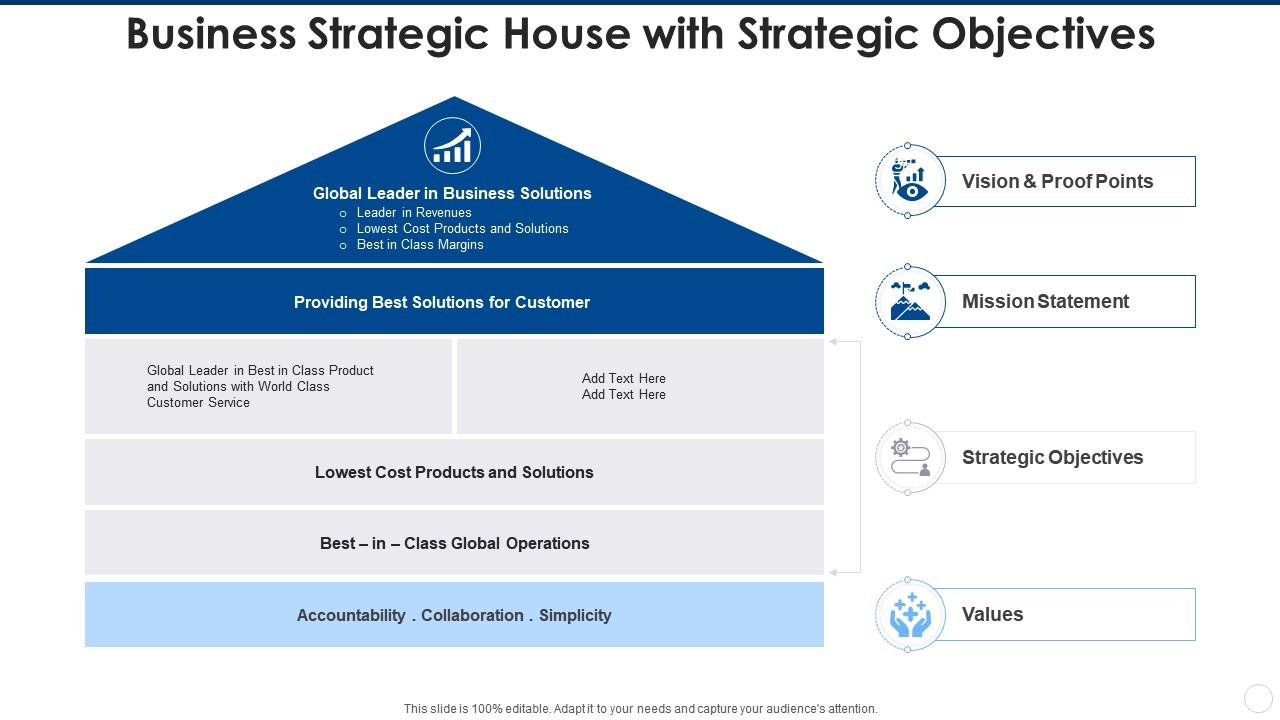
Presenting our set of slides with Business Strategic House With Strategic Objectives. This exhibits information on four stages of the process. This is an easy to edit and innovatively designed PowerPoint template. So download immediately and highlight information on Global, Business, Strategic.

FAQs for Business strategic house

Honestly, start with your vision first - everything else builds from that. You'll need clear goals that actually move the needle for your business, not just busy work. Figure out what your competitors are doing so you're not flying blind. Resource allocation is huge too - where you spend your time and money makes or breaks everything. Implementation planning sounds boring but trust me, most strategies die because nobody thinks through the "how." Markets shift constantly so build in regular reviews to adjust course. I've seen too many companies skip the implementation part and wonder why nothing happens.

Look, market analysis is basically your roadmap for everything else you'll do strategically. Without it, you're just guessing. It reveals opportunities you might miss otherwise and shows what competitors are actually up to. Plus threats that could blindside you later. Data helps you find gaps in the market and test whether your assumptions about customers are even right. You can set growth targets that aren't completely unrealistic too. Honestly, I'd compare it to GPS - wouldn't road trip without it. First step? Check what market info you already have. If it's over six months old, time for an update.

Think of competitive intelligence as your business radar system. You're basically keeping tabs on what your competitors are up to - their pricing, new products, marketing moves, how they position themselves. Honestly, it's like poker but for business decisions. The whole point isn't just hoarding random data though. You want to turn what you learn into actual moves that give you an edge. Maybe you spot a gap they're missing or see a threat coming your way. I'd start simple - pick 3-5 main competitors and just... watch them regularly. Sounds creepy but it works.

Break your big goals into specific targets for each team first. Then - and this is where most places mess up - actually schedule regular check-ins to see how it's going. Map out who's doing what by when so stuff doesn't slip through the cracks. Monthly reviews are your friend here. The whole point is making sure everyone gets how their daily grind connects to the company's bigger moves. Otherwise you're just stuck with fancy strategy slides that nobody actually follows. Oh, and don't forget to tweak things when they're not working.

Honestly, most people try to tackle everything at once - huge mistake. Pick one clear goal first. Don't just copy what competitors are doing either, that's like wearing someone else's clothes that don't fit. I've seen too many startups set crazy unrealistic deadlines then wonder why they're stressed out. Get real customer feedback before you build anything, and actually listen to your team's input. Also track something concrete so you know if you're making progress or just spinning your wheels. Start small, test it, then expand. Way less overwhelming that way.

Honestly? New tech is killing those old 5-year strategic plans. AI, blockchain, IoT - they're spinning up business models so fast that companies can't keep up. Your competitive edge today could be worthless next month. The whole "plan-execute-review" thing feels ancient now. You need strategies that can pivot quickly when the market shifts overnight. I'd start doing scenario planning instead - like, seriously game out different futures. Also, assume whatever model you're running has maybe 2-3 years before it needs a major overhaul. Sounds harsh but that's just reality now.

Honestly, think of stakeholder engagement as insurance for your strategy. You'll catch blind spots early and avoid those awful "nobody saw this coming" disasters. Getting people involved from the start means they actually want to help instead of sabotaging later - and trust me, I've watched too many smart plans crash because someone thought they could skip this part. Different perspectives make everything stronger anyway. Map out who matters most and grab their input before you lock anything down. Way better than dealing with pushback when it's too late to change course.

Honestly, small businesses have a huge advantage over big companies - you just gotta use it right. Those corporate giants get stuck in endless meetings and red tape while you can change direction in like a week. I'd focus on the tiny niches they completely ignore because they're obsessed with massive markets. You'll build way better relationships with customers too. Big companies take months to make simple decisions. Find one underserved group that needs what you offer and absolutely crush it for them. Speed and that personal touch? That's your secret weapon right there.

Honestly, it depends what you're trying to achieve, but I'd focus on 3-5 metrics max. Revenue growth and profit margins are no-brainers. Customer acquisition cost is huge too - like, if you're bleeding money to get new customers, that's a problem. Don't ignore employee engagement though. I've watched companies nail their numbers but fall apart because everyone was miserable. Retention rates and market share tell you if you're actually winning long-term. The trick is mixing quick wins with bigger picture stuff. Monthly check-ins work well so you can pivot if things go sideways. Just pick metrics that actually connect to your main goals instead of tracking everything.

Dude, when customers shift what they want, you're basically rebuilding everything. Not just ads - your whole product lineup, how you price stuff, even where you source materials. Netflix saw people wanted convenience and ran with it while Blockbuster... well, RIP. You gotta stay on top of this through constant feedback and watching the data. Otherwise you'll be scrambling to catch up when everyone else already moved. Honestly, the companies that survive are the ones tracking these patterns before they become obvious. It's way bigger than most people think.

Cash flow is everything right now - protect it like your life depends on it. Slash anything that's not essential immediately. Your team deserves to know what's going on, so don't sugarcoat the situation. If your business model isn't cutting it, pivot fast. Stubborn founders are usually broke founders, honestly. Stay super close to your customers and find creative ways to help them. Write down what you're learning because this stuff will save you next time. Oh, and make quick decisions even when you don't have all the info - waiting for perfect clarity is a luxury you can't afford.

Think of company culture as this invisible filter sitting on top of every big decision you make. Risk-averse teams? They'll always pick the safe play over something bold. I've watched killer strategies completely bomb because they just didn't fit how people actually worked together - it's wild how that happens. Culture decides what feels "normal" to your crew, plus how fast you can actually execute changes. Nobody wants to fight against the grain, you know? So when you're mapping out strategy, check it against your cultural DNA first. Then work backwards on what needs to shift.

Honestly? Cultural differences will hit you hardest - what crushes it in the US can totally bomb in Southeast Asia (trust me on that one). Regulatory stuff varies everywhere too, which gets messy fast. Currency swings mess with your pricing constantly. Local competitors know their turf way better than you do initially. Consumer habits are just... different. Sometimes laws between countries straight up contradict each other. Don't force some cookie-cutter approach - build something flexible that your local teams can actually adapt. Those relationships with people who get their markets? Worth everything.

Honestly, you've gotta bake flexibility into your planning from day one. Ditch those massive annual planning sessions - quarterly check-ins work way better. Always run a couple "what if" scenarios because Murphy's Law is real and stuff will go wrong. Get cross-functional teams that can actually move fast when needed. Oh, and set up clear decision-making processes so you're not waiting forever for approval when things get urgent. Your strategy should feel alive, not like some dusty document nobody touches. Start with your next planning cycle and throw in at least two different scenarios to test what you've got.

Look, innovation is what stops your strategy from turning into yesterday's news. Markets shift constantly, customers want new things, and your competitors aren't sitting around doing nothing. If you're not innovating, you're basically hoping the world stays exactly the same for the next decade - good luck with that. And honestly? It doesn't have to be some groundbreaking product launch. Maybe it's tweaking your processes or finding a better way to help customers. Figure out where your industry's headed first. Then work those innovation goals right into your planning from day one.

Ratings and Reviews

100% of 100
Review Form
Write a review
Most Relevant Reviews
  1. 100%

    by Cristobal West

    Awesome presentation, really professional and easy to edit.
  2. 100%

    by Cortez Graham

    Excellent design and quick turnaround.
  3. 100%

    by Darell Vargas

    It saves your time and decrease your efforts in half.

3 Item(s)

per page: