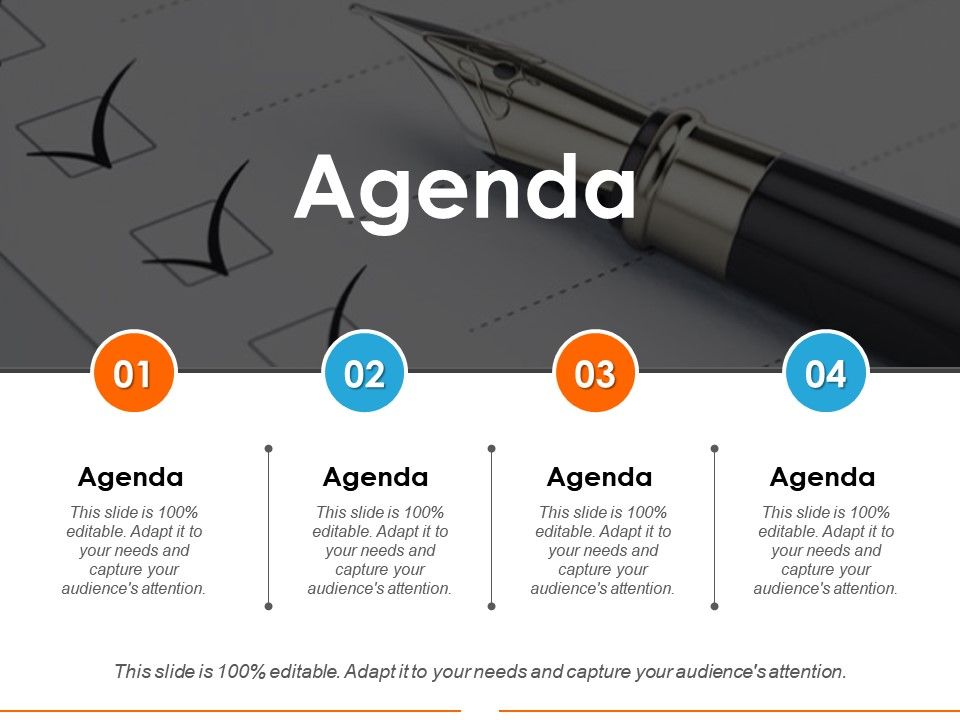
14566340 style essentials 1 agenda 4 piece powerpoint presentation diagram template slide

Rating:
90%
Slide 1 of 5
Favourites Favourites

Try Before you Buy Download Free Sample Product

Audience Impress Your
Audience
Editable 100%
Editable
Time Save Hours
of Time
The Biggest Sale is ending soon in
0
0
:
0
0
:
0
0
Rating:
90%
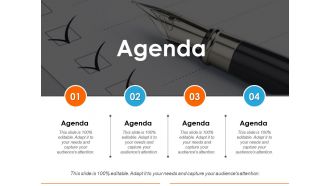
Presenting this set of slides with name - Agenda Ppt Topics. This is a four stage process. The stages in this process are Agenda, Business, Management, Marketing, Planning.

FAQs for 14566340 style essentials 1 agenda 4 piece powerpoint presentation

Focus on stuff that actually needs everyone's brain power - like making decisions, solving problems, or planning strategy. Status updates? Just email those beforehand, nobody wants to sit through them. Put the topics that require real collaboration at the top of your list. Quarterly reviews, addressing roadblocks, brainstorming sessions - that's the good stuff. I'd skip routine announcements entirely unless they'll spark actual discussion. Structure each item around a specific outcome too, like "we need to decide X" or "how do we fix Y." Makes meetings way more purposeful.

Keep sessions short - like 10-15 minutes max before switching things up. Throw in polls or breakout rooms between topics because nobody wants to stare at screens listening to one person drone on. Put your biggest stuff first since everyone's attention tanks after 20 minutes (I learned this the hard way). Each agenda item needs a clear point - what are we actually deciding here? Always pad your timeline because someone's mic will cut out or their wifi will die. Honestly, the tech issues are the worst part. End each section with actual next steps so people don't just... forget everything once they close Zoom.

Think of agenda topics like a movie trailer for your meeting - except way more boring lol. People need to know what they're getting into before you start talking. Share your agenda beforehand so they can figure out if they actually need to be there or what to prep. Without it? Everyone's just sitting there wondering when you'll hit the stuff that matters to them. Honestly, it's such a simple thing but makes a huge difference. Your audience stays way more engaged when they're not totally lost about where you're headed.

Mix up your content types - some strategic big picture stuff for the executives, tactical deep-dives for people actually doing the work. Interactive elements are clutch because honestly, nobody can sit through endless presentations without their brain melting. Survey your audience first to see what they actually care about. Balance industry-specific topics with broader themes that work across departments. Running parallel sessions is smart too - your marketing team shouldn't be trapped in some heavy finance discussion they don't need. Basically let people choose their own path through the content.

Honestly, the impact-urgency thing works great - just plot your topics as high/low on both and tackle the high-impact stuff first. Set strict time limits for each item and actually stick to them (this is where most meetings die). I'm a big fan of sorting everything into "must discuss," "nice to discuss," and "parking lot" categories before you even start. Oh, and send background info ahead of time so people aren't learning basics during the meeting. The real trick? Be brutal about what actually needs the whole group versus what you can handle with just a few people later.

Watch the room constantly - body language tells you everything. If they look confused, slow down and add more basics. Advanced crowd? Skip the intro stuff and go deeper. I've literally thrown out half my slides mid-presentation when I realized the audience was way beyond what I prepped for. Worked out great honestly. Always have backup content ready - both simpler explanations and advanced topics. But here's the thing that actually works best: just ask them directly. "Want to dive deeper into this or should we move on?" Most people will tell you exactly what they need if you give them the chance.

Honestly, just ask your team what's bugging them before you set the agenda. I learned this the hard way after running way too many pointless meetings where people just zoned out. Drop a quick survey or Slack message asking what needs discussing. Then rank stuff by how urgent it actually is. Don't forget follow-ups from last time either - those always slip through the cracks. Check your agenda the day before to see if anything's gone stale or if some crisis popped up. My rule of thumb: would I personally want to sit through this discussion? If not, cut it.

Oh totally - culture plays a huge role in what makes it onto agendas. Asian participants usually want way more time for consensus-building, while Western folks are all about quick decisions (I've watched this create some seriously uncomfortable meetings). Communication styles vary too. Some cultures do the indirect approach, others are super direct. Then you've got hierarchical versus everyone-gets-a-say decision making. Middle Eastern cultures often focus on honor and saving face when picking topics. My advice? Do your homework first. Research who's attending and maybe hit up regional reps to see what actually matters to their people before you lock anything in.

Okay so here's what actually works - don't just write "Marketing Budget" on your agenda. Write "Marketing Budget: Approve Q1 spending priorities and assign owners." Way more specific, right? I learned this the hard way after sitting through way too many pointless meetings. Put the owner and deadline right in each topic. Use words like "decide" or "approve" instead of boring stuff like "discuss." Honestly, half the battle is just being super clear about what you want to happen. Try this format: Topic + Action + Owner + Deadline. Game changer!

Honestly, I've been using ChatGPT and Notion AI to brainstorm agenda topics and it's a total time-saver. Just dump your audience info and meeting goals into the prompt and you'll get solid talking points in like 30 seconds. Some presentation platforms have these smart templates now that suggest flows based on your content type. But here's what really works - get your team involved with Miro or FigJam where everyone can throw ideas up and vote on them together. I usually start with AI to get the creative juices flowing, then let the team tear it apart and rebuild it better.

Don't pick topics that are too broad or just trendy bullshit without any real meat. Generic presentations kill good discussion every time. Honestly, chasing whatever's "hot" right now is such a mistake - academic trends die fast but your reputation sticks around. Your topics need to actually match what your audience cares about and where they are in their careers. Budget constraints are real too. I've watched conferences totally implode because organizers went crazy with expensive keynotes they couldn't pay for. Run your ideas past a few colleagues first - they'll spot the obvious problems you're blind to.

Here's what I'd do - ditch the boring "Product Overview" bullet points and turn your topics into actual questions. Like "What's your biggest headache with X?" or "How would you tackle this customer mess?" Break everything into bite-sized chunks with quick polls between sections. Nobody wants to sit through a 45-minute lecture, trust me. I learned this the hard way after watching people's attention completely tank halfway through my first webinar. Keep each interactive bit to 3-5 minutes tops so you don't lose momentum. Way more engaging than saving all questions for the end.

Honestly, specific agenda topics are a game changer for follow-ups. You get way better action items when people know exactly what they're deciding on. Like "decide Q4 budget for Project X" vs just "discuss project status" - there's no comparison. The whole meeting stays focused, so your action items aren't some random afterthought. People actually know what they committed to and when it's due. I've been in too many meetings where we "discussed" stuff but nobody knew what to do next. Try framing each agenda item as a decision you need to make. Works every time.

Just connect your agenda items to the bigger company goals - makes a huge difference. Instead of "Q3 Budget Review," write something like "Q3 Budget Review: Optimizing Resources for Customer Growth Initiative." Way more engaging when people see the why behind it. Honestly, I've watched this transform boring leadership meetings. People actually lean in when they get how their discussion ties to what the company's trying to achieve. You could also throw a quick goal statement at the top as your guiding focus. Try it next meeting - I bet you'll see way better participation.

Try timelines for project stuff instead of boring bullet points. Mock news headlines sound ridiculous but honestly they work so well for updates! "Choose your own adventure" decision trees are fun for strategic discussions. Problem-solution-action storytelling keeps people engaged too. Interactive bits help - polls, breakout groups, even point systems if your team's into that. Oh, and "roses, buds, thorns" is perfect for retrospectives. Just pick whatever matches your group's vibe. Start small with one new thing next meeting and see how it lands.

Ratings and Reviews

90% of 100
Review Form
Write a review
Most Relevant Reviews
  1. 100%

    by William King

    Great designs, really helpful.
  2. 80%

    by Damion Ford

    Out of the box and creative design.

2 Item(s)

per page: