Candidate journey map highlighting multiple stages of professional growth

Rating:
90%
Candidate journey map highlighting multiple stages of professional growth
Slide 1 of 2
Favourites Favourites

Try Before you Buy Download Free Sample Product

Audience Impress Your
Audience
Editable 100%
Editable
Time Save Hours
of Time
The Biggest Sale is ending soon in
0
0
:
0
0
:
0
0
Rating:
90%
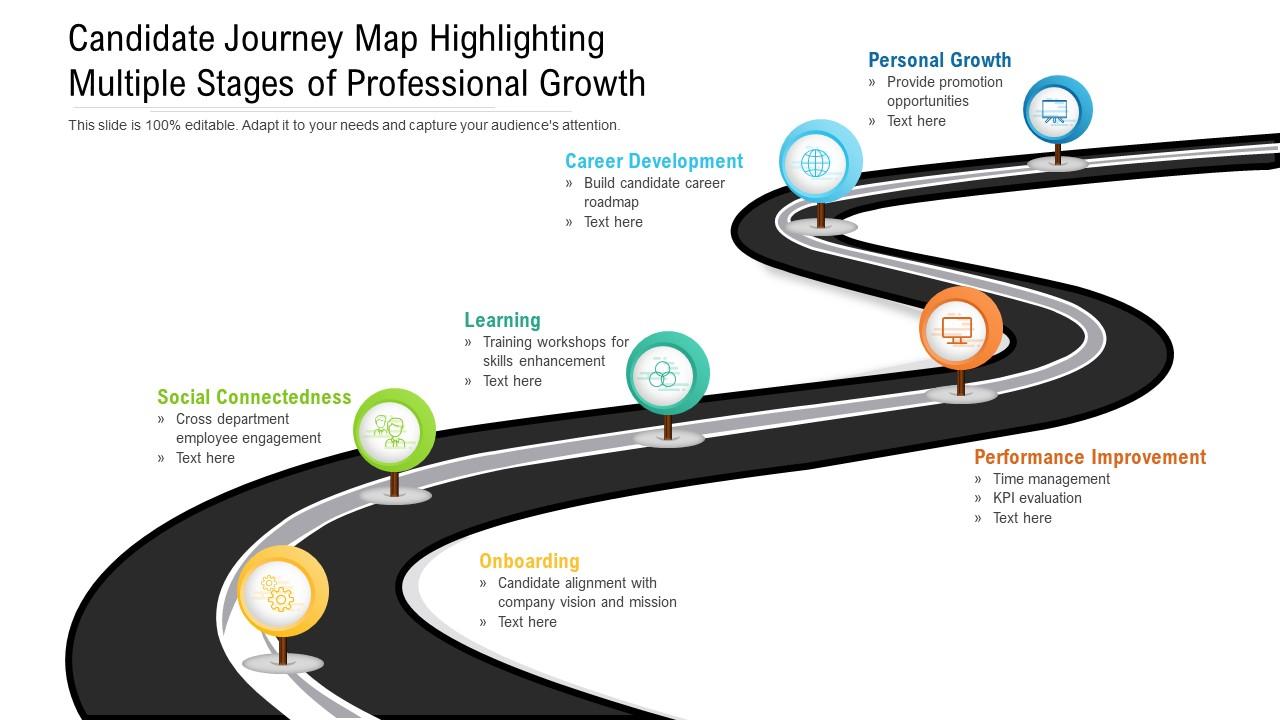
Presenting this set of slides with name Candidate Journey Map Highlighting Multiple Stages Of Professional Growth. This is a six stage process. The stages in this process are Social Connectedness, Learning, Career Development, Personal Growth, Performance Improvement. This is a completely editable PowerPoint presentation and is available for immediate download. Download now and impress your audience.

FAQs for Candidate journey map highlighting multiple stages

So there's basically five main stages: awareness (they hear about your company), consideration (doing research and deciding to apply), application, interviewing, and onboarding. Most people throw in a rejection/offer stage too - honestly that one's pretty crucial since it's make-or-break time. The trick is figuring out what candidates are actually thinking at each step. Also where you're bleeding talent. I'd literally walk through your process like you're job hunting yourself. You'll catch the annoying parts right away - like when applications ask for your resume AND make you type everything out again. That stuff drives people crazy.

Oh, this is super helpful! Basically you're looking at your hiring process like you're the one applying. Walk through every step - the job posting, application, interviews, all of it. You'll probably find tons of annoying stuff that makes candidates want to give up. Like when companies go radio silent for three weeks (seriously, why do they do that?). Map out where people get confused or frustrated, then fix those pain points. Maybe your application takes forever, or your communication sucks. Once you see it from their perspective, you can actually make it not terrible.

Miro or Mural are solid starting points - both are pretty intuitive for visual stuff and everyone can jump in to collaborate. Lucidchart's good if you want more structure. Though honestly? Google Slides or Figma work fine when you're just figuring things out. Just pick whatever your team can actually access and won't complain about using. Here's the thing though - don't stress too much about finding the "perfect" tool right away. You're better off spending time collecting real feedback from candidates first. Start basic, then you can always upgrade once you've got your process down. The tool matters way less than the actual insights you're gathering.

Honestly, just start asking people what sucked about your process. Send quick surveys after each interview stage - people will tell you exactly where things got confusing or frustrating. Talk to your recent hires too, because I guarantee they almost bailed at least once and can tell you why. Here's something that works really well: have your own team go through the whole process as fake candidates. They'll catch all the broken stuff you don't even notice anymore. Oh, and definitely survey people who dropped out - they're usually pretty honest about what went wrong. The trick is getting feedback right away while it's still fresh in their minds, not like six months later.

Track where people bail out during your hiring process - that's the goldmine. Application completion rates and time-to-apply are big ones. Honestly, the drop between job views and actual applications is brutal, but it tells you everything about your posting. Also watch candidate satisfaction scores, response rates to your emails, and offer acceptance rates. Post-interview feedback is clutch too. Pick maybe 3-4 metrics that match whatever's driving you crazy right now with hiring. The whole point is spotting where candidates get annoyed so you can actually fix it.

Start by mapping what impression you want candidates to have at each step. Show off your culture on social media during the awareness phase. Your careers page needs to actually sound like humans work there - ditch the corporate jargon because honestly, it's painful to read. Train your interview team to live your brand values, not just recite them. After interviews, send follow-ups that feel personal and remind people why you're different. Then audit whether you're actually delivering that experience or just thinking you are. Most companies think they nail this but... they really don't.

So candidate feedback is basically your sanity check for mapping out the hiring process. You get it through post-interview surveys, exit interviews, or quick check-ins along the way. Fair warning - some responses will make you want to hide under your desk, but that's good! They'll spot annoying stuff you totally missed, like when your application portal is confusing as hell or your timing sucks. I always tell people the candidates see things we're blind to internally. Use what they tell you to keep updating your map and figure out which problems need fixing first.

Oh yeah, personas totally flip your whole journey map on its head. Think about it - a new grad is probably stress-researching on Reddit at 2am, while some VP is casually browsing LinkedIn during lunch breaks. Their pain points are worlds apart too. New grads worry about seeming qualified enough, execs worry about whether it's worth leaving their current gig. You can't map them the same way because they're basically living different experiences. I'd pick your top 2-3 personas first. Map each one separately, then see where they overlap - that's where you'll find the quick wins.

Don't assume you know what candidates go through – actually ask them! I see so many people just guess instead of having real conversations with recent hires or even people who turned down offers. Each role is different too, so skip the generic approach. Here's what really gets overlooked: focus on where people drop out or get annoyed, not just the smooth parts. Those frustrating moments? That's where you'll find the best fixes. Oh, and talk to everyone involved in hiring, not just HR folks. They all see different pieces of the puzzle.

Honestly, I'd say every 6-12 months at minimum. Candidate expectations change so fast these days - what felt smooth last year probably seems clunky now. Definitely update it whenever you overhaul your hiring process too, like switching to new interview formats or updating your ATS. Oh, and here's what I've learned the hard way - do a quick check after big hiring pushes. You'll spot weird friction points you totally missed before. I set quarterly calendar reminders because otherwise I forget and then scramble when something's obviously broken. Better to catch problems early than deal with candidates complaining later.

Honestly, journey maps are game-changers for getting everyone aligned. You'll spot all those awkward moments where recruiting sells one vision but then the actual interview feels completely different - happens way more than it should. Shows who owns what too, so no more confusion about follow-ups. The best part? You'll catch pain points that seem invisible from your perspective. We tried this last quarter and found some really cringeworthy gaps. Just grab your team for an hour next week and walk through your current flow. Fair warning though - you might be horrified by what you discover, but that's the point.

Look at where different groups are dropping out of your process - that's where the bias lives. Job descriptions might have weird language that turns people off, or maybe certain interview rounds just favor people from similar backgrounds. Honestly, I was shocked when I first mapped this stuff out at my old company. The data doesn't lie. Focus on your biggest drop-off points first and ask what's creating barriers there. Could be requirements that don't actually matter for the role, or interviewers who need bias training. Once you see the patterns, you can fix those specific touchpoints instead of guessing.

Here's the thing - when your hiring process doesn't suck, people actually want to stay. Clear expectations from day one mean no nasty surprises later. Plus candidates who feel respected during interviews? They're already bought into your culture before they even start. Think of it like this: if you're upfront about everything (good and bad), new hires aren't gonna bail three months in because the job wasn't what they expected. Oh, and bonus - happy employees refer their friends, so you get better candidates too. Just map out your whole process and actually ask new people how it went. You'd be surprised what's broken that you don't even realize.

Oh man, analytics is such a game-changer for this stuff. You'll get actual data on where people drop off instead of just guessing. Track how long they spend reading job posts, completion rates, which parts convert best. I swear, we're always wrong about what we think is happening! The data reveals bottlenecks you totally missed - maybe your application's ridiculously long or people see the salary and nope out immediately. You can even break it down by different candidate types to see patterns. Honestly just start with basic conversion funnels between each stage and you'll be shocked what you find.

Swim lanes work great for showing different stakeholders, and color-coding the emotional ups and downs really helps. Add real candidate quotes at each stage - makes it way more convincing. I swear, some of these maps look like a kindergarten art project with sticky notes everywhere. Zero in on the actual pain points that mess with your hiring results. Show what candidates experience AND what your team's doing behind the scenes. Oh, and don't just email the document around. Walk people through it like you're telling a story - you'll get so much better buy-in that way.

Ratings and Reviews

90% of 100
Review Form
Write a review
Most Relevant Reviews
  1. 80%

    by Derick Meyer

    Excellent work done on template design and graphics.
  2. 100%

    by Li Stewart

    It saves your time and decrease your efforts in half.
  3. 100%

    by Garcia Ortiz

    Awesomely designed templates, Easy to understand.
  4. 80%

    by Eduardo Greene

    Unique design & color.

4 Item(s)

per page: