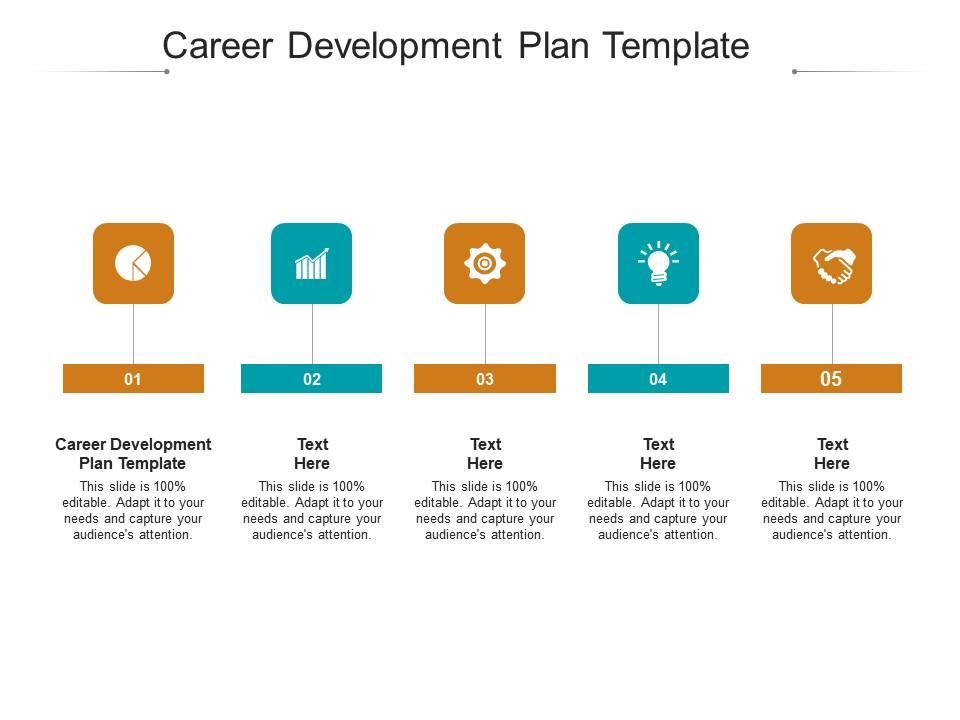
Career development plan template ppt powerpoint presentation layouts icons cpb
Try Before you Buy Download Free Sample Product
Audience
Editable
of Time
Related Products
Our Career Development Plan Template Ppt Powerpoint Presentation Layouts Icons Cpb are topically designed to provide an attractive backdrop to any subject. Use them to look like a presentation pro.
People who downloaded this PowerPoint presentation also viewed the following :
Career development plan template ppt powerpoint presentation layouts icons cpb with all 2 slides:
Use our Career Development Plan Template Ppt Powerpoint Presentation Layouts Icons Cpb to effectively help you save your valuable time. They are readymade to fit into any presentation structure.
FAQs for Career development plan template ppt powerpoint presentation
Look, you need four main things for a decent career plan. First, set clear goals - like where you'll be in 1-3 years. Then figure out what skills you're missing. Make specific action steps with actual deadlines, and don't forget regular check-ins (I always used to blow this off and my plans would just sit there gathering dust). Oh, and find mentors who can guide you - that part's huge. Be concrete about everything though. Instead of "get better at leadership," write something like "finish management training by March and lead two projects this year." Way more actionable that way.
Honestly? First figure out what actually gets you excited at work versus what drains you. Ask a few people you trust what they think you're really good at - sometimes we're blind to our own strengths. Those assessment tools like CliftonStrengths aren't bad either if you're into that stuff. Picture where you'd want to be in like 3-5 years, but be real about it. Not what sounds impressive, but what would genuinely make you happy to do every day. See where your natural talents line up with those goals. Any gaps you find? That's basically your to-do list for growing.
Honestly, having a mentor changes everything. They'll give you the real scoop on office politics and help you dodge those awkward career mistakes we all make. Look for people whose paths you actually respect - doesn't have to be someone super senior, just someone a few steps ahead. Don't make it weird with some formal "be my mentor" speech either. Just grab coffee and ask about their experience. Most people love talking about themselves anyway, so you'd be surprised how open they are to helping. Oh, and let it happen organically - the best mentoring relationships I've seen just kind of evolved naturally from those initial conversations.
Set specific goals you can actually measure, then check every 3 months or so. Track the obvious stuff - salary bumps, promotions, new skills. But honestly? The soft metrics matter just as much. Are you speaking up more in meetings? Getting pulled into bigger projects? Be real about what's not working though. Missing your targets isn't the end of the world - just tweak the plan. I'd throw a recurring reminder on your calendar because it's way too easy to forget about this stuff when you get busy.
Honestly, there's so much good stuff available now. Coursera and Udemy have solid structured courses, plus LinkedIn Learning if your company pays for it. Professional associations in your field usually run workshops and networking things - those are actually pretty valuable. I've been listening to more industry podcasts lately and some YouTubers really know their stuff, especially the ones sharing real experiences. Oh, and definitely ask HR about tuition reimbursement - tons of companies offer it but people forget to check. Just don't go crazy and sign up for everything at once. Pick maybe 2-3 things that actually match what you want to do career-wise.
Dude, networking changed everything for me career-wise. I used to think it was fake schmoozing but it's really just making genuine connections. Coffee chats with people whose jobs seem cool, joining industry groups, even random conversations at work events - all gold. LinkedIn's helpful obviously, but don't sleep on just talking to colleagues from other teams. Focus on actually being interested in what they do instead of selling yourself constantly. Oh and set a goal like one real professional convo per week. Sounds cheesy but it works. You'll hear about opportunities that never get posted anywhere.
Figure out what's actually stopping you first. Skills gap? Get training or find someone who can teach you the ropes. Not visible enough? Speak up in meetings and grab those bigger projects. Office politics are honestly the worst, but relationships matter - coffee chats help more than you'd think. Fear's probably part of it too. We all get imposter syndrome sometimes. Start writing down your wins so you remember what you've accomplished. When opportunities come up, you'll have proof of your work ready to go. Don't wait for someone else to notice.
Look, personal branding really does make a difference for your career - even though I used to roll my eyes at the whole concept. It's basically your professional reputation but more intentional. When you're known for specific skills, you become the person others think of first for opportunities. Better jobs start coming to you instead of the other way around. I honestly thought it was just LinkedIn fluff until I saw how it worked for people I know. The key is figuring out what you want to be recognized for professionally, then actually showing that expertise consistently. It helps you stand out when everyone's competing for the same roles.
Honestly, performance reviews are like having a roadmap for your career - they show you where you're crushing it and what needs work. Your manager will point out strengths you can keep building on, plus any skill gaps worth filling. Most companies tie these directly to promotions too, so you'll actually know what to focus on. I used to dread them (so awkward!) but now I think of them more like planning meetings. Oh, and definitely come with your own ideas about skills you want to develop. Makes the whole thing feel less one-sided and way more useful.
Ok so here's what works for me - think 6-12 months for short stuff, 3-5 years for the big picture. Make your short-term goals super specific, like "finish PM certification by March" instead of vague stuff about getting better at things. I actually start backwards from where I want to be in five years, then figure out what steps get me there. Write it all down somewhere you'll actually look at it (not buried in some random note app). Long-term should focus on what role or impact you're shooting for. Oh and don't stress if things change when you review quarterly - honestly, goals should evolve as you do.
Honestly, getting the right certifications can be a total game-changer for your salary and job prospects. Employers eat that stuff up because it shows you're not just coasting – you're actually investing in yourself and staying on top of industry changes. Some jobs literally won't even look at you without certain credentials, especially in tech or finance. The training programs are great for networking too, which is half the battle sometimes. Just don't go crazy collecting every certificate out there. Pick ones that actually matter in your field and match where you want your career to go.
Don't put all your eggs in one basket with specific tech or roles - build skills that transfer everywhere. Technical basics, people skills, ability to learn fast. Predicting where industries go is basically impossible now, so plan in 12-18 month chunks instead. Check in regularly on trends and what you actually want to do (your interests change too, trust me). Network with people outside your bubble, stay curious about related fields. I set aside time each month to dig into what's shifting - keeps me from getting blindsided by changes.
So you'll want to hit the basics first - where you are now, where you want to go, and how you're getting there. Talk about skill gaps and what training you need. Timeline with milestones is huge. Oh, and don't forget the money stuff - budget, mentoring, whatever resources you need. Honestly, throw in some ROI numbers because stakeholders eat that up. Shows it's not just about you but helps the company too. Address what could go wrong and your backup plans. Charts and visuals are your friend here - nobody wants to read walls of text. End with what you actually need from them.
Honestly, you gotta set some boundaries or you'll go crazy. Pick what actually matters right now - like maybe one course instead of trying to juggle three at once? I used to say yes to every single networking thing and it was exhausting lol. Block out 30 minutes daily for skill stuff and treat it like a real appointment. Tell your family what you're working toward so they get why you need that focused time. The whole "start small" thing is annoying advice but it actually works way better than going all-out from day one.
Dude, remote work is such a game changer. You can literally work for companies anywhere now instead of being stuck with whatever's in your city. Better pay, cooler roles, stuff that probably doesn't even exist locally. But yeah, you're competing with everyone globally too which is... intimidating honestly. I'd focus on getting good at communication and managing yourself since you won't have a boss breathing down your neck. Digital skills are obvious but worth mentioning. Oh, and start doing remote work in small doses now if you can - it's becoming pretty standard anyway.
-
Very well designed and informative templates.
-
Very unique, user-friendly presentation interface.
-
Awesomely designed templates, Easy to understand.
-
Awesome presentation, really professional and easy to edit.
-
Great designs, really helpful.
-
Wonderful templates design to use in business meetings.
-
Thanks for all your great templates they have saved me lots of time and accelerate my presentations. Great product, keep them up!