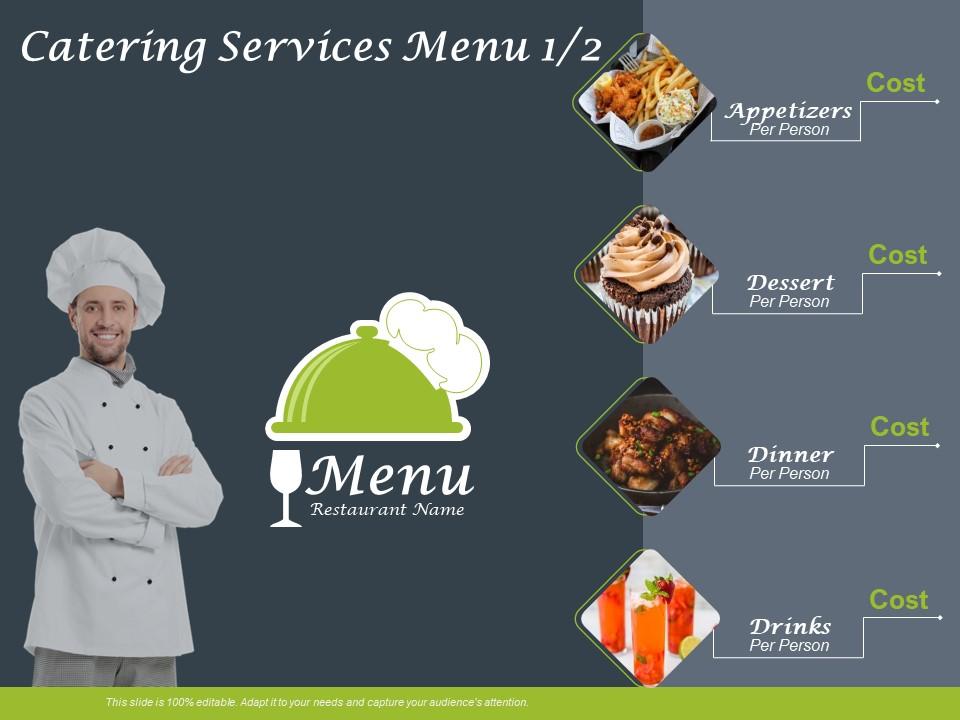
Catering service menu cost ppt powerpoint presentation outline introduction
Try Before you Buy Download Free Sample Product
Audience
Editable
of Time
Our Catering Service Menu Cost Ppt Powerpoint Presentation Outline Introduction are explicit and effective. They combine clarity and concise expression.
People who downloaded this PowerPoint presentation also viewed the following :
Catering service menu cost ppt powerpoint presentation outline introduction with all 2 slides:
Give your audience a fulfilling experience. They will find our Catering Service Menu Cost Ppt Powerpoint Presentation Outline Introduction elevating.
FAQs for Catering service menu cost ppt powerpoint
Catering menu pricing depends on ingredient costs, portion sizes, preparation complexity, service style, guest count, and seasonal availability. These factors combine with labor requirements, equipment needs, and venue logistics, with many caterers finding that premium ingredients and full-service options significantly enhance perceived value while delivering competitive positioning in increasingly diverse market segments.
Seasonal ingredients significantly impact catering menu costs through supply availability, price fluctuations, and transportation expenses, with peak-season produce typically reducing costs by 20-40%. Many catering businesses leverage seasonal planning to enhance profitability while delivering fresher options, ultimately creating competitive advantage through strategic menu rotation and cost optimization strategies.
Catering costs typically range from $15-30 per head for basic buffet services, $25-50 for plated meals, $40-80 for upscale corporate events, and $75-150+ for premium wedding or gala catering. These variations reflect service complexity, menu sophistication, and presentation requirements, with many organizations finding that strategic catering investments significantly enhance client relationships and event outcomes.
Dietary restrictions typically increase catering costs by 15-30% due to specialized ingredients, separate preparation processes, and additional staff training requirements. However, many caterers find that offering comprehensive dietary options, including gluten-free, vegan, and allergen-friendly choices, ultimately enhances client satisfaction and competitive positioning in an increasingly health-conscious market.
Key components include guest count, menu complexity, service style, dietary accommodations, and seasonal ingredient availability. These factors work together to determine overall costs, with many couples finding that buffet-style service and seasonal menus deliver significant savings while maintaining quality, ultimately enabling better resource allocation across other wedding priorities.
Event size significantly impacts catering rates through economies of scale, with larger events often reducing per-person costs while smaller gatherings incur higher unit prices due to fixed overhead expenses. Location affects pricing through venue accessibility, local supplier availability, travel distances for staff and equipment, and regional market rates, with remote or premium venues typically increasing overall service costs while urban locations offer competitive pricing advantages.
Cost-saving strategies include bulk purchasing from trusted suppliers, seasonal menu planning, standardized portion control, efficient inventory management, and strategic partnerships with local vendors. These approaches streamline operations by reducing waste, optimizing ingredient costs, and maximizing purchasing power, with many catering businesses finding that combining seasonal sourcing with standardized preparation ultimately delivers both quality consistency and competitive pricing advantages.
Additional services significantly increase catering costs, with staffing typically adding 15-25% and equipment rentals contributing another 10-20% to base menu pricing. These services enhance event execution by providing professional servers, bartenders, and essential items like linens, glassware, and furniture, with many event planners finding that bundled packages ultimately deliver better coordination and guest experiences.
Gourmet menu options typically increase catering costs by 40-70% compared to standard offerings due to premium ingredients, specialized preparation techniques, and enhanced presentation requirements. While standard menus focus on popular, cost-effective dishes that streamline operations, gourmet selections deliver elevated dining experiences that justify higher price points, with many catering companies finding this strategic positioning enhances their competitive advantage in corporate and wedding markets.
Catering service contracts typically outline menu pricing through per-person rates, package tiers, and itemized costs for appetizers, entrees, and beverages, along with detailed extra charges for overtime, additional staff, equipment rentals, and last-minute menu changes. These comprehensive agreements enable clients to budget accurately while providing transparency, with many restaurants and event planners finding that clear contract structures ultimately streamline operations and enhance customer satisfaction.
Food presentation significantly influences catering costs through specialized plating techniques, garnish requirements, custom serving arrangements, and enhanced visual displays. Professional caterers invest in premium tableware, skilled presentation staff, and additional preparation time, with many event organizers finding that elevated presentation justifies higher pricing while delivering memorable dining experiences and stronger brand impressions.
Catering companies adjust prices for diverse cultural cuisine options by factoring ingredient costs, specialty equipment requirements, chef expertise levels, and preparation complexity. Many establishments create tiered pricing structures, with traditional Mediterranean or Asian cuisines often commanding premium rates due to imported spices and specialized cooking techniques, ultimately enabling caterers to maintain profitability while expanding their market reach.
Hidden costs in catering services include service charges, gratuities, equipment rentals, overtime fees, last-minute guest additions, and venue-specific requirements like permits or cleanup fees. These additional expenses can increase total costs by 20-40%, with many event planners finding that transparent pricing discussions upfront help avoid budget surprises and ensure smoother negotiations.
Catering services can leverage seasonal promotions through holiday-themed packages, off-peak discounts, seasonal ingredient specials, early booking incentives, and bundled event services. These strategies enable caterers to maximize resource utilization during slower periods, reduce inventory costs with seasonal produce, and attract price-conscious clients while maintaining profit margins throughout the year.
Current trends influencing catering pricing include rising labor costs, supply chain disruptions, increased demand for sustainable and locally-sourced ingredients, technology integration, and premium dietary accommodations. These factors drive costs upward while creating opportunities for caterers to differentiate through specialized services, with many finding that transparency in pricing builds stronger client relationships and competitive advantage.
No Reviews