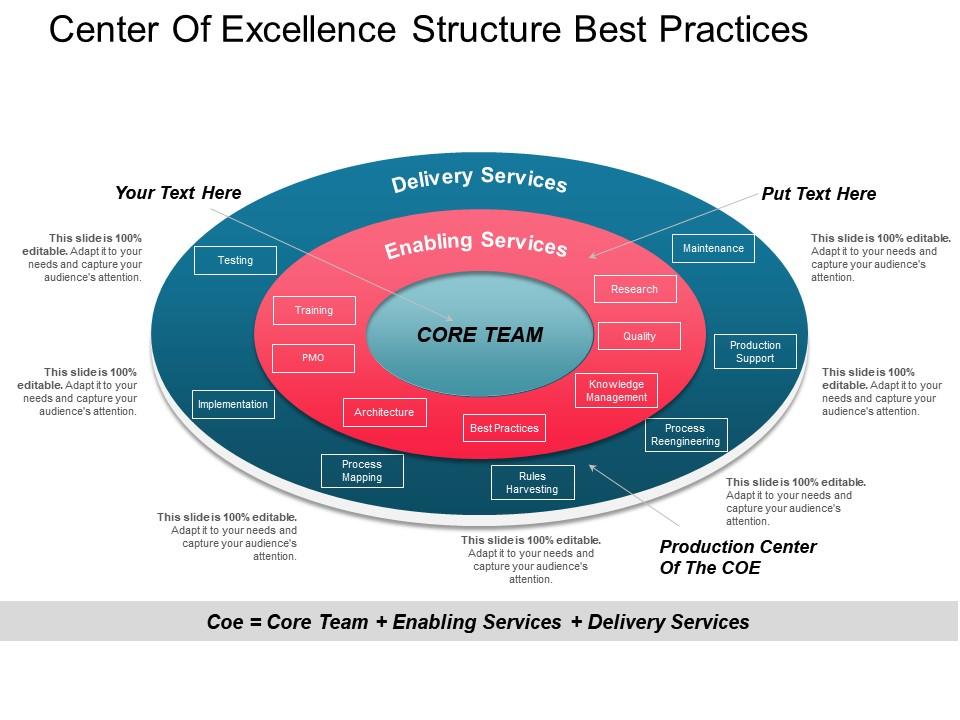
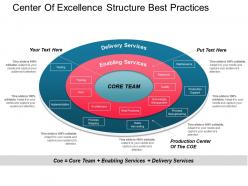
Center of excellence structure best practices ppt examples

Rating:
95%
Center of excellence structure best practices ppt examples
Slide 1 of 5
Favourites Favourites

Try Before you Buy Download Free Sample Product

Audience Impress Your
Audience
Editable 100%
Editable
Time Save Hours
of Time
The Biggest Sale is ending soon in
0
0
:
0
0
:
0
0
Rating:
95%
Presenting center of excellence best practices PPT examples PowerPoint template which is completely editable. The PPT is used by business analysts, business managers etc. The PowerPoint presentation is compatible with multiple software and format options and with Google Slides also. Editing instructions are also provided for your kind assistance. The user can easily customize and personalize this slideshow as per his / her requirements. The visuals being of good quality do not pixelate when this PPT slide is projected on the wide screen.

FAQs for Center of excellence structure best

Track both the day-to-day stuff and bigger picture metrics. Adoption rates, support ticket resolution times, cost savings - that's your operational bread and butter. Then look at knowledge transfer success, stakeholder satisfaction, consistency across teams. Leadership definitely wants to see ROI numbers (they always do). Mix your leading indicators like training completions with lagging ones - actual performance gains. Don't go crazy measuring everything though. Start with maybe 3-5 core metrics and build from there. You can always add more later once you've got a solid baseline going.

Honestly, CoEs work best when they're not sitting in some ivory tower. Get your people embedded in different business units - that's where you'll spot real problems and solutions. Focus on quick wins first to build credibility, then work on connecting teams that never talk to each other (this is where most fail). Standardize stuff, but only processes people will actually use. Think of yourselves as internal consultants who get the business, not experts just tossing advice around. The whole cross-functional thing is messy but that's kinda the point.

Honestly, cross-functional teams are your best bet here. Monthly check-ins where departments actually share what's working (and what isn't) make a huge difference. I'd also set up shared KPIs so teams have to collaborate instead of just hitting their own numbers. Virtual coffee chats sound cheesy but they really do work - people need those informal connections. Oh, and silos will kill your CoE faster than anything else, so break those down early. Maybe start with one pilot project next quarter? That way you can figure out what actually clicks with your team before going all-in.

Dude, most teams waste SO much time on manual stuff it's ridiculous. Get your CoE some collaboration platforms where experts can actually work together in real-time. Build a central spot for best practices and lessons learned - trust me, you'll reference it constantly. Automate the boring tasks like reporting and data collection. AI analytics can spot patterns you'd totally miss otherwise. Oh and pick tools that actually match how your team works. I've seen too many companies blow money on fancy tech that just sits there unused because it doesn't fit their workflow.

Honestly, leadership can make or break your whole CoE situation. You absolutely need execs who'll actually fight for it - not just give lip service but secure real funding and knock down resistance when teams get stubborn about new processes. I've watched too many CoEs turn into "maybe later" projects the second budgets get tight. Your leaders have to walk the walk too, actually using what the CoE promotes. Oh, and make sure at least one senior person is genuinely excited about it - someone who'll bring it up in every exec meeting. Without that champion? You're pretty much toast.

Look past all the fancy industry buzzwords and figure out what problem they're actually solving. Toyota's lean stuff? Works perfectly for software when you realize "defects" are just bugs with a different name. Don't try to copy everything at once though - context is huge. Run small tests first to see what sticks. Honestly, most practices fail because people just slap them on without translating the core ideas to fit their world. Pick something simple that fixes a problem your team already complains about. Your CoE should build a framework that converts their terminology into yours. Once that first thing works, you can expand from there.

Honestly, the hardest part is getting other teams to actually care about what you're doing. You'll end up in this weird bubble where your CoE feels super important but nobody else gets it. Resource allocation becomes a nightmare too. My advice? Don't centralize everything - put your people directly in the business units instead. Quick wins are your best friend here, so start with small pilot projects that show value fast. Leadership loves their numbers, so nail down those success metrics early and brag about wins whenever you can. Oh, and share knowledge freely rather than hoarding it. That gatekeeping mentality kills CoEs faster than anything else.

Run it like a portfolio - split your CoE resources maybe 70/30 between long-term strategy work and quick wins. Those fast projects are honestly crucial for keeping leadership happy and funding your bigger stuff. I'd constantly tie everything back to business goals so people get why you're doing both. The quick hits build credibility while your transformation work actually moves the company forward. Oh, and set up regular check-ins where you can shift resources around - priorities change fast and you don't want to be stuck doing work that doesn't matter anymore.

Focus on three main things: technical training for your specific area, change management, and communication skills. Honestly, most teams nail the technical part but completely bomb on the soft skills side. Your people need to influence without any real authority, run workshops that don't suck, and translate between departments that might as well be speaking different languages. Project management basics are crucial too - oh, and throw in some data analysis skills. I'd start by figuring out what gaps your team has, then create a 90-day program with actual hands-on practice instead of just theory.

First thing - figure out who actually matters and what keeps them up at night. Don't assume you know! Set up monthly check-ins or whatever works, but make them worth people's time. I've watched so many CoEs crash and burn because they just talked to themselves all day. Listen when people complain and actually do something about it. Find allies in each group who'll speak up for you behind closed doors - that's huge. Oh, and be real about your failures too, not just the wins. People can smell BS from a mile away and they'll trust you more if you're honest about what's not working.

Start with templates for the basics - playbooks, case studies, that kind of stuff. Same format every time so people aren't hunting around forever. Definitely need one central spot where everyone can search and find things (we learned this the hard way). Monthly show-and-tells work really well too. Teams demo what worked and what totally bombed. The trick is making it brain-dead simple to add stuff and find it later. Honestly, I'd just pick your top 3-4 knowledge areas first and build from there instead of trying to do everything at once.

Track the obvious stuff first - cost savings, how many teams actually use your standards, training completions. But honestly? The soft metrics are where you'll really see impact. Survey people on satisfaction levels, count how often teams come to you for help (that's huge), document those wins where you saved someone's butt. Also measure if knowledge is actually transferring and whether you're cutting down on duplicate work. I'd set up a basic quarterly dashboard - nothing fancy - and connect it back to business results when you can. The stories matter as much as the numbers, trust me.

Your CoE dies without continuous improvement - that's just reality. Gather feedback from stakeholders regularly and measure how you're actually impacting business results. I've seen too many teams skip this part and wonder why nobody takes them seriously anymore. Set up retrospectives with key people and build feedback loops that genuinely change how you work. It's like updating software but for your whole operation. The teams you're helping will lose faith fast if you don't evolve. Start small - maybe monthly check-ins - then iterate from there.

Map everything back to corporate goals first - that's non-negotiable. Your CoE needs success metrics that actually tie to company KPIs, not just nice-to-have numbers. Meet with stakeholders regularly because strategies change constantly (more than anyone admits, honestly). Quarterly leadership reviews help you stay on track. Here's what really matters though - make the connection visible through dashboards showing how your work impacts business outcomes. I learned this the hard way at my last job. Don't just do good work, do work that leadership genuinely values. That's how you survive budget cuts.

Psychological safety is huge - people won't innovate if they're scared to mess up. I've watched so many centers of excellence turn into these weird isolated departments that nobody actually wants to work with. Your leadership team needs to walk the walk, not just give speeches about it. Rotate folks through different business units regularly. Celebrate the smart failures alongside the wins (this part's harder than it sounds). Oh, and build in actual time for experimentation - not just "do it when you can" but real dedicated hours. Start with retrospectives where people can be honest about what's broken. That's your foundation right there.

Ratings and Reviews

95% of 100
Review Form
Write a review
Most Relevant Reviews
  1. 80%

    by Dave Shaw

    Top Quality presentations that are easily editable.
  2. 100%

    by Duncan Berry

    Attractive design and informative presentation.
  3. 100%

    by Devon Ferguson

    I discovered this website through a google search, the services matched my needs perfectly and the pricing was very reasonable. I was thrilled with the product and the customer service. I will definitely use their slides again for my presentations and recommend them to other colleagues.
  4. 100%

    by Cleo Long

    Easily Understandable slides.

4 Item(s)

per page: