Characteristics organizational behaviour ppt powerpoint presentation pictures cpb

Characteristics organizational behaviour ppt powerpoint presentation pictures cpb
Slide 1 of 2
Favourites Favourites

Try Before you Buy Download Free Sample Product

Audience Impress Your
Audience
Editable 100%
Editable
Time Save Hours
of Time
The Biggest Sale is ending soon in
0
0
:
0
0
:
0
0
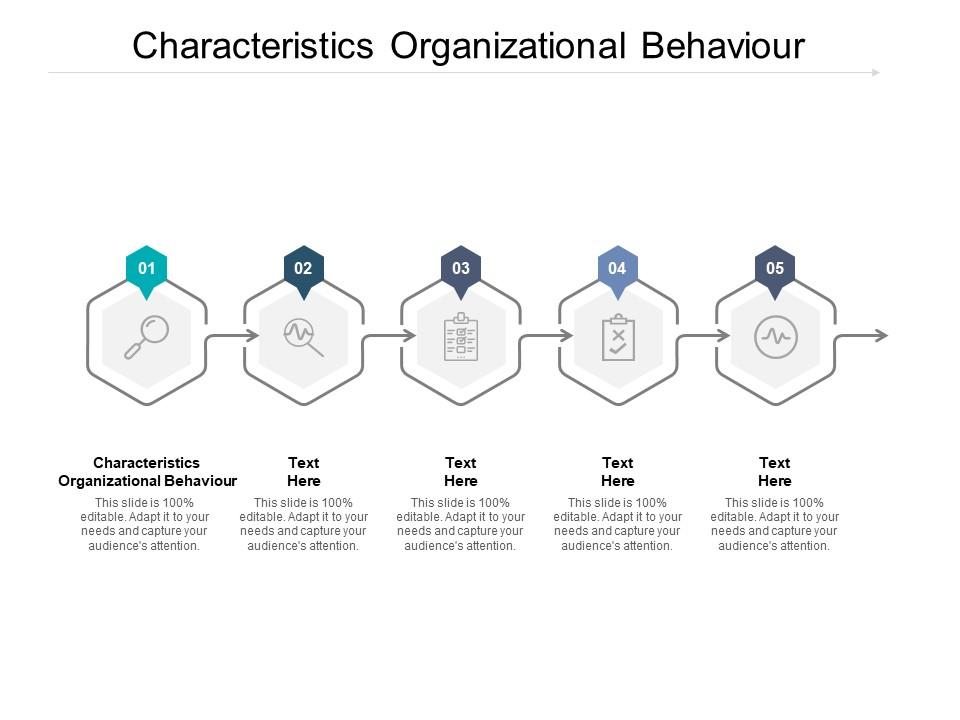
Presenting this set of slides with name Characteristics Organizational Behaviour Ppt Powerpoint Presentation Pictures Cpb. This is an editable Powerpoint five stages graphic that deals with topics like Characteristics Organizational Behaviour to help convey your message better graphically. This product is a premium product available for immediate download and is 100 percent editable in Powerpoint. Download this now and use it in your presentations to impress your audience.

People who downloaded this PowerPoint presentation also viewed the following :

FAQs for Characteristics organizational behaviour ppt powerpoint

Organizational culture significantly influences employee performance and satisfaction by shaping workplace values, communication patterns, recognition systems, and behavioral expectations. A strong, supportive culture enhances productivity, reduces turnover, and improves engagement, with many organizations finding that aligned cultures deliver better collaboration, higher retention rates, and ultimately stronger competitive advantage in talent acquisition and business outcomes.

Leaders effectively influence organizational behavior by modeling desired behaviors, communicating clear expectations, recognizing achievements, and creating psychological safety for innovation and feedback. Through consistent demonstration of values, transparent decision-making, and strategic recognition programs, organizations across industries like healthcare, financial services, and manufacturing find that employee engagement increases significantly, ultimately delivering improved performance, reduced turnover, and stronger competitive advantage.

Key factors contributing to team dynamics include communication patterns, leadership styles, role clarity, trust levels, and conflict resolution mechanisms. These elements work together by establishing psychological safety, promoting collaborative decision-making, and aligning individual goals with team objectives, with many organizations finding that effective dynamics ultimately enhance productivity, innovation, and employee retention across departments.

Organizations measure employee engagement through comprehensive surveys, pulse checks, performance metrics, retention rates, and 360-degree feedback systems. These assessment tools enable companies to track satisfaction levels, identify improvement areas, and benchmark against industry standards, with many finding that regular measurement drives targeted interventions, ultimately enhancing productivity and competitive advantage.

Diversity and inclusion significantly enhance organizational behavior by fostering innovation, improving decision-making, reducing groupthink, and increasing employee engagement across all levels. These initiatives drive better problem-solving capabilities, higher retention rates, and stronger financial performance, with many organizations finding that diverse teams deliver more creative solutions and adapt more effectively in increasingly competitive markets.

Power dynamics significantly influence team decision-making through authority hierarchies, information control, resource allocation, and communication patterns. Teams with balanced power distribution often experience more collaborative discussions and diverse input, while concentrated power structures can streamline decisions but may limit creative solutions, with many organizations finding that psychological safety and inclusive leadership ultimately deliver better outcomes and innovation.

Effective communication enhances organizational performance by improving collaboration, reducing errors, accelerating decision-making, and building stronger employee engagement across all levels. Organizations with clear communication channels experience increased productivity, faster project completion, and better customer service, while minimizing costly misunderstandings, ultimately delivering competitive advantage and improved financial outcomes.

Motivation and incentive systems directly influence employee performance, engagement, retention, and organizational culture by aligning individual goals with business objectives. Through strategic compensation packages, recognition programs, and career development opportunities, companies enhance productivity, reduce turnover, and foster innovation, with many organizations finding that well-designed incentive structures ultimately deliver competitive advantage and sustainable growth.

Effective conflict management involves establishing clear communication channels, implementing structured mediation processes, promoting active listening, and creating transparent resolution frameworks. Organizations in healthcare, manufacturing, and financial services find that these approaches enhance team collaboration, reduce workplace tension, and improve employee satisfaction, ultimately delivering stronger organizational performance and competitive advantage.

Common barriers to organizational change include employee resistance, inadequate communication, insufficient leadership support, resource constraints, and entrenched cultural norms. These challenges can be overcome by fostering transparent communication, engaging stakeholders early, providing comprehensive training, and demonstrating quick wins, with many organizations finding that combining strong leadership commitment with employee involvement ultimately delivers smoother transitions and sustainable transformation.

Organizational structures influence behavior by defining reporting relationships, communication channels, decision-making processes, and resource allocation methods, which directly shape how employees interact and collaborate. Hierarchical structures typically encourage formal communication and clear accountability, while flatter organizations promote cross-functional teamwork and faster decision-making, with many companies finding that matrix structures enhance project collaboration and innovation.

Emotional intelligence enhances leadership effectiveness by improving self-awareness, empathy, social skills, and emotional regulation, enabling leaders to better connect with teams and navigate complex interpersonal dynamics. Leaders with high emotional intelligence create more inclusive environments, resolve conflicts more effectively, and inspire greater employee engagement, with many organizations finding that emotionally intelligent leaders deliver higher team performance and retention rates.

Remote work transforms organizational behavior by reducing face-to-face interactions, increasing reliance on digital communication tools, and reshaping team dynamics through asynchronous collaboration patterns. While this shift presents challenges in maintaining company culture and spontaneous connections, many organizations find that remote arrangements enhance flexibility, reduce geographical constraints, and ultimately deliver improved work-life balance and access to diverse talent pools.

Organizational behavior's long-term effects on business success include enhanced employee engagement, improved retention rates, stronger team collaboration, increased productivity, and better adaptability to market changes. These behavioral foundations streamline operations by fostering innovation, reducing turnover costs, and creating resilient workplace cultures, with many organizations finding that strategic behavior management ultimately delivers sustainable competitive advantage and measurable performance improvements.

Organizations create continuous feedback cultures by establishing regular check-ins, implementing peer-to-peer feedback systems, training managers in constructive communication, and integrating feedback into daily workflows rather than limiting it to annual reviews. This approach enhances performance by increasing employee engagement, accelerating skill development, and improving team collaboration, with many companies finding that real-time feedback delivers faster problem resolution and stronger business outcomes.

Ratings and Reviews

0% of 100
Write a review
Most Relevant Reviews

No Reviews