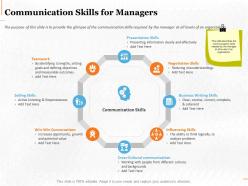
Communication skills for managers ppt powerpoint presentation infographics
Try Before you Buy Download Free Sample Product
Audience
Editable
of Time
Our Communication Skills For Managers Ppt Powerpoint Presentation Infographics will bring you good fortune. You will definitely have it all going for you.
People who downloaded this PowerPoint presentation also viewed the following :
Communication skills for managers ppt powerpoint presentation infographics with all 2 slides:
Have it all going for you with our Communication Skills For Managers Ppt Powerpoint Presentation Infographics. They will definitely bring good fortune.
FAQs for Communication skills for managers ppt
Focus on three things: actually listening, being clear when you talk, and giving good feedback. When someone's talking, don't just sit there planning what you'll say next - really hear them out. Skip the corporate BS too. Nobody wants to decode "let's circle back on synergies" or whatever. Just be straight with people, but nice about it. The feedback thing is probably the hardest part honestly. Your team needs to know how they're doing. Try practicing in your next one-on-ones. Maybe start by listening way more than you talk this week?
So here's the thing - when you actually listen to people instead of just waiting for your turn to talk, they feel way more valued. I've noticed it catches problems before they blow up too. People start trusting you more and share the real stuff, not just surface-level updates. Honestly, half the workplace drama I see could've been avoided with better listening. Your meetings get so much better because people actually contribute instead of zoning out. Oh and definitely try the phone face-down trick during your next one-on-one - it's weirdly effective.
Dude, your body language as a manager is SO much more important than you think. I've watched managers totally kill their credibility just by crossing their arms during feedback sessions - it's wild how much that stuff matters. Your team reads everything: tone, eye contact, posture. They're basically trying to figure out if you're approachable or having a bad day. Keep your posture open and make sure your voice actually matches what you're saying. Oh, and don't avoid eye contact - that's like management death. Your non-verbal stuff can literally make or break how people see you.
Just watch how everyone actually likes getting info and roll with it. Some people want everything in detailed emails they can save, others would rather just chat quickly in person. Notice the patterns - like does Sarah always follow up in writing? Does Mike zone out when you go on too long? Your quiet developers probably want written stuff before meetings, but sales people usually love thinking out loud together. Honestly, sometimes just asking "hey, how do you prefer to communicate?" works better than overthinking it. Then tweak your style based on what clicks with each person.
Okay so first thing - chunk everything down and give them the overview before jumping into weeds. I'm obsessed with analogies because they actually work way better than technical speak. Visual stuff helps too if you can swing it. Here's what I learned the hard way: don't ask "make sense?" because everyone just says yes. Ask specific questions instead. Oh and definitely send a recap email after, otherwise people forget like 90% of what you covered. Trust me, your team will thank you for not making them sit through another confusing explanation where they're just nodding along pretending to get it.
Oh man, I used to be terrible at this! Skip the generic "good job" stuff - it's useless. Try the SBI thing: describe the Situation, what Behavior you saw, and the Impact. Way more helpful. Ask questions too like "what's your take on this?" Makes it feel less like you're just lecturing them. Don't wait for those awkward formal reviews either. Regular quick check-ins work better - less intimidating for everyone. Mix the good with what needs work, but be specific about both. Honestly took me forever to figure this out, but once you do these conversations get so much easier.
Honestly, prep work is key here. Start by acknowledging where they're coming from before you jump into what's bothering you. Ask open questions and actually listen - I'm terrible at this but it really helps you understand their side. Don't attack their character, stick to specific stuff they did. "I felt frustrated when..." works way better than "you always..." Trust me on that one. Stay calm even if they lose it, and definitely do this privately. The goal isn't just venting - work together to fix whatever's going wrong. Then check in later to see how things are going.
Honestly, emotional intelligence is just getting good at reading the room. You pick up on someone's vibe and adjust how you talk to them. Stressed coworker? Talk slower, give them breathing room. I've learned the hard way that managing your own reactions matters too - keeps conversations from going completely sideways. Pay attention to body language before you even start talking. Active listening is huge. Also random but timing matters more than people think. Short version: notice the energy in the room first, then match it.
Honestly, cultural awareness is everything for team communication. Some people are super blunt, others drop hints and expect you to read between the lines. Drives me crazy when managers don't get this! Ask your teammates straight up how they like to receive feedback instead of guessing. You'll catch way more nonverbal stuff too once you know what to look for. I've watched good teams completely implode because nobody bothered figuring out everyone's communication style. Worth the effort though - makes everything smoother.
Honestly, start with Slack or Teams - they're lifesavers for keeping conversations organized by project. Video calls make such a difference too. I know it sounds obvious, but one 15-minute face-to-face beats endless email chains every time. Try shared workspaces like Notion or Asana where everyone can track stuff and update documents together. Don't go overboard though - pick maybe 2-3 tools max and actually teach people how to use them. Otherwise you'll just create more chaos. Start small by moving one regular meeting online first, see how it feels.
Honestly, most communication fails because of info overload and people making assumptions about what others already know. Plus unclear messaging just confuses everyone - happens all the time. Ask people to repeat back what they heard instead of assuming they got it. Set up regular check-ins for actual dialogue, not just you talking at them. Make it okay for people to say "wait, I'm lost" without feeling stupid about it. One trick that actually works? Start meetings with "What questions do you have?" instead of "Any questions?" Sounds small but people respond way differently. Oh, and hierarchy kills communication fast - nobody wants to look dumb in front of their boss.
Honestly, stories work way better than just throwing facts at people. When I need to make a point, I'll share something that actually happened instead of being all preachy about it. Like if teamwork's an issue, don't lecture them - tell them about that time when Sarah didn't loop in marketing and we had to redo the whole campaign. People get it immediately. They can picture themselves in that situation, you know? Next meeting, try opening with a quick story that connects to whatever you're discussing. Trust me, you'll actually see people lean in instead of checking their phones.
Psychological safety is huge - people won't speak up if they think they'll get in trouble. When someone does share concerns, actually be curious about it. Ask follow-up questions, act on their feedback when you can. Those one-on-ones work way better than team meetings where everyone just stares at screens, honestly. Share your own screwups too - shows it's okay to be human. The consistency part is what really matters though. Maybe start small this week? Ask for input on something specific and genuinely listen to what comes back.
Okay so here's the thing - people absorb visuals like 60,000 times faster than text, which is honestly wild when you think about it. Charts and diagrams give your audience two ways to get your point: they're hearing you talk AND seeing it mapped out. Way better than making them stare at boring text slides (been there, suffered through that). Just keep your visuals clean and connected to what you're actually saying. Don't dump some crazy complicated chart on them - break it down piece by piece. Walk them through the parts that matter most. Oh, and bullet points work great too if you're keeping things simple.
Dude, follow-up communication literally saves your ass. People walk away from meetings with totally different ideas about what happened - I've watched whole projects crash because nobody was on the same page. A quick recap email within 24 hours? That's your safety net. List the decisions, who's doing what, deadlines. Creates accountability too. Plus honestly, it makes you look super organized as a manager. Trust me, your team will actually appreciate knowing what they signed up for instead of guessing later.
No Reviews