

Comprehensive Site Visit Customer Plan




Try Before you Buy Download Free Sample Product
 Impress Your
Audience
 100%
Editable
 Save Hours
of Time


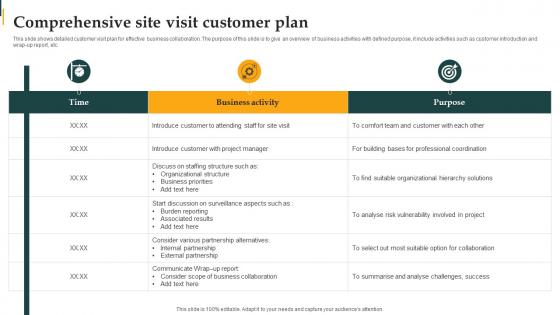
This slide shows detailed customer visit plan for effective business collaboration. The purpose of this slide is to give an overview of business activities with defined purpose, it include activities such as customer introduction and wrap up report, etc.
People who downloaded this PowerPoint presentation also viewed the following :
Comprehensive Site Visit Customer Plan with all 6 slides:
Use our Comprehensive Site Visit Customer Plan to effectively help you save your valuable time. They are readymade to fit into any presentation structure.






FAQs for Comprehensive Site
So for your site visit, nail down exactly what you need to learn that you can't figure out from your desk. Write down your questions beforehand - trust me, you'll forget half of them otherwise. Definitely block out time to actually watch how things work in person and take tons of photos. Building rapport with the local team is huge too, since they're the ones who'll make or break your project honestly. These visits cost a fortune and scheduling another one is always a nightmare, so make a checklist. Short visits go by way faster than you think they will.
Honestly, a good site visit plan is a game-changer. It stops the whole thing from turning into a mess where everyone's wandering around aimlessly. You can bring different people in at specific spots so they actually see what's happening and speak up right then - way better than those awful email threads that go nowhere. The trick is timing who shows up where. When people walk through spaces together, they usually agree on stuff more than when they're just sitting in boring meetings. Oh, and definitely leave time to talk after each section. That's when people actually open up and you get the good feedback.
Pack your safety gear first - that stuff's non-negotiable. You'll want all technical docs, contact info for key people, measuring tools, and your camera. Oh and grab permits/credentials if needed. Weather can totally screw you over, so check forecasts and pack accordingly. Map out your specific inspection points beforehand with the quality benchmarks you're testing against. Timeline's crucial too - build in buffer time because sites always throw curveballs. Print physical copies of everything important since cell service is usually garbage. Test equipment beforehand and bring spare batteries. Trust me on that last one.
Look, timing is everything with site visits. Weather's huge - nobody wants to slog through mud when it's pouring, trust me on that one. Match your visit to what phase you're in too. Early on? Go broad with your assessment. Later phases need laser focus on specific stuff. Getting the right people there makes or breaks the whole thing though. Book 2-3 weeks ahead so everyone can actually show up and bring whatever docs you'll need. Oh, and seasonal conditions matter more than people think - winter visits can be brutal depending on your location.
Okay so first thing - map out your routes and timing. Traffic's gonna be a nightmare, plus you need to think about parking and whether certain areas have access restrictions. Some places need special vehicle clearances or escorts too. Your gear situation could get messy - lots of sites have equipment rules or make everything go through security, which honestly takes forever. Weather can screw things up bad, especially if you're going somewhere remote. Oh and definitely have a backup transport plan. I'd build in extra time for when stuff inevitably goes wrong and double-check access requirements with whoever's your site contact.
Honestly, you've gotta spell out exactly what you want before everyone shows up. Send them a quick rundown beforehand - are we evaluating the space? Getting feedback? Making decisions? I've watched too many site visits turn into aimless wandering because nobody knew the point. Tell each person what specific expertise you need from them and how you'll actually use their input later. Include your agenda and key questions too. Don't just text "come check out this space" - that's way too vague and you'll waste everyone's time.
Honestly, just get a decent mobile app for site visits - it'll save you so much headache. Instead of juggling clipboards and losing random notes, you can snap photos and log everything directly on your phone. GPS tracks locations automatically, which is clutch. The cloud sync thing means your office team sees updates right away instead of waiting for you to get back. There's even some wild AR stuff now that shows technical details overlaid on whatever you're looking at (though that might be overkill depending on your work). Start simple though - even basic digital forms will cut your paperwork time in half, guaranteed.
Get that survey out within 24-48 hours while it's still fresh in their heads. Keep it short - nobody's filling out some massive questionnaire. Ask about logistics, content, what they'd change. I always do a quick verbal check right before everyone leaves too. Call a few key people afterward for the real insights. Here's the thing though - skip the generic "how satisfied were you" crap. Ask "what surprised you most?" That's where you get the good stuff. Oh and actually use their feedback to fix your next visit. Sounds obvious but you'd be amazed how many people just... don't.
Definitely do a safety briefing first - cover the specific hazards you'll face, what PPE everyone needs, emergency contacts, all that stuff. Have a backup way to communicate since cell towers can be iffy in remote areas. Weather backup plans are clutch too, honestly saved my butt more times than I can count. Know where the nearest hospital is before you go. Someone at the office should have your full schedule and when you're supposed to be back. Put together a basic checklist your team will actually use - those fancy corporate forms are useless when you're in the field.
Dude, you've gotta do your homework on local customs before you go. Some places want you to chat and build relationships for like an hour before talking business - others think that's a waste of time. Punctuality is weird too; being exactly on time can actually be rude in certain cultures (who knew?). Look up their gift rules, dress codes, even how they hand over business cards. Honestly, the business card thing seems minor but I've heard it can really throw people off. Find someone local who can give you the real deal on what not to mess up.
Honestly, I'd go with a combo approach - snap photos with timestamps, record voice memos for quick thoughts, and scribble notes using some basic template that covers processes, people stuff, and pain points. Voice memos are clutch because you can walk around recording without looking like a weirdo taking notes constantly. Definitely bring someone else if you can swing it - they'll catch things you totally miss. Oh, and this part's crucial: sort through everything within 24 hours or you'll forget half the context behind your cryptic notes. Trust me on that one.
Okay so here's the thing - executives want the big picture stuff. ROI, major milestones, how everything ties to business goals. Don't bog them down with details. Operational teams are totally different though. They need to see actual workflows and processes since they'll be living with this stuff daily. Honestly, the nitty-gritty details that bore executives to tears? That's exactly what ops people need to understand. Plan different routes through the facility for each group. Before you even start planning, ask yourself what decisions each audience will make afterward - that'll guide everything else.
Honestly, prep some good open-ended questions first and shoot everyone the agenda a day before. People hate walking into meetings blind. Kick things off by explaining why you're all there and what actually needs to get decided. Bring a whiteboard or sticky notes - sounds dumb but people really do engage more when they can move stuff around visually. Have someone take notes so you're not trying to remember everything later. Keep it to 6-8 people max for real discussions. Any bigger and it gets messy. Send out a summary within two days with next steps and who's doing what.
Check if you actually hit your goals - got the data, made the connections, figured out next moves. Do a brain dump within 24 hours because honestly, you'll blank on half the details otherwise. Survey people who were there, see if anyone follows through on what they promised. Compare what you found versus what you thought you'd find going in. The big question though? Did this thing actually push your project ahead or was it just busy work. I'd set a reminder to circle back in 30 days and see if anything stuck.
Honestly, the worst thing you can do is pack way too much in. You'll just sprint through everything and miss the good stuff. Make sure everyone's on the same page before you even show up - trust me, mismatched expectations are painfully awkward. Buffer time is huge because something always goes sideways or takes longer than expected. Oh, and have actual goals written down somewhere or you'll just wander around aimlessly. Prep your team on who's doing what, and definitely have a backup plan if someone bails last minute.
-
One word for SlideTeam–Versatile!
-
They helped us design the pamphlets for our church’s food drive! The people loved the design, and I’m happy to say it was successful. Thank you, SlideTeam!