


Corporate leadership powerpoint presentation slides
Corporate leadership is a part of the leadership which guides and motivates the business to realize its mission, provide clarity of the purpose, also helps to direct the resources for the achievement of goals and improved efficiency. Firms require leadership to enhance risk management, effectively manage change, increase employee engagement, nurture future leaders, etc. Check out our professionally designed template on Corporate Leadership for inspiring your teammates to do their best, manage resources well and create a vision into reality. The purpose of this proposal is to explain all the elements of leaders and leadership in the corporate world to clarify its importance and all the responsibilities associated with it. Firms can display the basics of management and corporate leadership in a creative manner using quotes and high quality images for each topic. The template shows a complete theory for leadership, its styles, categories, qualities of a good leader, etc., with the pros and cons of each of them. One can demonstrate the corporate leadership theories in the deck to make employees understand what elements make a worker an efficient leader based on their traits and skills. Organizations can study and guide leadership using a managerial grid, goal models, and more to explain team about their standards, financials, and professional routine. Talk to our expert team and customize the 100 percent editable Leadership Powerpoint Presentation Slides based on needs.
Corporate leadership is a part of the leadership which guides and motivates the business to realize its mission, provide cl..

















-

- Google Slides is a new FREE Presentation software from Google.
- All our content is 100% compatible with Google Slides.
- Just download our designs, and upload them to Google Slides and they will work automatically.
- Amaze your audience with SlideTeam and Google Slides.
-

Want Changes to This PPT Slide? Check out our Presentation Design Services
-

- WideScreen Aspect ratio is becoming a very popular format. When you download this product, the downloaded ZIP will contain this product in both standard and widescreen format.
-

- Some older products that we have may only be in standard format, but they can easily be converted to widescreen.
- To do this, please open the SlideTeam product in Powerpoint, and go to
- Design ( On the top bar) -> Page Setup -> and select "On-screen Show (16:9)” in the drop down for "Slides Sized for".
- The slide or theme will change to widescreen, and all graphics will adjust automatically. You can similarly convert our content to any other desired screen aspect ratio.
Compatible With Google Slides

Get This In WideScreen
You must be logged in to download this presentation.


Do you want to remove this product from your favourites?
PowerPoint presentation slides
Deliver this complete deck to your team members and other collaborators. Encompassed with stylized slides presenting various concepts, this Corporate Leadership Powerpoint Presentation Slides is the best tool you can utilize. Personalize its content and graphics to make it unique and thought provoking. All the seventy nine slides are editable and modifiable, so feel free to adjust them to your business setting. The font, color, and other components also come in an editable format making this PPT design the best choice for your next presentation. So, download now.

People who downloaded this PowerPoint presentation also viewed the following :
Content of this Powerpoint Presentation
Slide 1: This slide displays the title i.e. 'Corporate Leadership' and your Company Name.
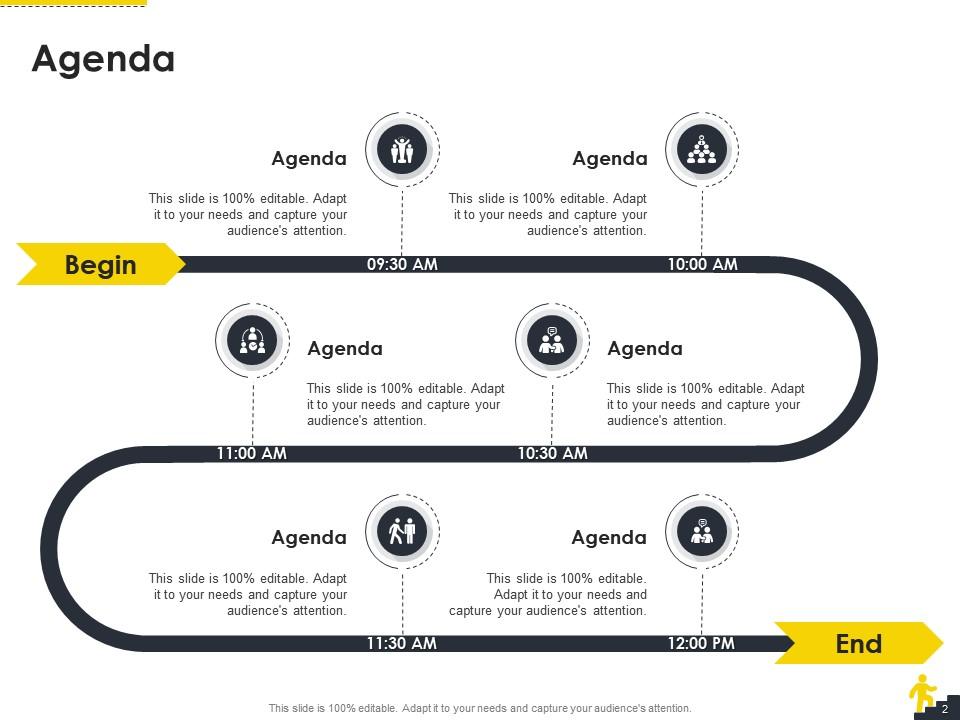
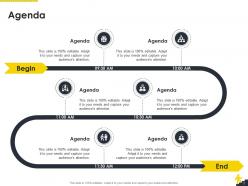
Slide 2: This slide presents the agenda for the project.
Slide 3: This slide exhibits the title for 'Leadership is Influence'.
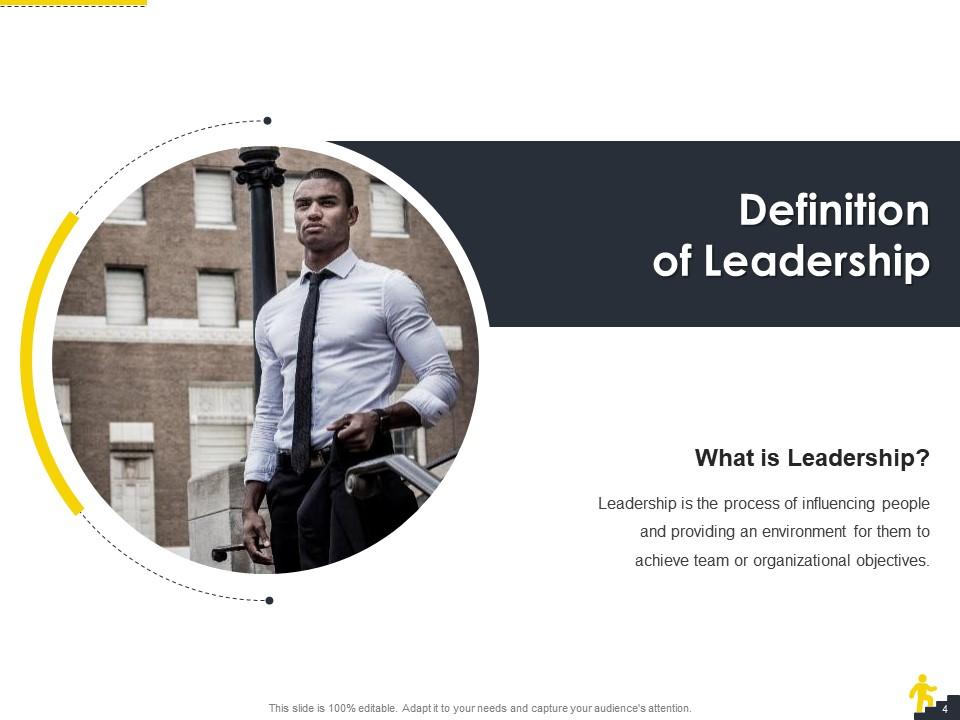
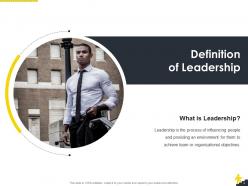
Slide 4: This slide shows the defination of leadership.
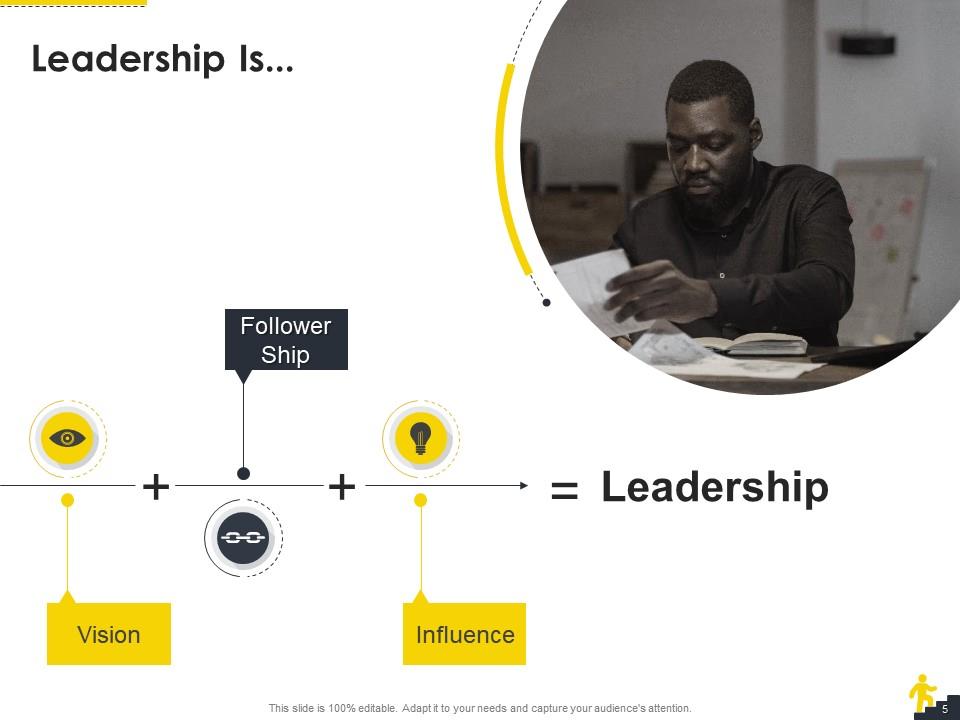
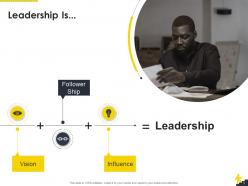
Slide 5: This slide depicts meaning of leadership in a formula and use of pictures/symbols.
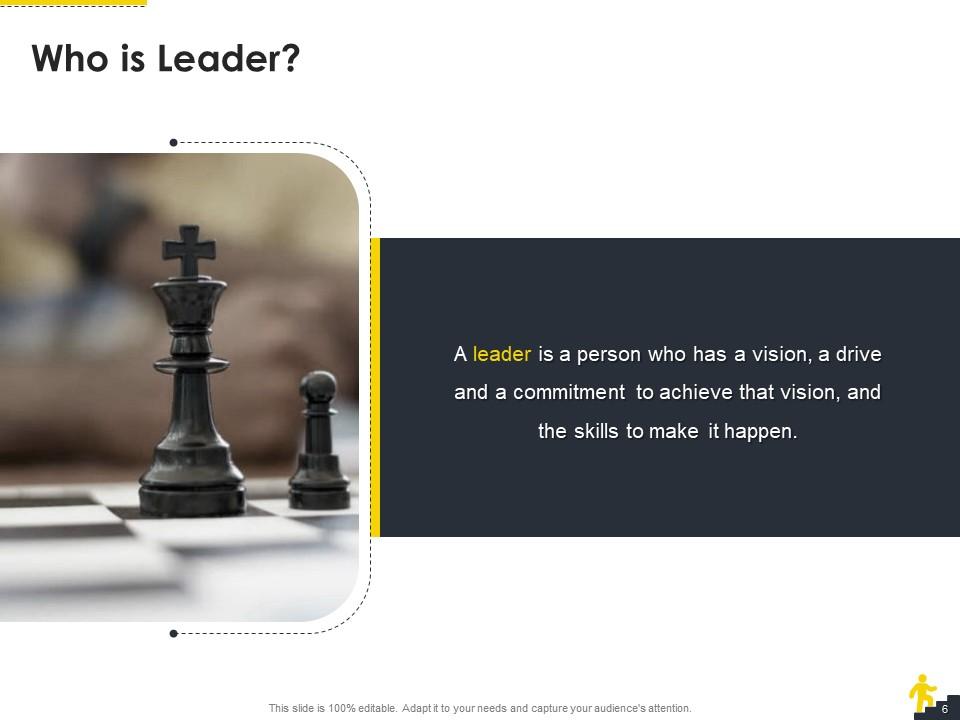
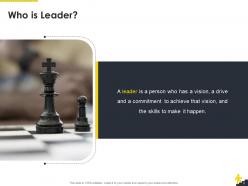
Slide 6: This slide explains the defination of a leader.
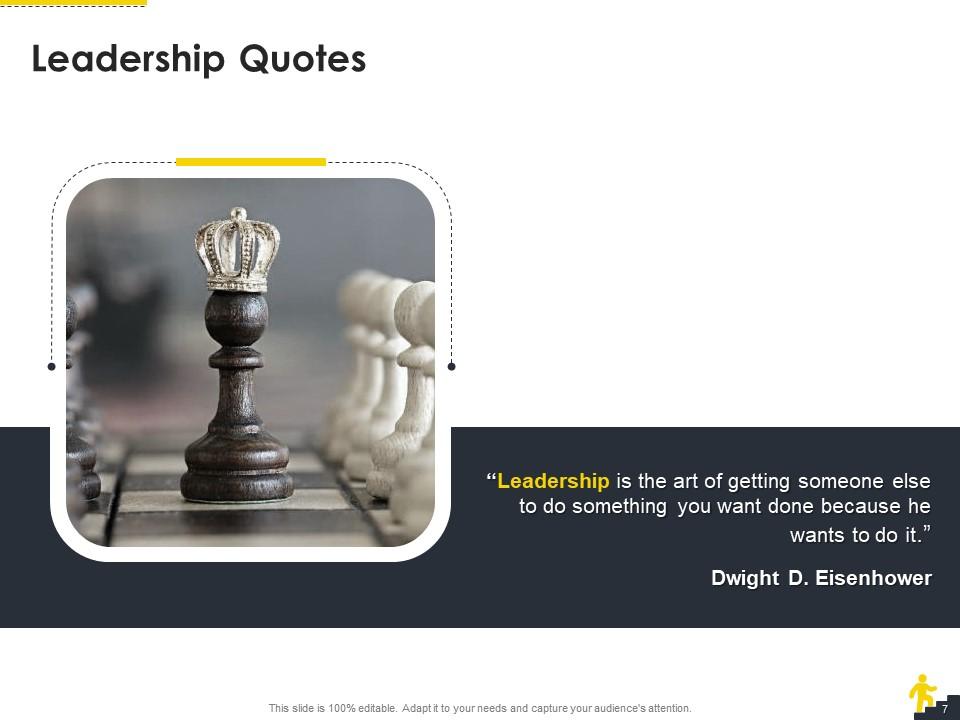
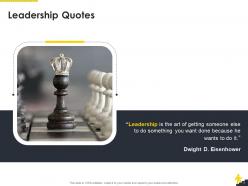
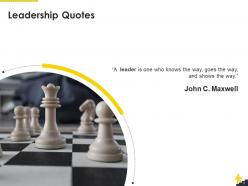
Slide 7: This slide showcases the leadership quote.
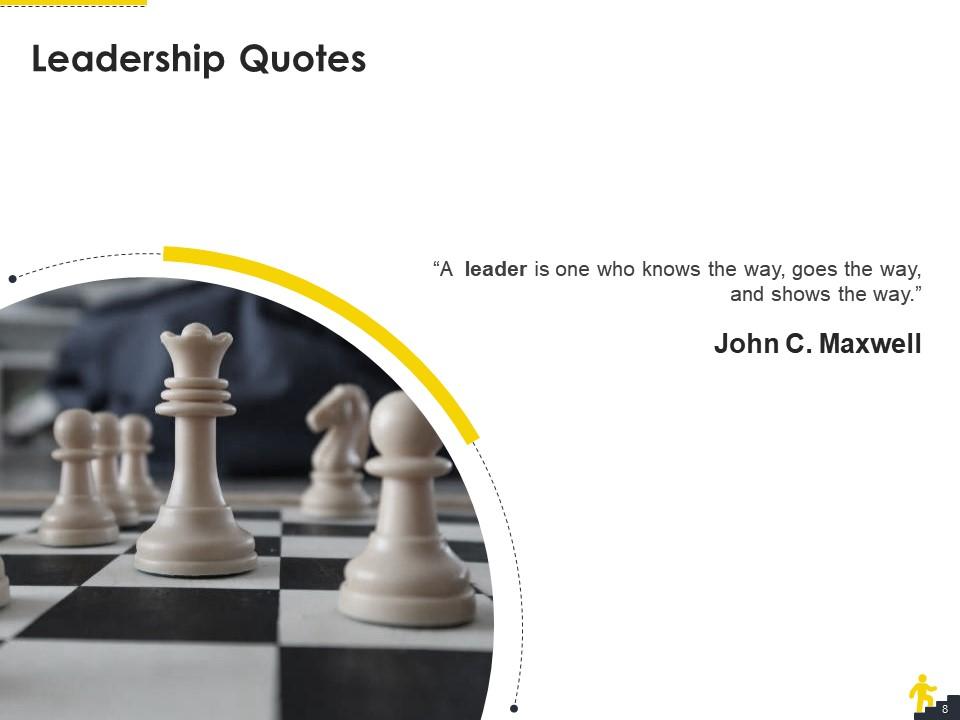
Slide 8: This slide displays a leadership quote.
Slide 9: This slide showcases the leadership quote.
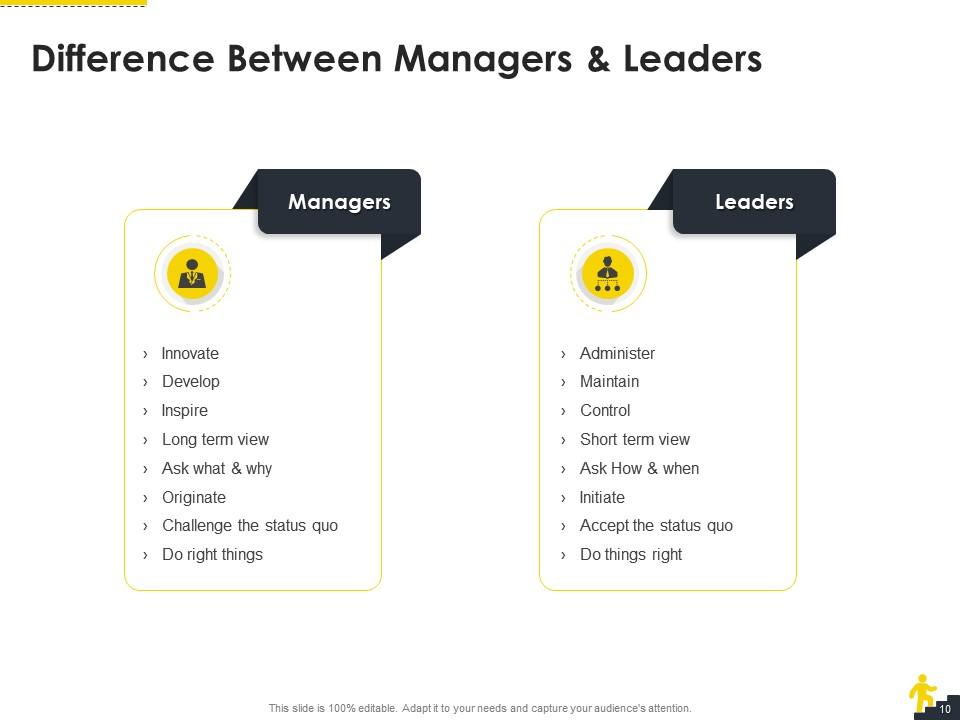
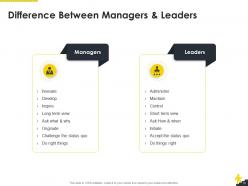
Slide 10: This slide explains the difference between managers and leaders.
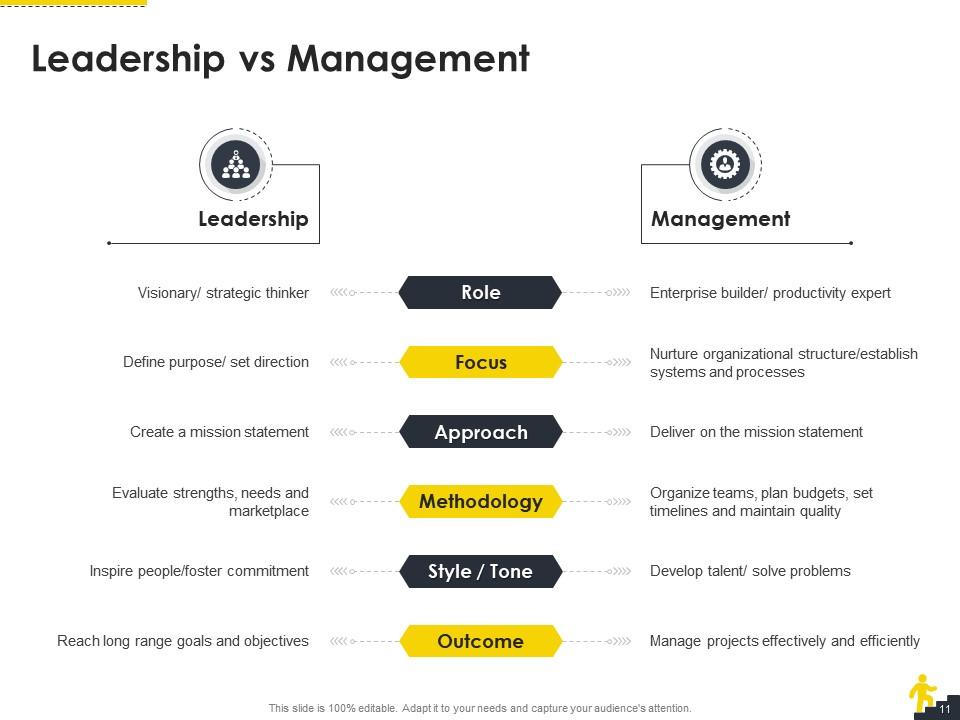
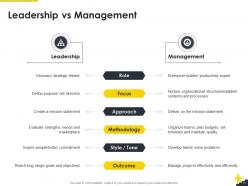
Slide 11: This slide presents the difference of leadership and management.
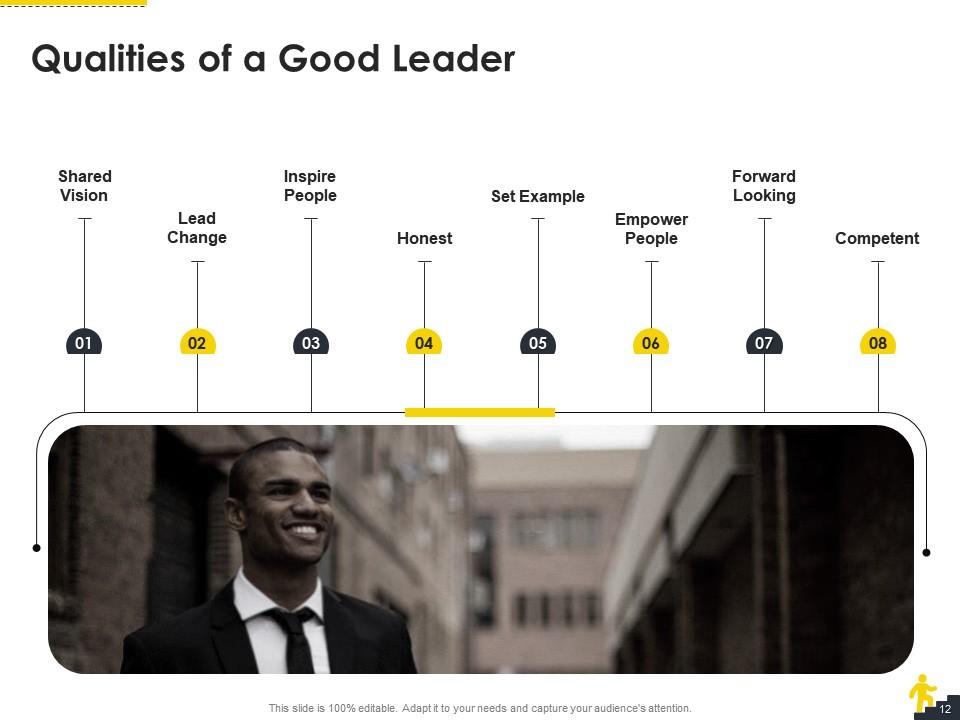
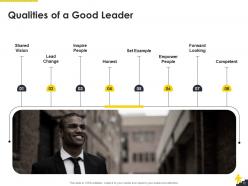
Slide 12: This slide exhibits the qualities of a good leader.
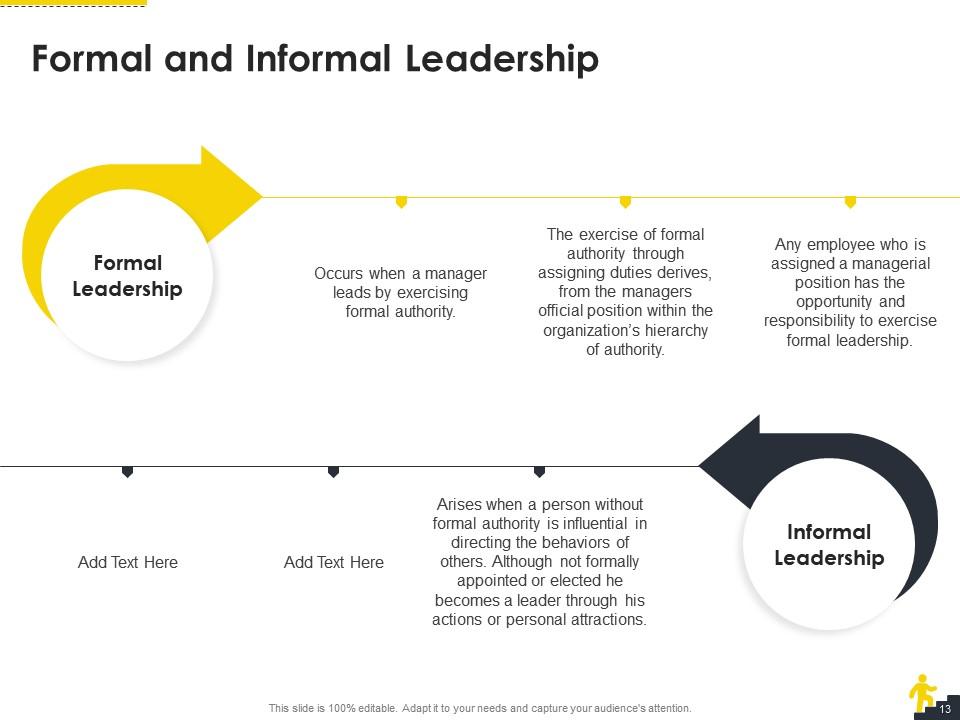
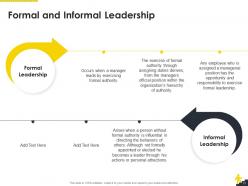
Slide 13: This slide explains formal and informal leadership.
Slide 14: This slide depicts the title for styles of leadership.
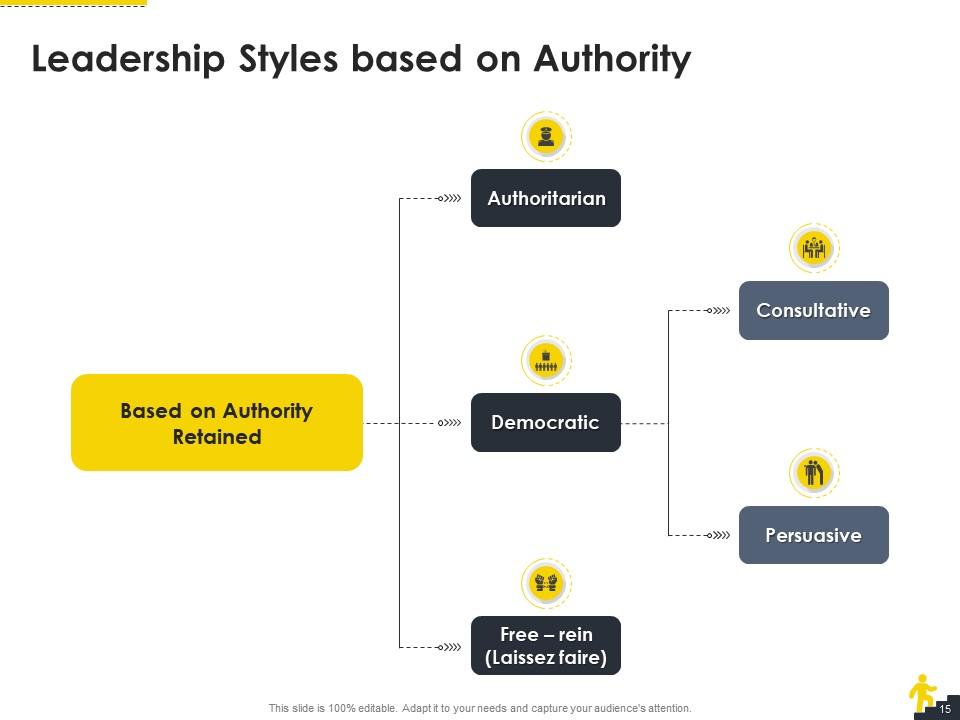
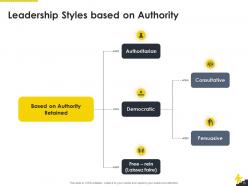
Slide 15: This slide displays the leadership styles based on authority.
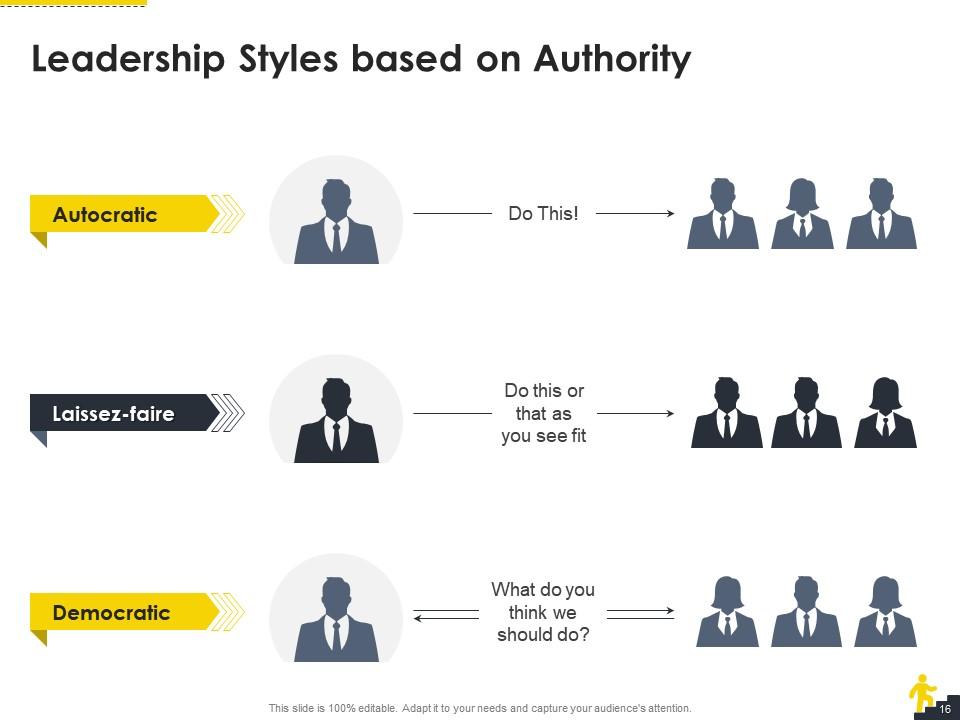
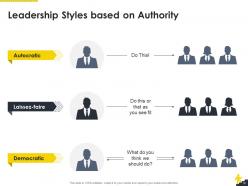
Slide 16: This slide displays the leadership styles based on authority.
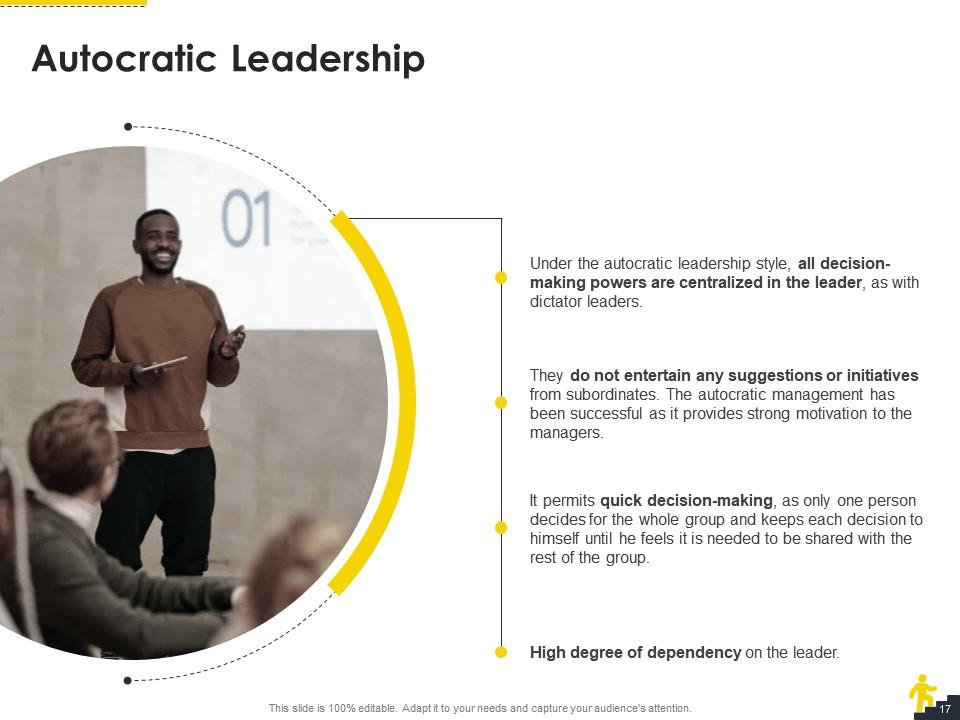
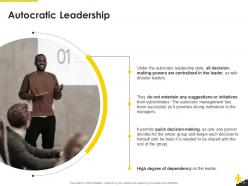
Slide 17: This slide shows about autocratic leadership.
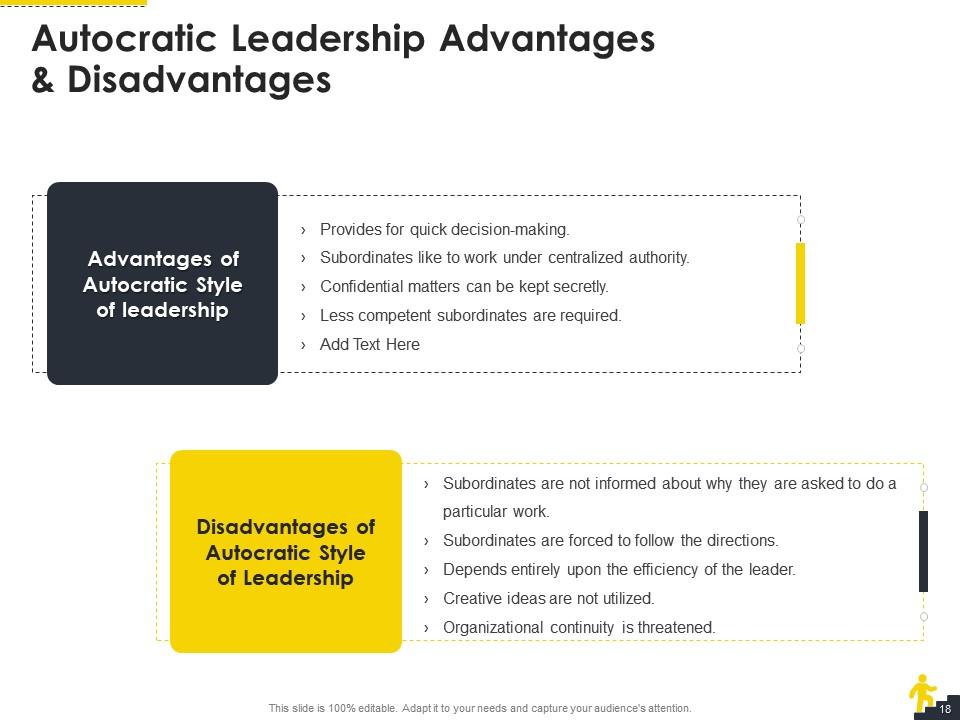
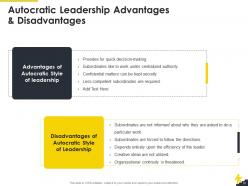
Slide 18: This slide depicts advantages & disadvantages of autocratic leadership.
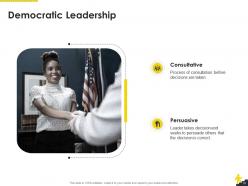
Slide 19: This slide describes about democratic leadership.
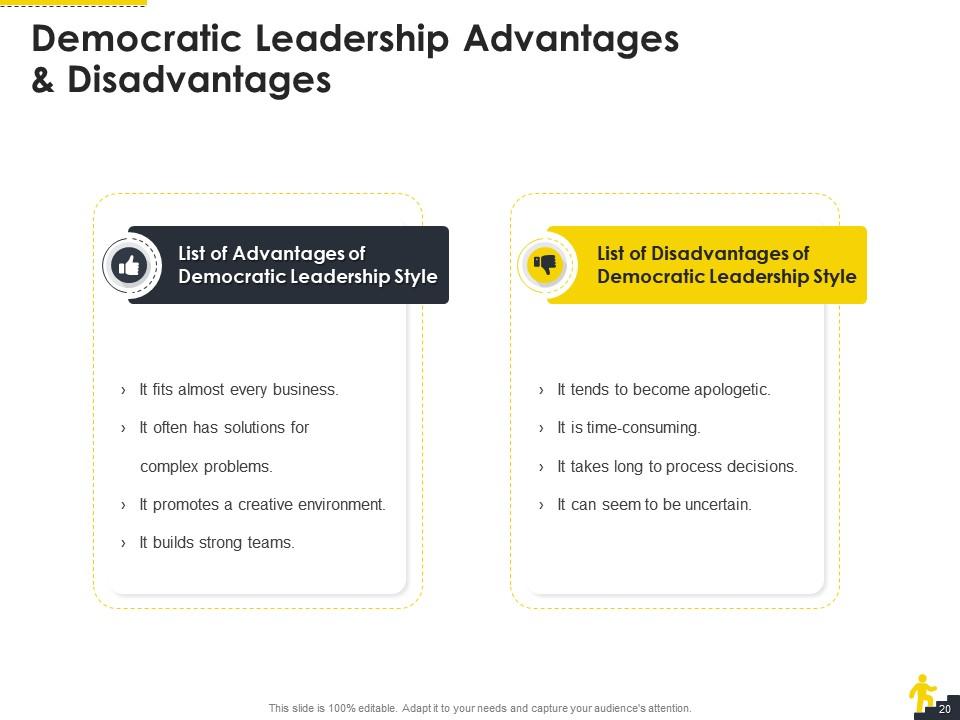
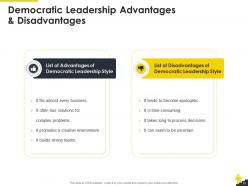
Slide 20: This slide presents advantages & disadvantages of democratic leadership.
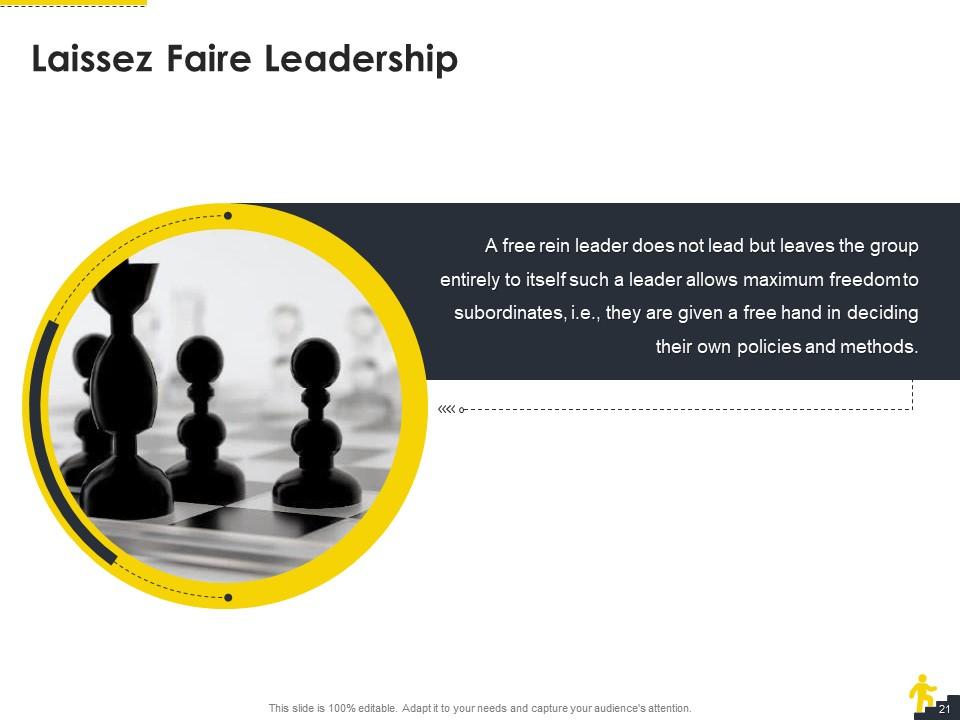
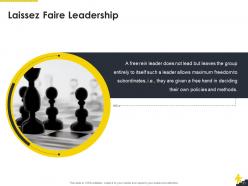
Slide 21: This slide shows about Laissez Faire Leadership.
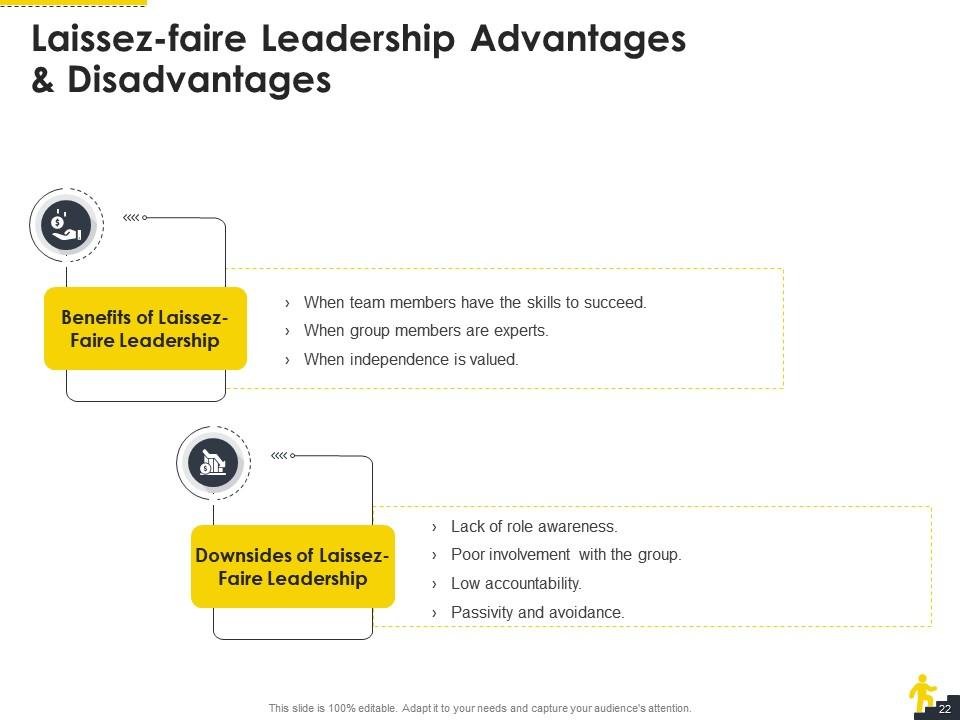
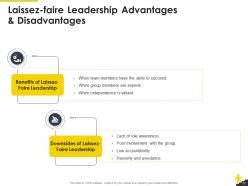
Slide 22: This slide depicts advantages & disadvantages of Laissez Faire Leadership.
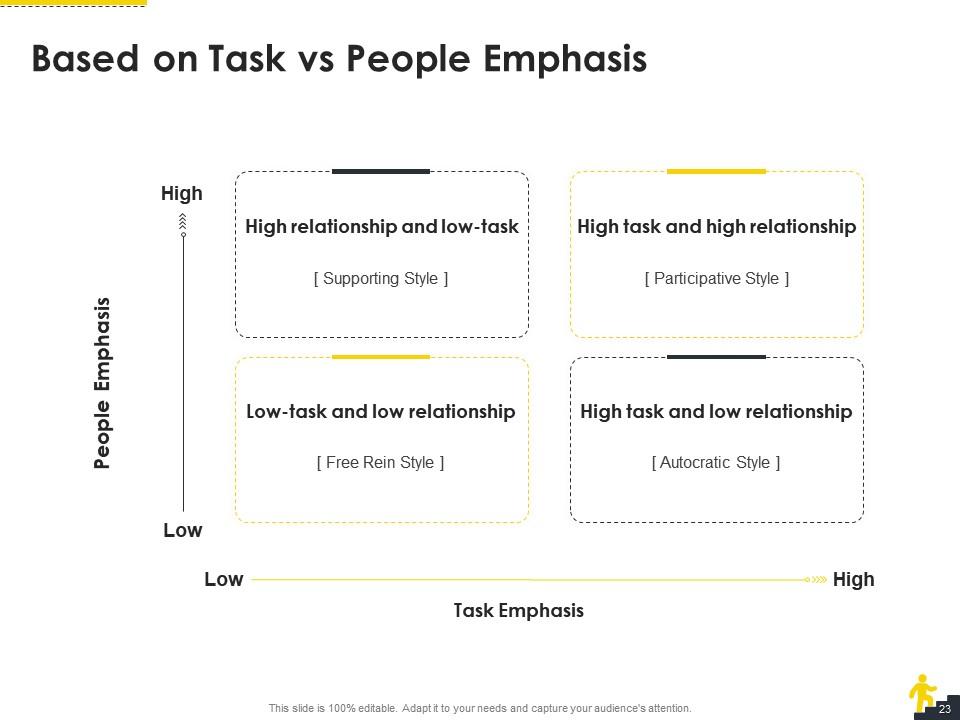
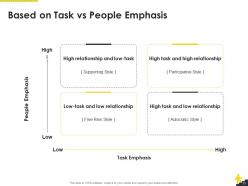
Slide 23: This slide presents more about leadership based on task vs people emphasis.
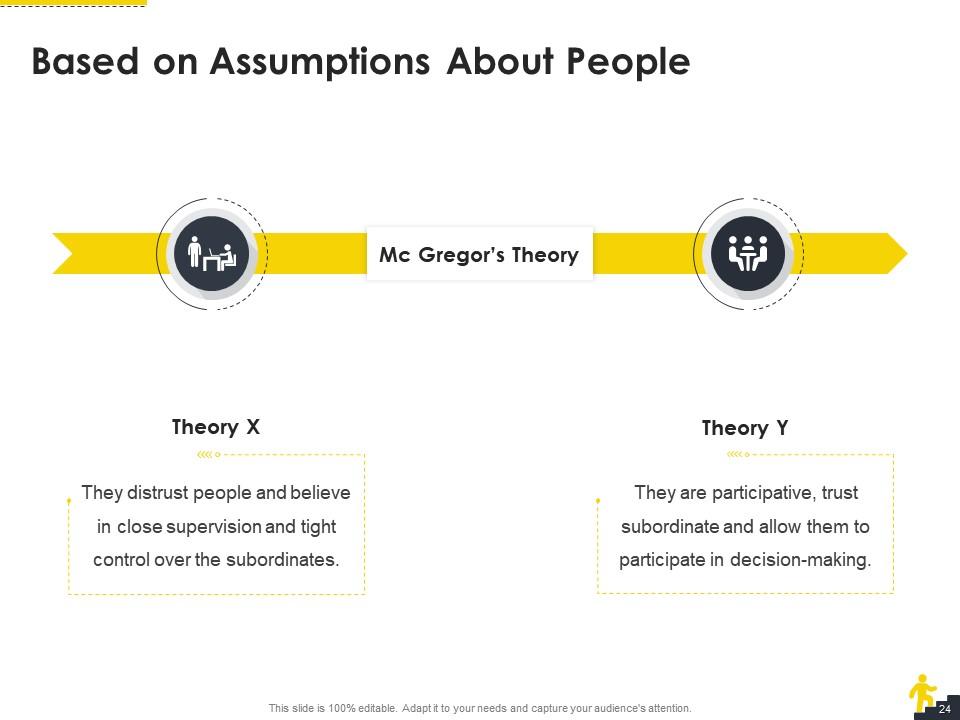
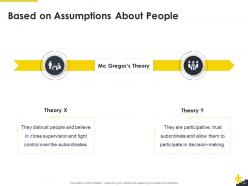
Slide 24: This slide exhibits more about leadership based on assumptions about people.
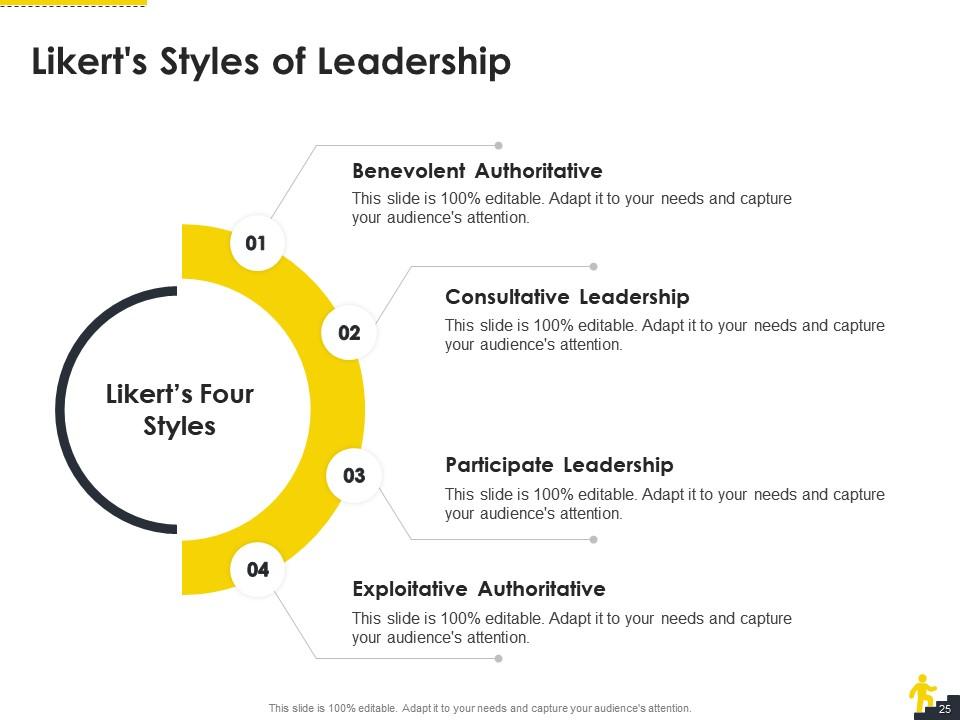
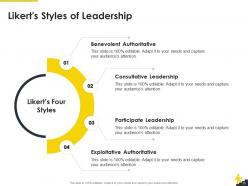
Slide 25: This slide depicts on Likert's styles of leadership.
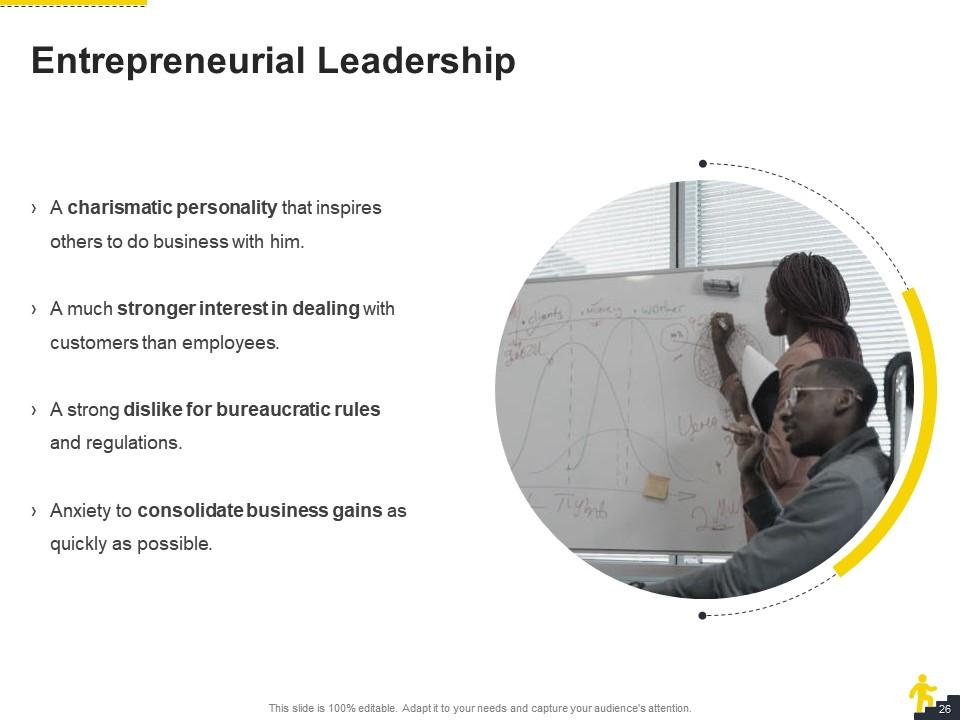
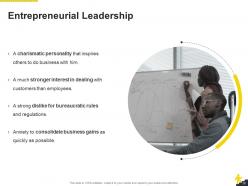
Slide 26: This slide displays on entreprenuerial leadership.
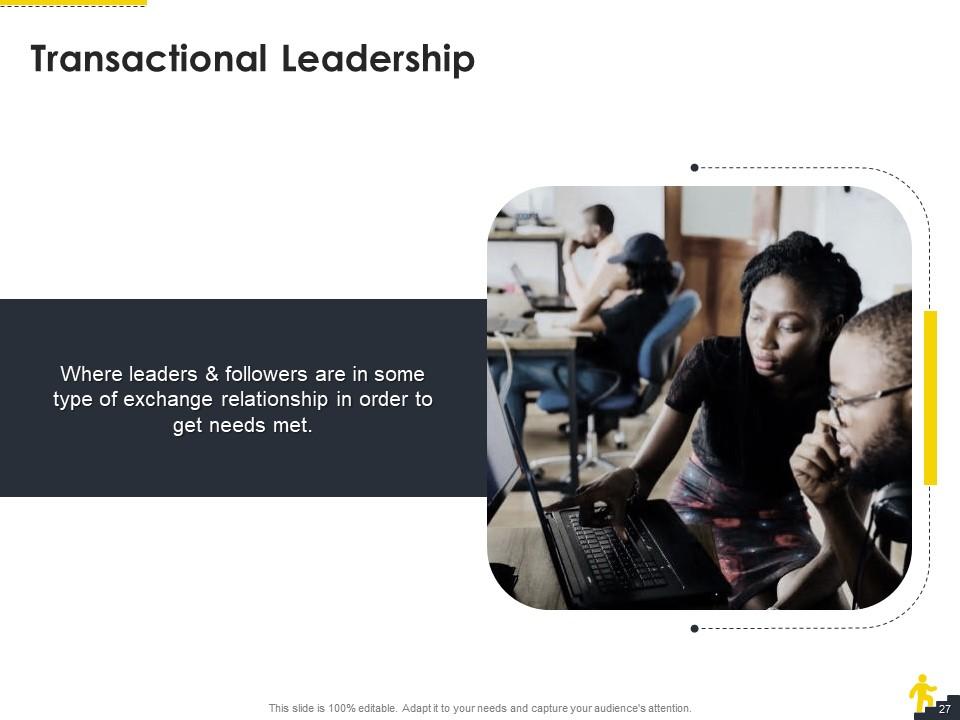
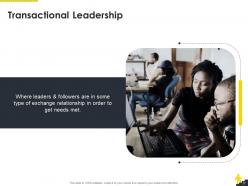
Slide 27: This slide explains about transactional leadership.
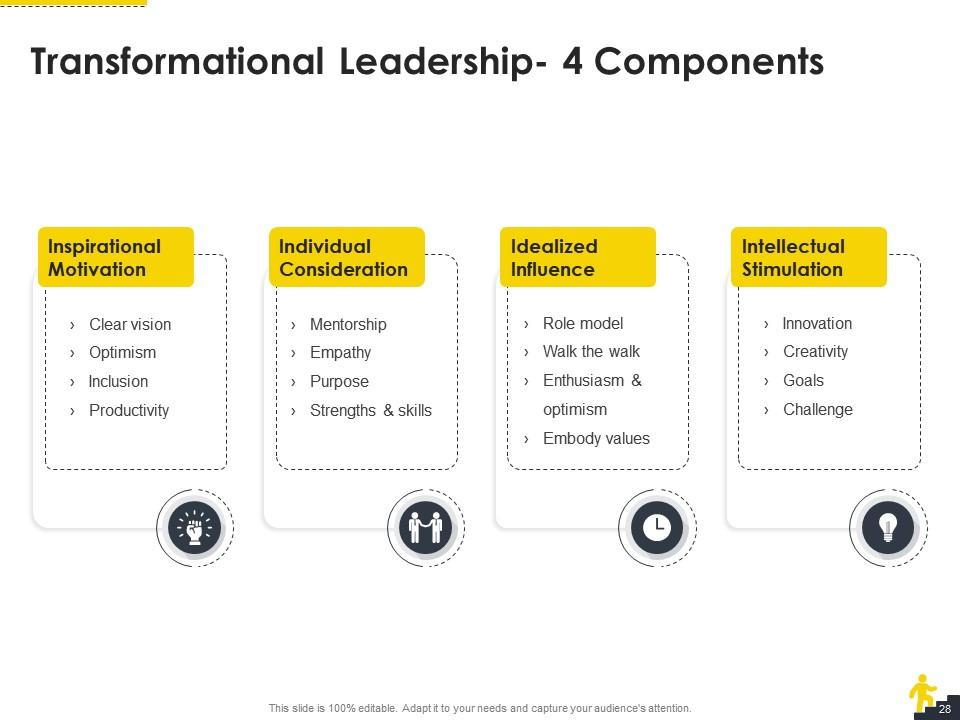
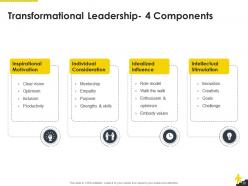
Slide 28: This slide shows 4 components of transformational leadership.
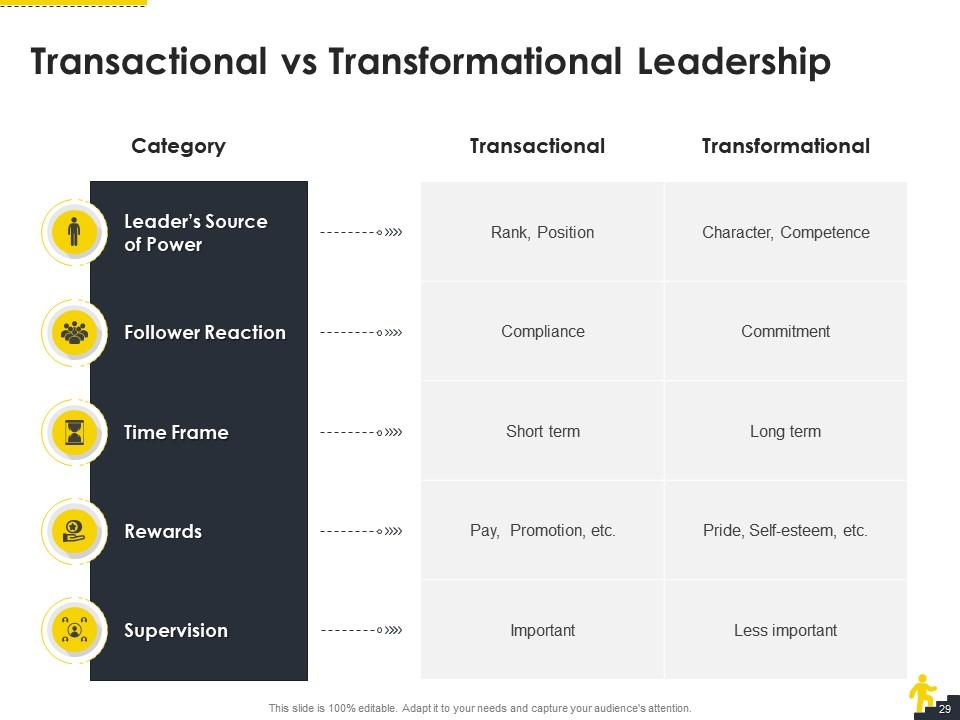
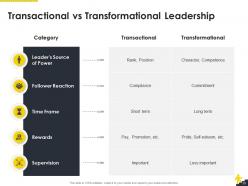
Slide 29: This slide displays the difference of transactional vs transformational leadership.
Slide 30: This slide depicts the title for theories of leadership.
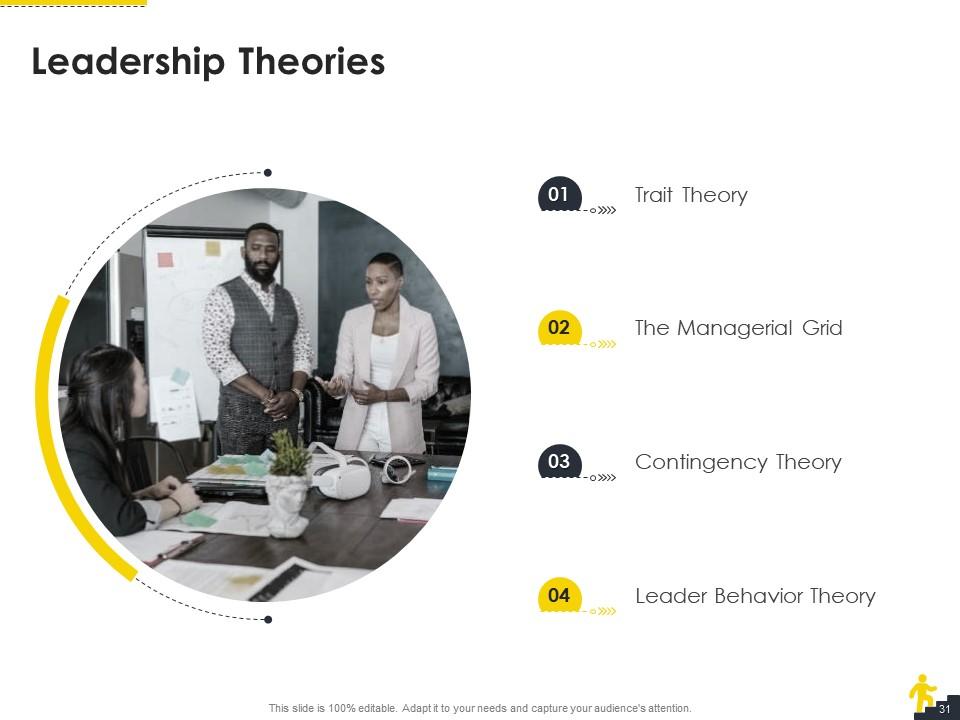
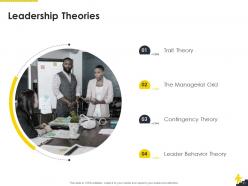
Slide 31: This slide explains the leadership theories.
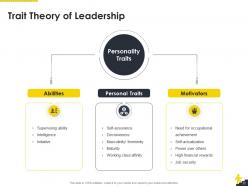
Slide 32: This slide exhibits the trait theory of leadership.
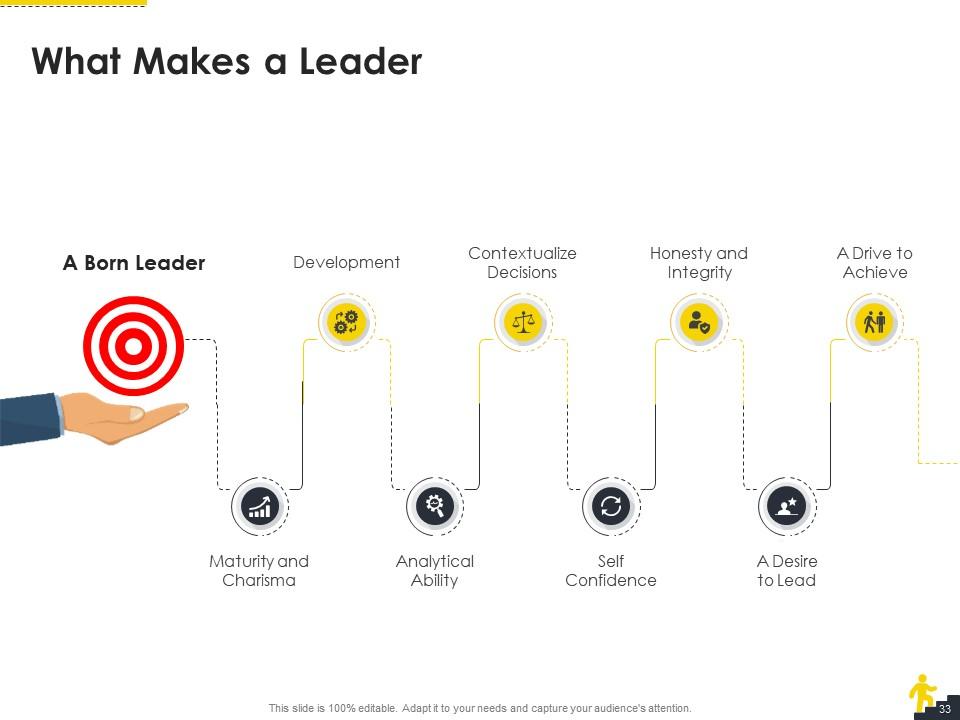
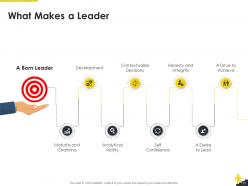
Slide 33: This slide shows the qualities that makes a leader.
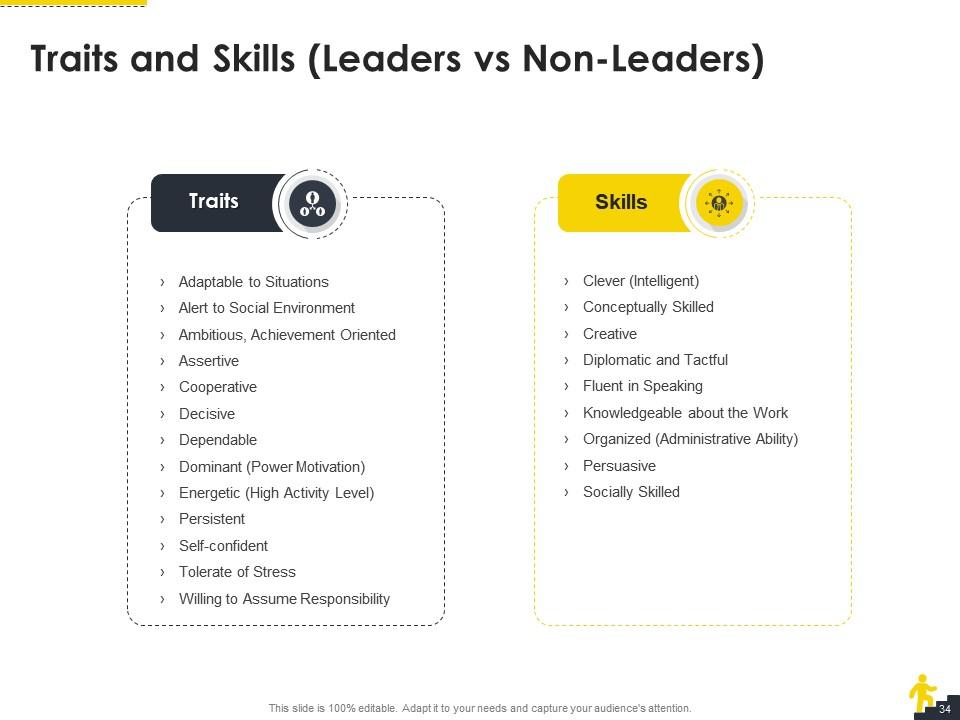
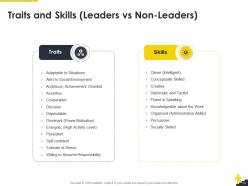
Slide 34: This slide displays the traits and skills for a leader.
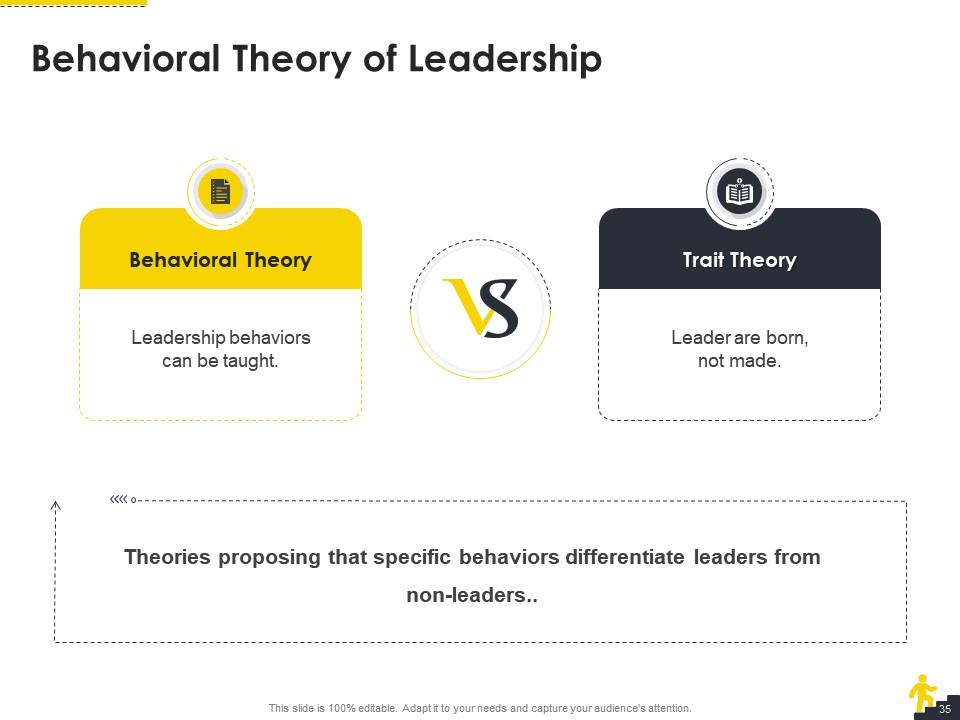
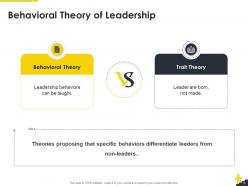
Slide 35: This slide presents the behavioral theory of leadership.
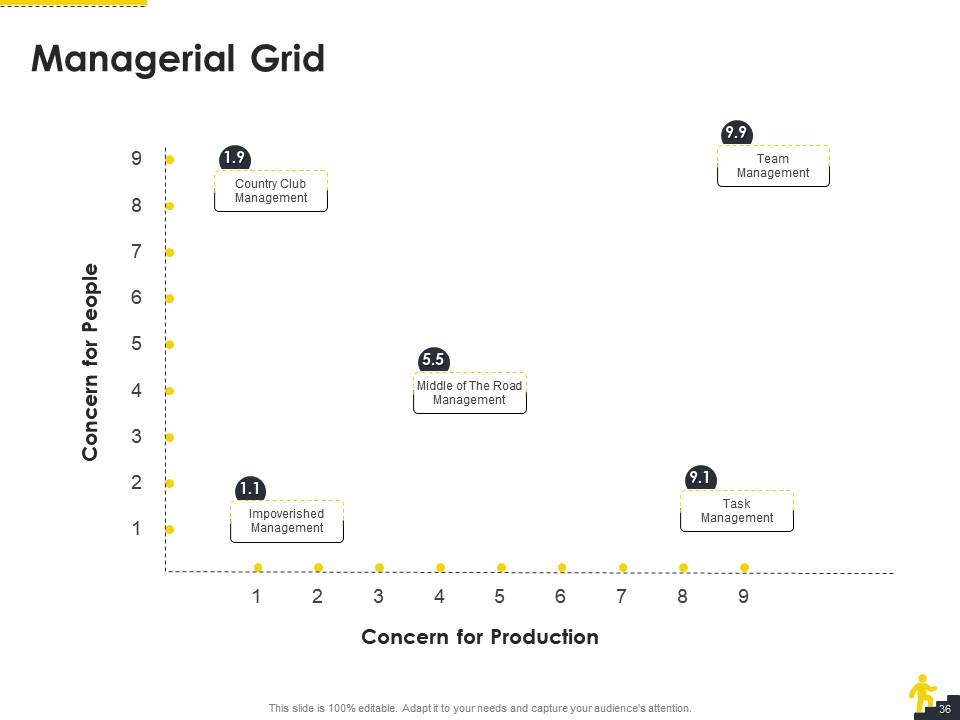
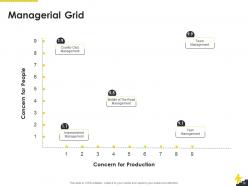
Slide 36: This slide exhibits the managerial grid.
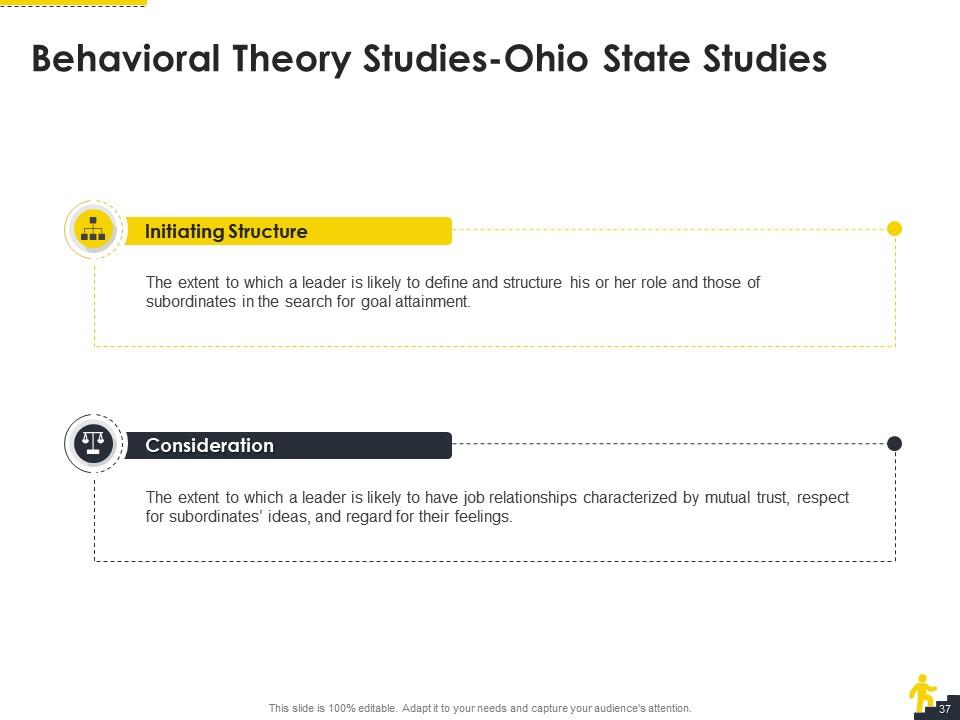
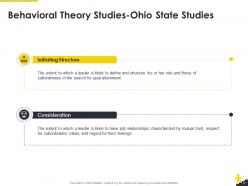
Slide 37: This slide displays the behavioral theory and Ohio State Studies.
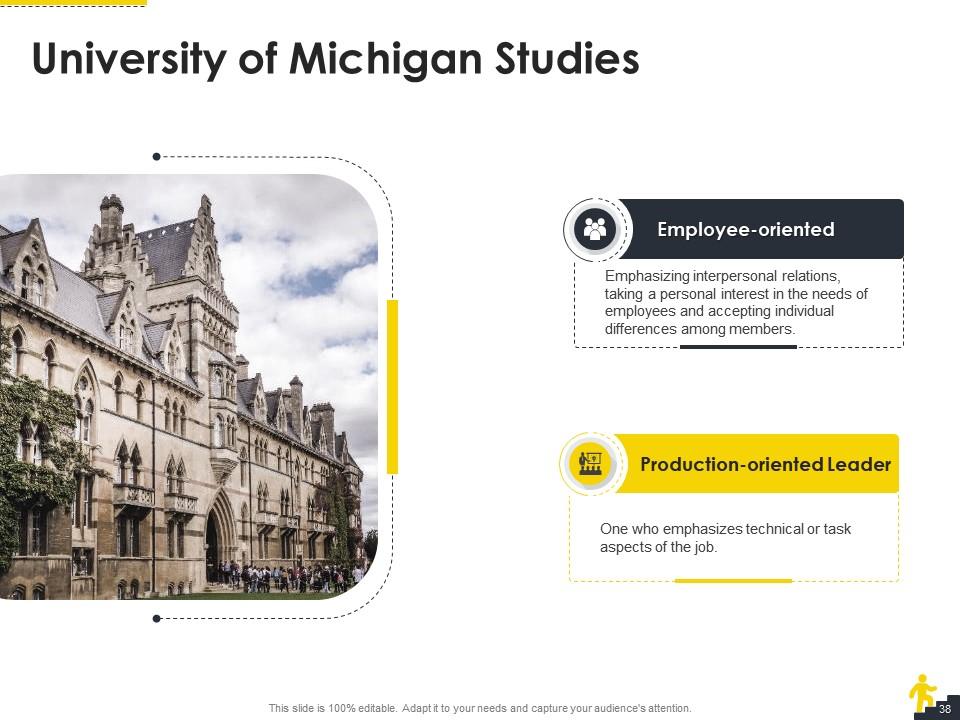
Slide 38: This slide shows about university of Michigan studies.
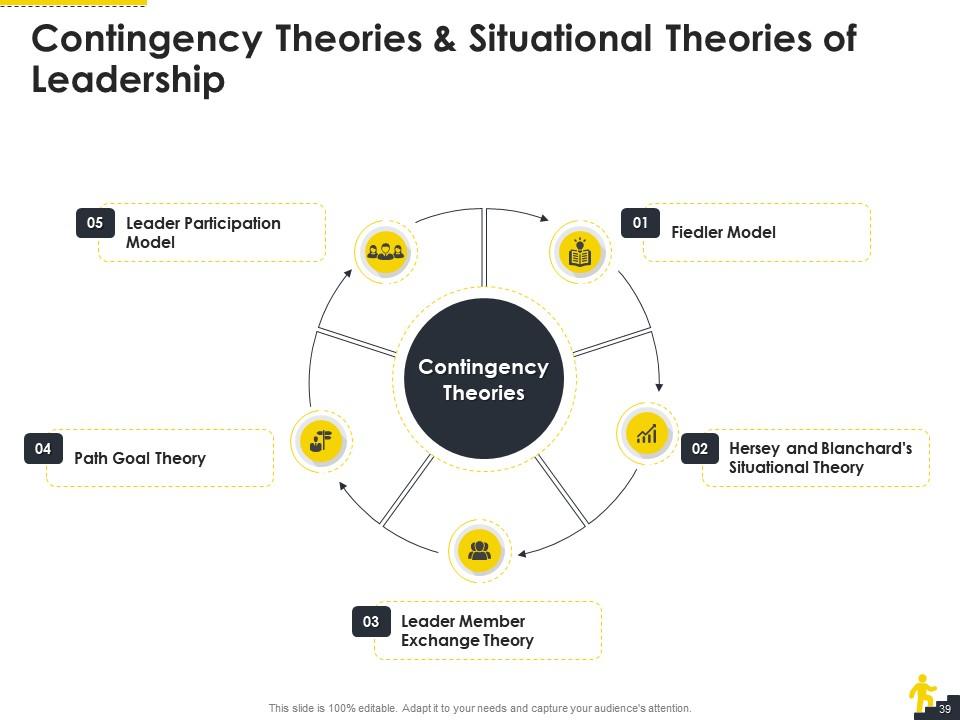
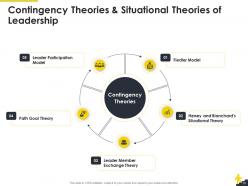
Slide 39: This slide explains contingency theories & situational theories of leadership.
Slide 40: This slide depicts the title for 'coffee break'.
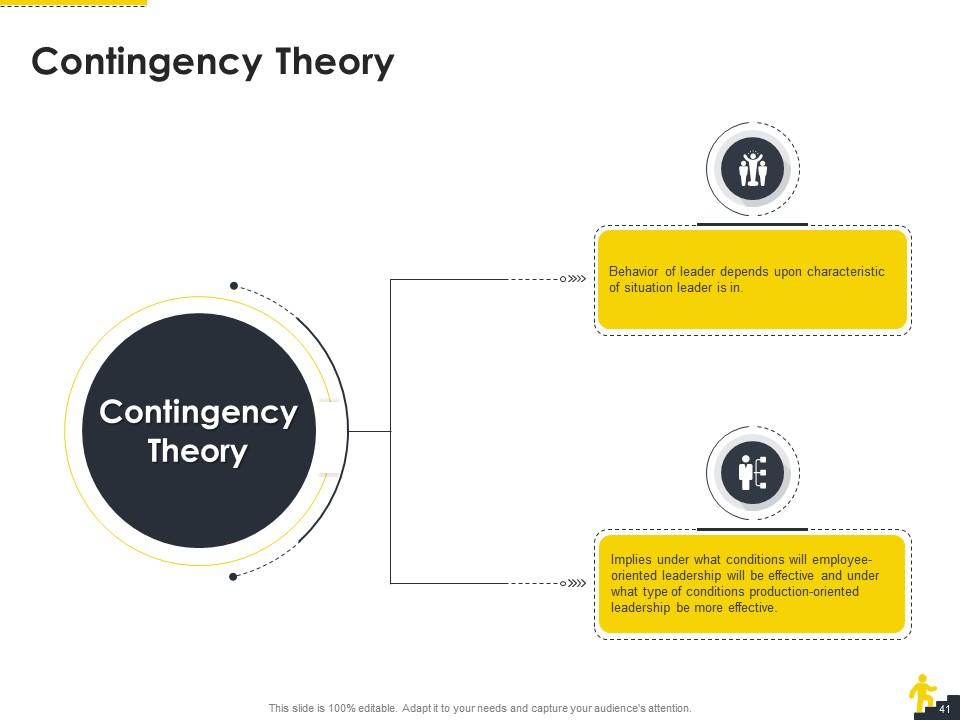
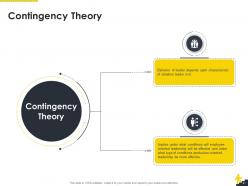
Slide 41: This slide showcases the contingency theory.
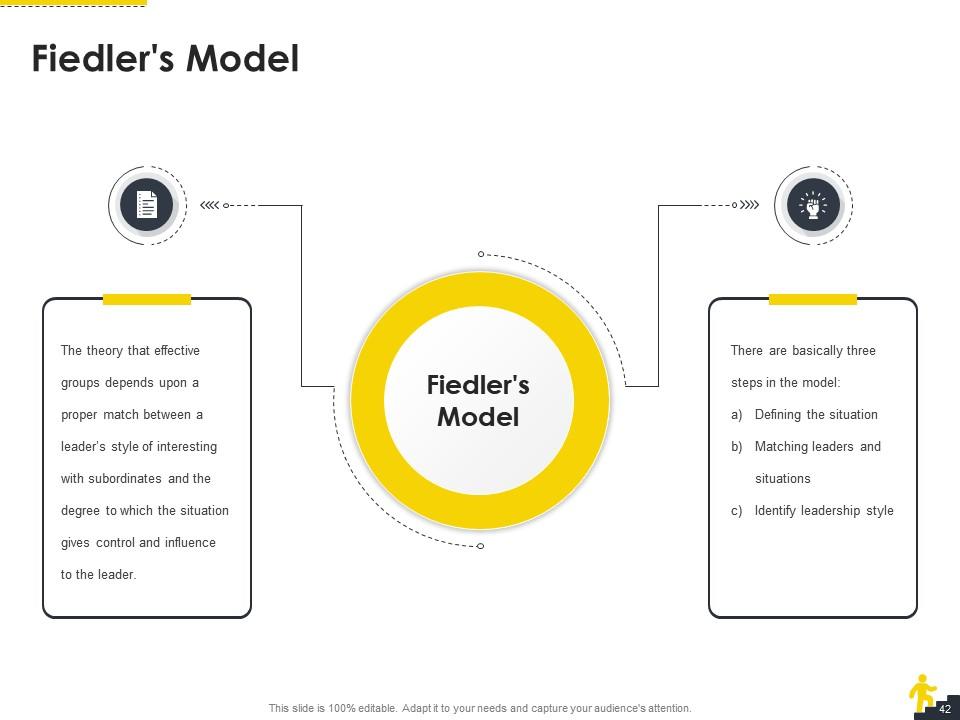
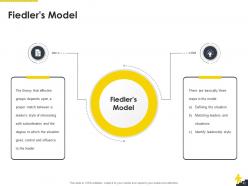
Slide 42: This slide presents the Fiedler's Model.
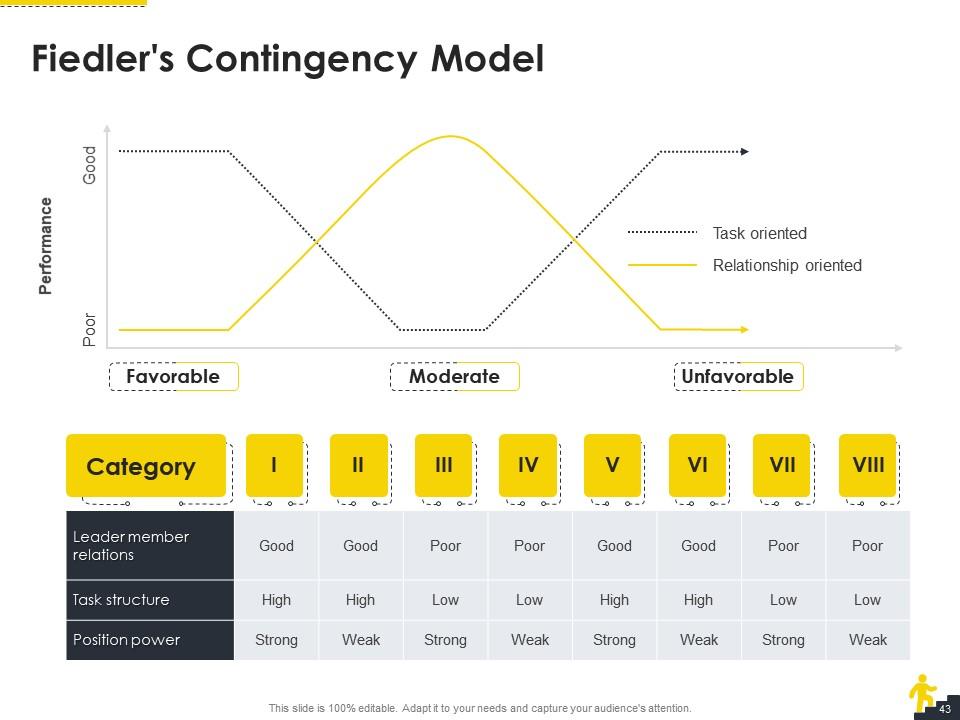
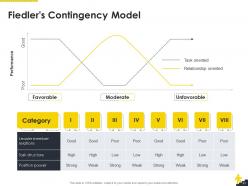
Slide 43: This slide exhibits the Fiedler's contingency model.
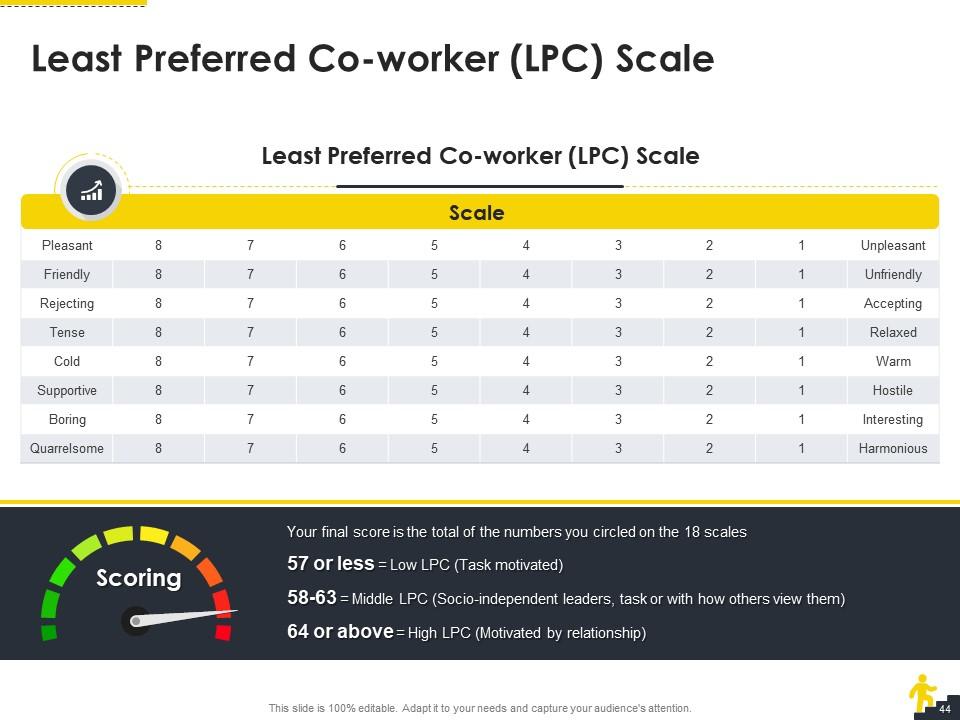
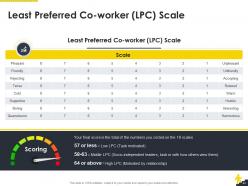
Slide 44: This slide displays the table for least preferred co-worker scale.
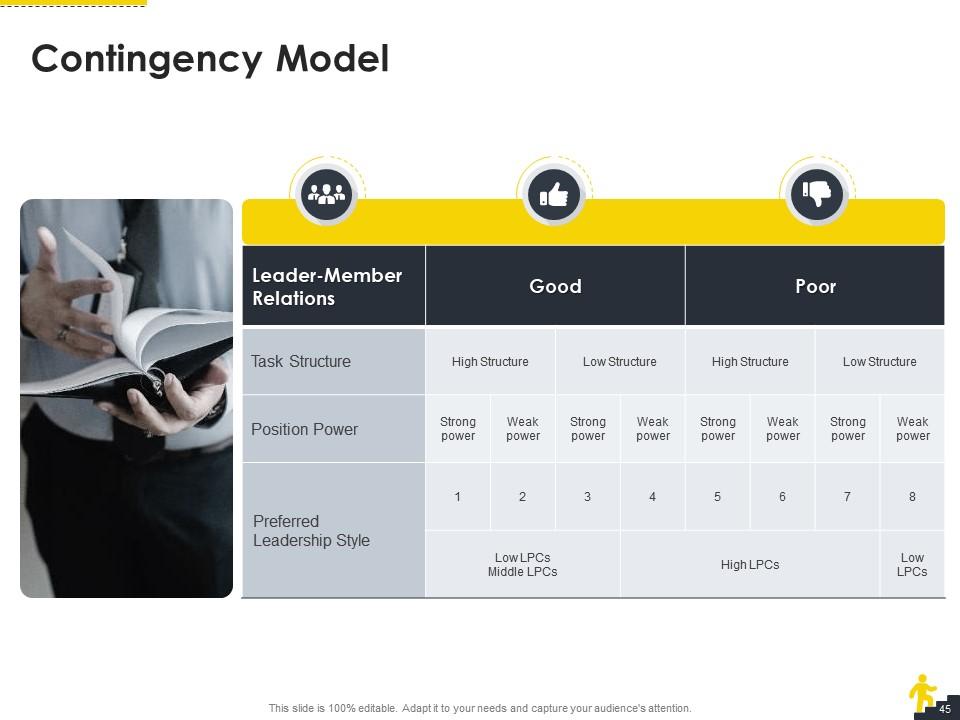
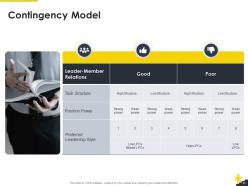
Slide 45: This slide depicts the contingency model.
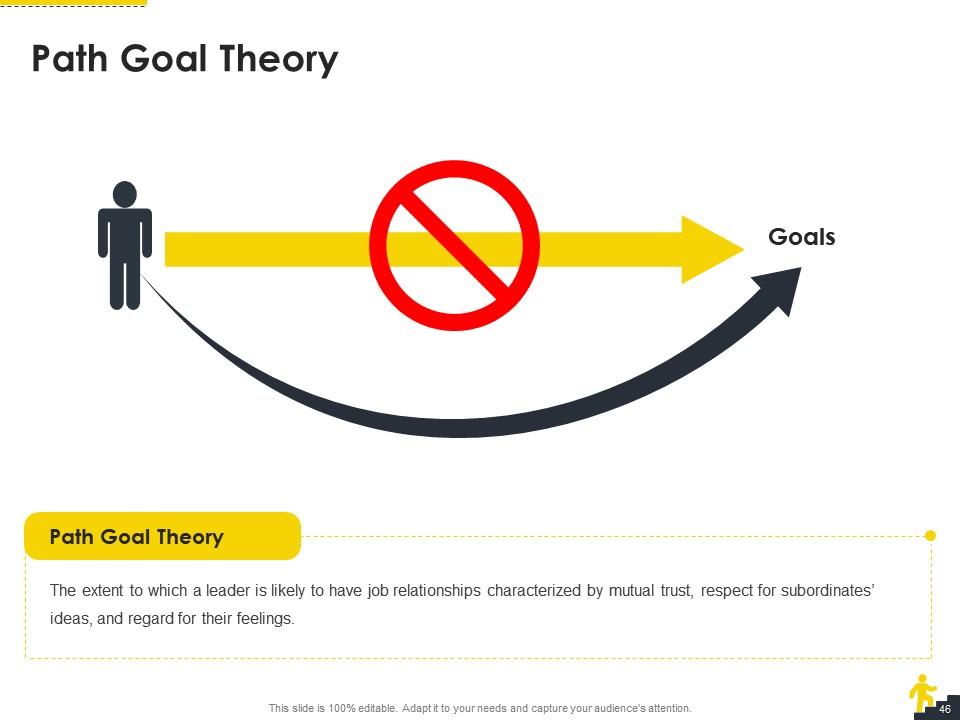
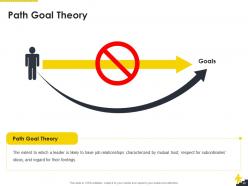
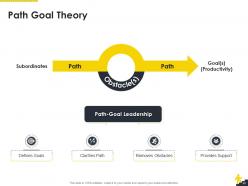
Slide 46: This slide explains the path goal theory.
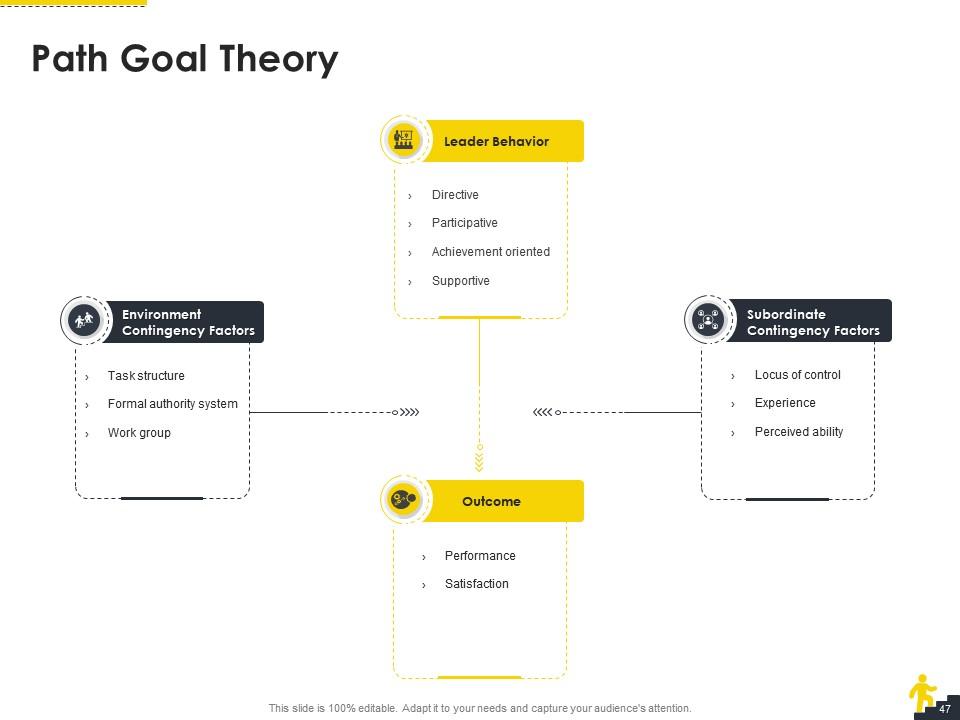
Slide 47: This slide explains the path goal theory.
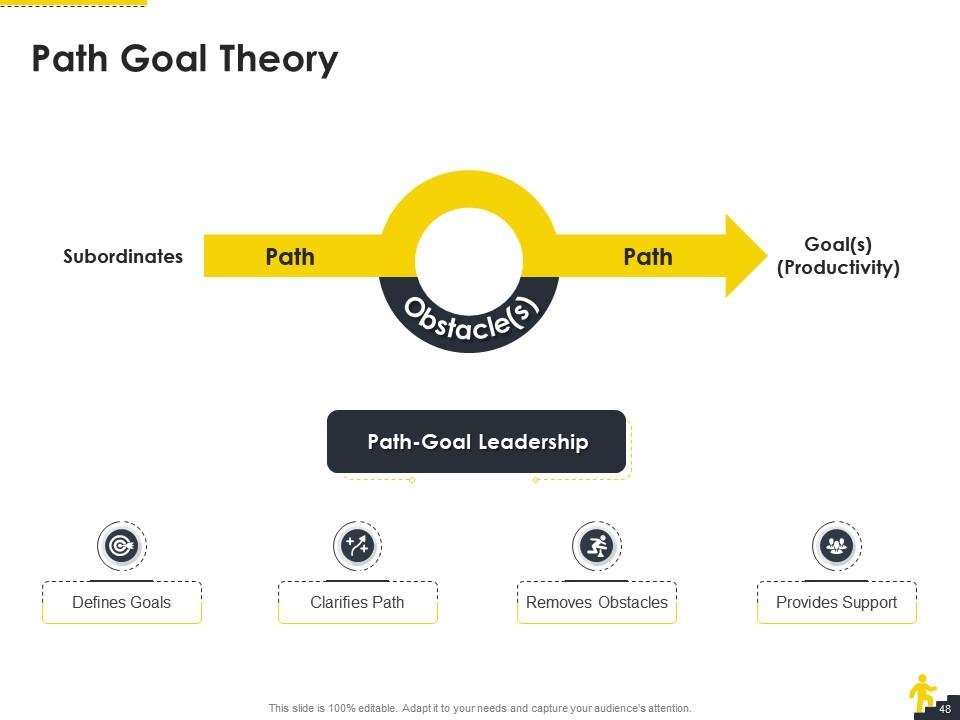
Slide 48: This slide explains the path goal theory.
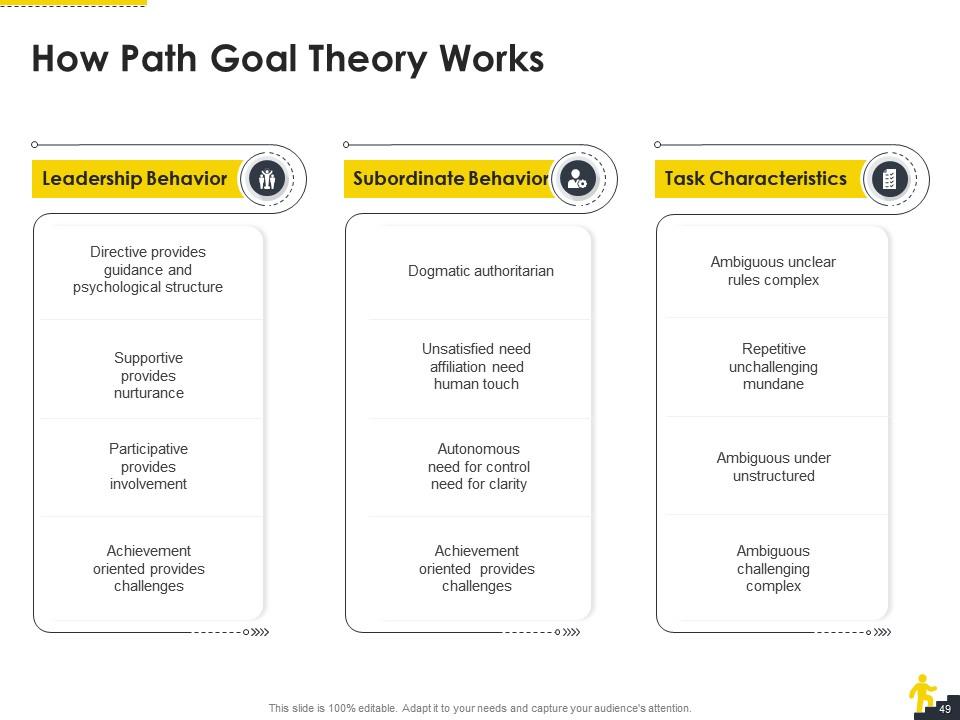
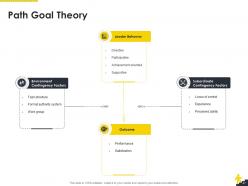
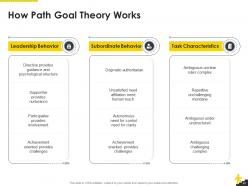
Slide 49: This slide displays how the path goal theory works.
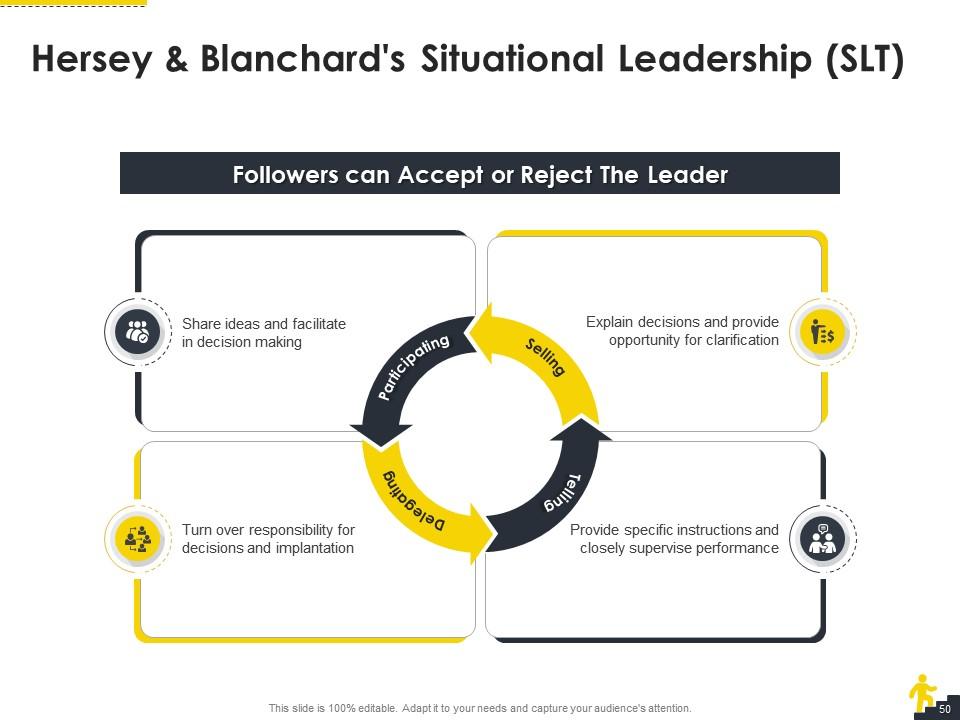
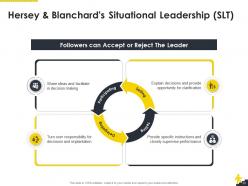
Slide 50: This slide presents the Hersey & Blanchard's situational leadership.
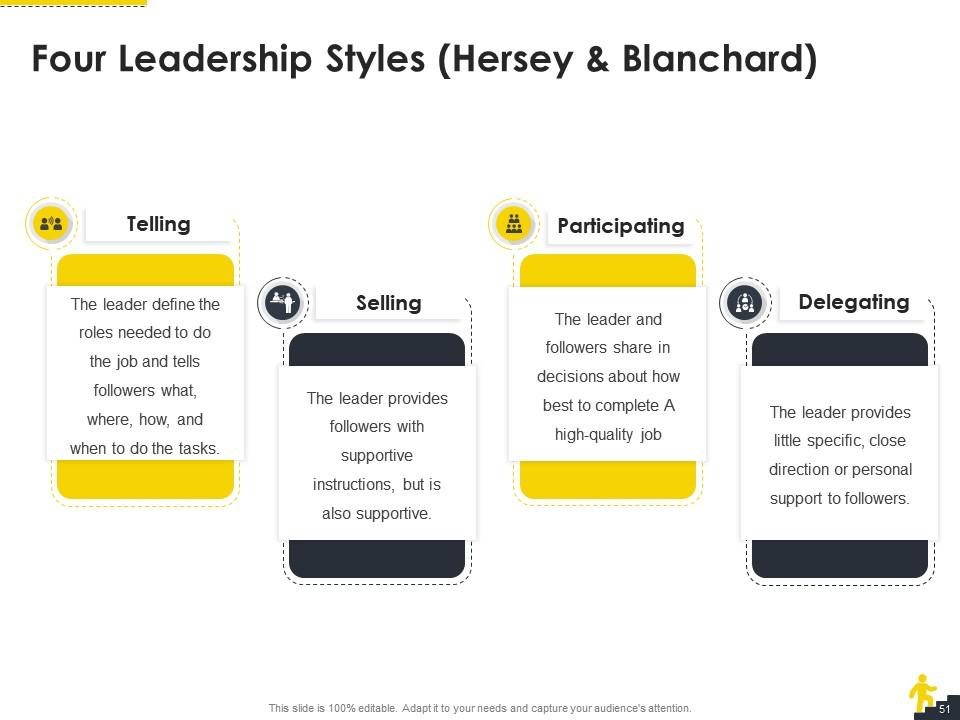
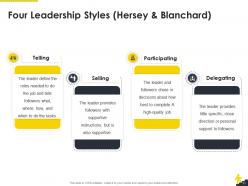
Slide 51: This slide showcases four leadership styles.
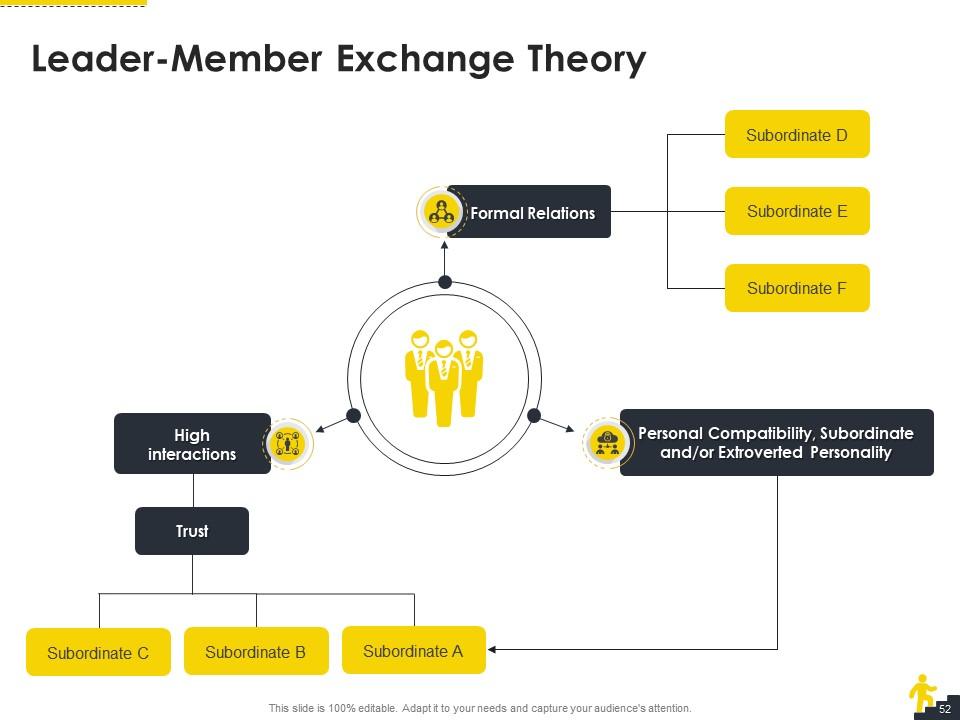
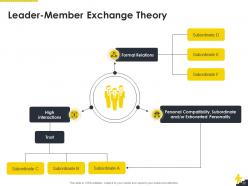
Slide 52: This slide describes leader-member exchange theory.
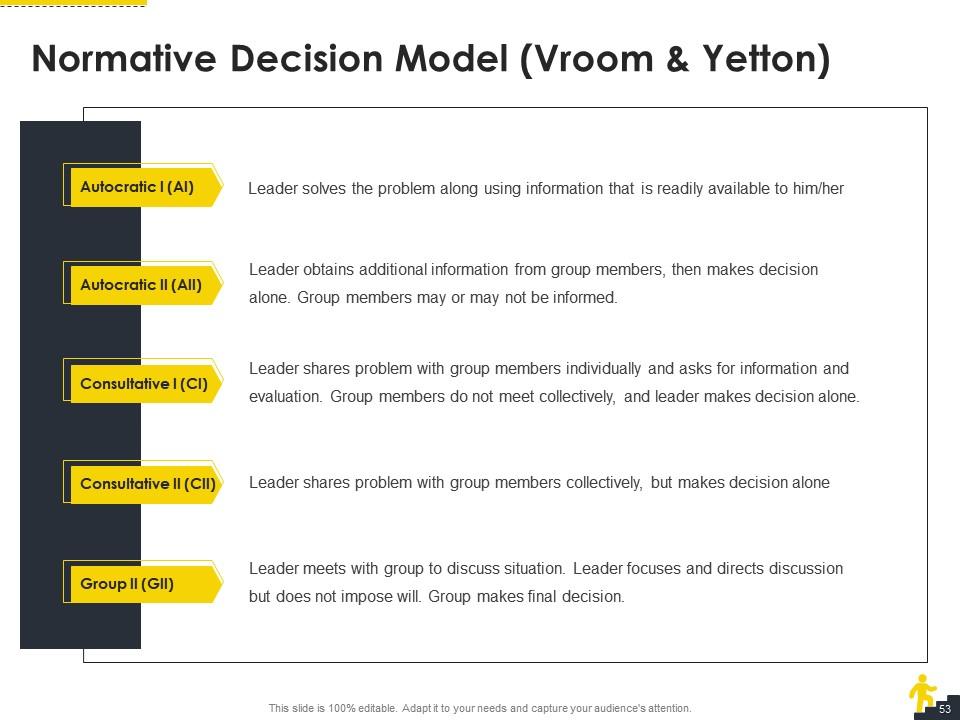
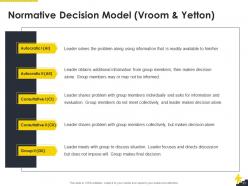
Slide 53: This slide exhibits normative decision model.
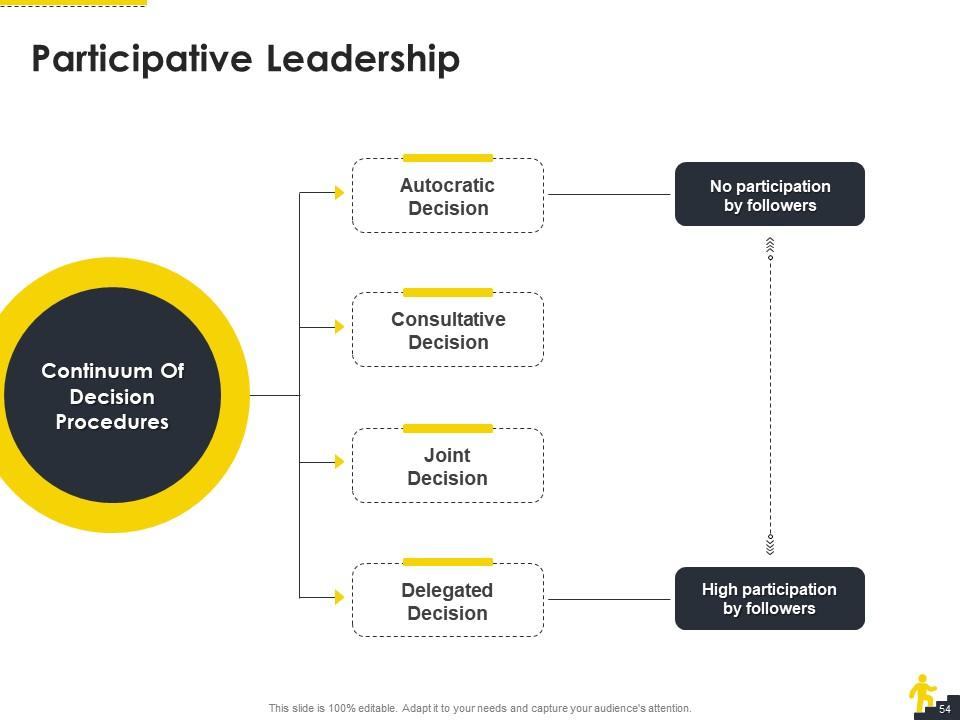
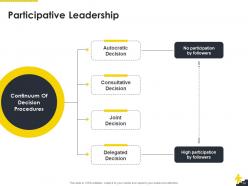
Slide 54: This slide presents the participative leadership.
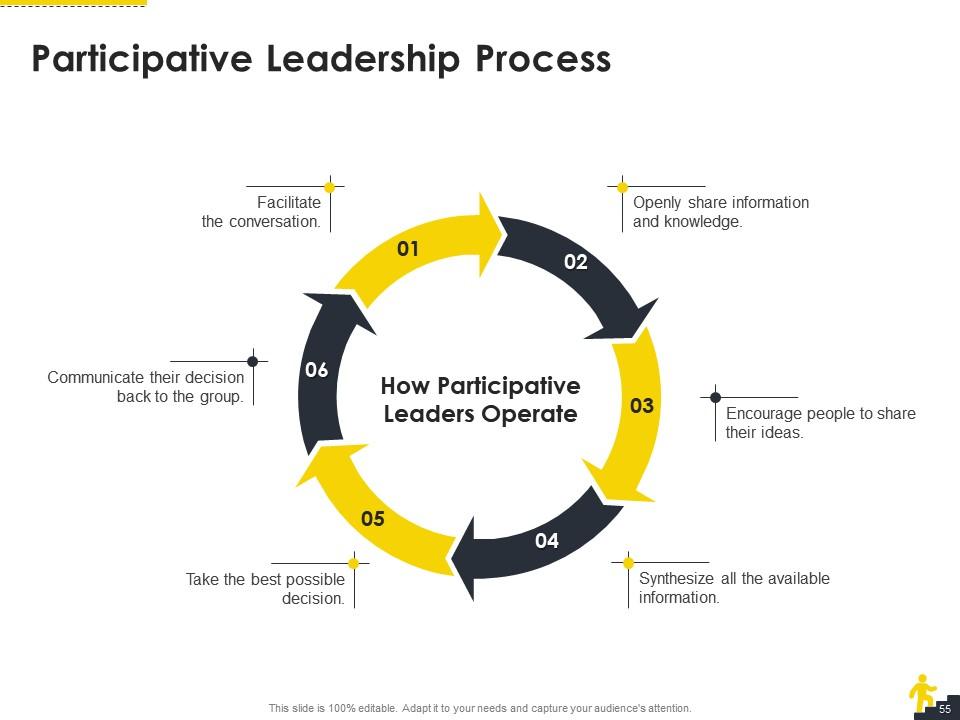
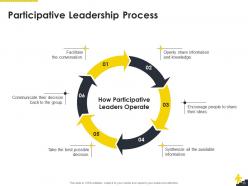
Slide 55: This slide explains participative leadership process.
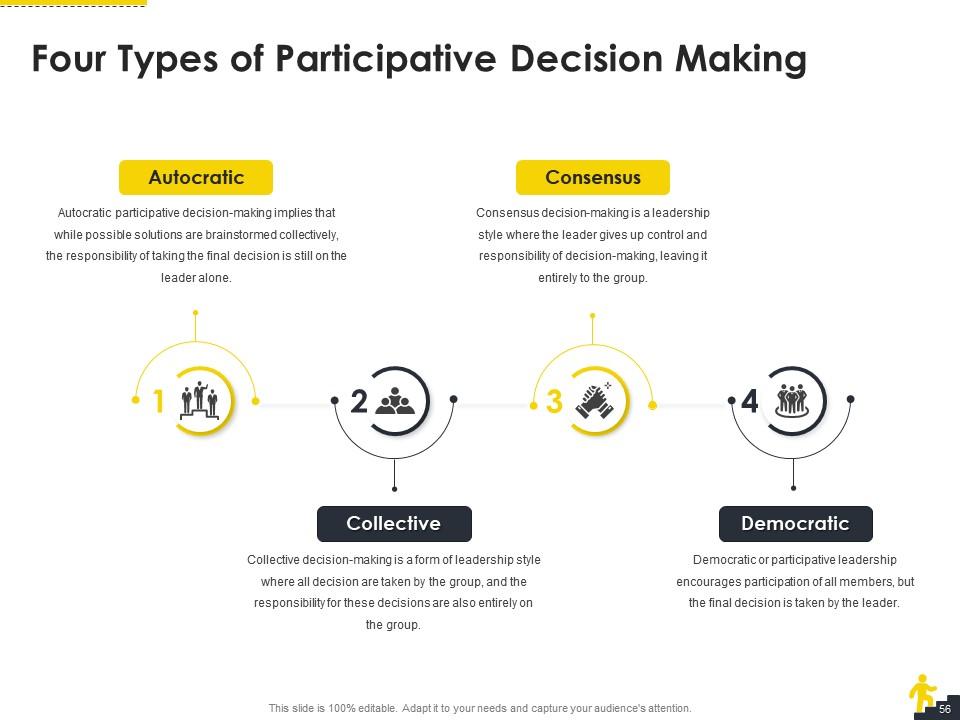
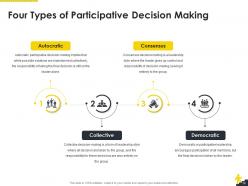
Slide 56: This slide shows four types of participative decision-making.
Slide 57: This is the icons slide for the project.
Slide 58: This slide displays the title for additional slides.
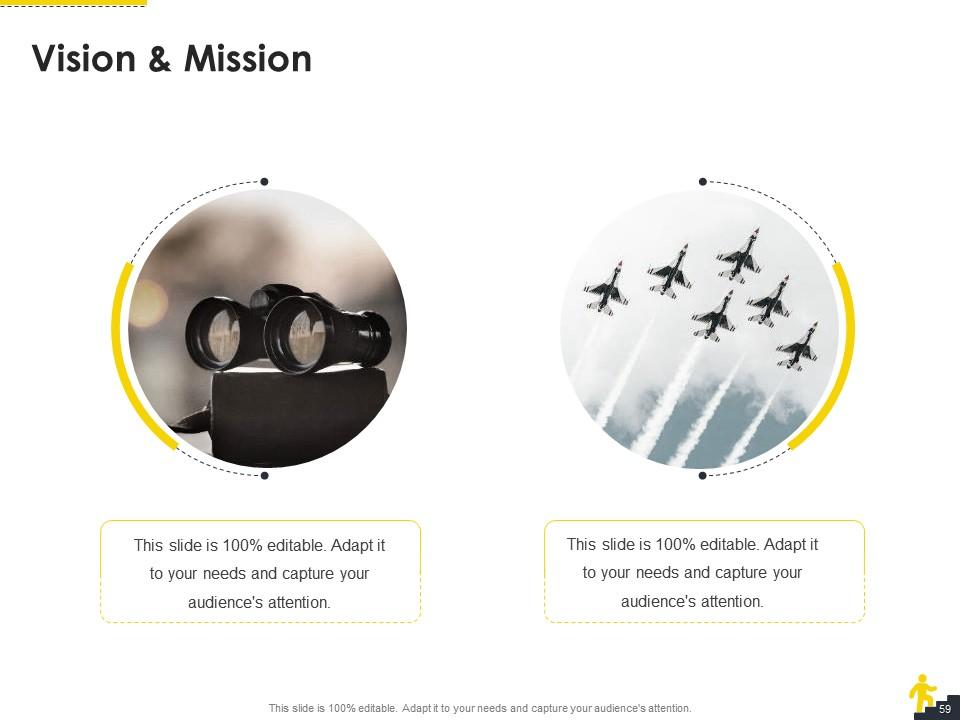
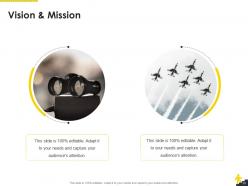
Slide 59: This slide presents vision and mission of the company.
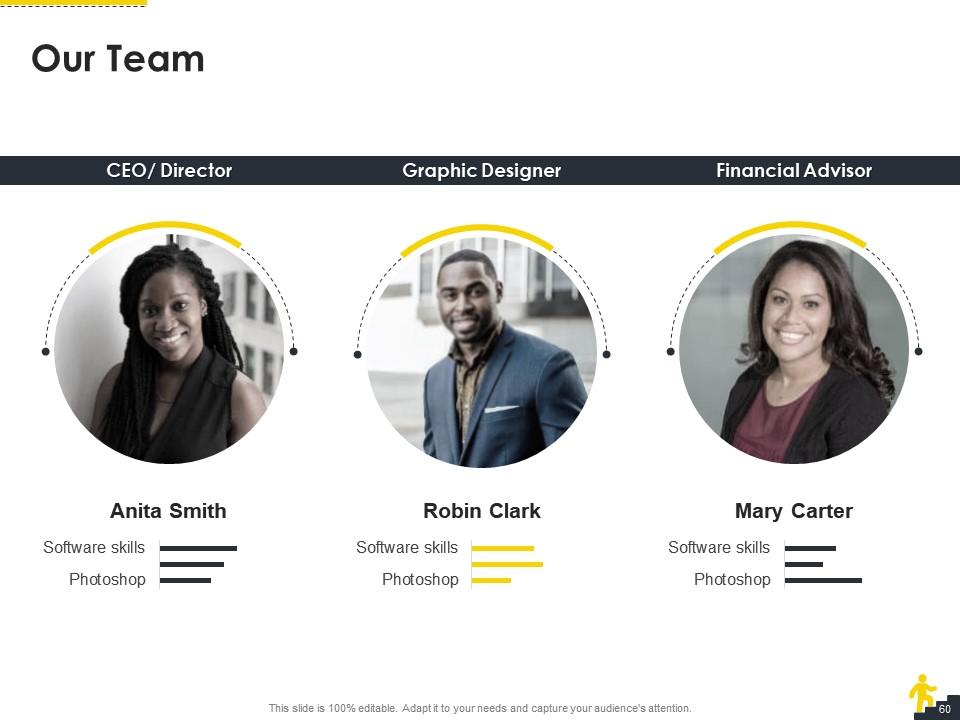
Slide 60: This slide exhibits details of the team members responsible for the project.
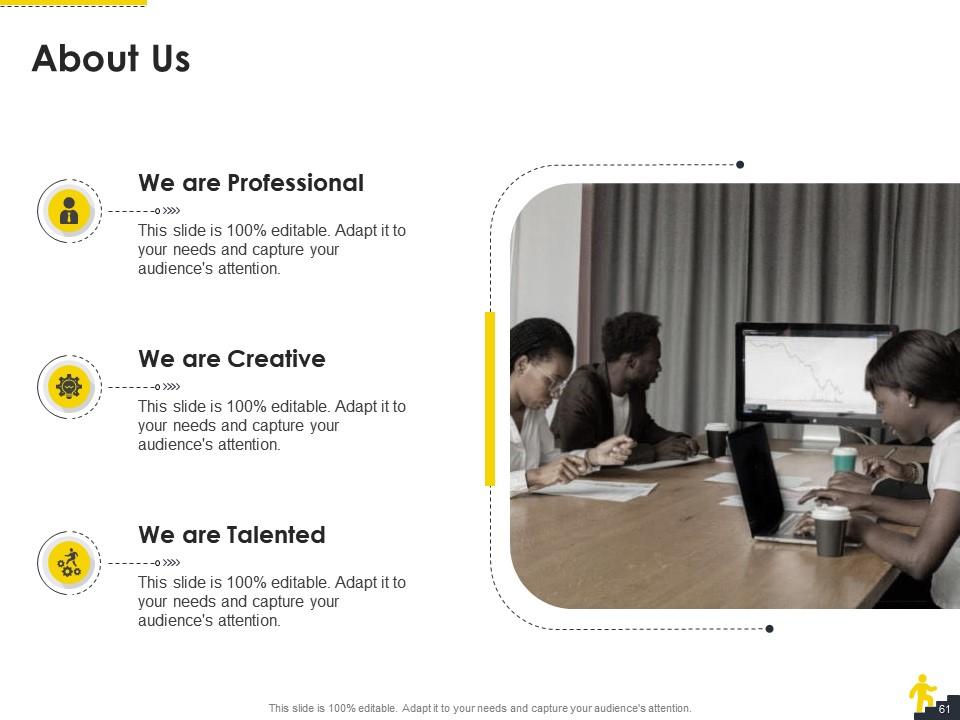
Slide 61: This slide shows about the company.
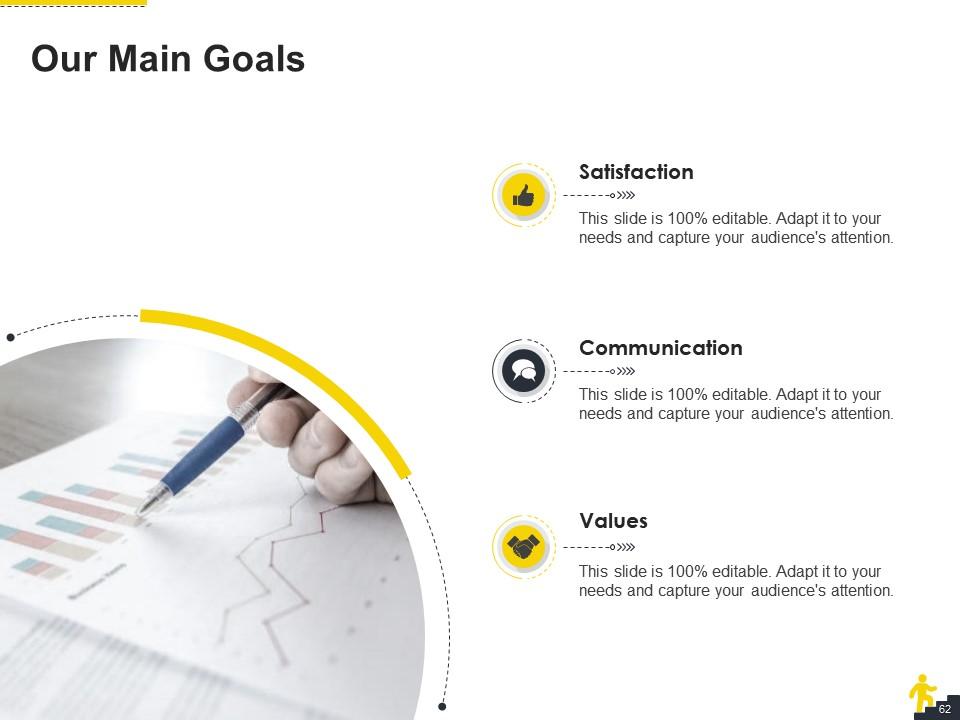
Slide 62: This slide depicts the goals of the company.
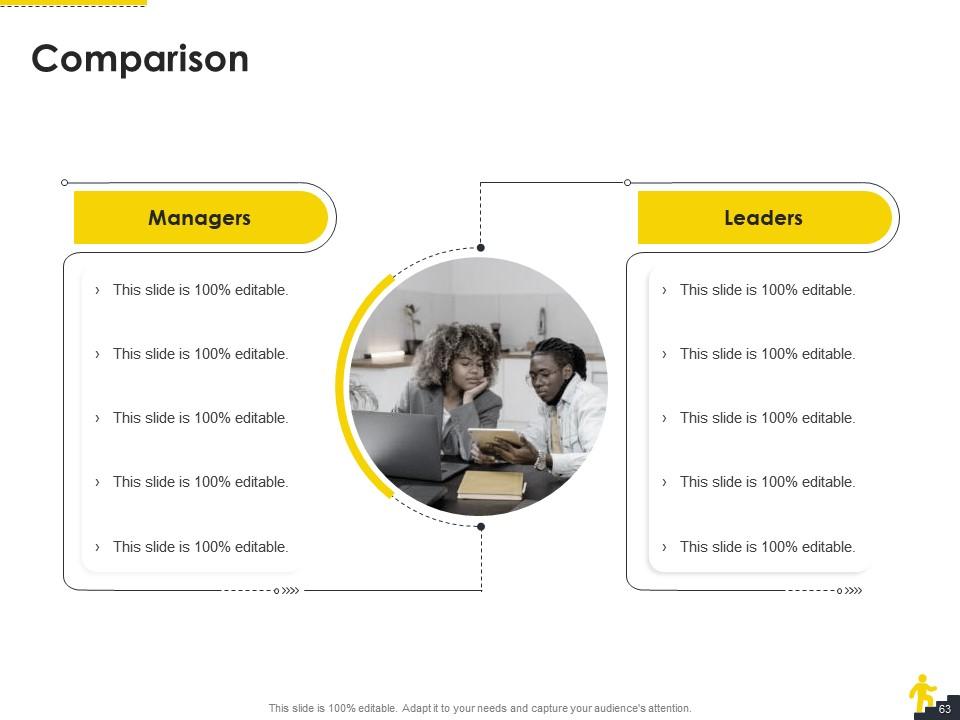
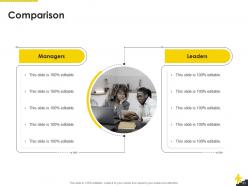
Slide 63: This slide presents comparison of managers and leaders.
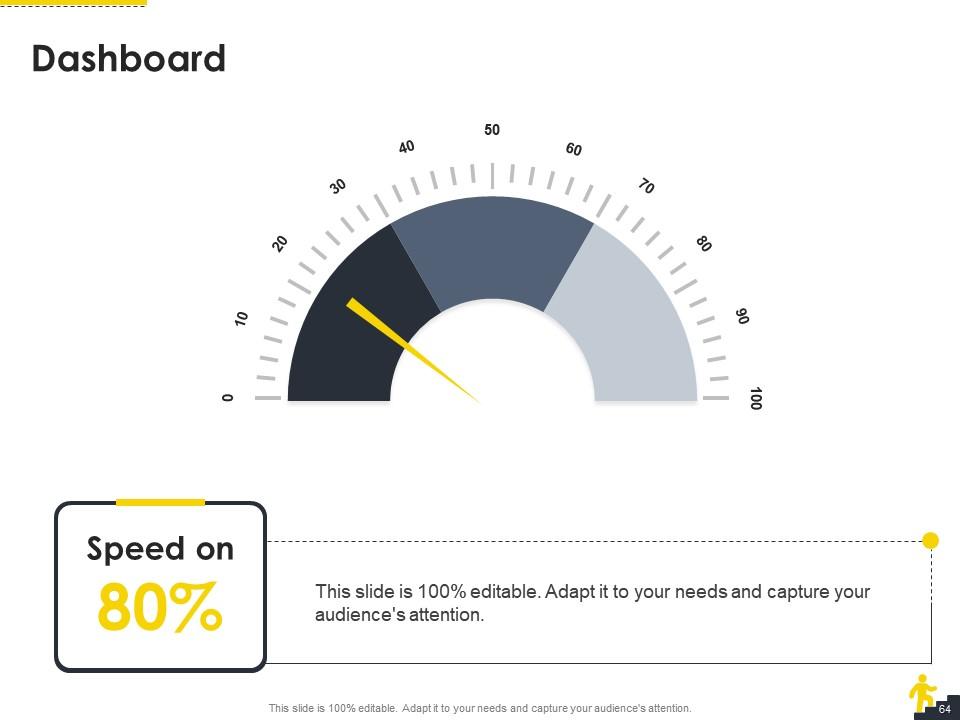
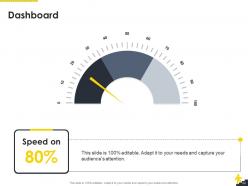
Slide 64: This slide showcases the dashboard of the project.
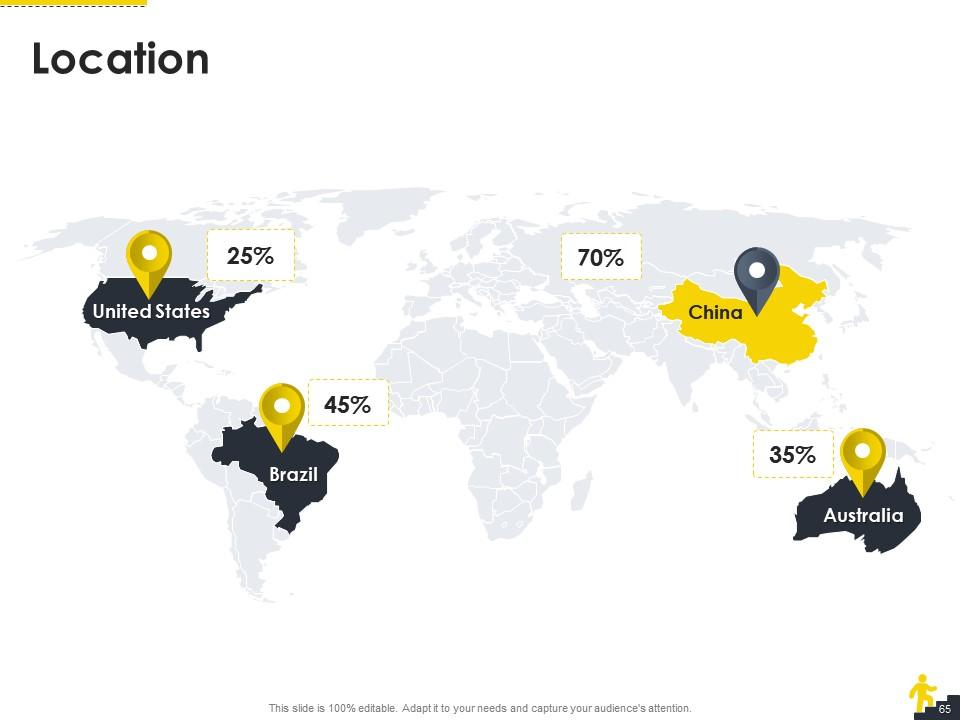
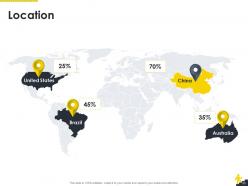
Slide 65: This slide displays the location of the company across the globe.
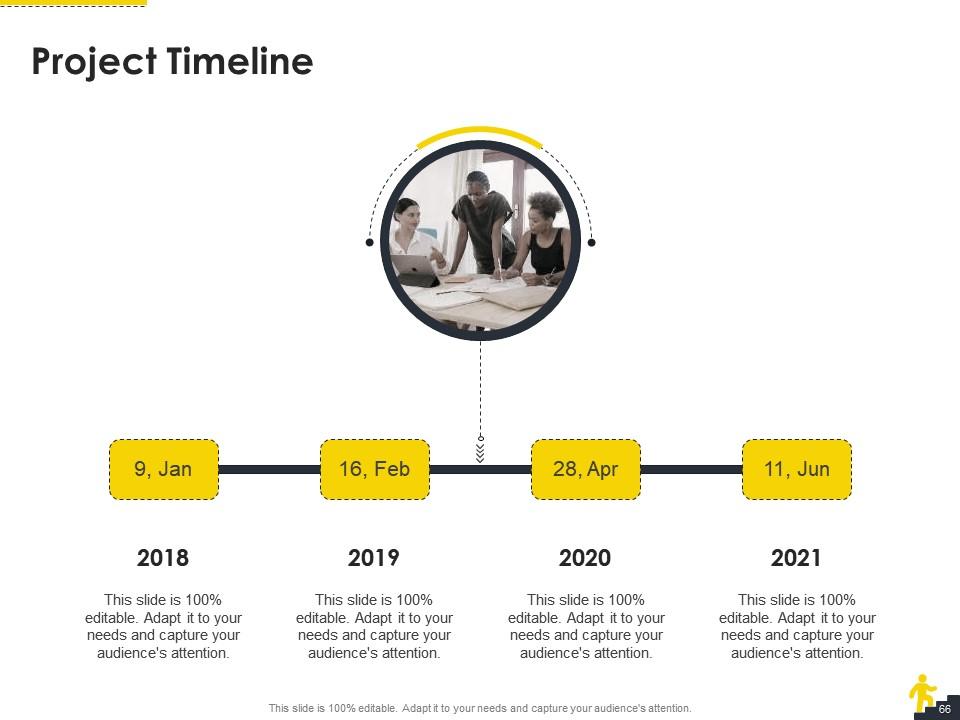
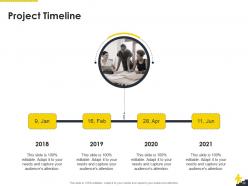
Slide 66: This slide gives yearly project timeline details.
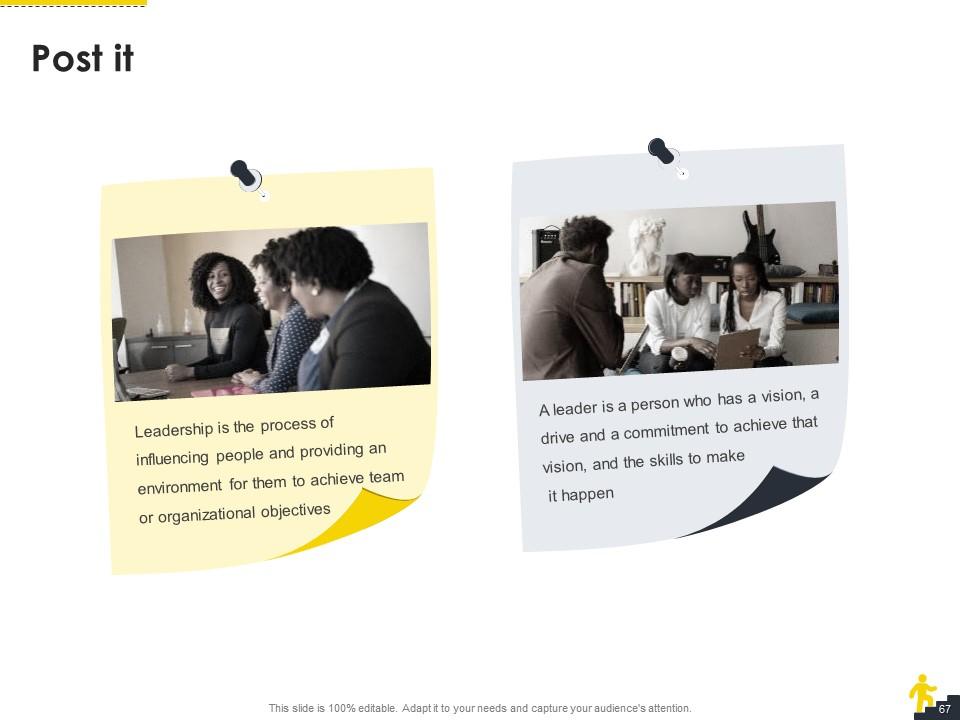
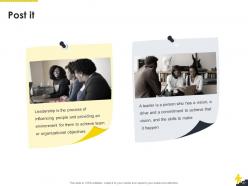
Slide 67: This slide shows posts for past feedbacks.
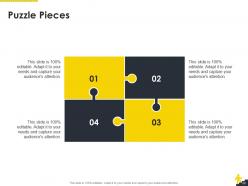
Slide 68: This slide presents the puzzle related to company.
Slide 69: This slide exhibits the targets of the company.
Slide 70: This slide shows the venn of the project.
Slide 71: This slide explains the mind map of the project.
Slide 72: This slide displays the lego of the project.
Slide 73: This slide presents the Silhouettes of the project.
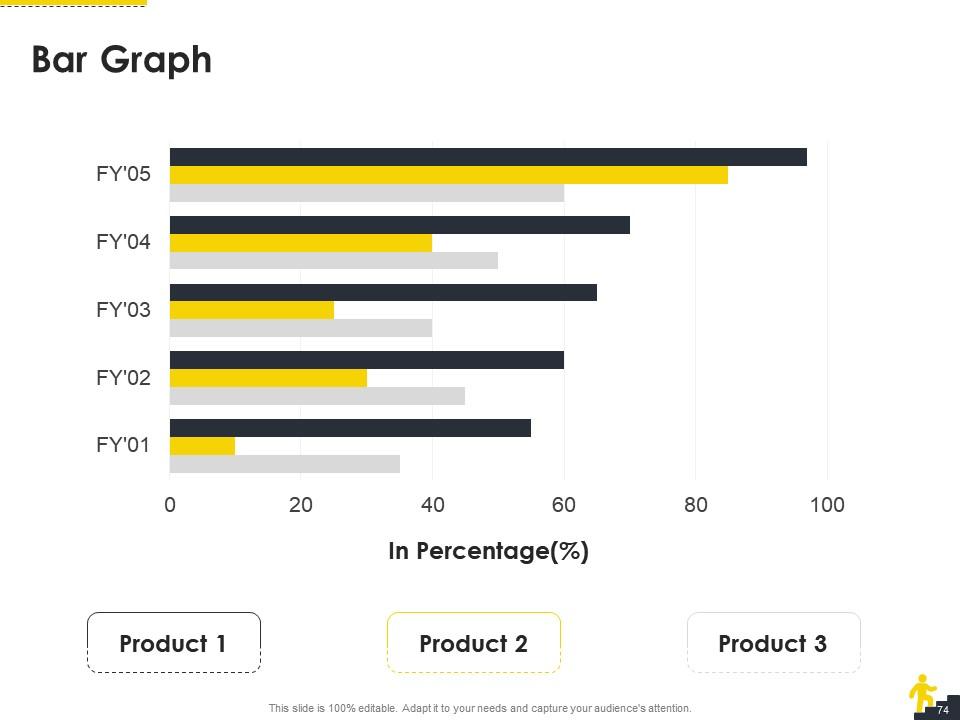
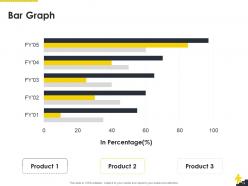
Slide 74: This slide shows the bar graphs for different products. The graphs are linked to Excel.
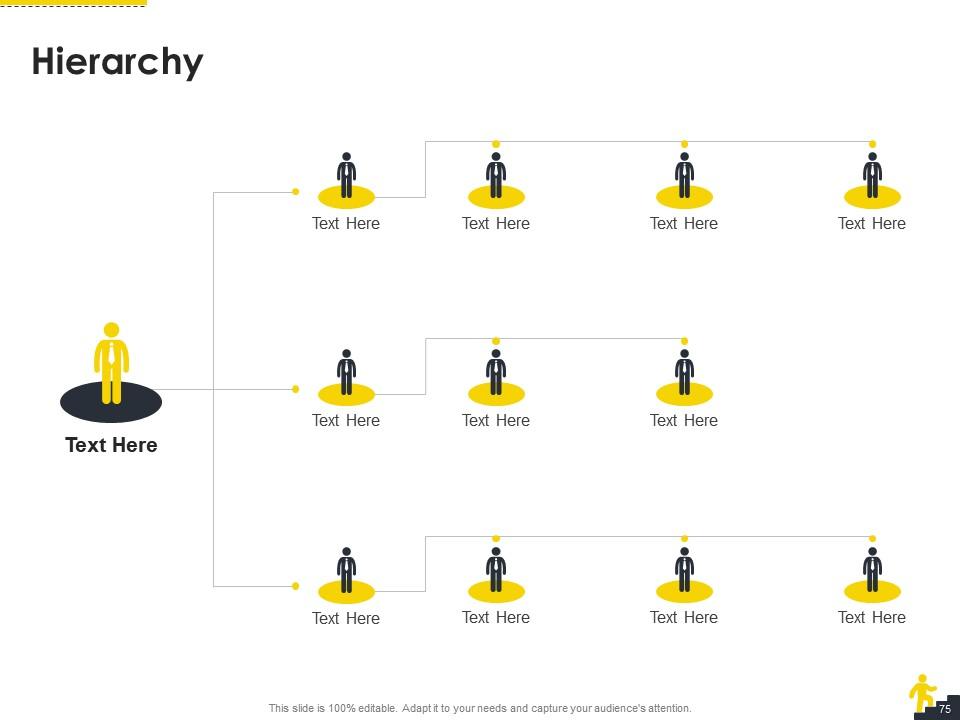
Slide 75: This slide displays the hierarchy of the company.
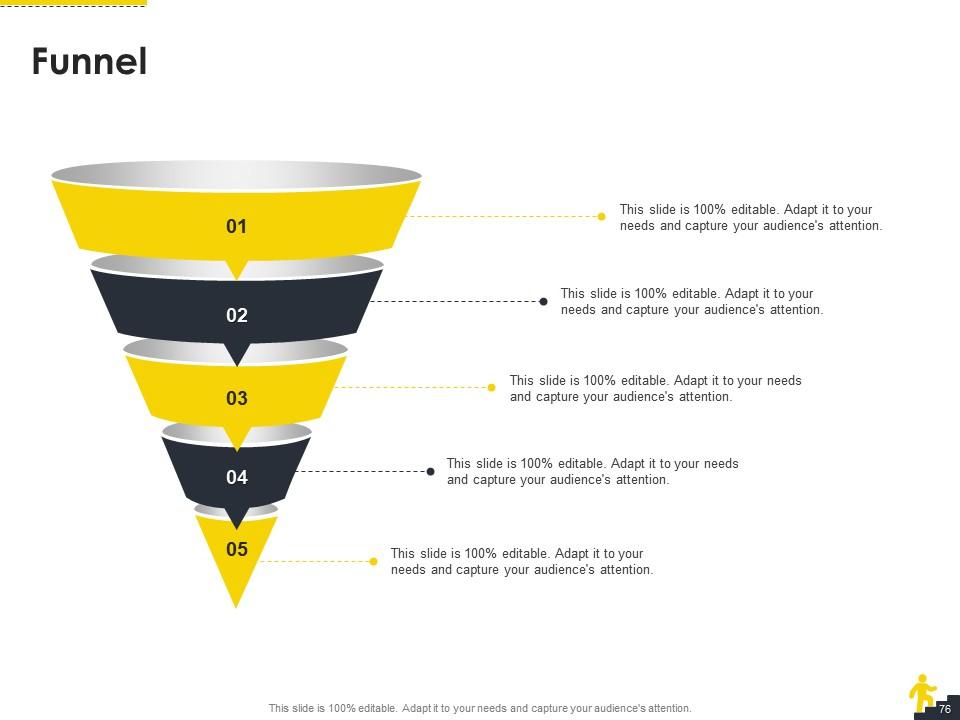
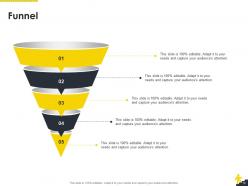
Slide 76: This slide showcases the funnel related to project.
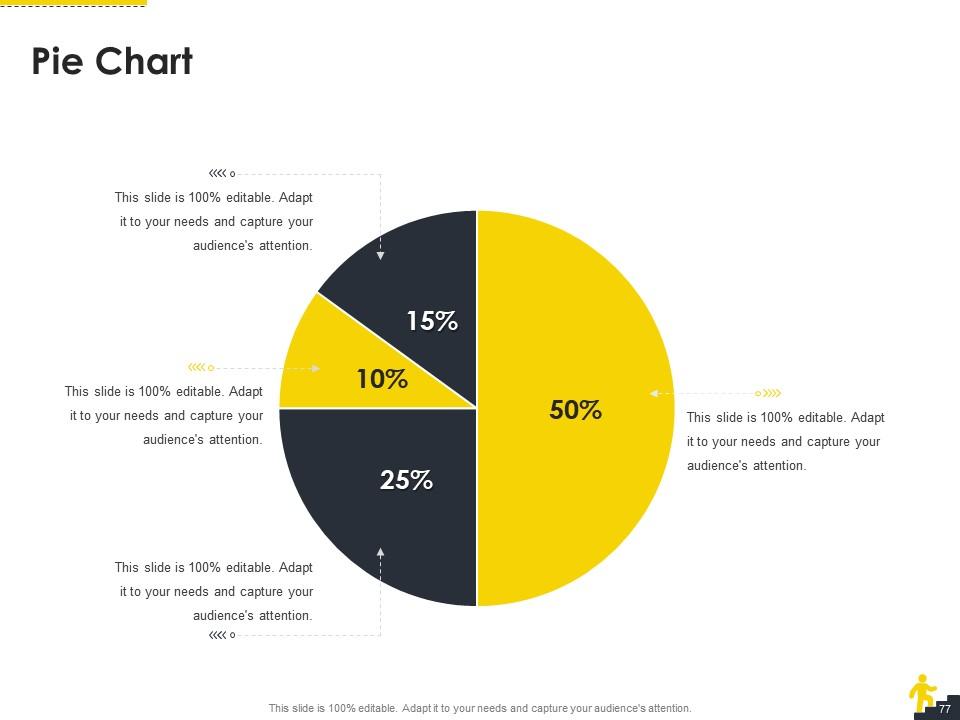
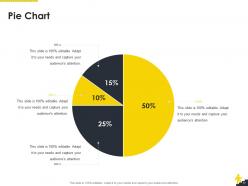
Slide 77: This slide shows the pie charts for different products. The charts are linked to Excel.
Slide 78: This slide contains contact details of the company including phone number, email address, office address, etc.
Slide 79: This is the thank you slide.
Corporate leadership powerpoint presentation slides with all 79 slides:
Use our Corporate Leadership Powerpoint Presentation Slides to effectively help you save your valuable time. They are readymade to fit into any presentation structure.
-
Great product with highly impressive and engaging designs.
-
Unique and attractive product design.
-
Excellent Designs.
-
It saves your time and decrease your efforts in half.
-
Perfect template with attractive color combination.
