Cross touchpoint experience marketing model multi channel marketing ppt inspiration
Try Before you Buy Download Free Sample Product
Audience
Editable
of Time
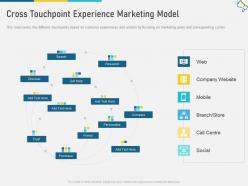
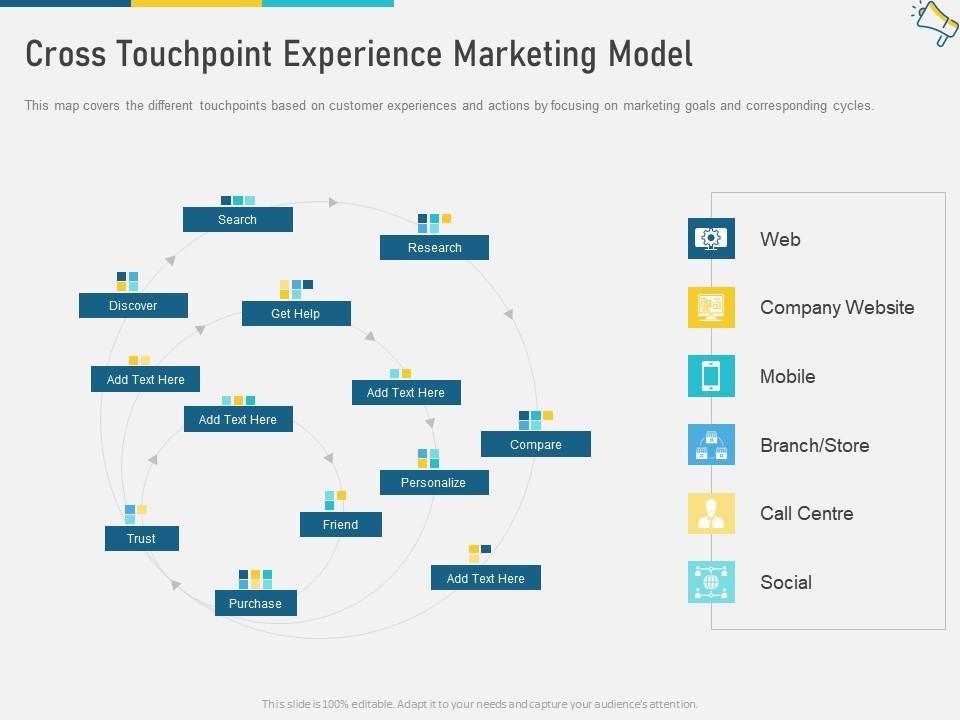
This map covers the different touchpoints based on customer experiences and actions by focusing on marketing goals and corresponding cycles.
People who downloaded this PowerPoint presentation also viewed the following :
Cross touchpoint experience marketing model multi channel marketing ppt inspiration with all 2 slides:
Use our Cross Touchpoint Experience Marketing Model Multi Channel Marketing Ppt Inspiration to effectively help you save your valuable time. They are readymade to fit into any presentation structure.
FAQs for Cross touchpoint experience marketing model multi channel
Cross touchpoint experience marketing enhances customer engagement by creating seamless, personalized interactions across all channels, ensuring consistent messaging, and leveraging data insights to anticipate customer needs. Through integrated campaigns spanning social media, email, retail stores, and mobile apps, businesses deliver cohesive experiences that build deeper relationships, increase satisfaction, and ultimately drive higher conversion rates and customer loyalty.
Key components include unified customer data platforms, consistent brand messaging, personalized content delivery, omnichannel integration, and real-time analytics tracking. These elements work together by creating seamless customer journeys across digital and physical touchpoints, enabling personalized experiences at scale, and ultimately delivering improved customer satisfaction and increased conversion rates across all channels.
Businesses can effectively map customer journeys by identifying all touchpoints, analyzing customer interactions at each stage, collecting feedback through surveys and analytics, and documenting pain points alongside opportunities for improvement. Through comprehensive mapping tools, organizations streamline experiences across digital platforms, retail locations, and customer service channels, while enhancing satisfaction and retention, ultimately delivering seamless interactions that drive competitive advantage.
Data analytics enables businesses to track customer interactions across touchpoints, identify behavioral patterns, measure engagement effectiveness, and personalize experiences in real-time. Through advanced analytics platforms, companies streamline customer journeys, reduce friction points, and enhance satisfaction rates, with many retail and financial services organizations finding that data-driven insights ultimately deliver stronger customer loyalty and increased conversion rates.
Personalization integrates into cross touchpoint marketing through unified customer data platforms, dynamic content delivery, behavioral tracking, and AI-driven recommendations that adapt messaging across all channels. This strategic combination enables retailers, financial services, and healthcare organizations to deliver consistent, relevant experiences whether customers engage via mobile apps, websites, or in-store visits, ultimately enhancing engagement and conversion rates.
Physical stores, customer service interactions, mobile apps, email communications, and post-purchase support represent the most critical touchpoints for loyalty and retention. These touchpoints deliver consistent experiences by providing personalized service, seamless problem resolution, and proactive engagement, with many retail and financial services organizations finding that strategic integration across these channels ultimately drives repeat purchases and long-term customer relationships.
Brands ensure messaging consistency by developing comprehensive brand guidelines, implementing centralized content management systems, conducting regular cross-channel audits, and establishing unified communication protocols across all departments. Through strategic coordination tools and integrated marketing platforms, organizations streamline their messaging workflows, maintain visual and tonal alignment, and deliver cohesive customer experiences, ultimately strengthening brand recognition and trust.
Technology solutions that enable seamless cross touchpoint marketing include customer data platforms (CDPs), marketing automation tools, omnichannel analytics, AI-powered personalization engines, and integrated CRM systems. These technologies streamline customer journey mapping, automate personalized messaging across channels, and deliver unified brand experiences, with many retail and financial services organizations finding that strategic integration ultimately enhances customer engagement and drives conversion rates.
Customer personas influence cross touchpoint experience strategies by providing detailed behavioral insights, preference mapping, and journey expectations that guide consistent messaging across all channels. Through persona-driven segmentation, organizations tailor touchpoint interactions, messaging timing, and channel preferences, with retail brands and financial services finding that persona-aligned strategies deliver higher engagement rates and seamless customer experiences.
Marketers face challenges including data silos across departments, inconsistent messaging between channels, technology integration complexities, and measuring attribution across multiple touchpoints. While coordinating campaigns across digital, social, email, and physical channels presents logistical hurdles, organizations increasingly find that unified customer data platforms and cross-functional teams ultimately deliver seamless experiences and improved conversion rates.
Feedback from different touchpoints enables organizations to identify experience gaps, optimize customer journeys, and personalize interactions by analyzing patterns across channels like websites, stores, and support centers. Through integrated feedback systems, companies streamline service delivery, enhance touchpoint consistency, and reduce friction points, ultimately delivering seamless experiences and competitive advantage in increasingly complex customer landscapes.
Marketers should track customer journey completion rates, attribution models across channels, customer lifetime value, engagement consistency scores, and conversion path analysis. These metrics enable organizations to measure touchpoint synergy, optimize resource allocation across platforms, and identify friction points, with many retail and financial services companies finding that integrated tracking delivers significantly higher ROI and customer satisfaction.
Omnichannel strategies enhance cross touchpoint marketing by creating seamless customer journeys, integrating data across platforms, and delivering consistent messaging throughout all interactions. This unified approach enables retailers, banks, and healthcare providers to personalize experiences more effectively, reduce customer acquisition costs, and increase conversion rates, ultimately delivering higher customer lifetime value and stronger brand loyalty.
Social media serves as a dynamic touchpoint through interactive content creation, real-time customer engagement, personalized messaging, community building, and user-generated content campaigns. These platforms enable brands to deliver seamless experiences by fostering authentic conversations, providing instant customer support, and creating shareable moments, with many organizations finding that strategic social integration significantly enhances customer loyalty and drives measurable engagement outcomes.
Best practices for integrating online and offline touchpoints include unified customer data platforms, consistent messaging across channels, seamless omnichannel experiences, synchronized inventory systems, and cross-channel personalization capabilities. These approaches streamline customer journeys by connecting digital interactions with physical experiences, enabling retailers and service providers to deliver cohesive brand engagement, ultimately enhancing customer satisfaction while driving increased loyalty and revenue.
-
Very unique and reliable designs.
-
It saves your time and decrease your efforts in half.
-
Designs have enough space to add content.
-
Use of different colors is good. It's simple and attractive.