


Customer Experience Improvement Powerpoint Presentation Slides
Customer experience is an interaction that customers have with the organization. It is basically related to the customers perception and feeling about the business. The main objective of this deck i.e. Customer Experience Improvement is to improve customer satisfaction and loyalty for the overall growth of the business. This deck incorporated various slides, including the present scenario, we have analyzed the current customer experience or service approach and its impact on the companys performance. Also, it contains slides showcasing the reasons for customer complaints, collecting useful insights, taking action, and making impactful changes. This PowerPoint presentation will arm you to assess customer behavior trends, and buyer journey, and also determine customer wants and expectations. This customer experience improvement PowerPoint module also covers tools and techniques for building customer relationships online, providing tactics to increase customer satisfaction, and implementing Chatbot tech service for giving instant replies to customers. This deck also includes a template that covers the job description of a customer support executive describing the summary of hiring a new executive including areas of knowledge, education, skills, and abilities. It also talks about the steps for solving customer specific problems and issues with the product or services. We have also covered the impact of implementing strategies for improving customer experience while measuring the metrics in this PowerPoint Presentation. Download this PowerPoint presentation right away.
Customer experience is an interaction that customers have with the organization. It is basically related to the customers p..

















-

- Google Slides is a new FREE Presentation software from Google.
- All our content is 100% compatible with Google Slides.
- Just download our designs, and upload them to Google Slides and they will work automatically.
- Amaze your audience with SlideTeam and Google Slides.
-

Want Changes to This PPT Slide? Check out our Presentation Design Services
-

- WideScreen Aspect ratio is becoming a very popular format. When you download this product, the downloaded ZIP will contain this product in both standard and widescreen format.
-

- Some older products that we have may only be in standard format, but they can easily be converted to widescreen.
- To do this, please open the SlideTeam product in Powerpoint, and go to
- Design ( On the top bar) -> Page Setup -> and select "On-screen Show (16:9)” in the drop down for "Slides Sized for".
- The slide or theme will change to widescreen, and all graphics will adjust automatically. You can similarly convert our content to any other desired screen aspect ratio.
Compatible With Google Slides

Get This In WideScreen
You must be logged in to download this presentation.


Do you want to remove this product from your favourites?
PowerPoint presentation slides
Deliver this complete deck to your team members and other collaborators. Encompassed with stylized slides presenting various concepts, this Customer Experience Improvement Powerpoint Presentation Slides is the best tool you can utilize. Personalize its content and graphics to make it unique and thought-provoking. All the Seventy-Seven slides are editable and modifiable, so feel free to adjust them to your business setting. The font, color, and other components also come in an editable format making this PPT design the best choice for your next presentation. So, download now.

People who downloaded this PowerPoint presentation also viewed the following :
Content of this Powerpoint Presentation
Slide 1: This slide displays the title Customer Experience Improvement.
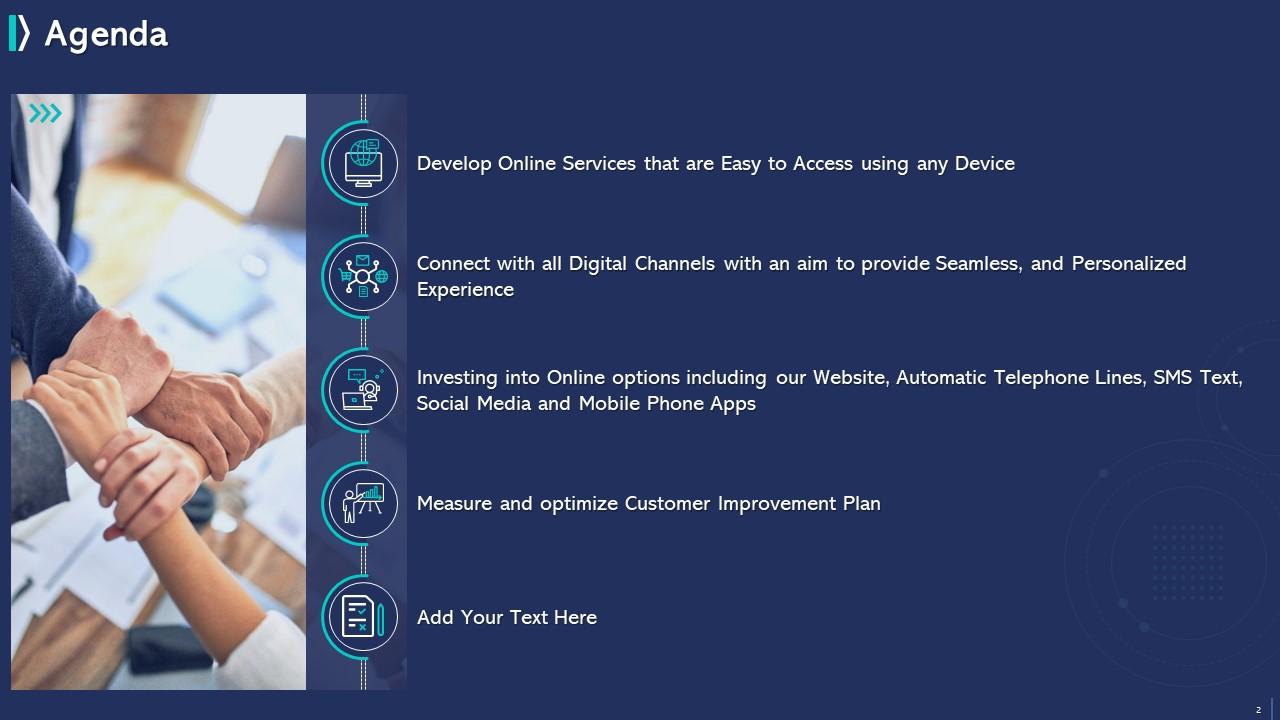
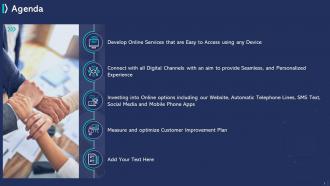
Slide 2: This slide displays the title Agenda.
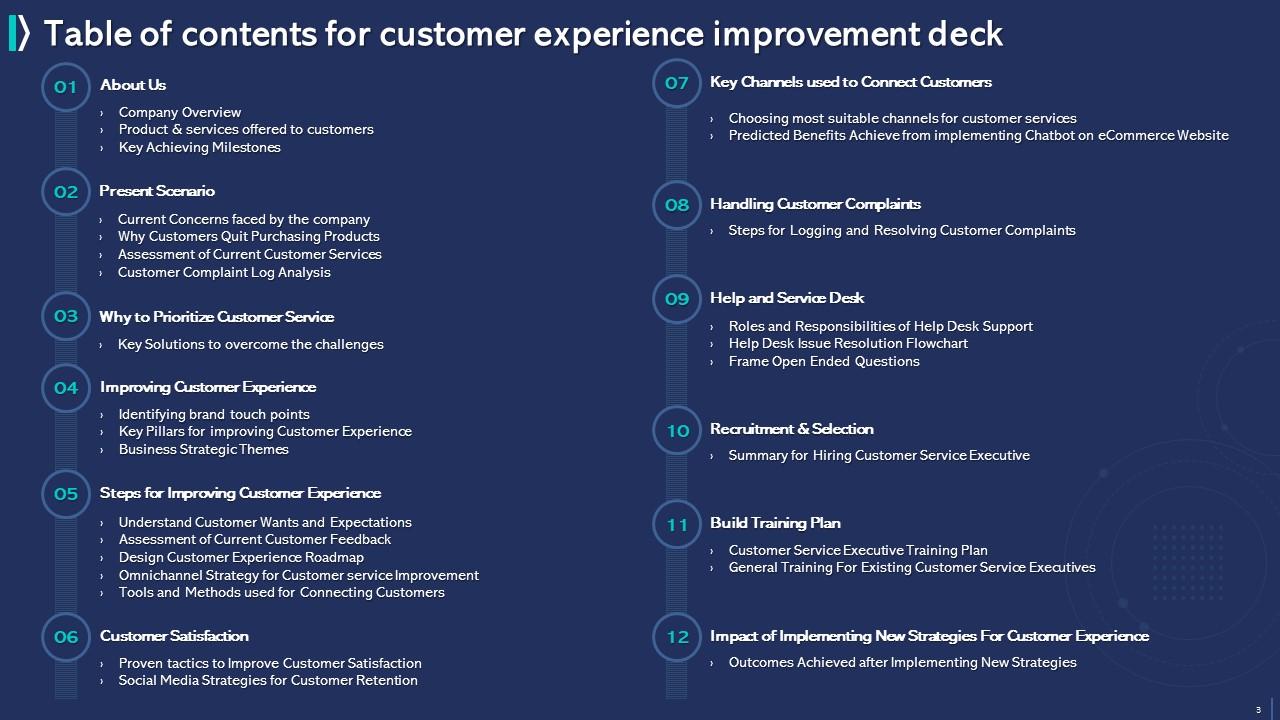
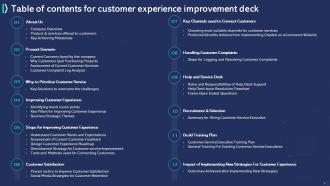
Slide 3: This slide exhibit table of content.
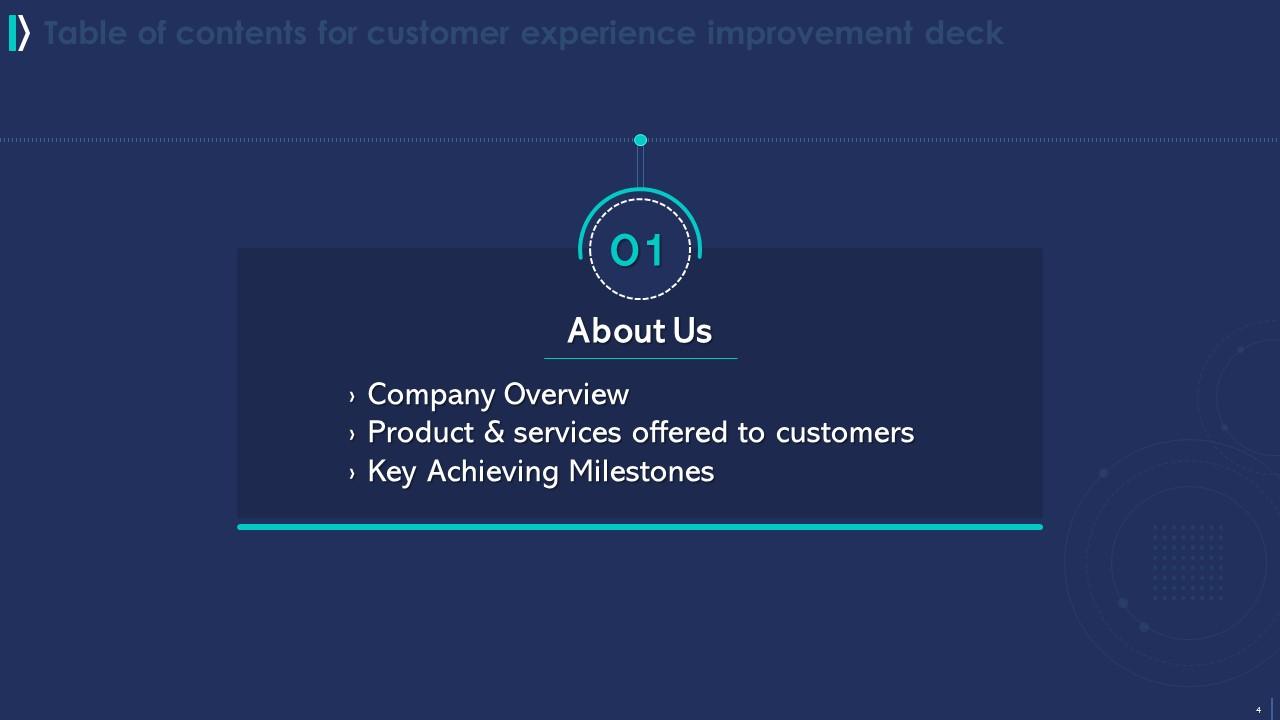
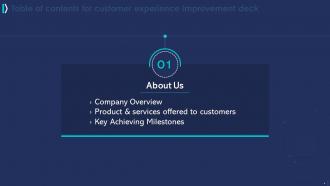
Slide 4: This slide exhibit table of content- About Us.
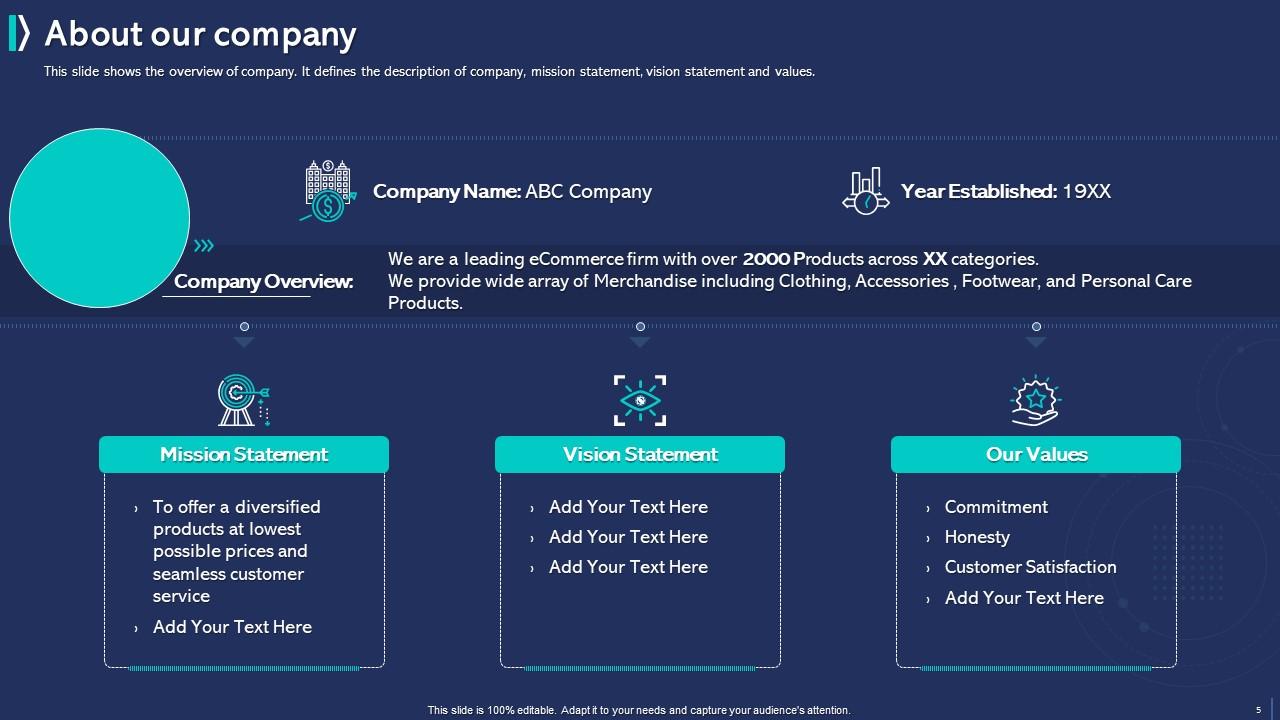
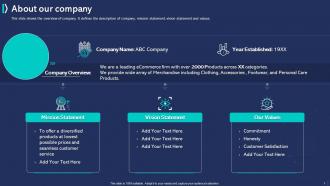
Slide 5: This slide shows the overview of company. It defines the description of company, mission statement, vision statement and values.
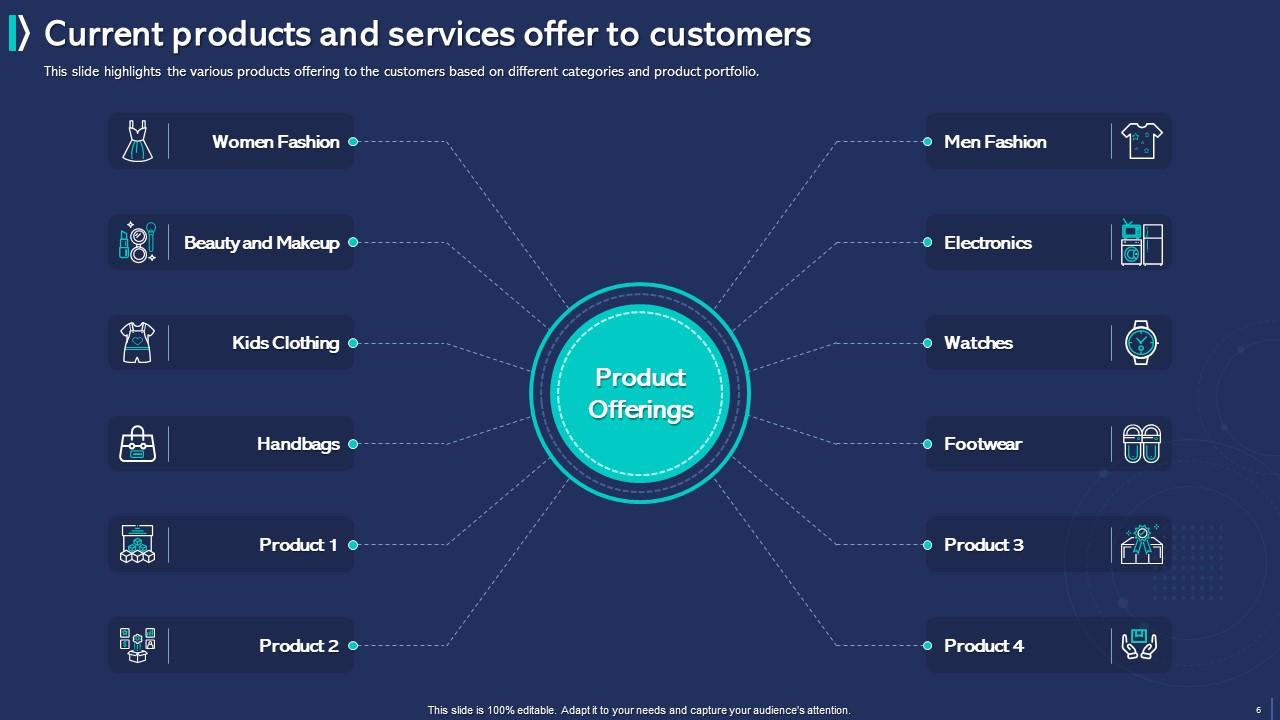
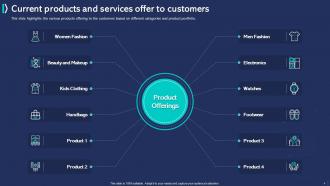
Slide 6: This slide highlights the various products offering to the customers based on different categories and product portfolio.
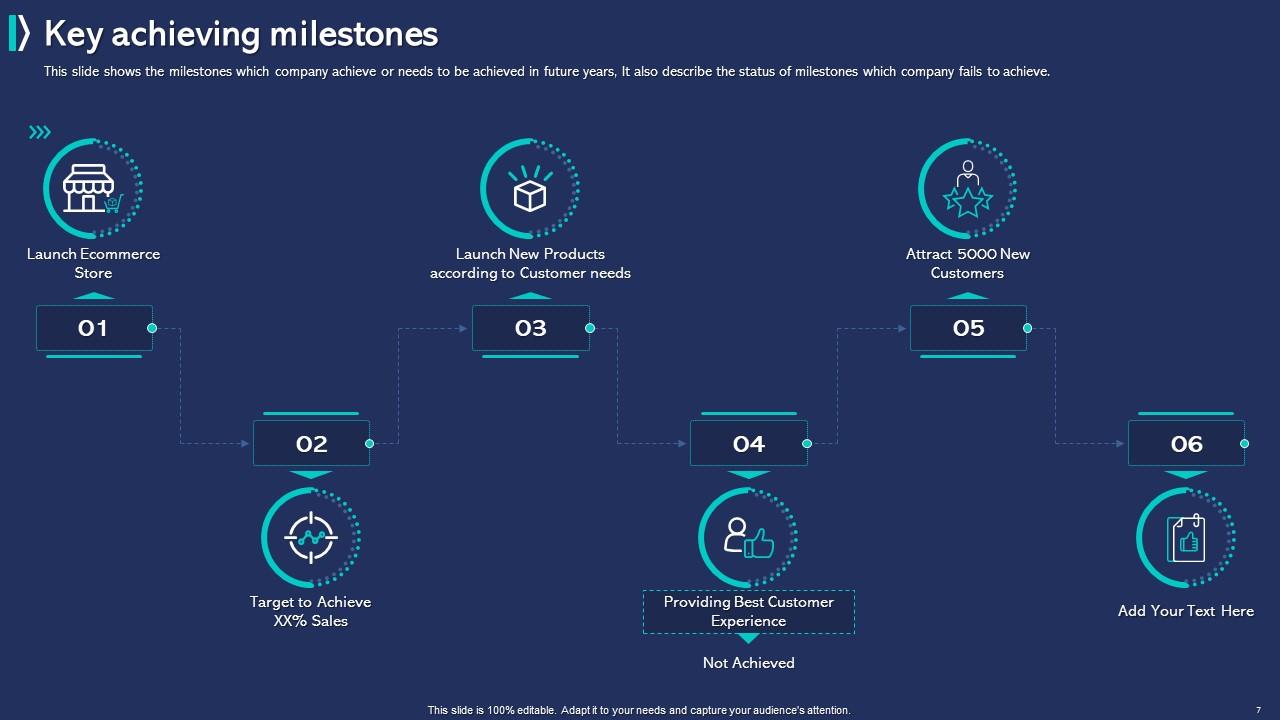
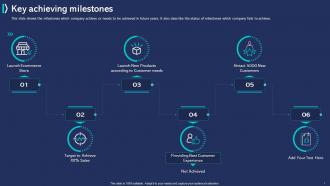
Slide 7: This slide shows the milestones which company achieve or needs to be achieved in future years.
Slide 8: This slide exhibit table of content- Present Scenario.
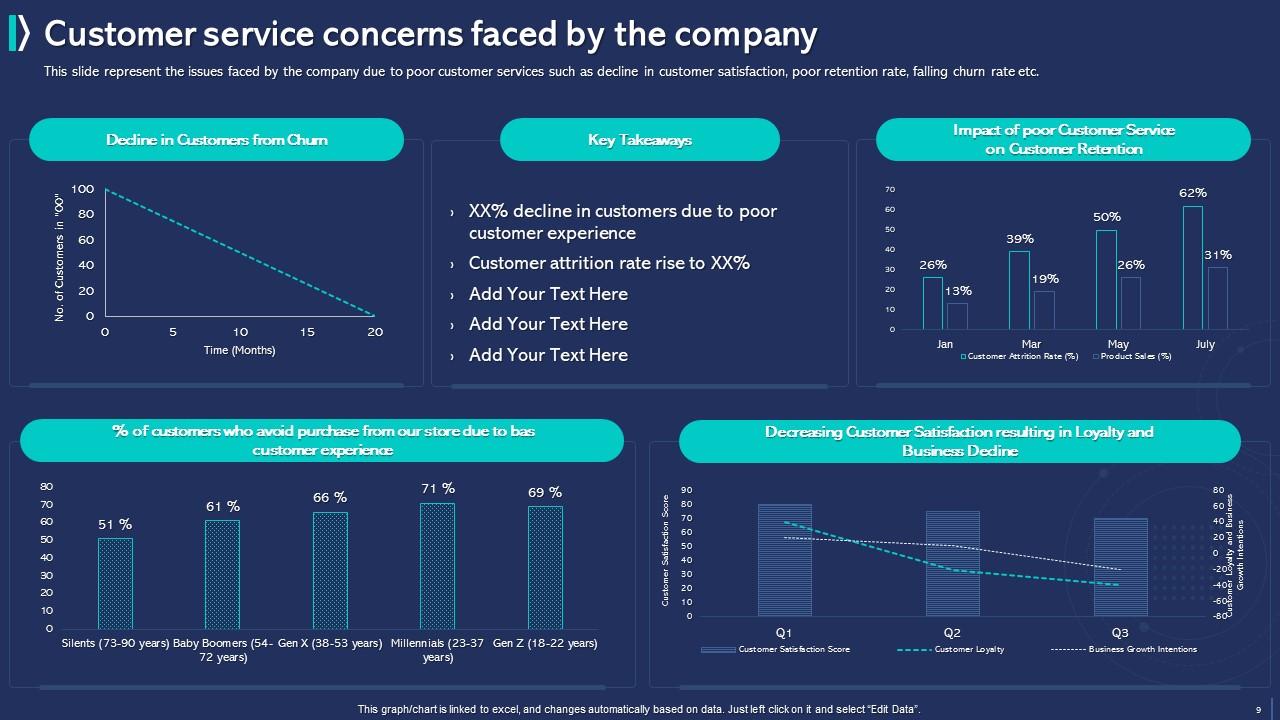
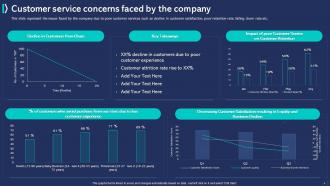
Slide 9: This slide represent the issues faced by the company due to poor customer services.
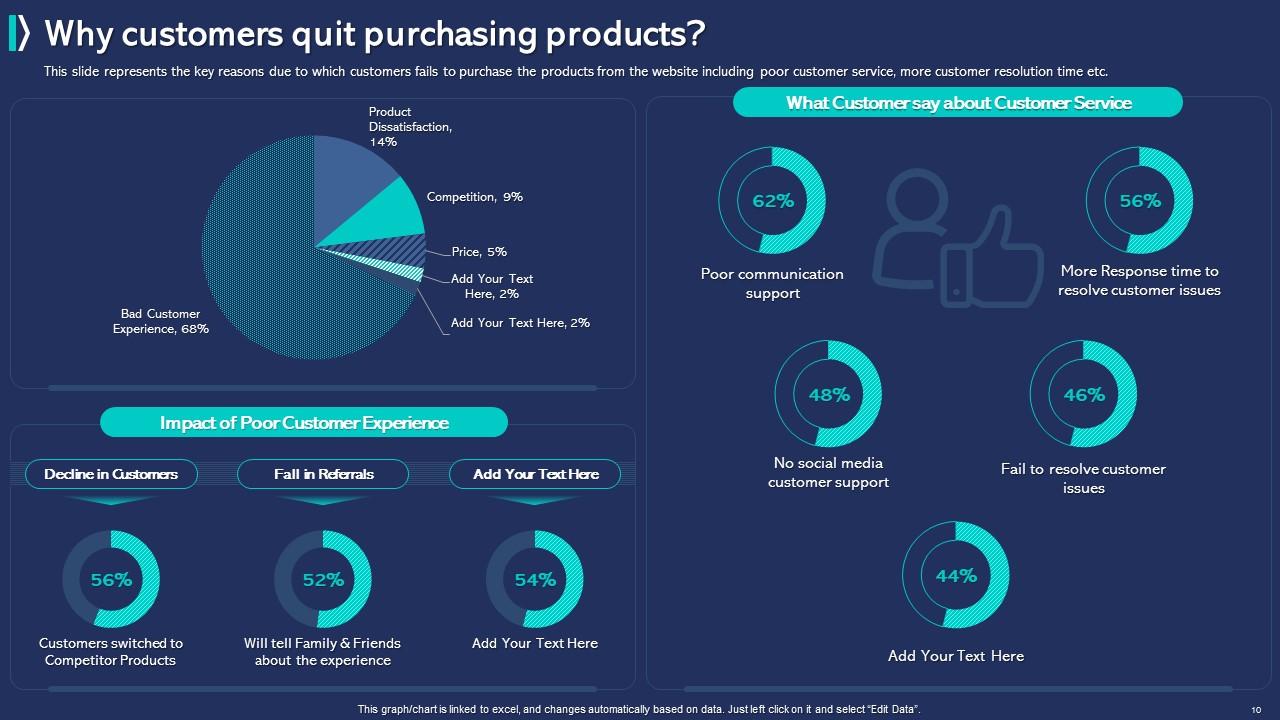
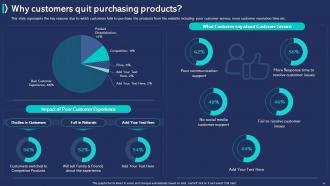
Slide 10: This slide represents the key reasons due to which customers fails to purchase the products from the website.
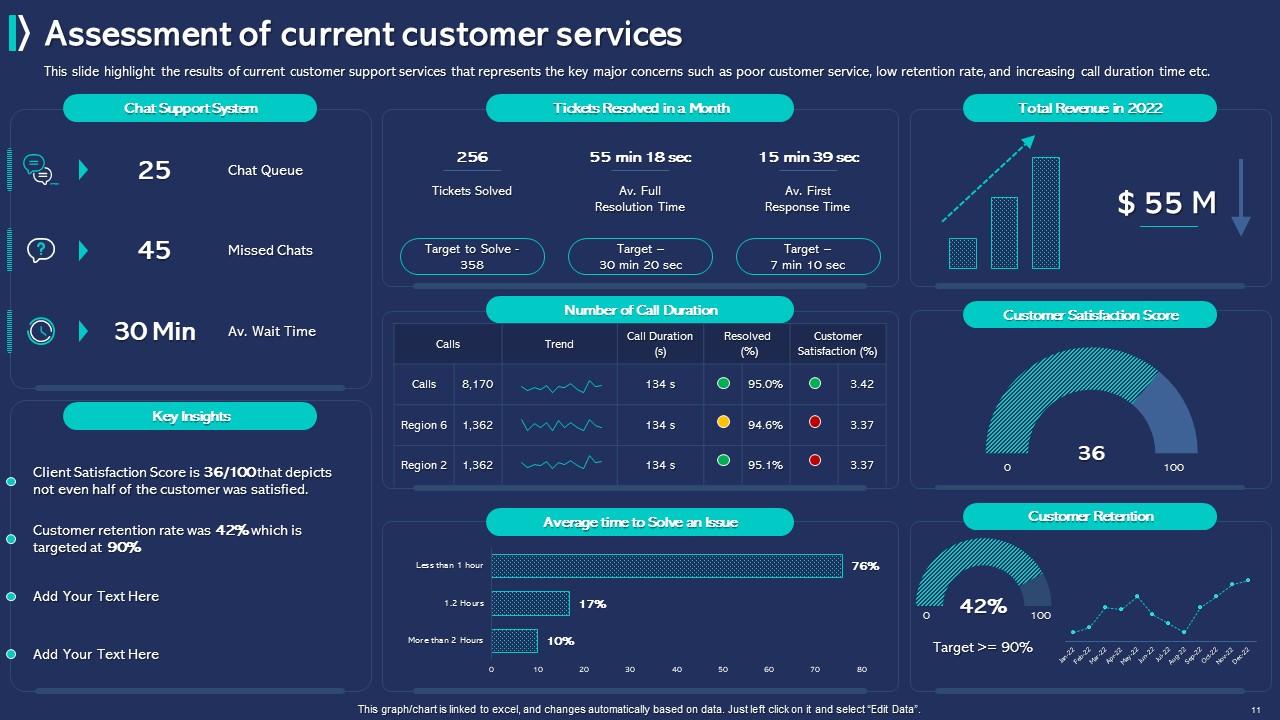
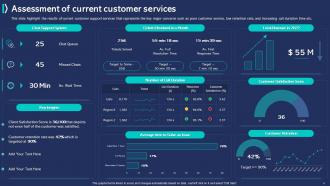
Slide 11: This slide highlight the results of current customer support services that represents the key major concerns.
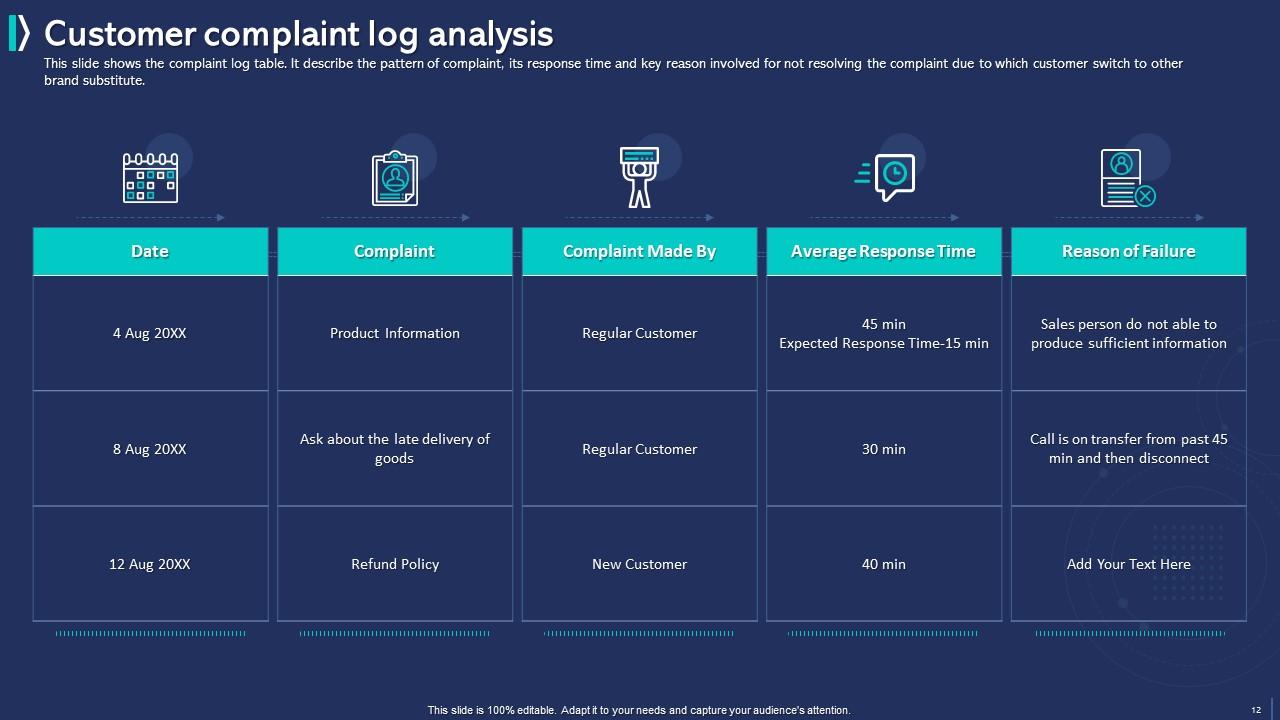
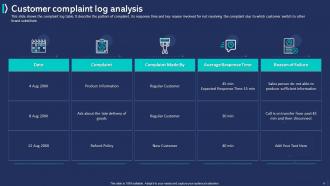
Slide 12: This slide shows the complaint log table.
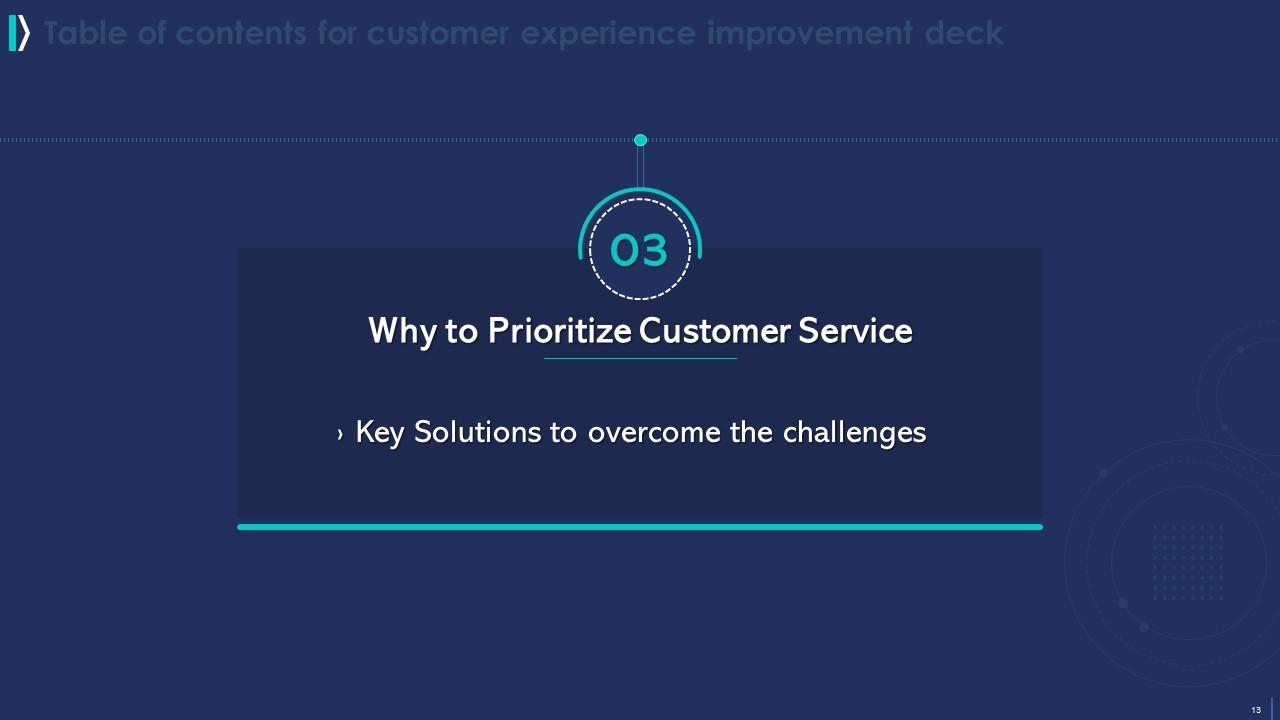
Slide 13: This slide exhibit table of content- Why to Prioritize Customer Service.
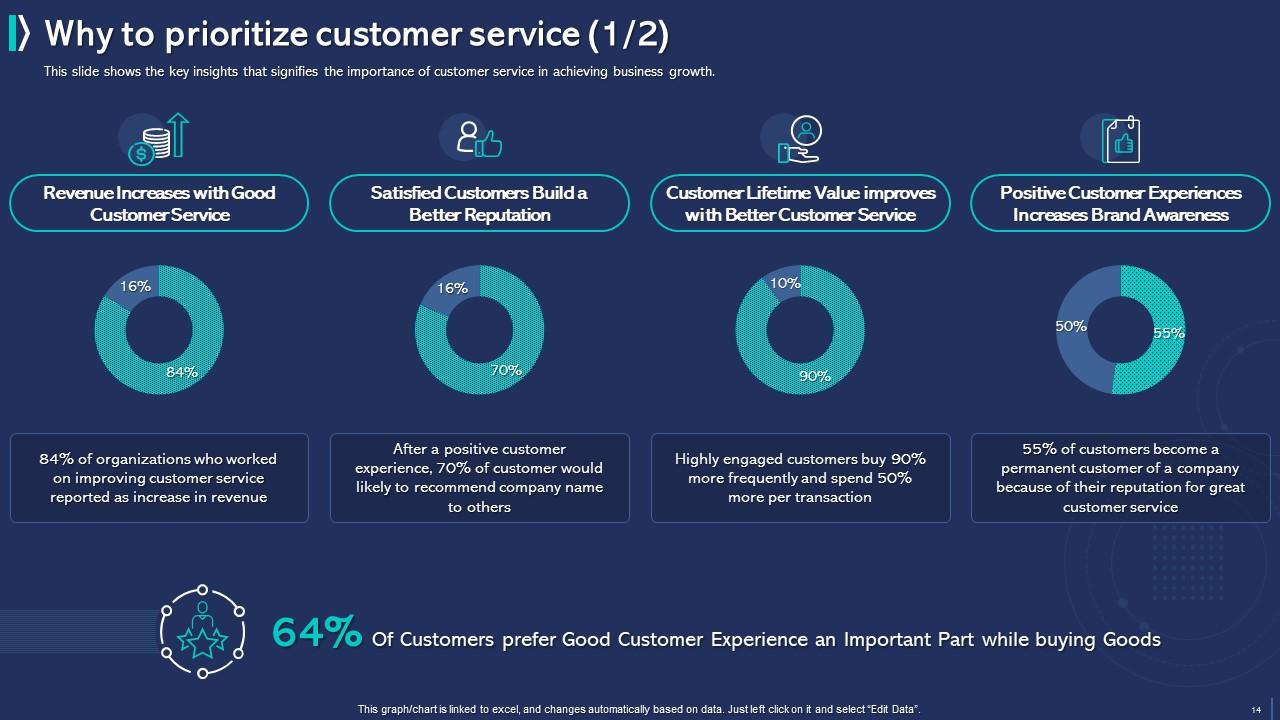
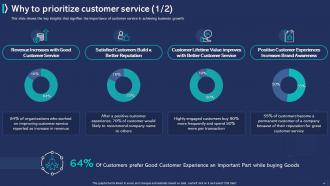
Slide 14: This slide shows the key insights that signifies the importance of customer service in achieving business growth.
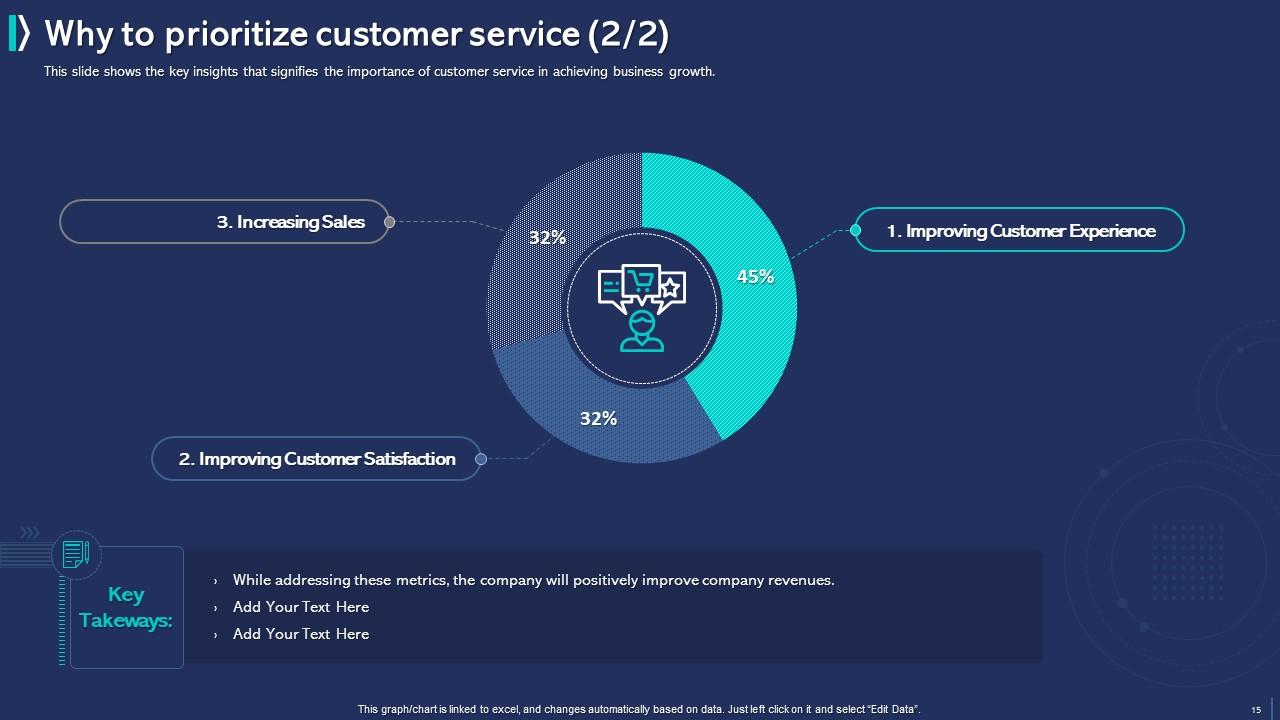
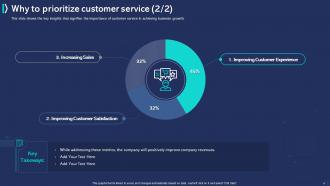
Slide 15: This slide shows the key insights that signifies the importance of customer service in achieving business growth.
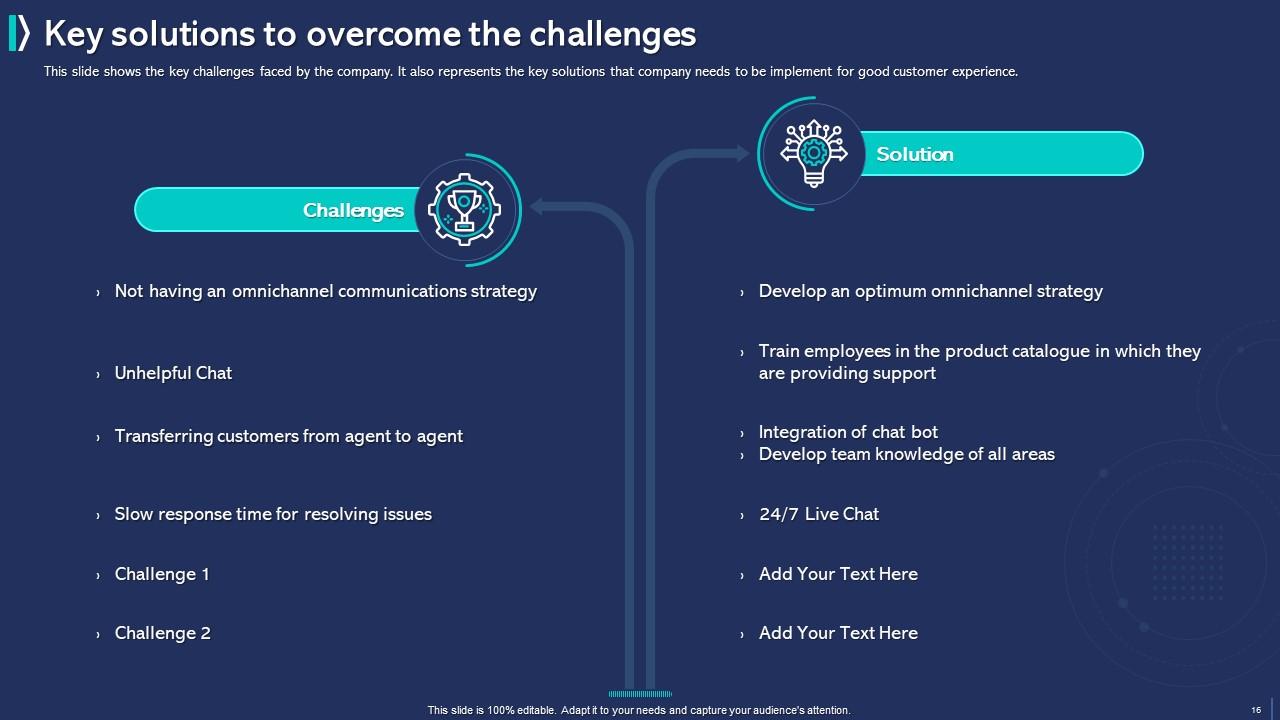
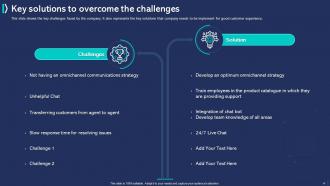
Slide 16: This slide shows the key challenges faced by the company.
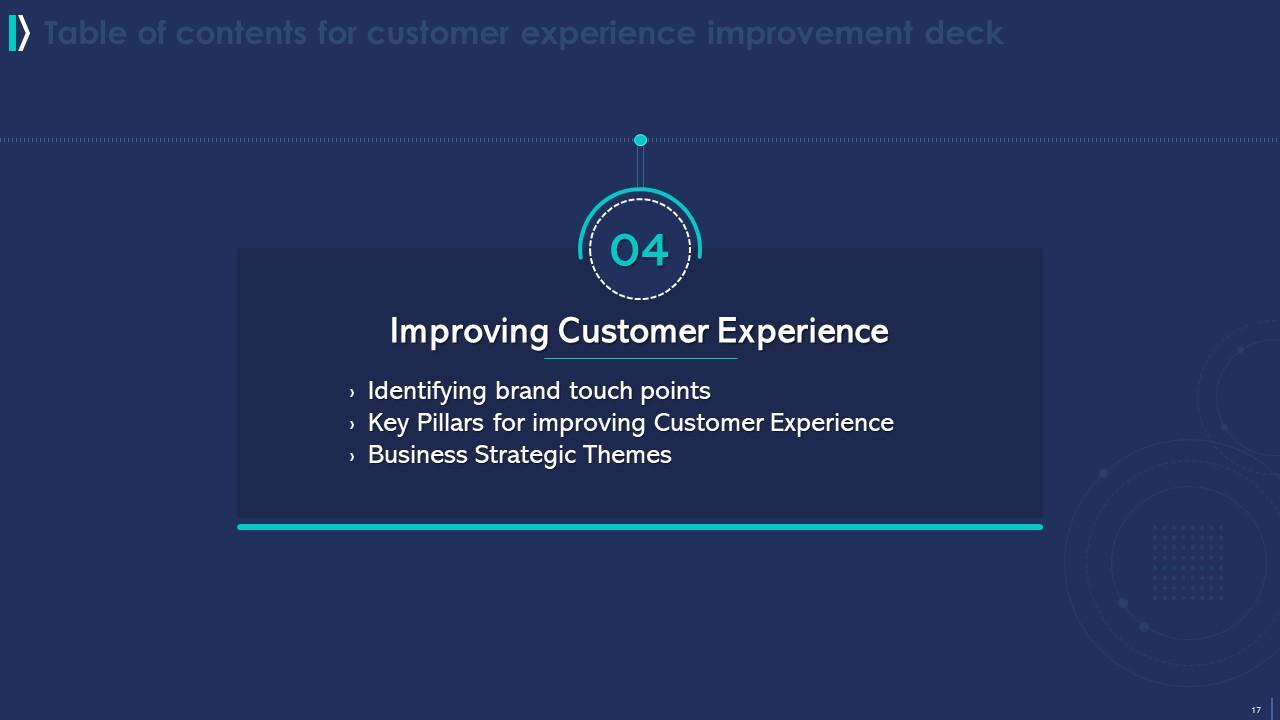
Slide 17: This slide exhibit table of content- Improving Customer Experience.
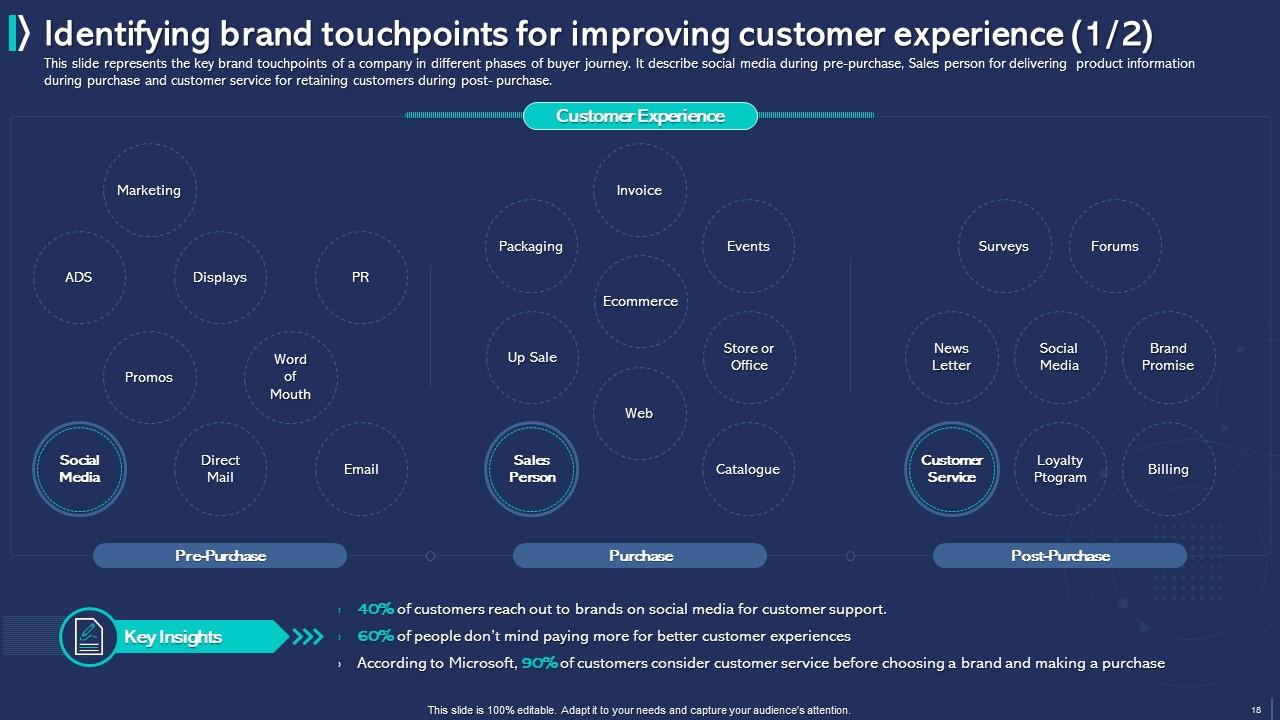
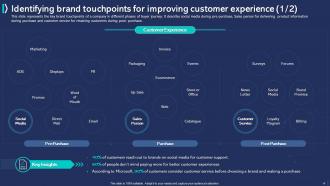
Slide 18: This slide represents the key brand touchpoints of a company in different phases of buyer journey.
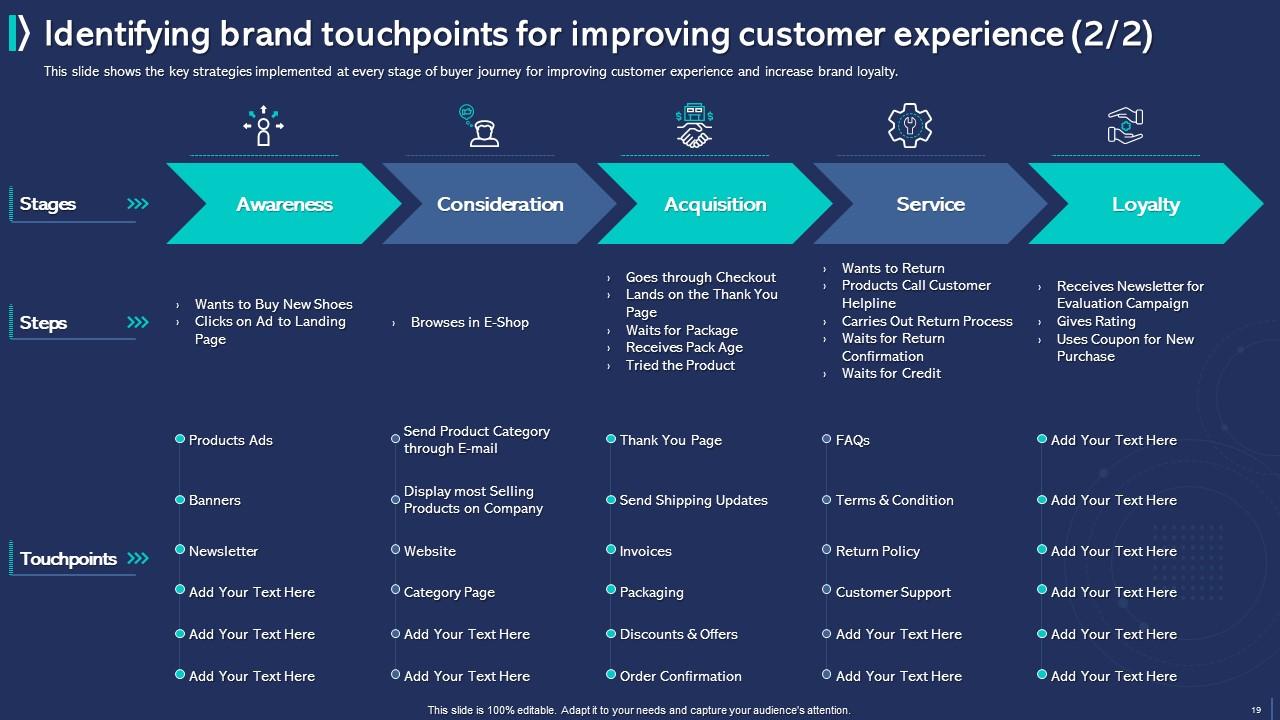
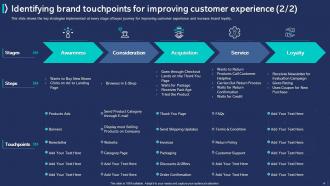
Slide 19: This slide shows the key strategies implemented at every stage of buyer journey for improving customer experience and increase brand loyalty.
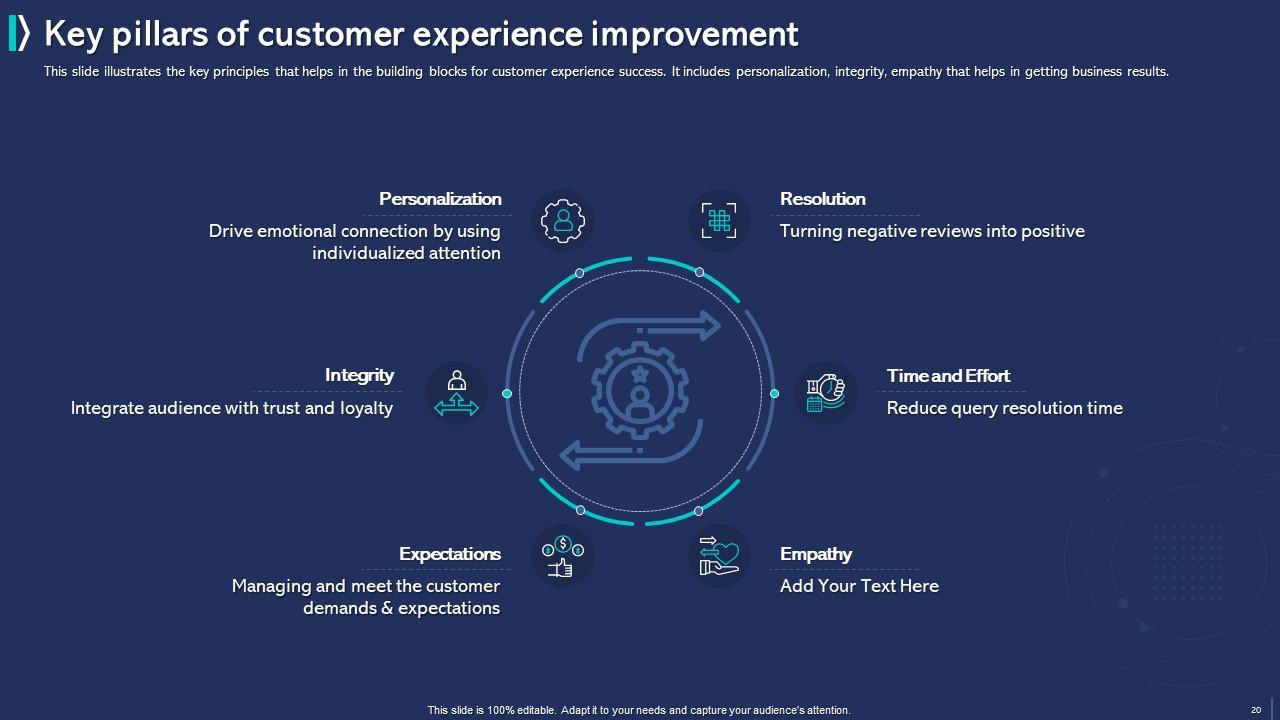
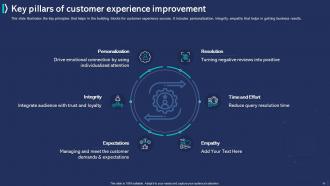
Slide 20: This slide illustrates the key principles that helps in the building blocks for customer experience success.
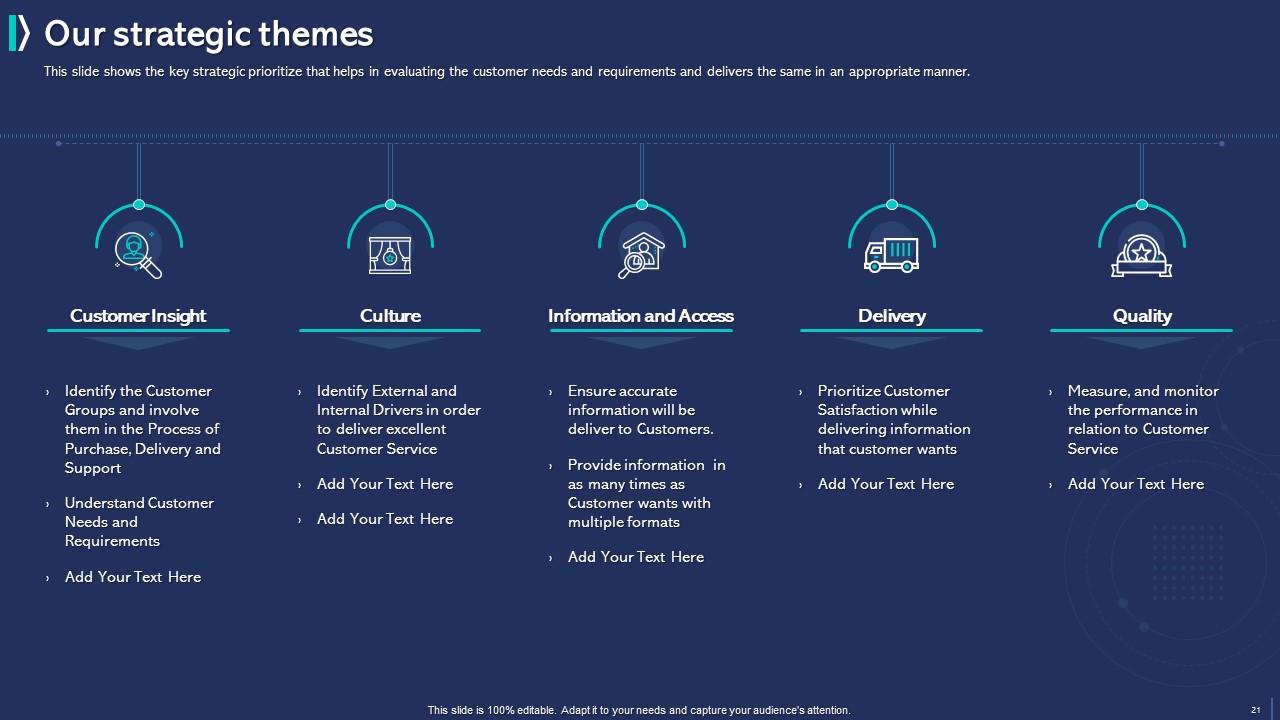
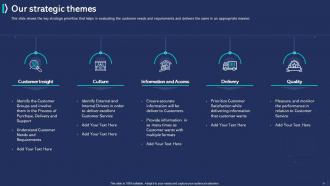
Slide 21: This slide shows the key strategic prioritize that helps in evaluating the customer needs and requirements and delivers the same in an appropriate manner.
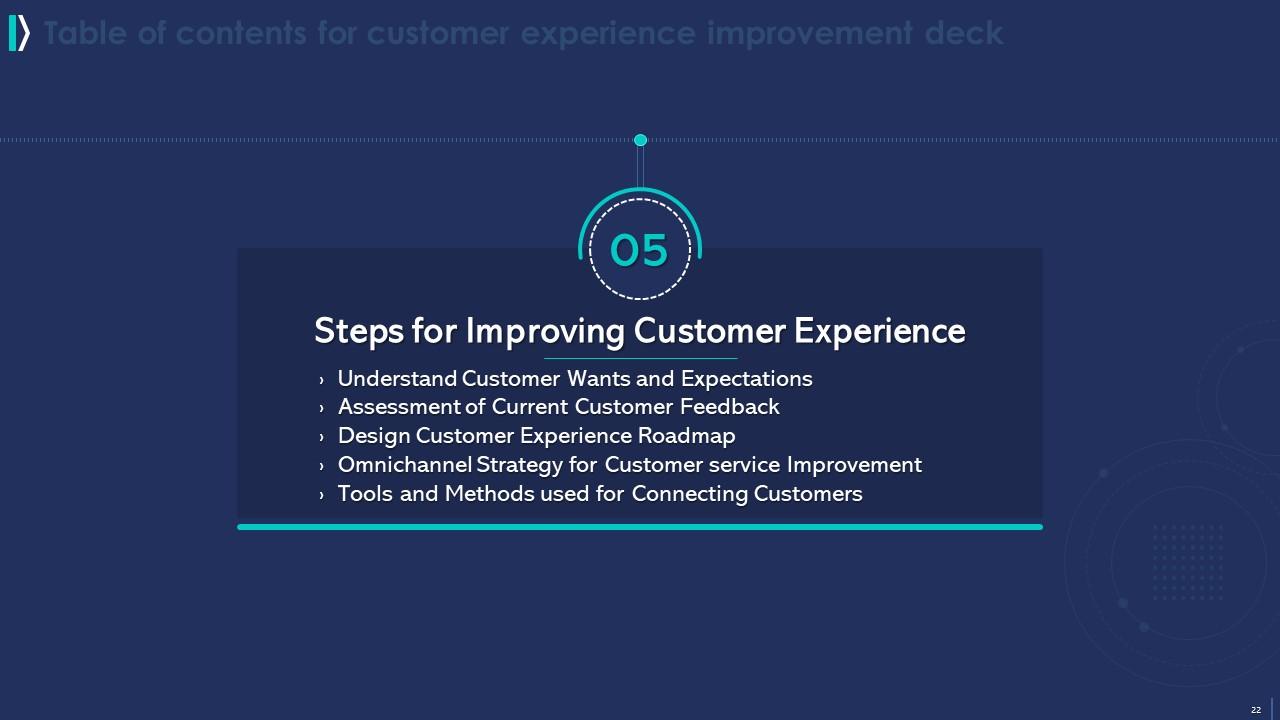
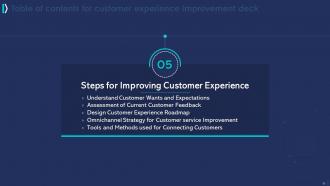
Slide 22: This slide exhibit table of content- Steps for Improving Customer Experience.
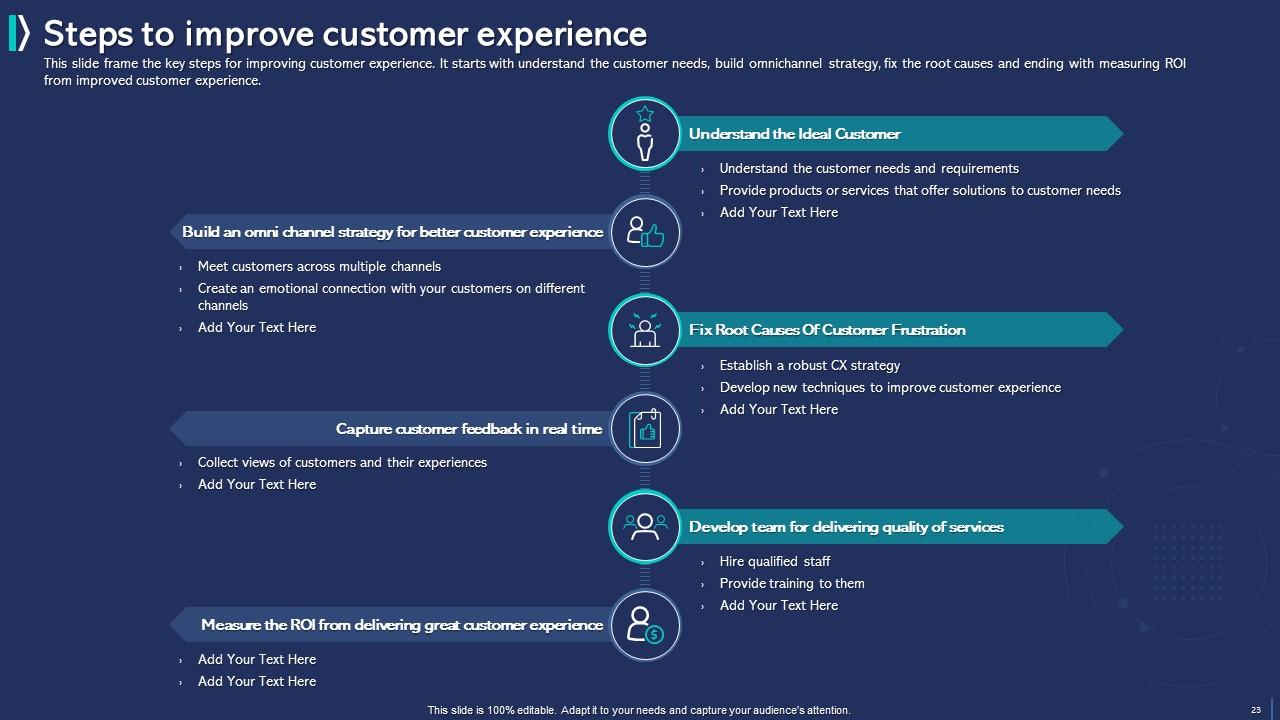
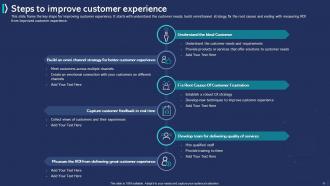
Slide 23: This slide frame the key steps for improving customer experience.
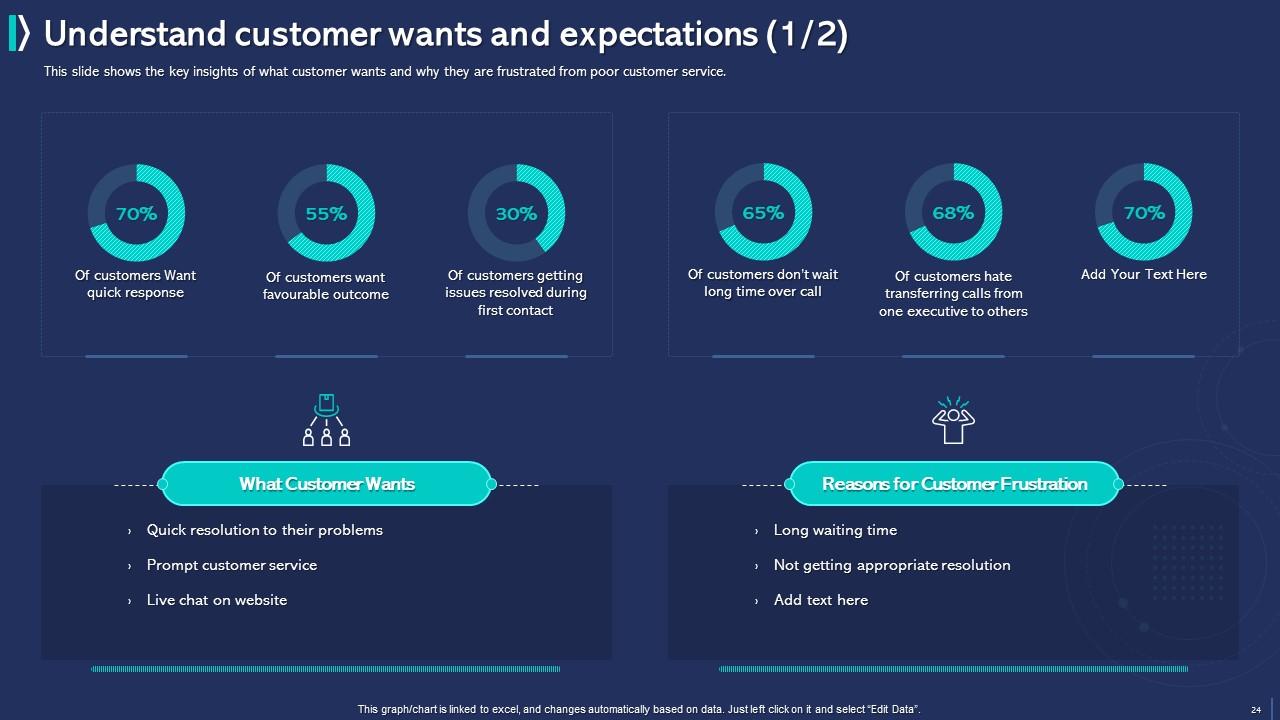
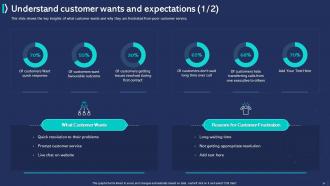
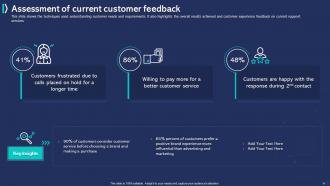
Slide 24: This slide shows the key insights of what customer wants and why they are frustrated from poor customer service.
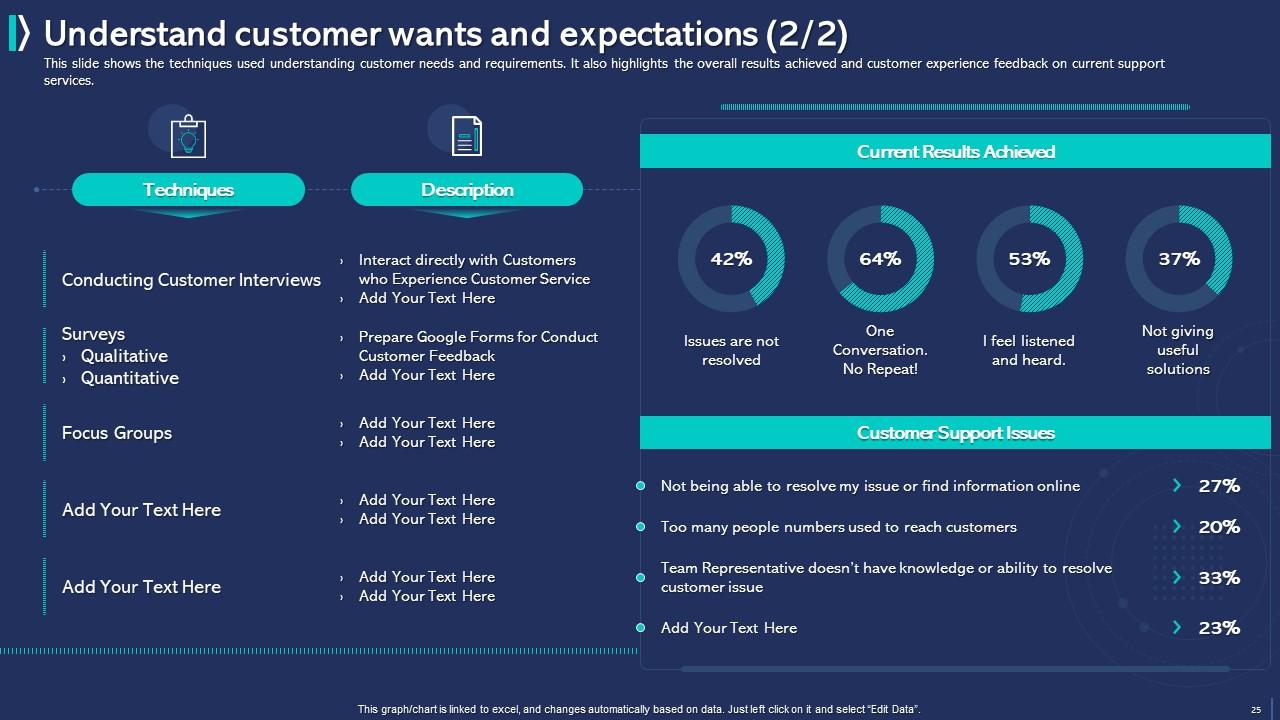
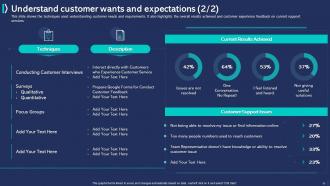
Slide 25: This slide shows the techniques used understanding customer needs and requirements.
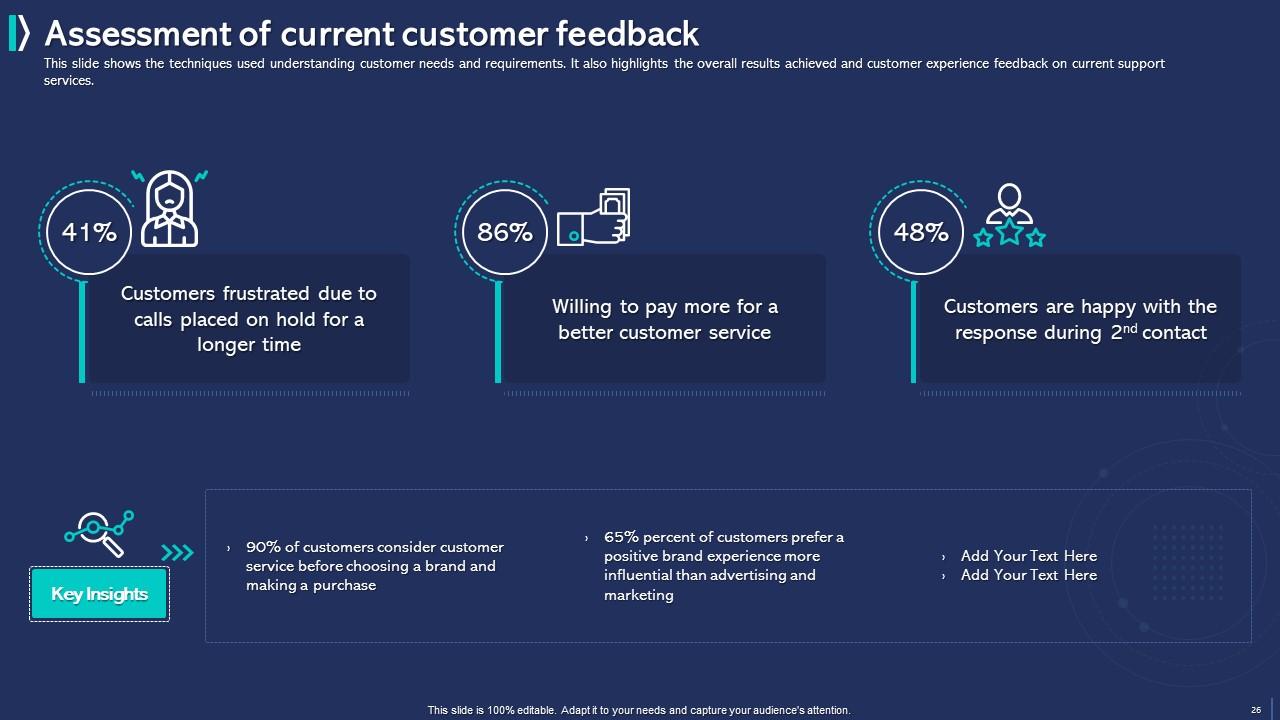
Slide 26: This slide shows the techniques used understanding customer needs and requirements.
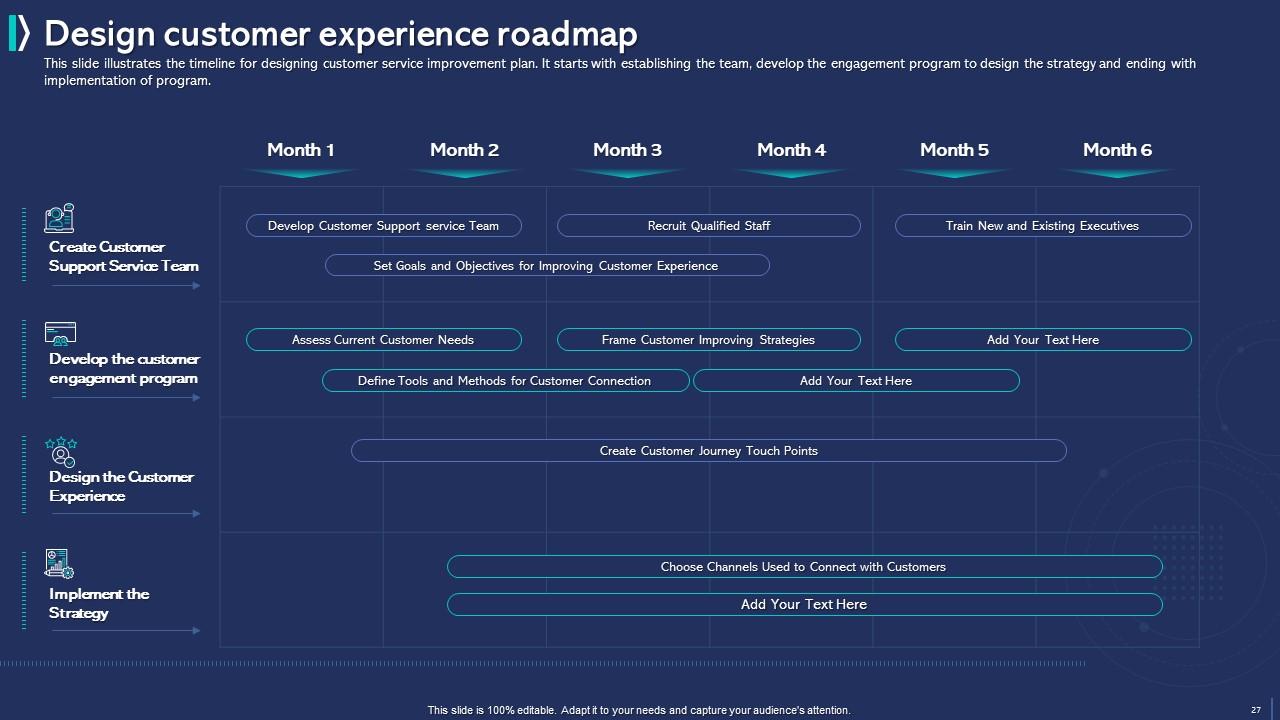
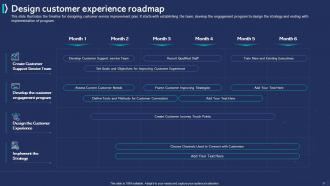
Slide 27: This slide illustrates the timeline for designing customer service improvement plan.
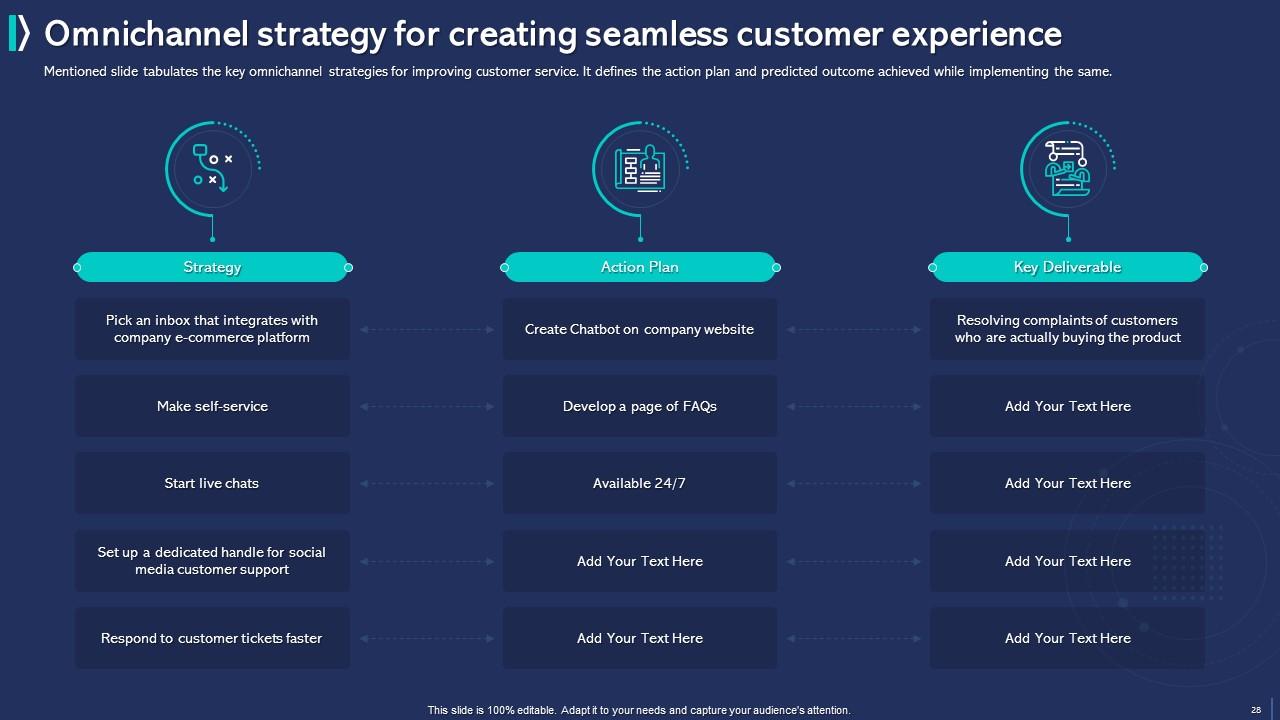
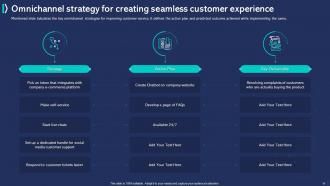
Slide 28: Mentioned slide tabulates the key omnichannel strategies for improving customer service.
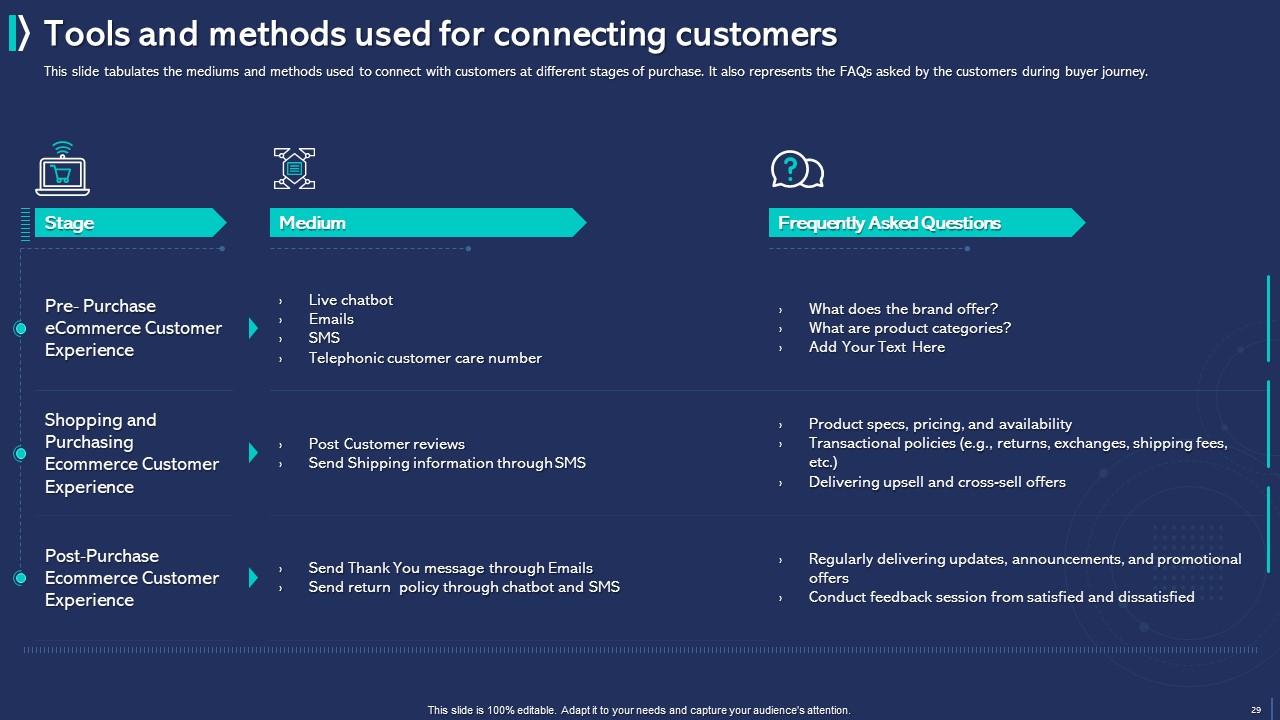
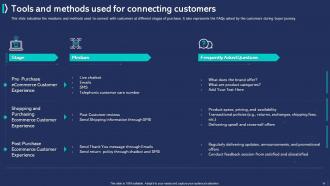
Slide 29: This slide tabulates the mediums and methods used to connect with customers at different stages of purchase.
Slide 30: This slide exhibit table of content- Customer Satisfaction.
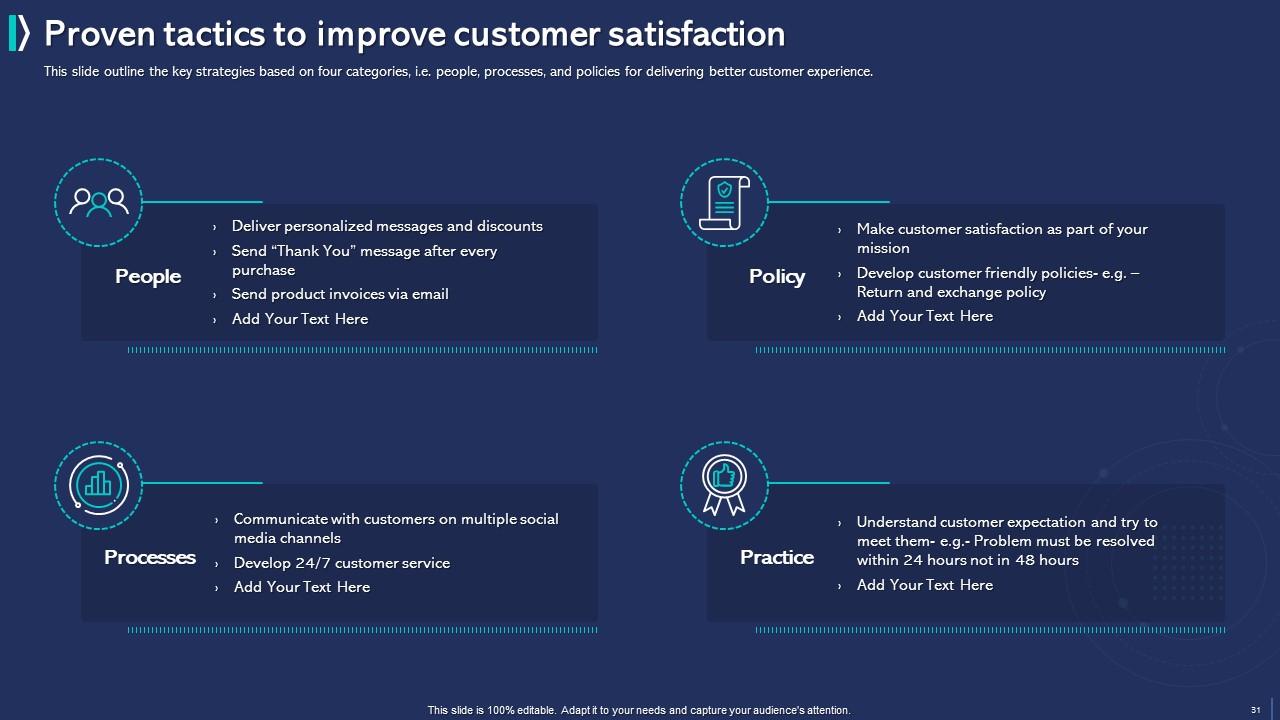
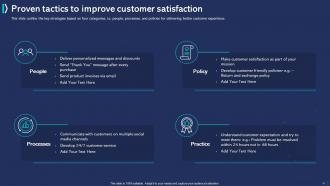
Slide 31: This slide outline the key strategies based on four categories, i.e. people, processes, and policies for delivering better customer experience.
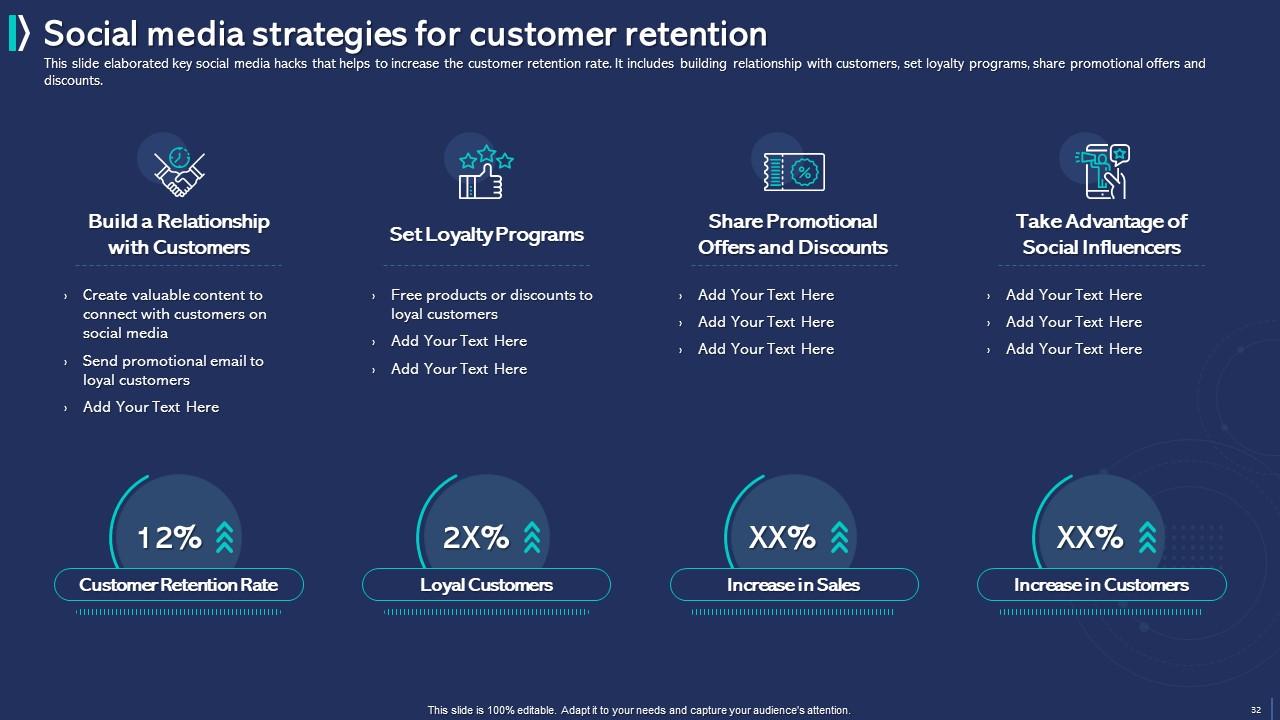
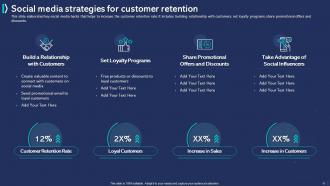
Slide 32: This slide elaborated key social media hacks that helps to increase the customer retention rate.
Slide 33: This slide exhibit table of content- Key Channels used to Connect Customers.
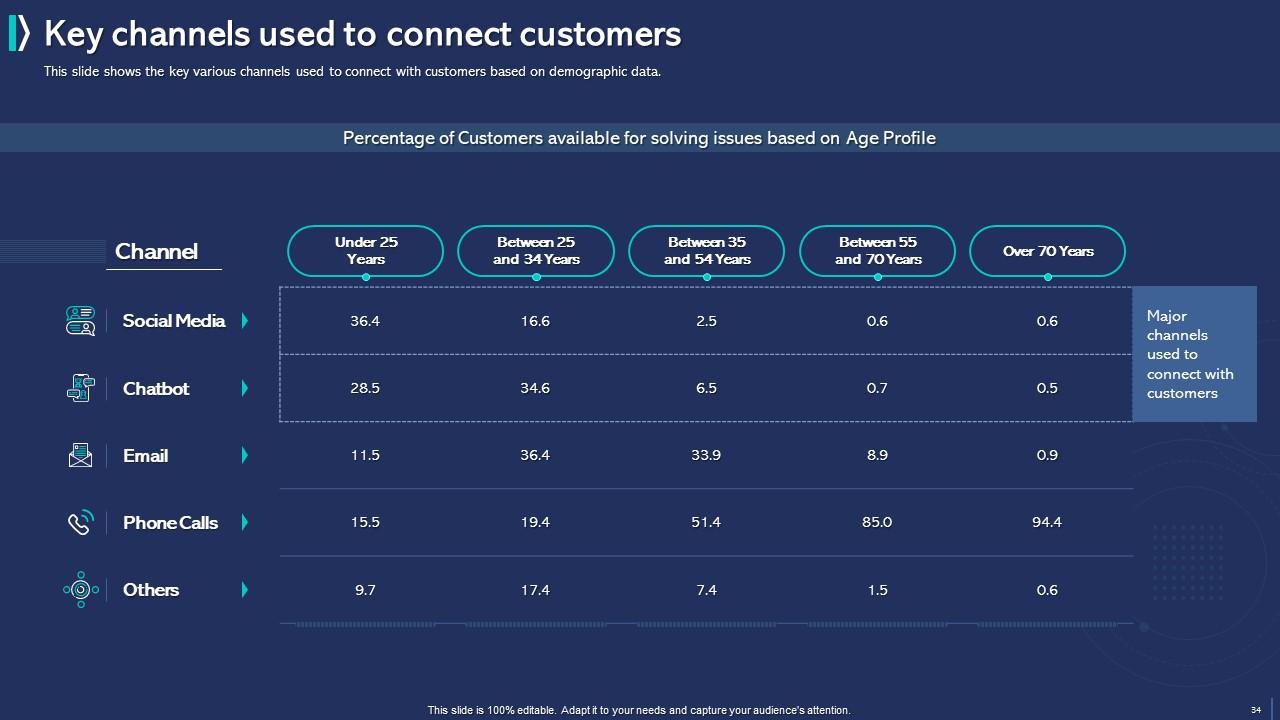
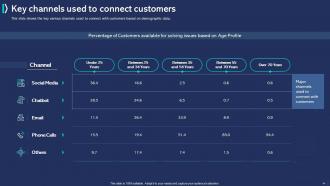
Slide 34: This slide shows the key various channels used to connect with customers based on demographic data.
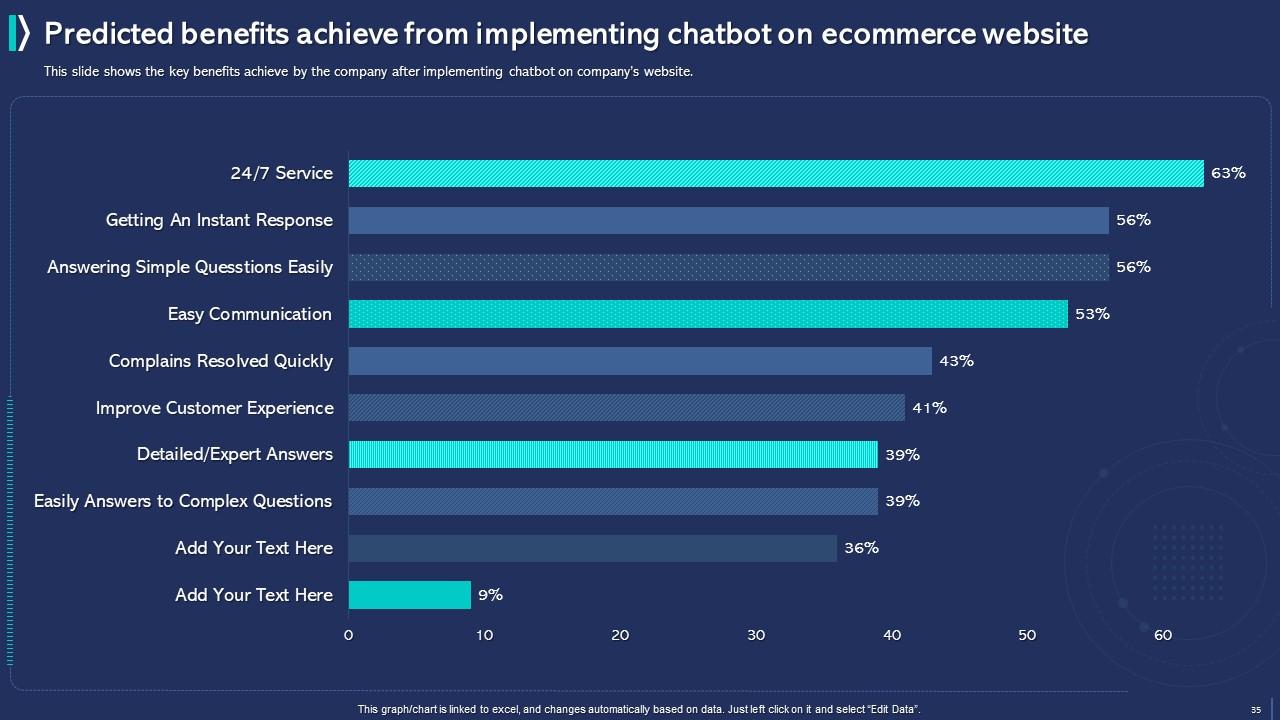
Slide 35: This slide shows the key benefits achieve by the company after implementing chatbot on company’s website.
Slide 36: This slide exhibit table of content- Handling Customer Complaints.
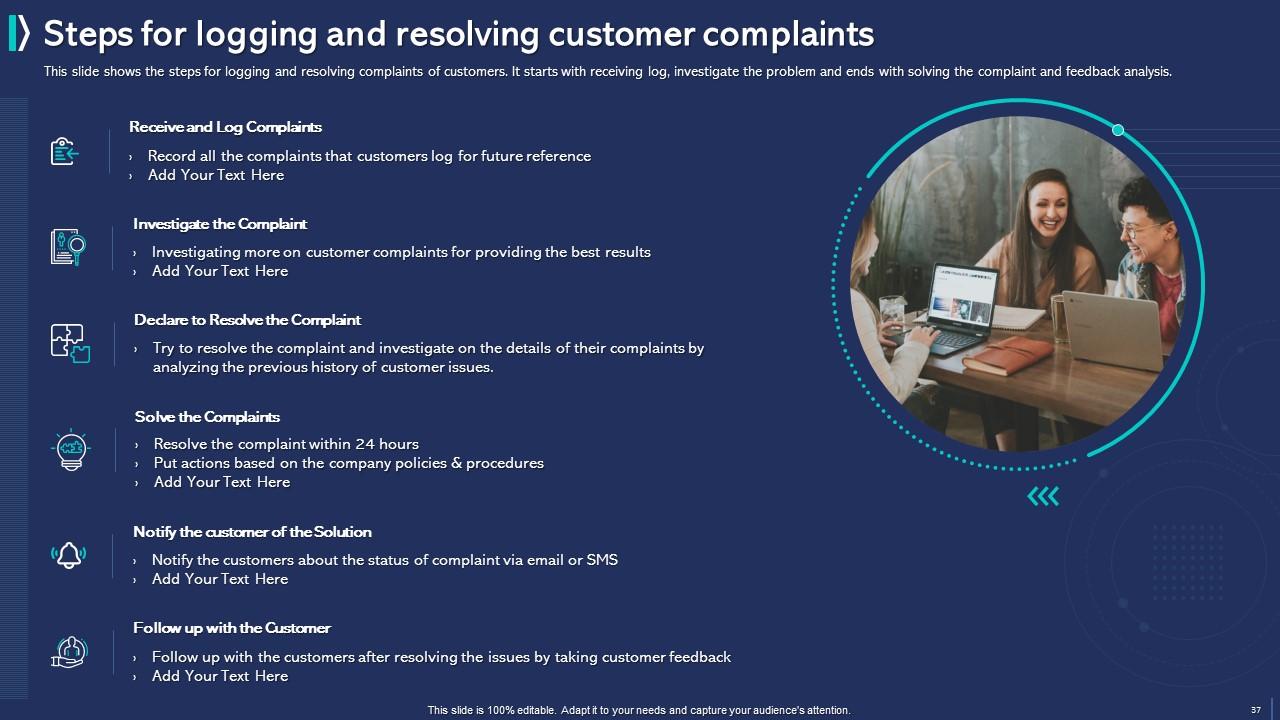
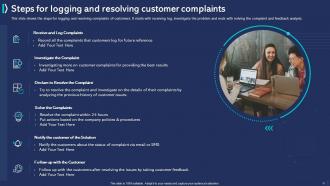
Slide 37: This slide shows the steps for logging and resolving complaints of customers.
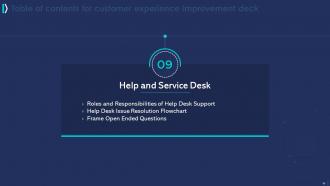
Slide 38: This slide exhibit table of content- Help and Service Desk.
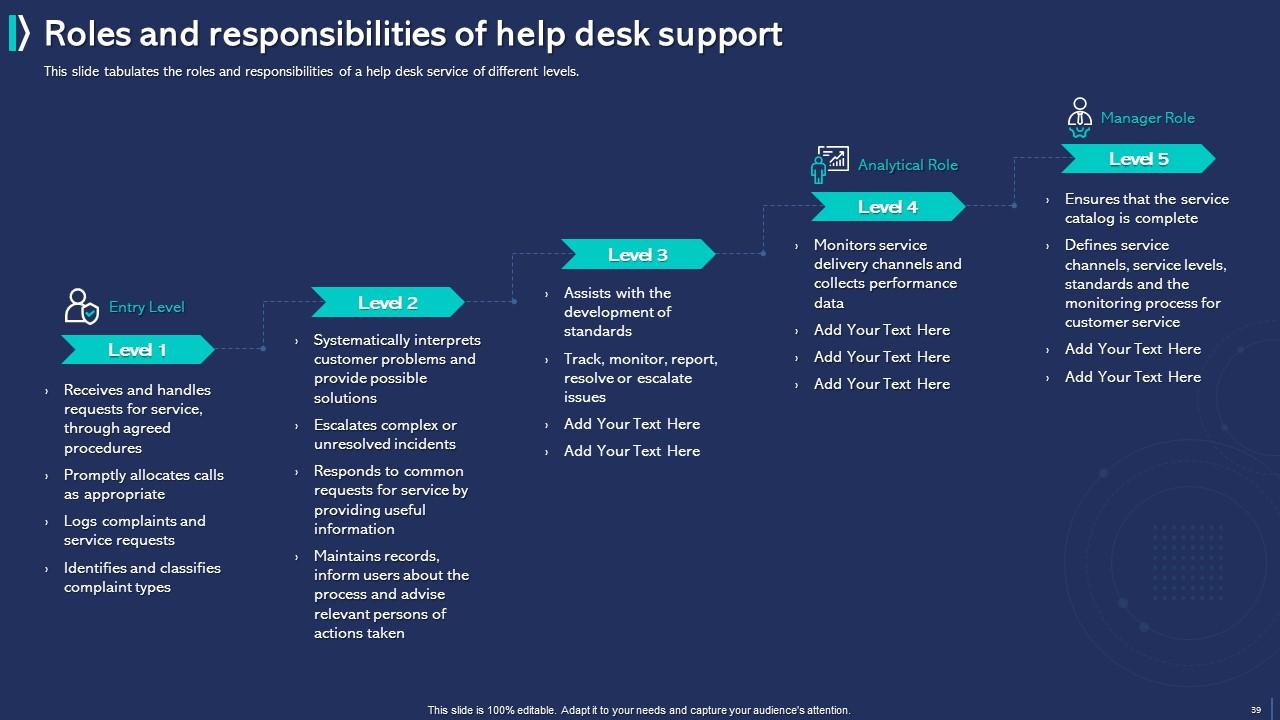
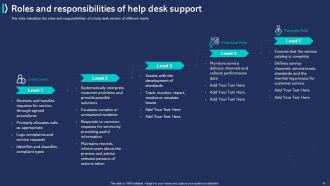
Slide 39: This slide tabulates the roles and responsibilities of a help desk service of different levels.
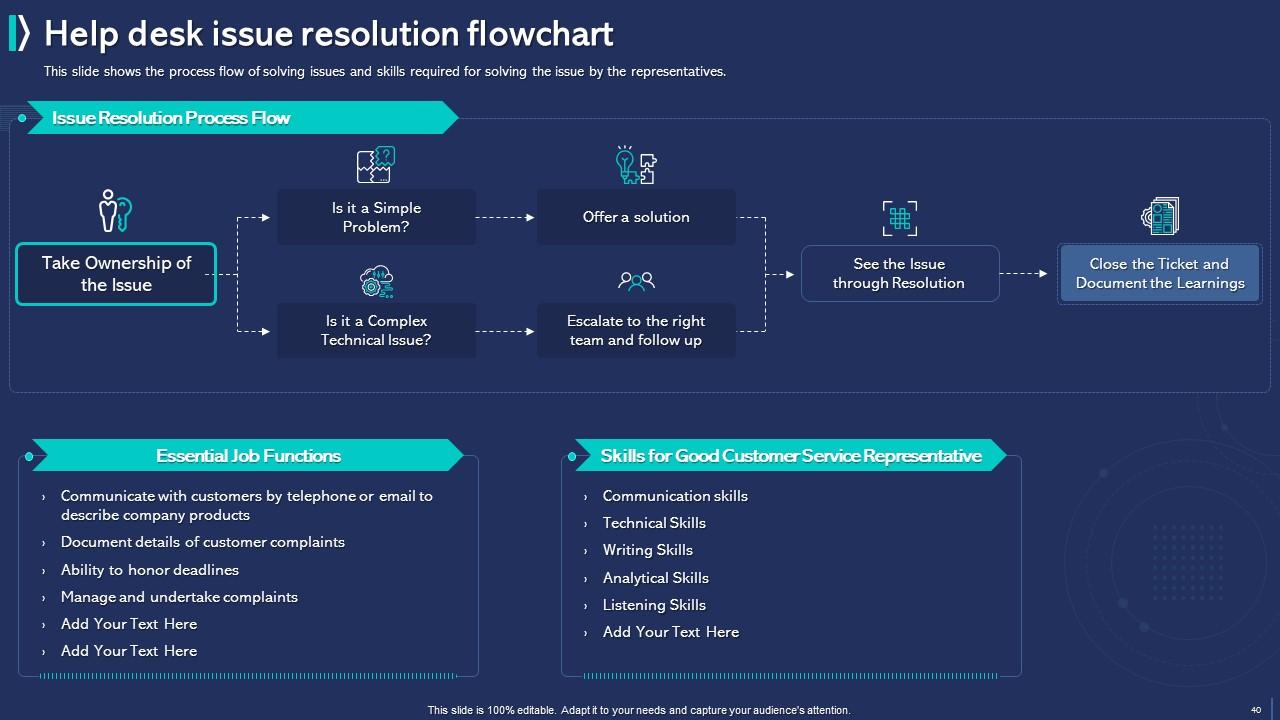
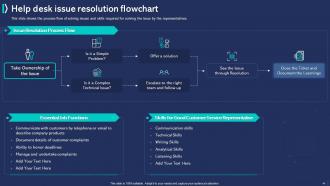
Slide 40: This slide shows the process flow of solving issues and skills required for solving the issue by the representatives.
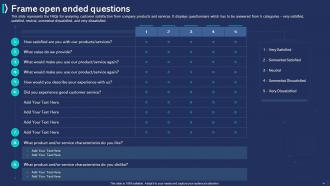
Slide 41: This slide represents the FAQs for analysing customer satisfaction from company products and services.
Slide 42: This slide exhibit table of content- Recruitment & Selection.
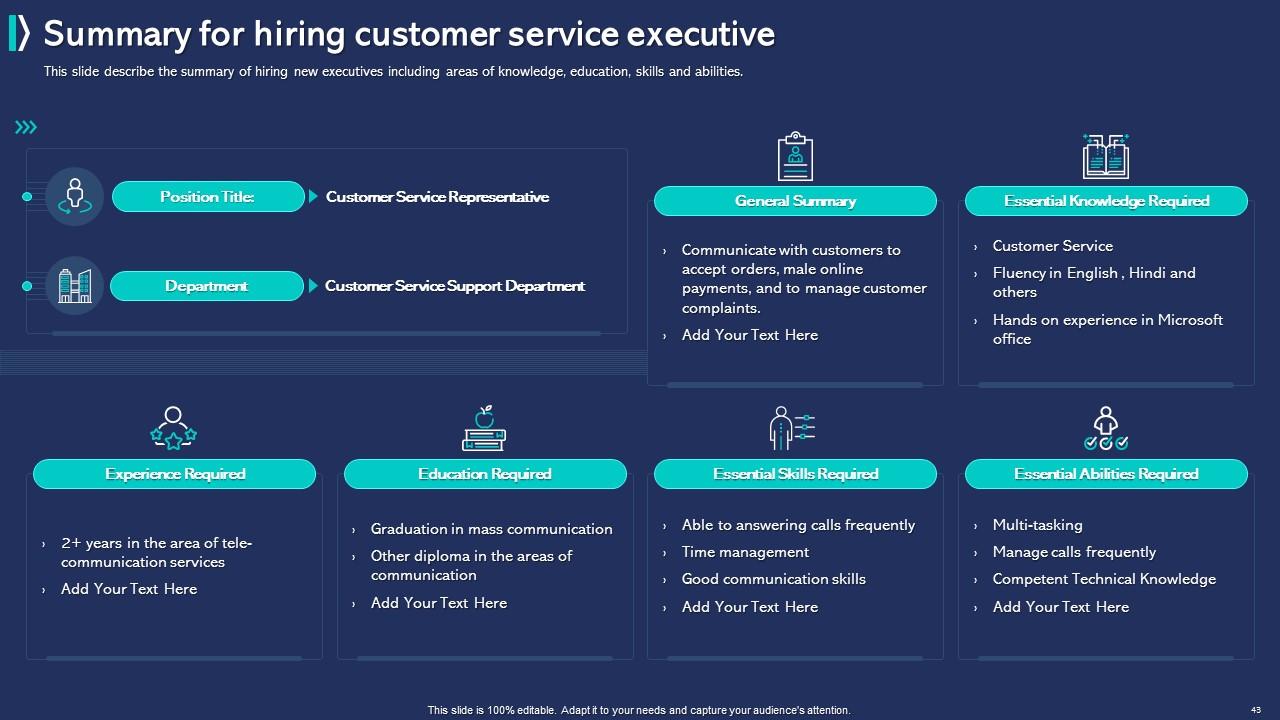
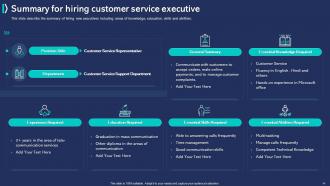
Slide 43: This slide describe the summary of hiring new executives including areas of knowledge, education, skills and abilities.
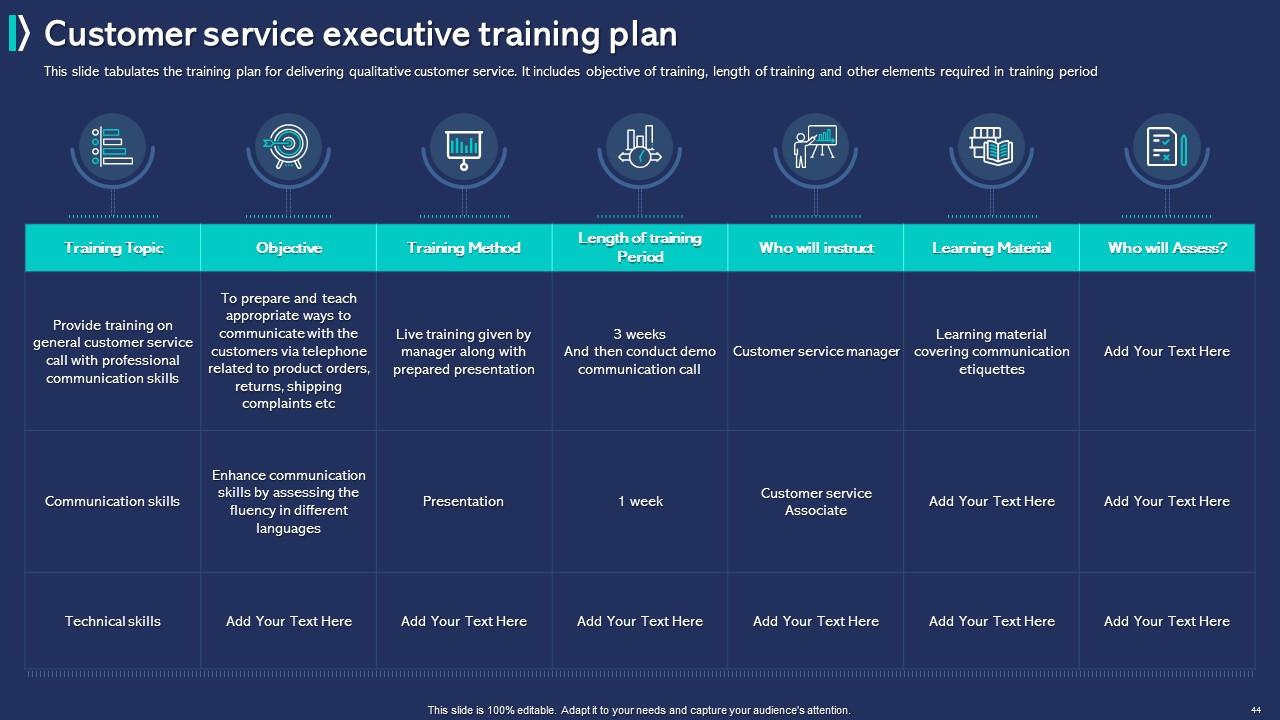
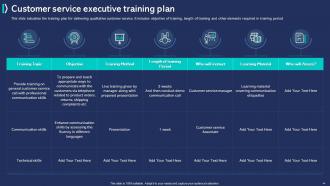
Slide 44: This slide tabulates the training plan for delivering qualitative customer service.
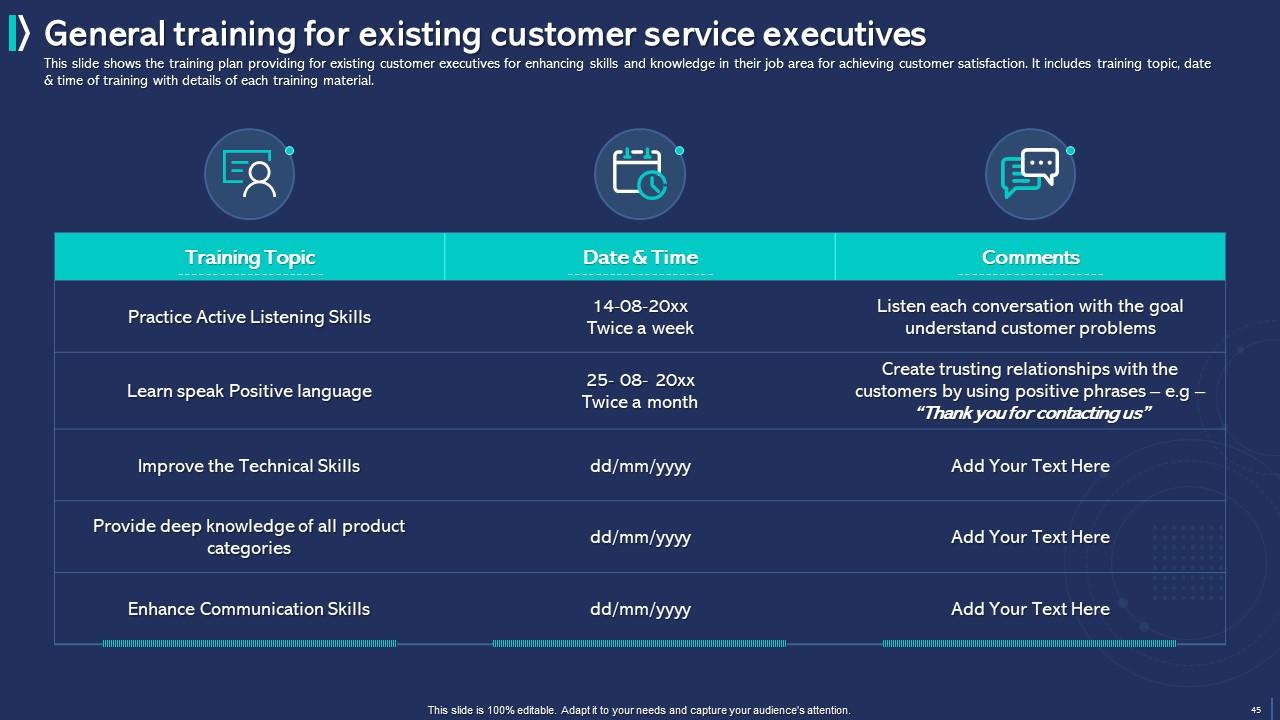
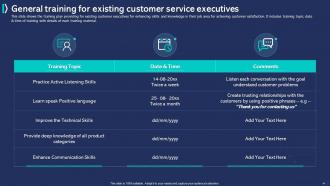
Slide 45: This slide shows the training plan providing for existing customer executives for enhancing skills and knowledge in their job area.
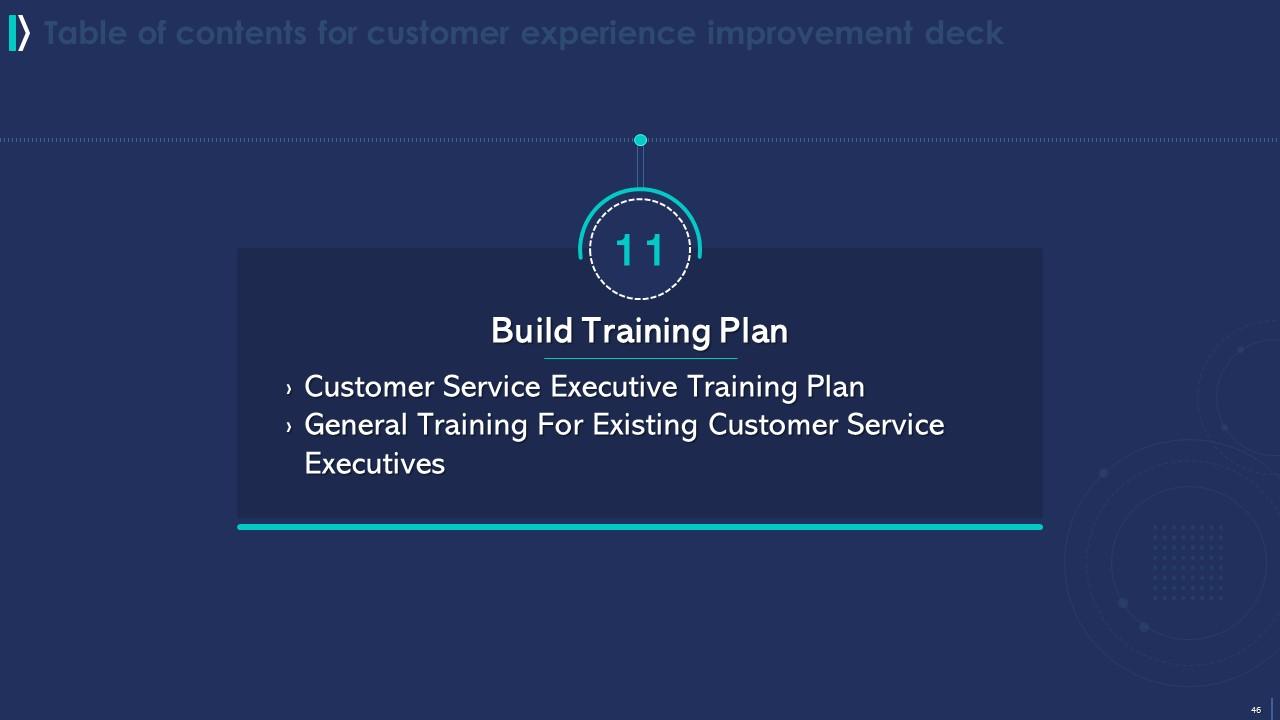
Slide 46: This slide exhibit table of content- Build Training Plan.
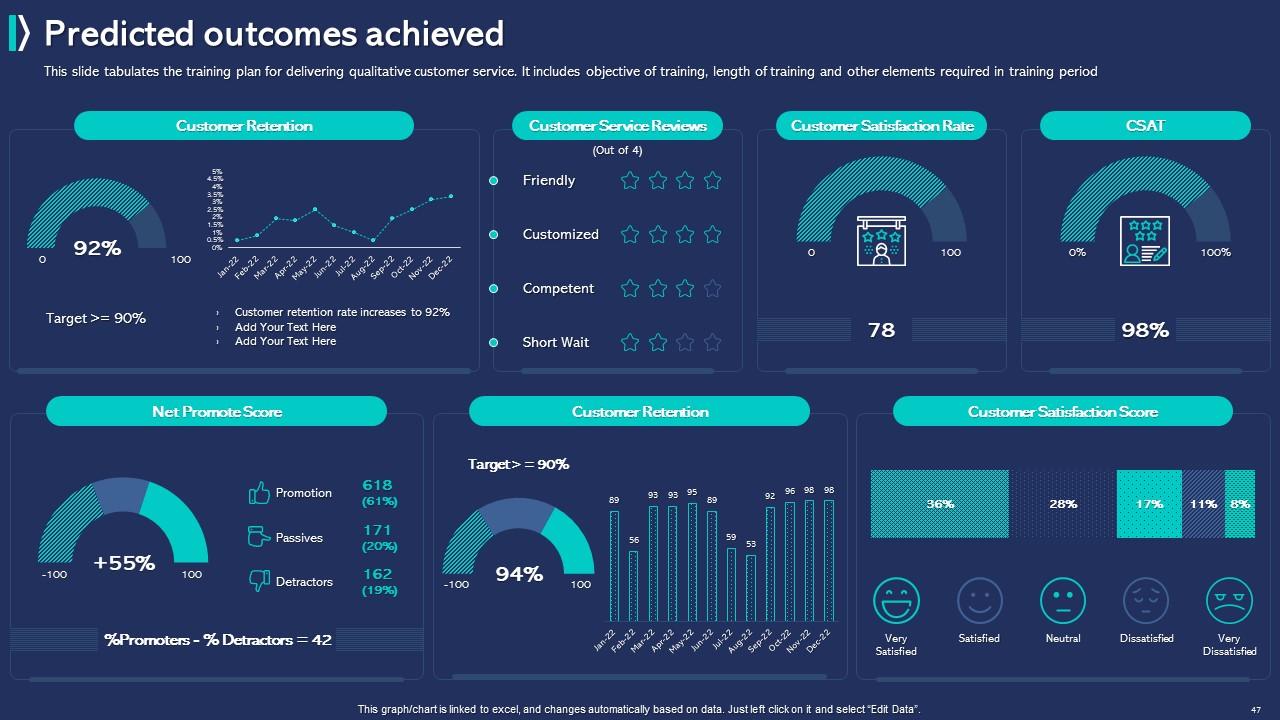
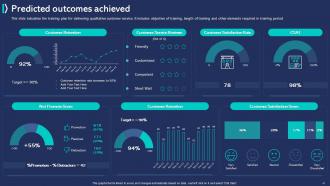
Slide 47: This slide tabulates the training plan for delivering qualitative customer service.
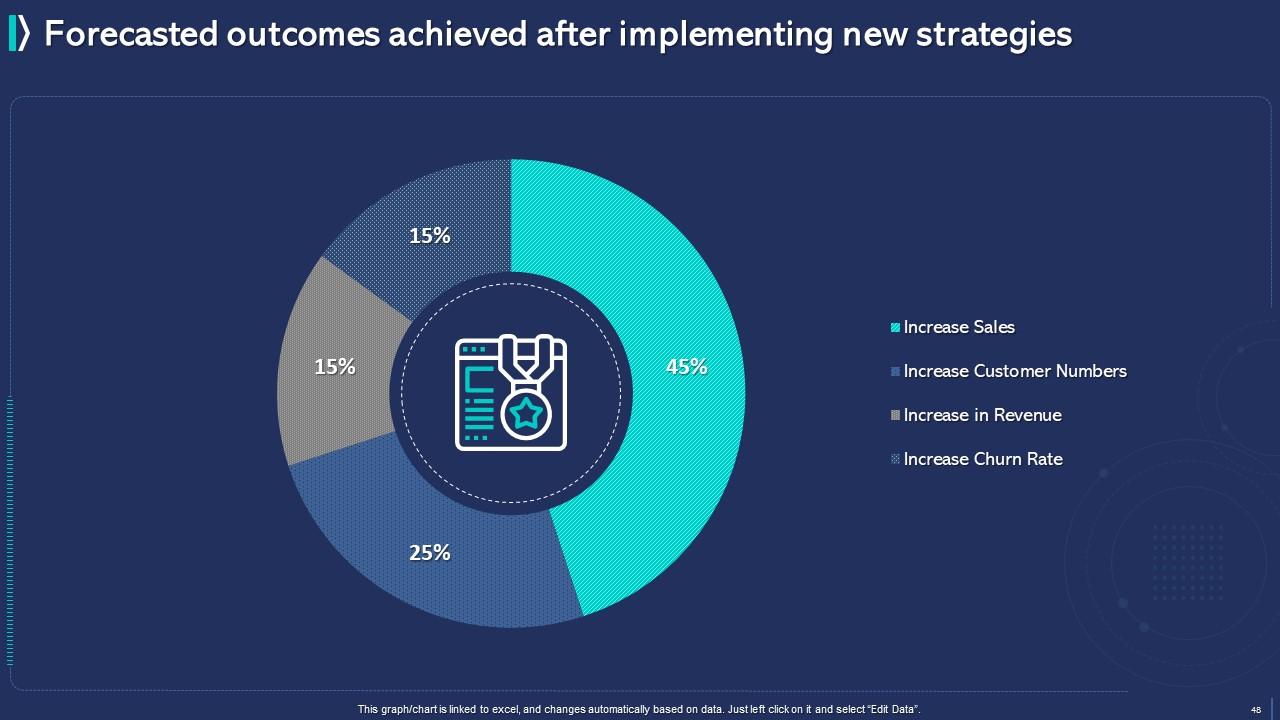
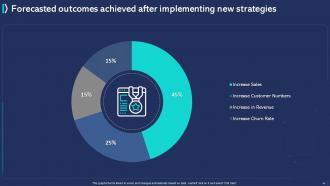
Slide 48: This slide showcase Forecasted outcomes achieved after implementing new strategies.
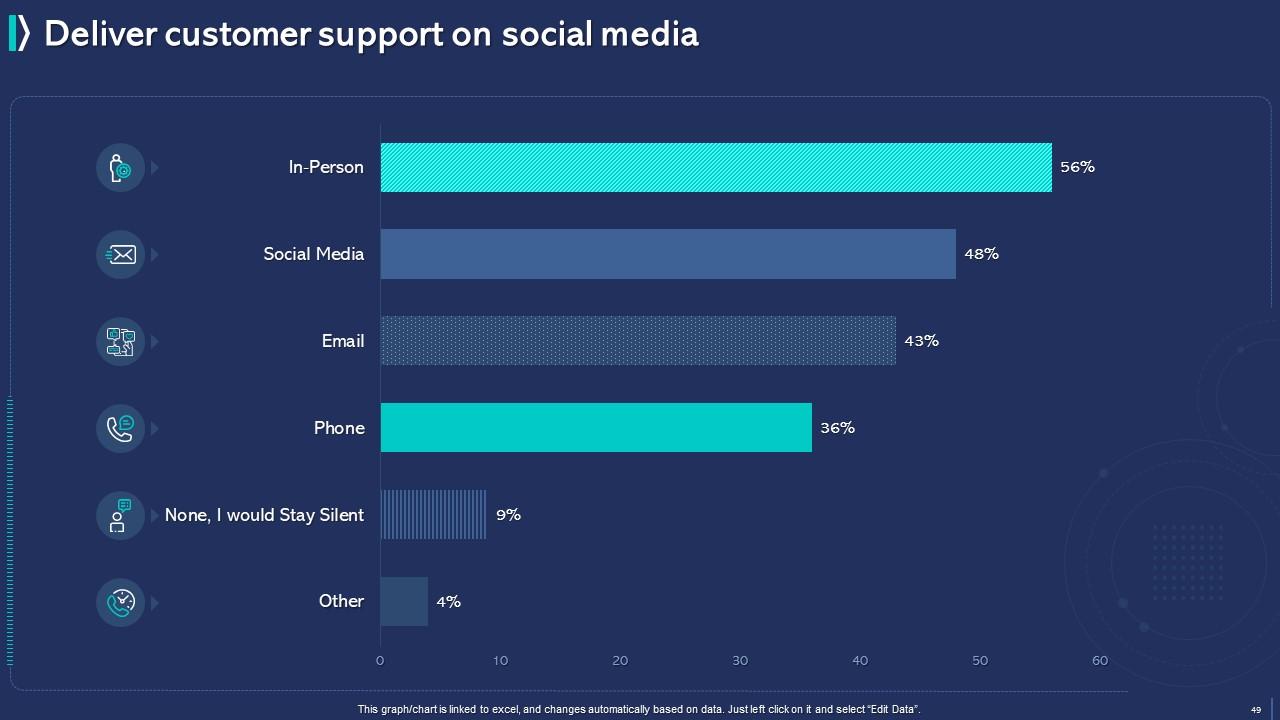
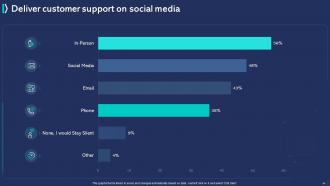
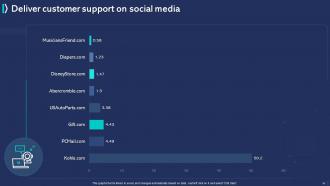
Slide 49: This slide showcase Deliver customer support on social media.
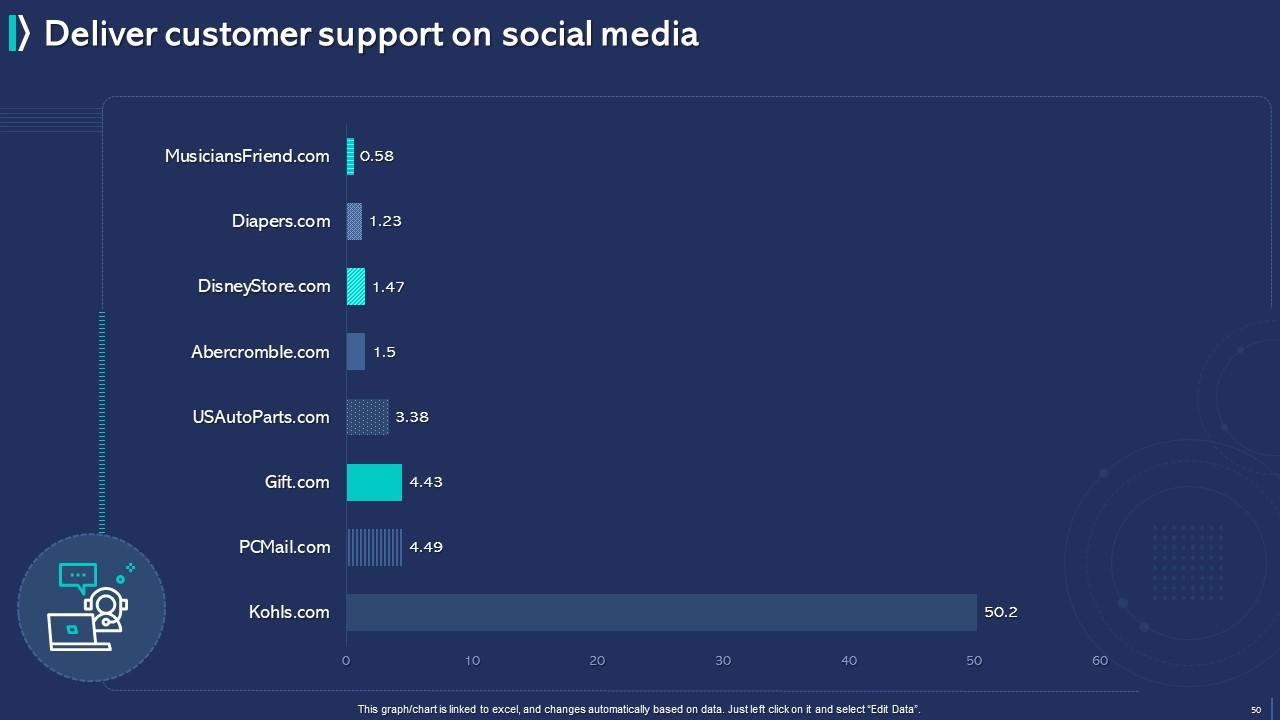
Slide 50: This slide showcase Deliver customer support on social media.
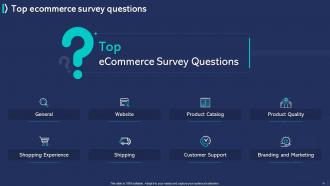
Slide 51: This slide showcase Top ecommerce survey questions.
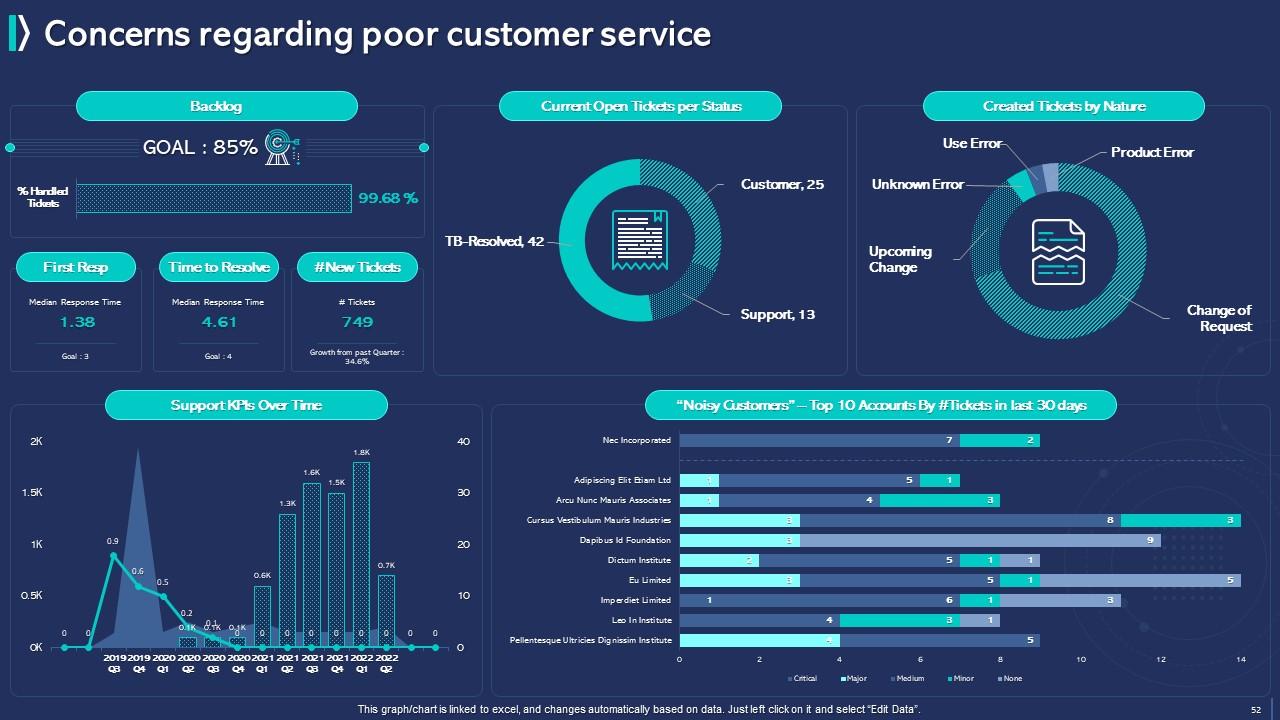
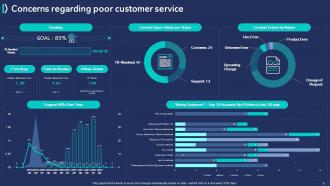
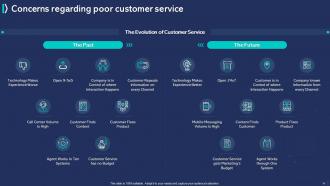
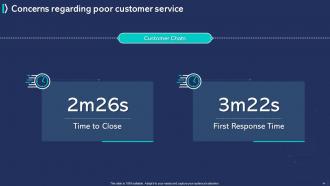
Slide 52: This slide showcase Concerns regarding poor customer service.
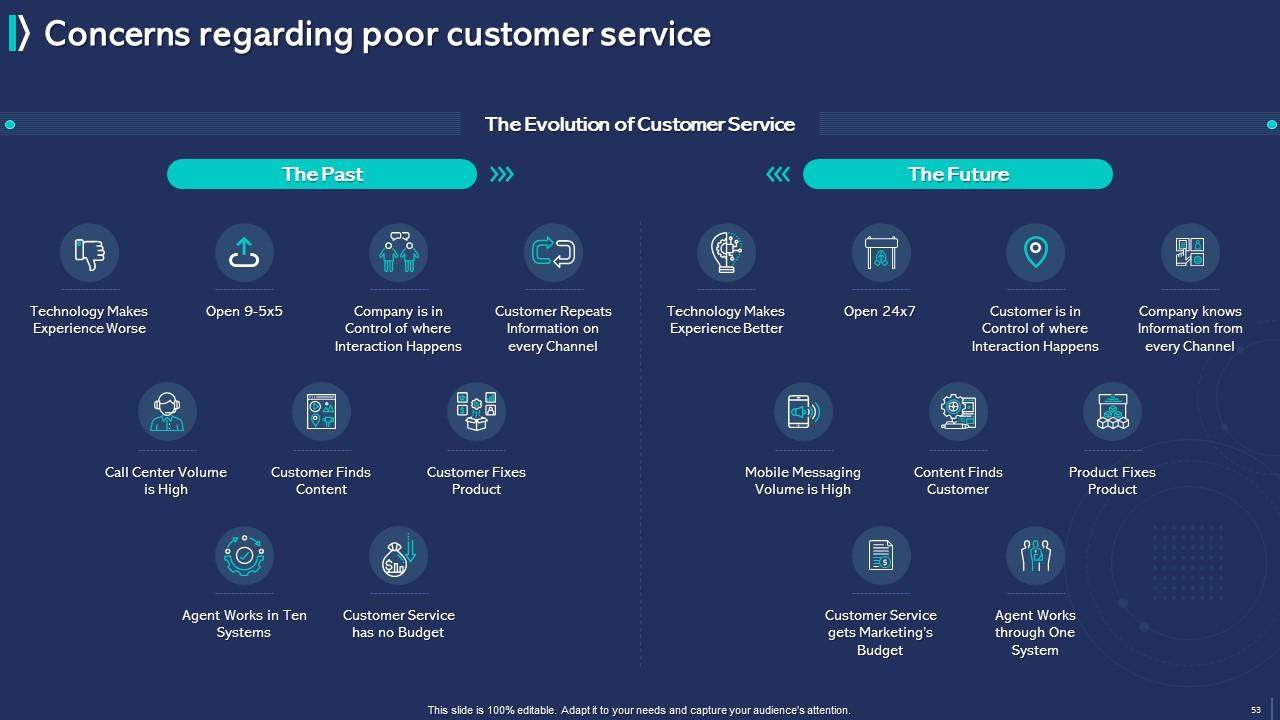
Slide 53: This slide showcase Concerns regarding poor customer service.
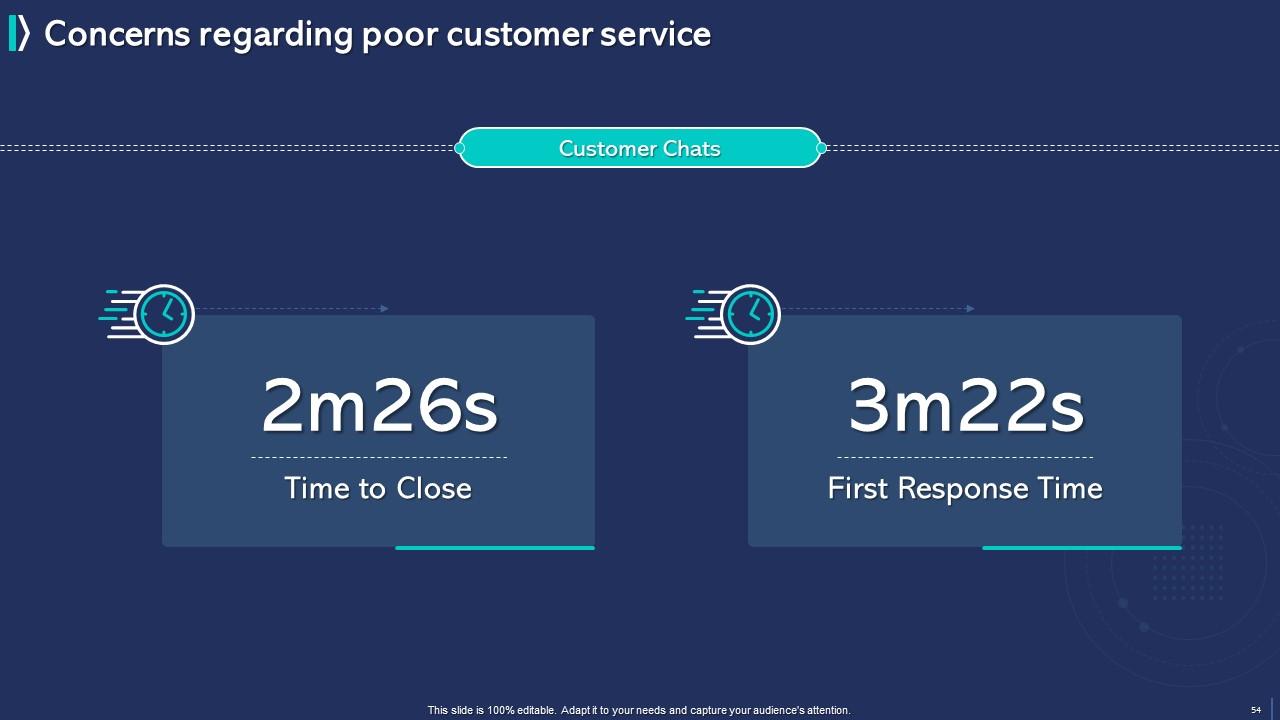
Slide 54: This slide showcase Concerns regarding poor customer service.
Slide 55: This is the icons slide.
Slide 56: This slide presents title for additional slides.
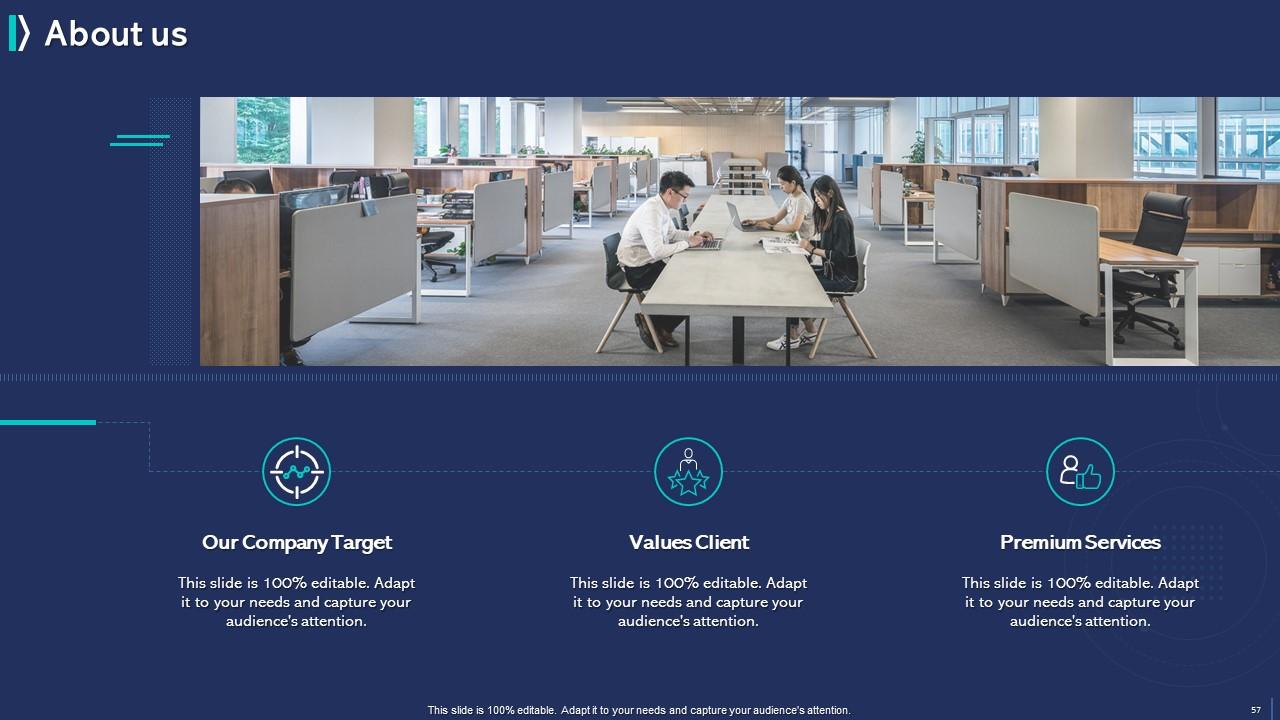
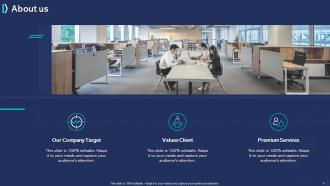
Slide 57: This slide display About us.
Slide 58: This slide presents Mind map.
Slide 59: This slide display Our goal.
Slide 60: This slide exhibits ideas generated.
Slide 61: This slide display Bulb and idea.
Slide 62: This slide depicts posts for past experiences of clients.
Slide 63: This slide showcase Stacked.
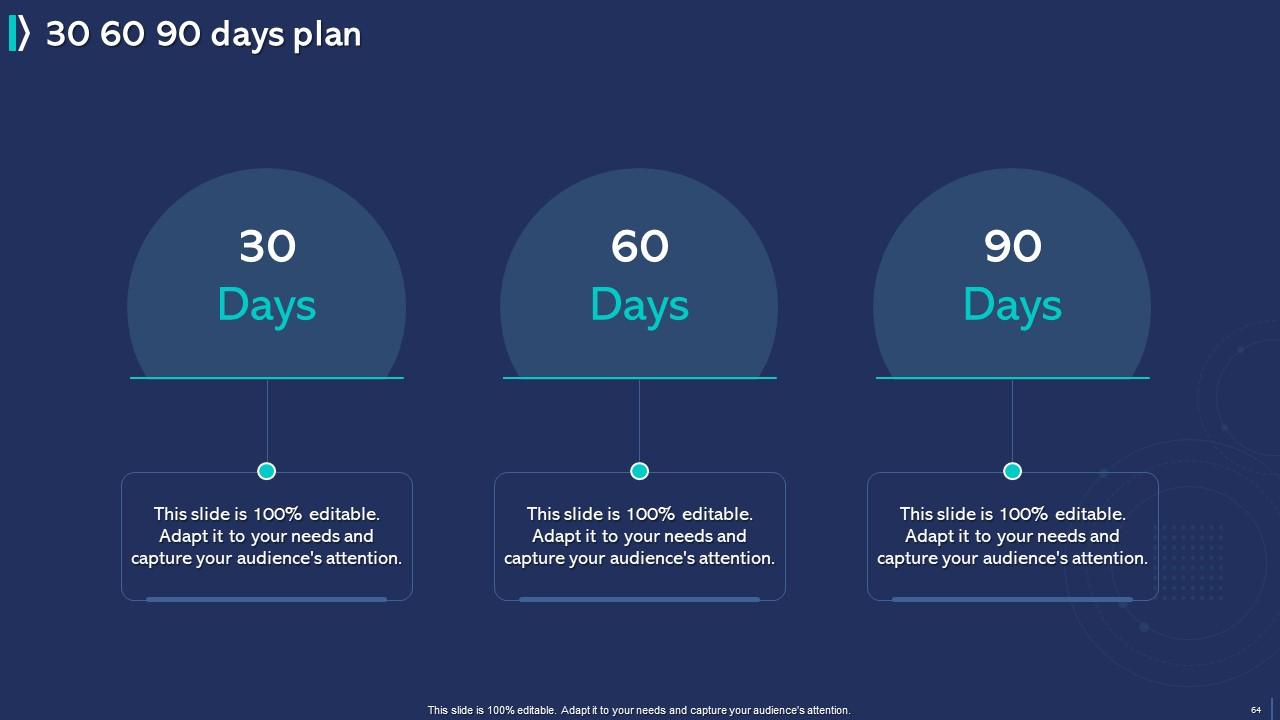
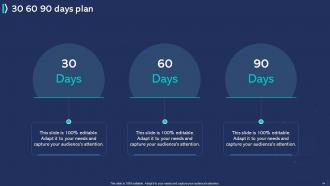
Slide 64: This slide depicts 30-60-90 days plan for projects.
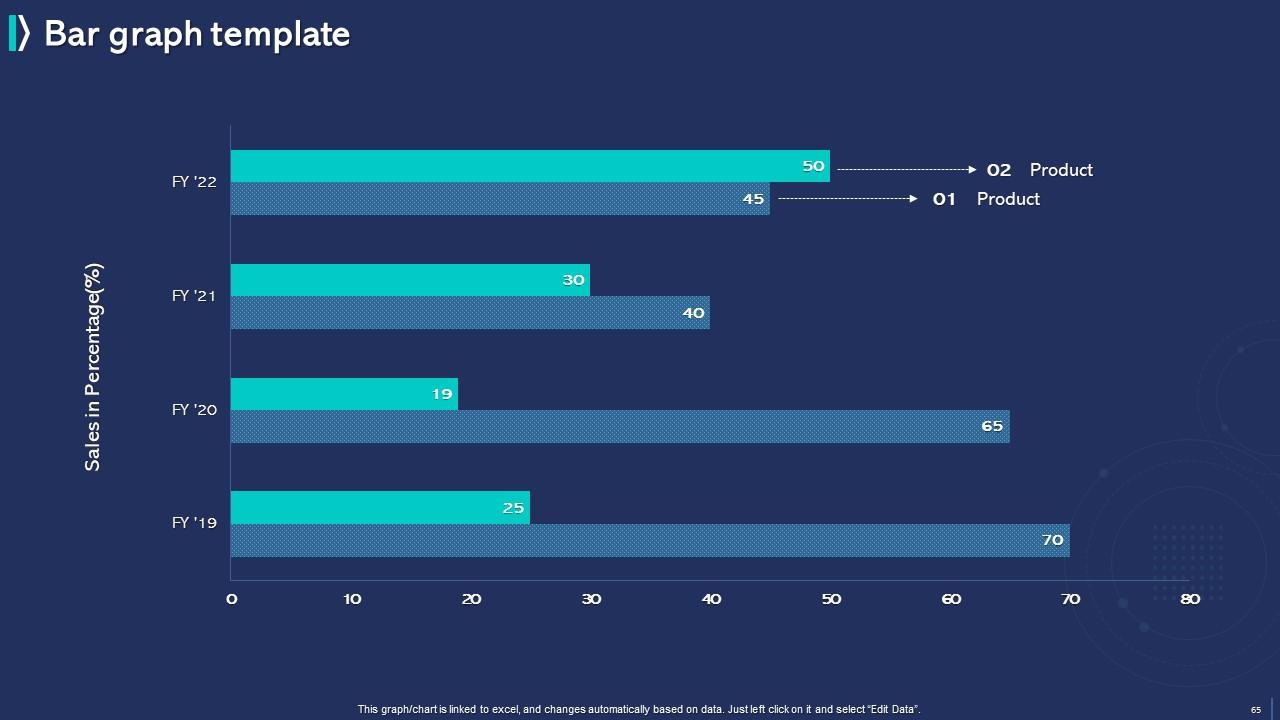
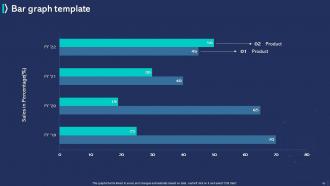
Slide 65: This slide displays yearly bar graph for different products.
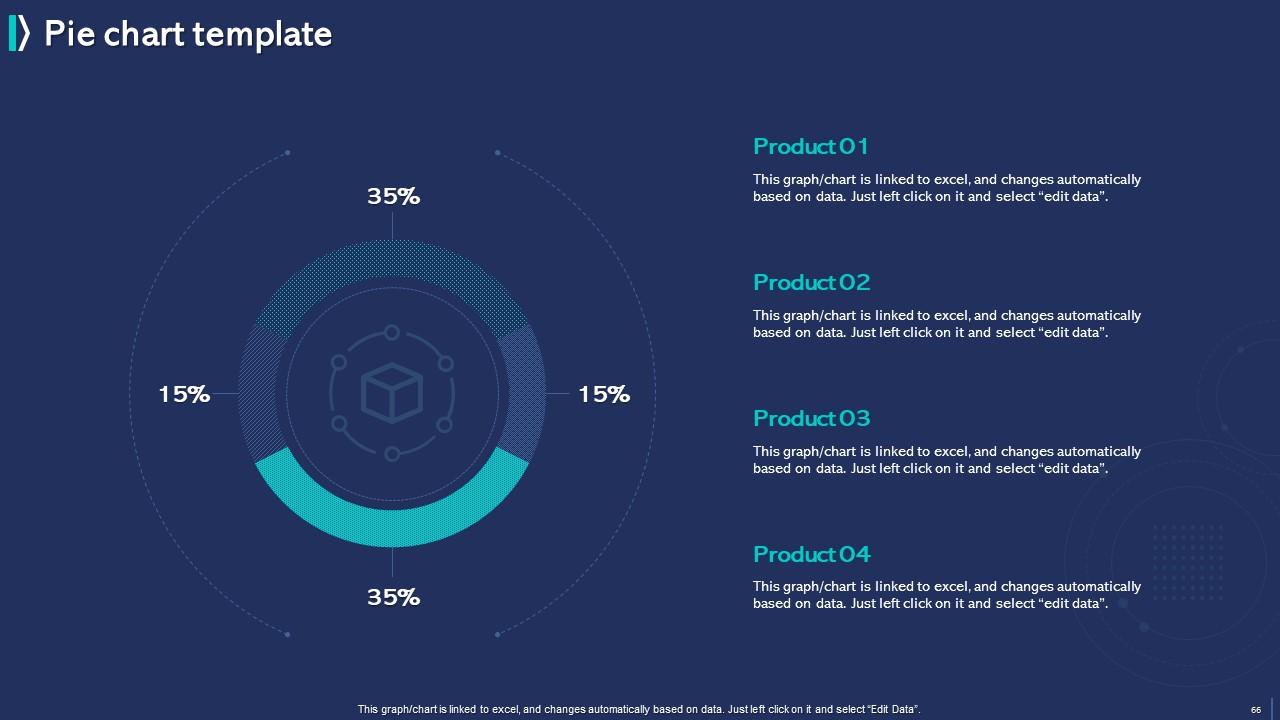
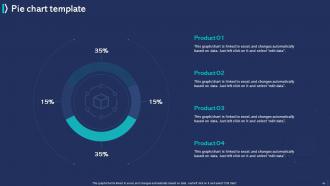
Slide 66: This slide displays Pie chart template.
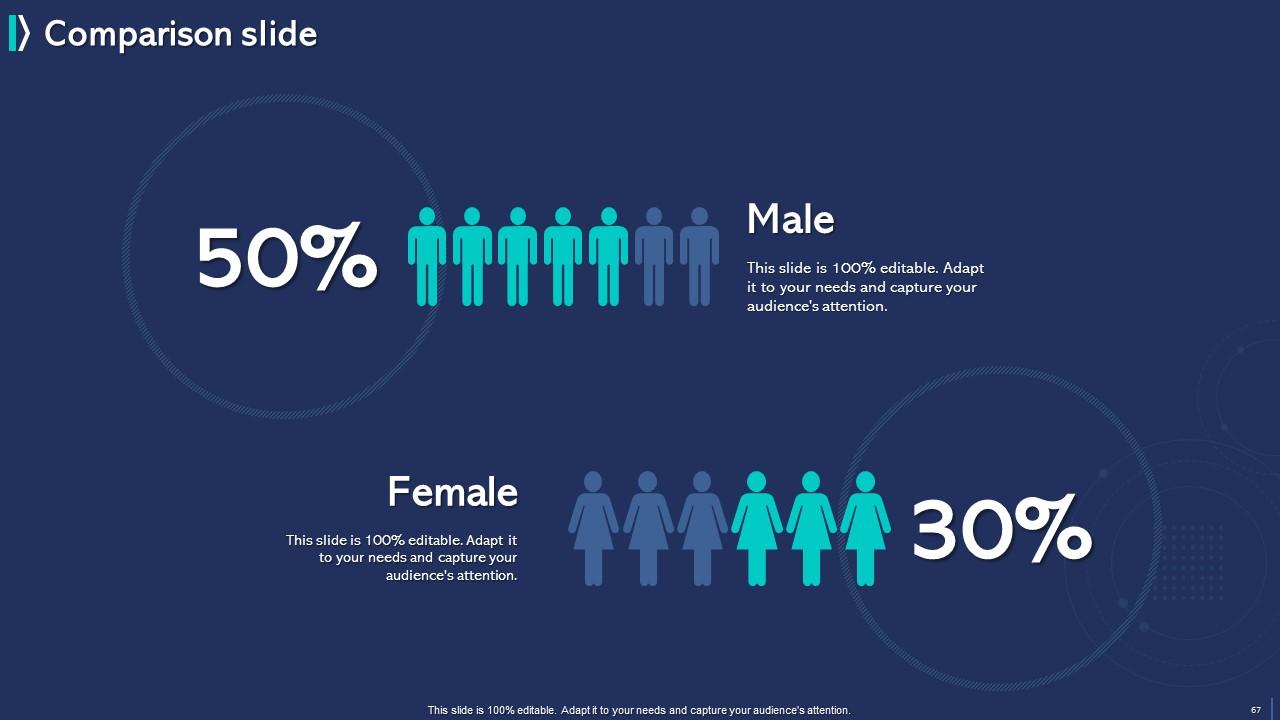
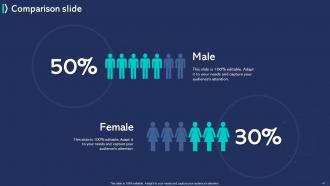
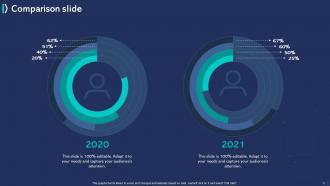
Slide 67: This is the Comparison slide.
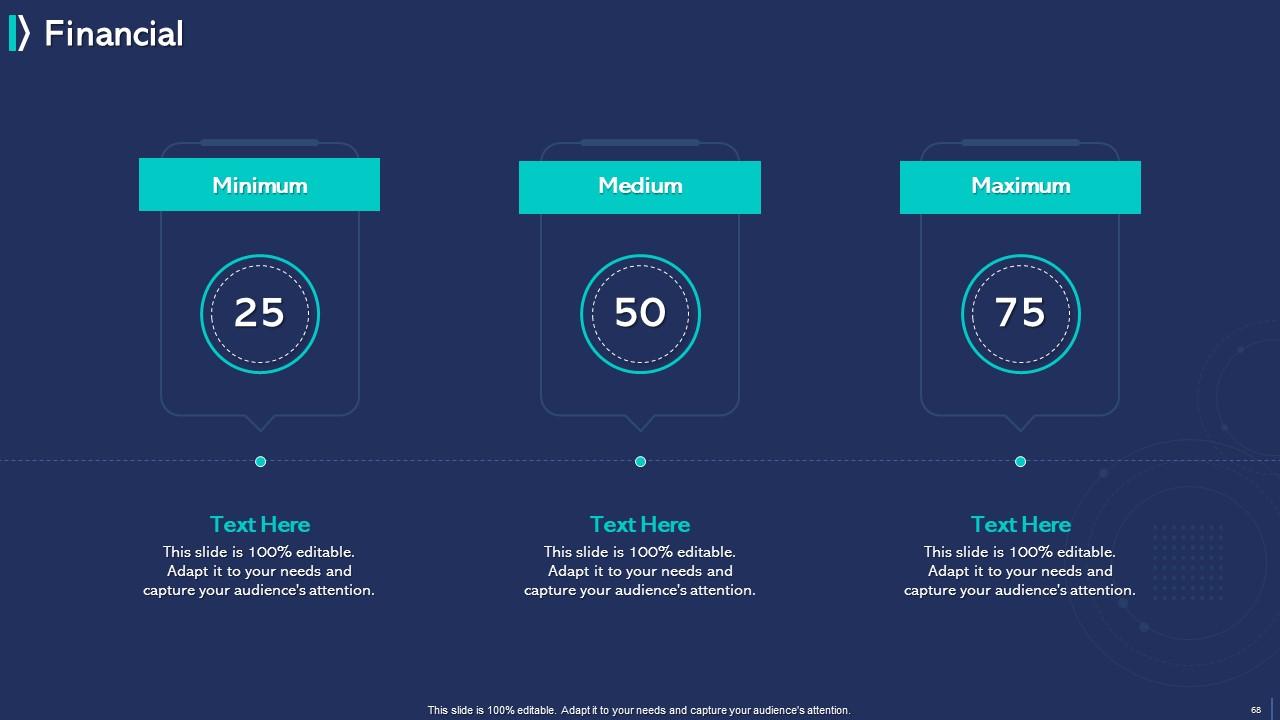
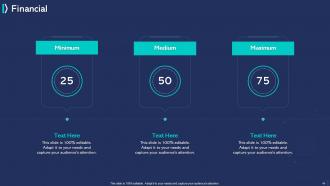
Slide 68: This slide shows Financial of the company.
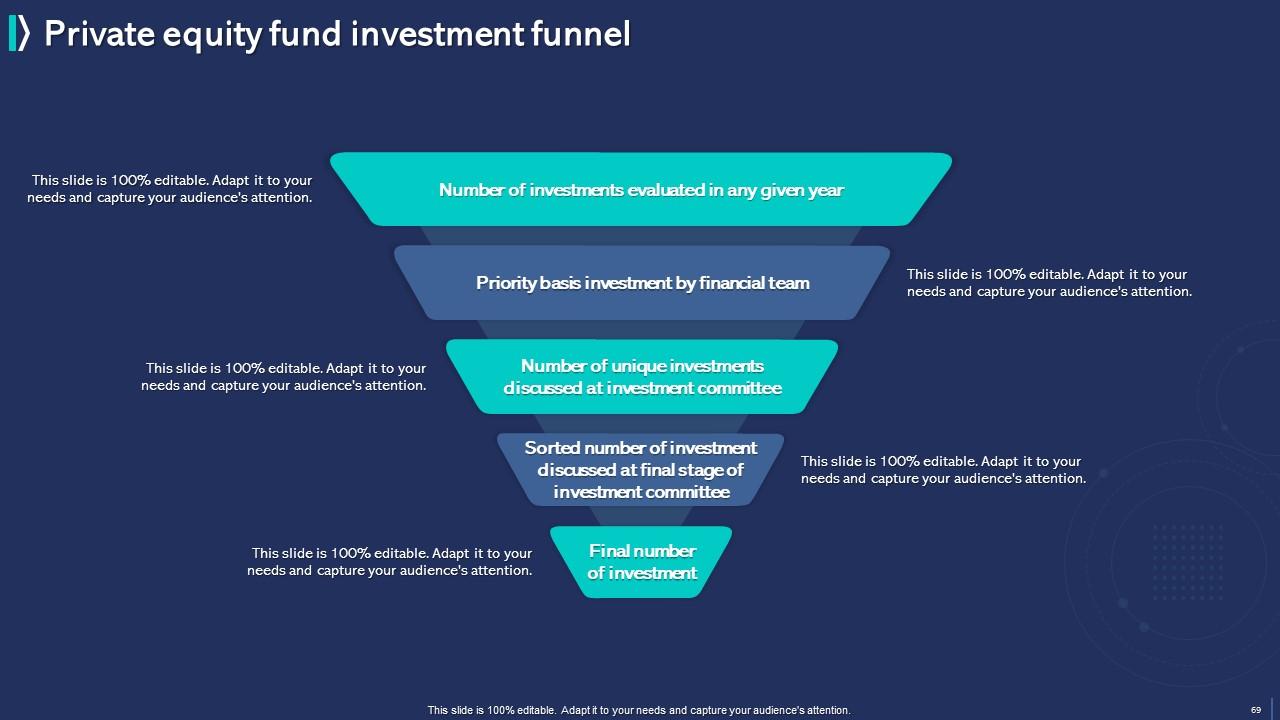
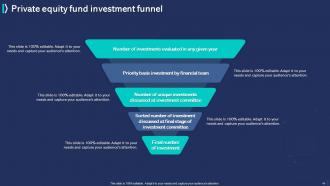
Slide 69: This slide shows Private equity fund investment funnel.
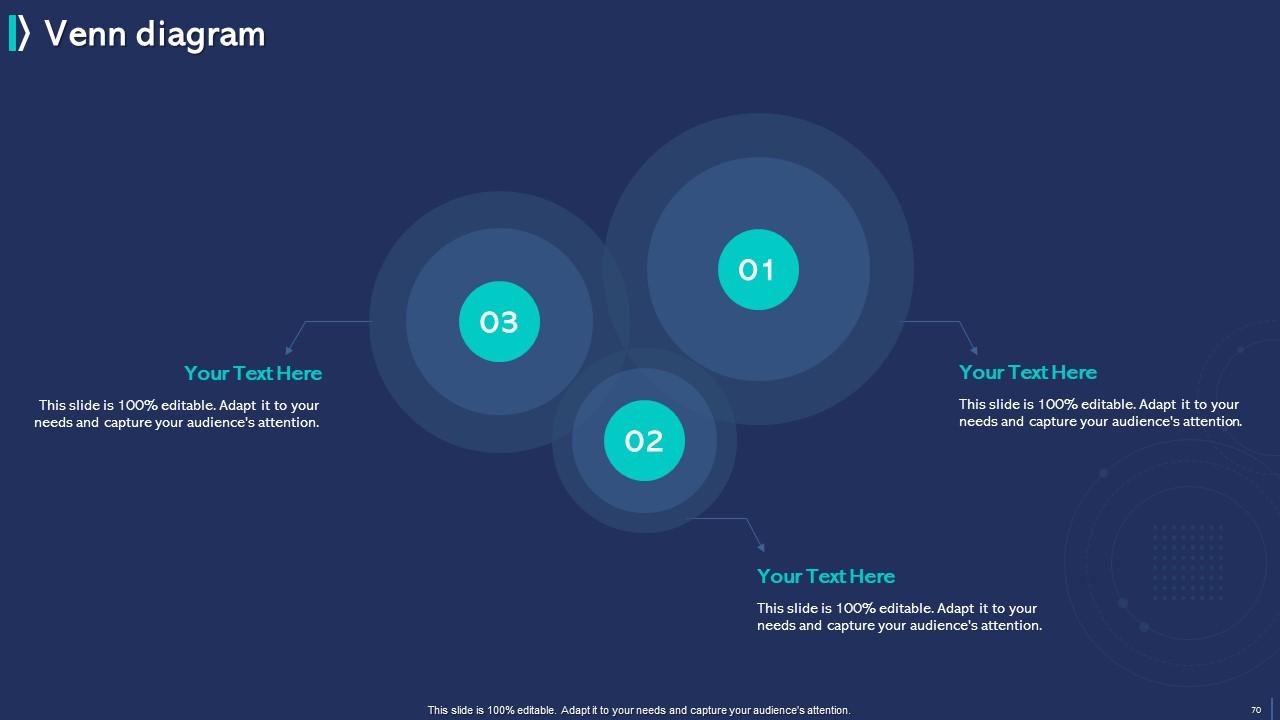
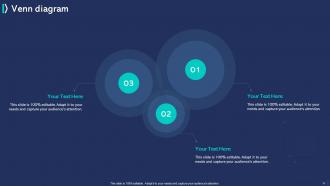
Slide 70: This slide display Venn diagram.
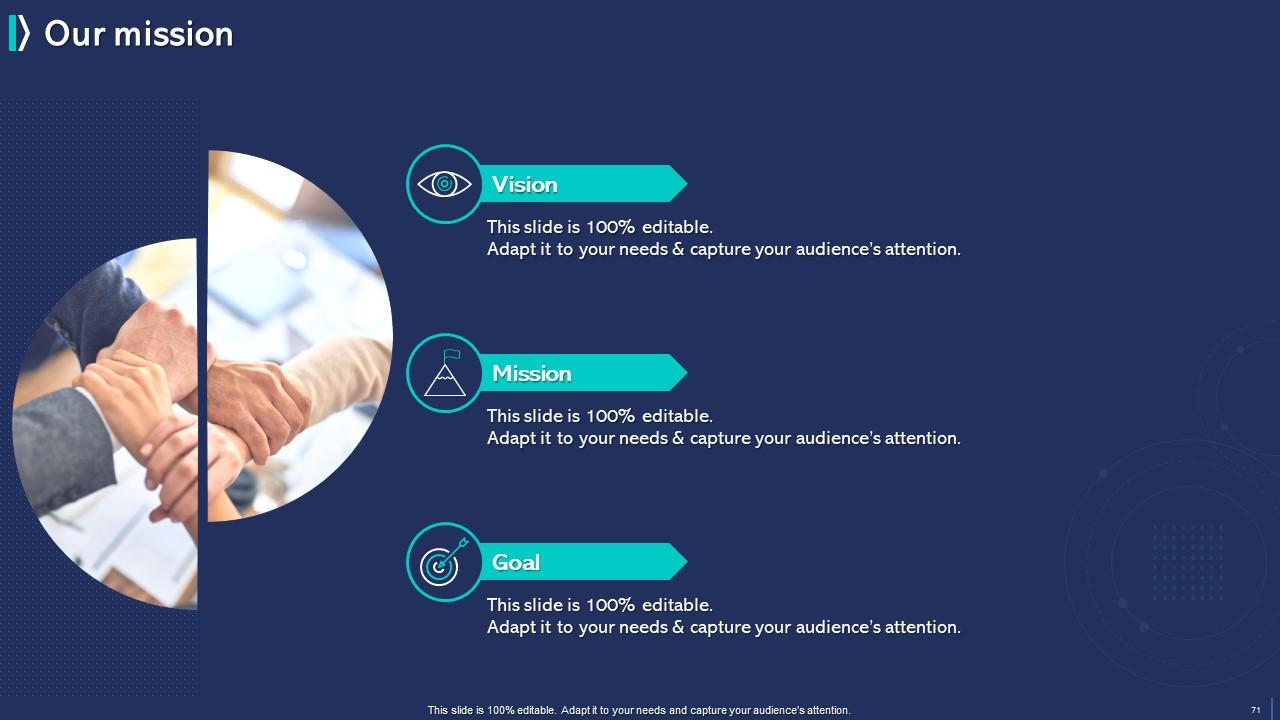
Slide 71: This slide presents your company's vision, mission and goals.
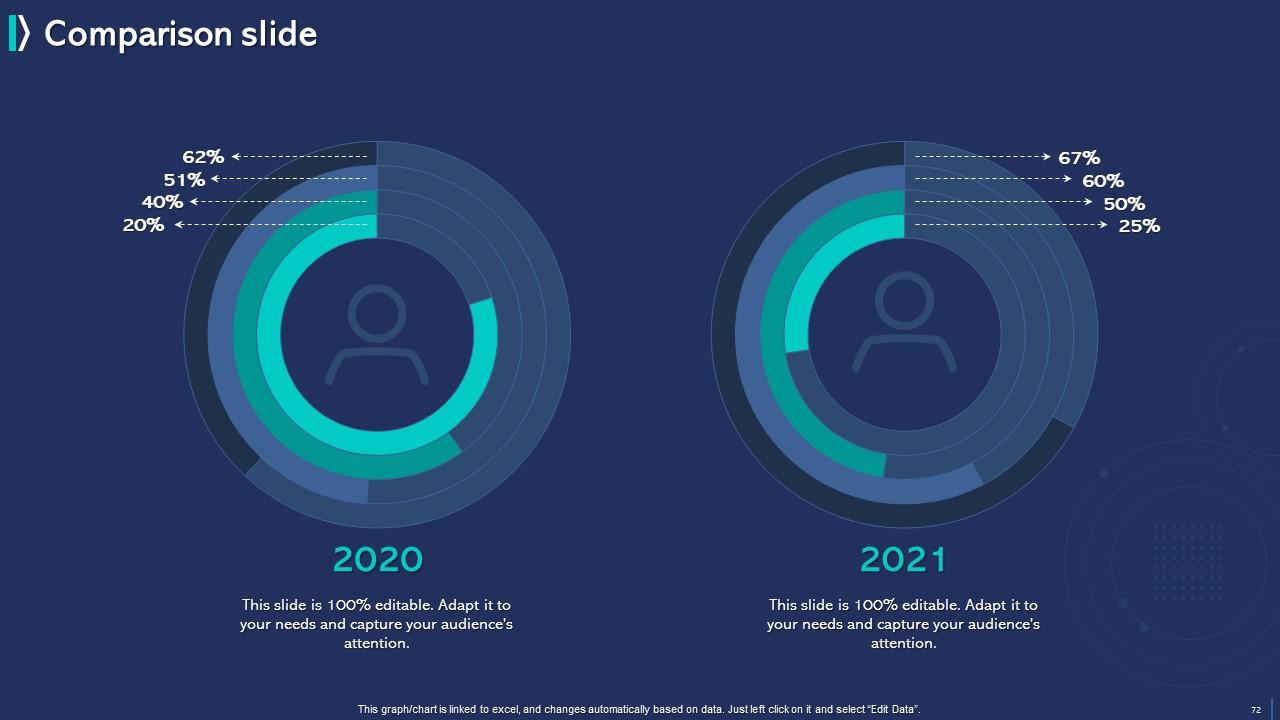
Slide 72: This is the Comparison slide.
Slide 73: This slide shows details of team members like name, designation, etc.
Slide 74: This slide shows puzzle for displaying elements of company.
Slide 75: This slide shows roadmap of company.
Slide 76: This slide exhibits yearly timeline of company.
Slide 77: This is thank you slide & contains contact details of company like office address, phone no., etc.
Customer Experience Improvement Powerpoint Presentation Slides with all 82 slides:
Use our Customer Experience Improvement Powerpoint Presentation Slides to effectively help you save your valuable time. They are readymade to fit into any presentation structure.
-
It is my first time working with them and that too on a friend's recommendation. I would say, I am not expecting such a worldly service at this low price.
-
Amazing slides! Unique, attractive, and easy to understand.
