Customer feedback powerpoint slide design ideas

Rating:
90%
Customer feedback powerpoint slide design ideas
Slide 1 of 5
Favourites Favourites

Try Before you Buy Download Free Sample Product

Audience Impress Your
Audience
Editable 100%
Editable
Time Save Hours
of Time
The Biggest Sale is ending soon in
0
0
:
0
0
:
0
0
Rating:
90%
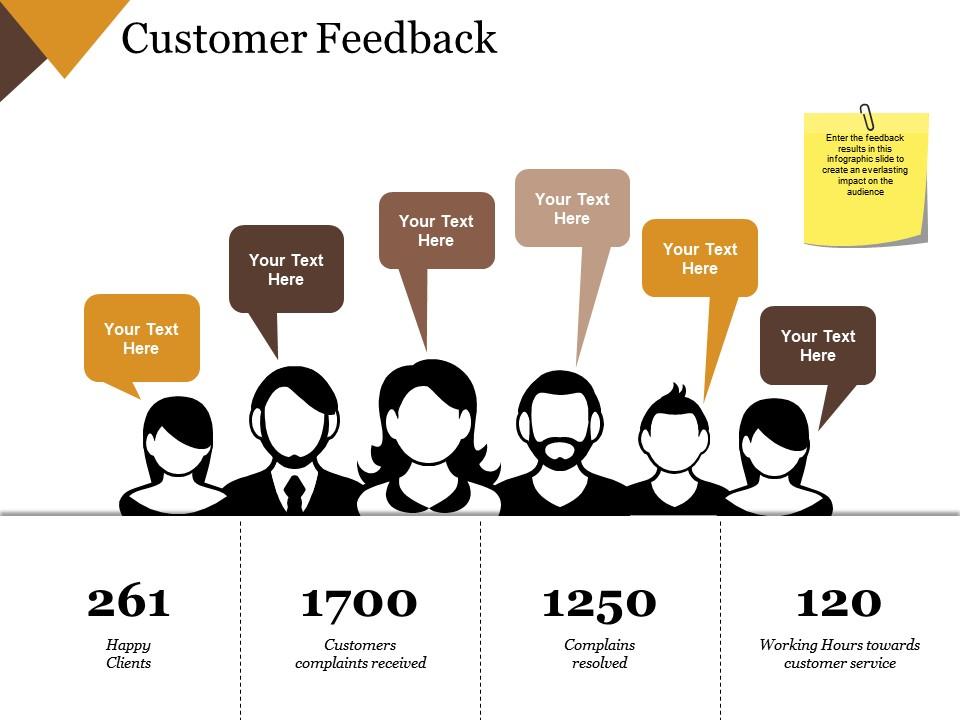
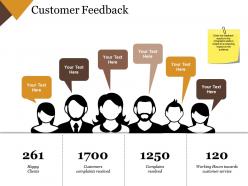
Presenting this set of slides with name - Customer Feedback Powerpoint Slide Design Ideas. This is a six stage process. The stages in this process are Happy Clients, Customers Complaints Received, Complains Resolved, Working Hours Towards Customer Service, Business.

People who downloaded this PowerPoint presentation also viewed the following :

FAQs for Customer feedback powerpoint

Honestly, I swear by Mentimeter and Slido for live polls - way better than awkward silence when you ask "any questions?" Quick verbal check-ins work great too, especially at natural breaks. If you're doing virtual, definitely use the chat. People are way more likely to type feedback than unmute themselves. During the actual presentation, keep it super simple - thumbs up/down beats lengthy surveys every time. You don't want to kill your momentum. But here's the thing: hit them with a quick 2-3 question follow-up survey immediately after while everything's still fresh. That's where you'll get the real insights.

Here's what works for me - color-code your feedback themes and stick with it throughout. Use bigger fonts for the stuff that actually matters. White space is your friend because nobody wants to decode a text wall. I always go with charts over tables for trends and sentiment breakdowns - way easier to digest quickly. Keep your colors simple (maybe 3-4 max) and use obvious ones like green for positive, red for negative. Honestly, if someone can't grasp your main points in 10 seconds flat, you've probably overcomplicated it. The whole thing should tell the story without them having to hunt for it.

Honestly, storytelling is way more powerful than just dumping data on people. Nobody remembers "73% satisfaction rate" but they'll totally remember Sarah trying to checkout at 2am with a screaming baby and your site being impossible to navigate. That's the stuff that sticks. Pick like 2-3 customer types and build little stories around your main feedback themes. Raw emotions hit different than spreadsheets - stakeholders actually care when you paint the real picture of what customers go through. Way more effective than drowning everyone in charts they'll forget five minutes later.

Honestly, just think about how your different people actually like getting info. Data nerds want all the charts and numbers they can dig into. Busy execs? They need the quick summary with clear next steps - no fluff. Visual people love dashboards and infographics (and let's be real, most of us do). Your detail people want those full reports they can bookmark and come back to later. I'd pick your top 3 types of people and make different versions of the same feedback. Same data, just packaged differently so it actually makes sense to them.

Honestly, quote cards with customer photos are your best bet - they just feel more real and trustworthy. Story templates are solid too, where you map out their whole journey from problem to solution. Video testimonials get crazy engagement but they're obviously way more work to pull together. Oh, and timeline formats work really well for those dramatic before/after transformations. Just don't go overboard with the design though - fancy graphics will totally overshadow the actual feedback. I'd start with simple quote cards since they're super easy to make and work for pretty much any audience.

Stick to maybe 3-5 metrics tops - any more and people's brains just shut off. Start with the big picture stuff, then let them click through for details if they're curious. Bar charts and line graphs are way better than tables (seriously, who wants to squint at rows of numbers?). Color should highlight what actually matters, not just look nice. Oh, and don't cram everything together! White space makes a huge difference. I learned that the hard way on my last project. Each view should tell one clear story. You'll thank yourself later when people actually understand what you're showing them.

Ugh, don't cram everything onto one slide - people's eyes just glaze over. Raw numbers without context are useless too. Like telling me satisfaction dropped 3% but not why? Come on. Lead with your biggest insights instead of burying them on slide 47 where nobody will see them. Those fancy charts that take forever to understand are the worst. And here's the thing - if you're just presenting problems without solutions, what's the point? Your stakeholders need to know what they should actually DO about it. Otherwise you're just wasting everyone's time complaining about data.

Honestly, the easiest way is just adding sections like "Customer Wins" or "Pain Points We Solved" to your regular retro format. Pull in actual survey quotes or NPS scores - way more powerful than just talking about internal stuff. One team I worked with does "What customers loved / What frustrated them / How we'll respond next sprint" and it works really well. Maybe dedicate like 15 minutes each retro to recent customer feedback? The trick is making it feel natural, not forced. Oh, and don't just tack it on at the end - weave those insights right into how you're reflecting on the sprint.

Honestly, those visual feedback cards work really well - just pull good quotes with customer photos and ratings. Your team will actually share them around. I'd build a simple dashboard showing trending themes with color-coded sentiment (sounds fancy but it's not hard). Or here's something that feels weird but totally works: record short videos of team members reading powerful customer quotes out loud. Some people even make fake "newspaper headlines" from feedback patterns, which is kinda brilliant for meetings. The whole point is making insights so obvious that people can't ignore them. Just pick whatever format your team actually uses - don't overthink it.

Stop dumping those testimonials like giant text walls - nobody's reading that mess. Instead, grab your best quotes and make them pop visually. Big fonts, customer photos, company logos. The whole nine yards. Here's what actually works: sprinkle shorter quotes throughout your presentation to back up key points. Match testimonials to specific moments in your story. Like, if you're addressing pricing concerns, that's when you drop the quote about ROI. Start by going through your customer feedback and sort them by what problems they solve. Way more strategic than just slapping them on one boring slide at the end.

Honestly, visual hierarchy is everything - clear headings, bullet points, tons of white space so people don't feel overwhelmed. Interactive stuff works wonders too. Polls, quick surveys, whatever gets them clicking instead of zoning out. I'd stick with simple colors but throw in some accent colors for key points. Short text blocks are crucial here. Nobody wants to read walls of text (I sure don't). Oh, and definitely end with clear next steps so people actually know what you're doing with their feedback. Makes a huge difference.

Mentimeter and Slido are game changers for this - you can throw polls and Q&A slides right into your deck. People just use their phones to respond in real-time, which honestly feels way more natural than awkward hand-raising. I drop in quick pulse checks every 10-15 minutes. Works great for stuff like "rate this idea 1-5" or asking about their biggest pain points. The responses pop up live on screen so everyone sees the results instantly. PowerPoint Live does this too if you're already using that. Just don't go overboard - maybe 2-3 feedback moments max or you'll annoy people.

Put your biggest insights right at the top - don't bury the good stuff. Group feedback by themes instead of going through each customer individually (trust me, no one wants to hear about that checkout bug 47 times). Charts and actual quotes help break things up so people don't zone out. I made this mistake once with a massive slide deck and could literally see people checking their phones. Problem → impact → what to do next works best. End with priorities ranked by how urgent they are and how much work they'll take. People should walk away knowing exactly what needs fixing first.

Colors totally mess with people's heads before they even look at your actual data. Red screams "something's broken!" while green says everything's fine. But you can accidentally trick people if you pick weird colors. I learned this the hard way once - used red for our best metrics and confused everyone lol. Stick with blue or gray for neutral stuff since they don't make people panic. Orange works well when you want to highlight trends without setting off alarms. Definitely run your color choices by someone else first and throw in a legend so nobody gets confused.

Try mixing video testimonials with animated text overlays - those look super professional. Interactive dashboards work great too, where people can click through different feedback themes. Heat maps are honestly my go-to for showing sentiment across your product interface. Everyone eats up visual data like that. Voice recordings hit different than just text because you catch all the emotional stuff. QR codes linking to customer videos make presentations way more engaging. Oh, and "feedback journeys" are clutch - combine screenshots, quotes, and short clips to tell the whole story. Just start with one thing and build up from there. Don't overthink it.

Ratings and Reviews

90% of 100
Write a review
Most Relevant Reviews
  1. 100%

    by Cristobal West

    Easy to edit slides with easy to understand instructions.
  2. 80%

    by Dewayne Nichols

    Easily Editable.

2 Item(s)

per page: