Customer journey cycle ppt slide design

Rating:
80%
Slide 1 of 5
Favourites Favourites

Try Before you Buy Download Free Sample Product

Audience Impress Your
Audience
Editable 100%
Editable
Time Save Hours
of Time
The Biggest Sale is ending soon in
0
0
:
0
0
:
0
0
Rating:
80%
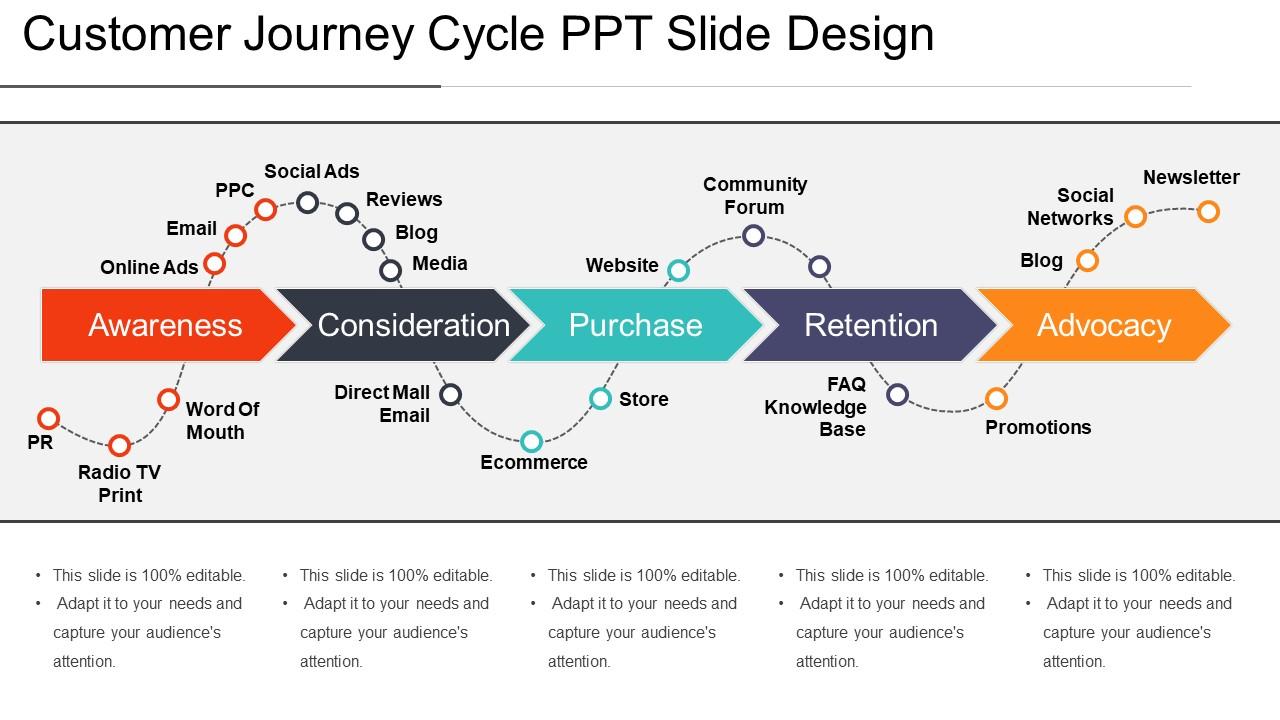
Presenting Customer Journey Cycle PPT Slide Design. Our PowerPoint slides are fully compatible with Google Slides. Icons, images, and logos can be added or replaced as per your desired style or company’s theme. The slide template is totally editable. It can also be saved in formats like PDF, JPG and it works well with Google Slides as well. Download it by just a click. It is available in both the Standard screen(4:3) and Widescreen (16:9).

FAQs for Customer journey cycle

So you've got five main stages: awareness, consideration, purchase, onboarding, and retention/advocacy. People usually get stuck longest in consideration - honestly, that's where I'd focus most of my energy. Here's the thing though - you can nail your sales process, but if onboarding sucks? They're gone. Map out where people are dropping off in your funnel because that's pure gold for improvements. Each stage totally shapes how customers feel about your brand. Oh, and don't sleep on those pain points - smooth experiences build crazy loyalty.

Honestly, just grab some sticky notes and map out every step from when people first hear about you to after they buy. Surveys help, but shadowing your customer service team for a day? That's where the real insights are. You'll see patterns you never noticed. Get marketing, sales, and support in the same room - they all have different pieces of the story. Analytics show you the numbers, but talking to actual customers shows you the why. Find the biggest gaps between what people expect vs. what actually happens, then fix whatever's hitting the most people first.

Okay so think of customer feedback like your GPS - it shows you exactly where people are getting lost or confused. You'll want to collect it at every step, not just after they buy something. Use it to fix your awareness game (are the right people finding you?), make consideration smoother (do they have enough info?), and definitely streamline that checkout process. Retention gets better too when you actually listen. Without feedback you're basically flying blind, which honestly seems crazy when it's so easy to just ask. The trick is setting up those feedback loops everywhere so you're always improving stuff.

So you can basically track everything in one place with a good CRM - every email, call, purchase, whatever. The automation stuff is pretty wild though, like setting up email sequences that fire off based on what people do (or don't do). I'd start by sketching out your customer journey first - sounds boring but it helps. Then you'll spot where people are bailing out and can actually fix those gaps. Real-time data shows you what's working too. Honestly beats having customer info scattered across spreadsheets and your brain.

So you're gonna want to track the obvious stuff first - conversion rates, customer acquisition cost, lifetime value. Those tell you if you're actually making money. Then add engagement metrics like time on site and email opens. Customer satisfaction scores are super important too, even though they're annoying to connect to actual revenue sometimes. Here's the thing though - don't go crazy with like 20 different metrics or you'll lose your mind. Pick maybe 5-7 max and stick with those. Set up a basic dashboard, check it monthly, and you'll start seeing patterns. Way better than drowning in spreadsheets.

Personas totally change how you design every touchpoint. Think about it - your busy exec needs a super streamlined mobile experience, while that research-heavy person wants tons of detail and comparison tools. You can't send them the same email, obviously. Map out separate journey paths for each one. Honestly, I'd focus on just your top 2-3 personas first or you'll go crazy trying to account for everyone. Adjust your messaging and timing based on what actually motivates each group. Channel preferences matter too - some people live in their inbox, others ignore it completely.

Start by figuring out who your customers actually are - group them by what they buy and how they act on your site. Then customize everything accordingly. Email's honestly the easiest place to begin since you can segment lists and see results fast (I've watched open rates go crazy high with good targeting). Your website should show different content to different people too - like targeted offers or landing pages that actually make sense for them. Map out where customers interact with you first, then pick one spot to test personalization before you go overboard. Don't try to do everything at once or you'll burn out.

Don't just guess what customers do - use real data or you'll map fantasy land. Teams love focusing on the perfect scenario but honestly, the broken stuff is way more useful to fix. I've seen gorgeous maps that nobody ever looks at again (total waste of time). Get actual feedback first, involve different people from your team, and definitely include the annoying edge cases. Keep it simple though - like, stupidly simple. Make sure you actually use these things to fix problems, not just stick them on a wall somewhere.

B2C customers make quick decisions - we're talking days or weeks max. But B2B? Totally different beast. You've got months of back-and-forth, multiple people weighing in, budget meetings (ugh), demos, the whole nine yards. With B2C you're hitting emotional buttons for fast conversions. B2B buyers want educational content and relationship building since they're risking way more money. The touchpoints are completely different too. Honestly, B2B can be a slog but the deals are usually worth it. Figure out which one you're dealing with first because your whole strategy changes.

So content marketing is basically like being that friend who always knows what to say at the right moment. When people are just figuring out their problem, you hit them with educational stuff about their pain points. Comparison guides and case studies work great when they're weighing options - honestly, most companies skip this part and wonder why their conversion sucks. Then testimonials and demos close the deal when they're ready to buy. The trick is actually matching what you're putting out there to where someone's head is at, instead of just throwing sales pitches everywhere and hoping something sticks.

So basically you want to match your social content to where people are in their buying journey. Like awareness posts for newbies, nurturing content for people considering you, then customer service stuff after they buy. UTM codes are your best friend here - they'll show you which posts actually convert (most people skip this part but it's game-changing). Social listening tools help too. I'd start by looking at your current social presence and see where people are bouncing. Think of social as the glue connecting all your other channels. Pretty much every touchpoint can tie back to social somehow.

Honestly, you gotta match your recovery strategy to where people are actually bailing. Early dropouts need retargeting ads and content that pulls them back in. When someone's on the fence during consideration, hit them with comparison guides or testimonials - social proof works wonders. Cart abandonment is the obvious one - email reminders with discounts or free shipping usually do the trick. Oh, and for customers who bought once but disappeared? That's where loyalty programs and personalized recs based on what they already purchased come in handy. Don't just spray the same approach everywhere though.

Honestly, visual templates are a game changer for explaining customer journeys. People just get it faster when they can see the story mapped out instead of reading through endless bullet points. Your execs will actually pay attention – I swear they have the attention span of goldfish sometimes. Templates keep everything consistent too, so you're not reinventing the wheel every time you present to different teams. The best part? You'll spot problems and opportunities that totally get lost in those massive text reports. Just start simple – show the stages, emotions, and what customers actually do. Way more engaging than drowning people in data.

Honestly, predictive analytics is a game changer - you can catch customers before they bounce and swoop in with the right message. I'd start with real-time behavioral tracking since it lets you personalize stuff based on what they're actually doing right now, not just their age or whatever. Heat maps are clutch too. Like, you'll be shocked seeing how people really use your site vs what you assumed. Oh and cross-channel attribution shows you what's actually converting people across all touchpoints. My advice? Pick your worst dropout point first and test small changes based on the patterns you're seeing.

Dude, post-purchase is make-or-break time. Once someone buys from you, the next 30-60 days basically determine if they'll stick around or ghost you completely. I'm talking onboarding that doesn't suck, actually helpful follow-ups, easy returns when things go wrong. Send them useful tips, check in before they even think to complain. You want them getting real results from whatever they bought. Do this right? They'll tell their friends and keep coming back. Mess it up and even an amazing product won't save you. It's wild how many businesses nail the sale then completely drop the ball here.

Ratings and Reviews

80% of 100
Review Form
Write a review
Most Relevant Reviews
  1. 80%

    by Damian Stevens

    Unique design & color.
  2. 80%

    by Devon Ferguson

    Best way of representation of the topic.

2 Item(s)

per page: