Customer journey roadmap digital customer engagement ppt elements

Rating:
80%
Customer journey roadmap digital customer engagement ppt elements
Slide 1 of 2

or

Favourites Favourites

Try Before you Buy Download Free Sample Product

Audience Impress Your
Audience
Editable 100%
Editable
Time Save Hours
of Time
The Biggest Sale is ending soon in
0
0
:
0
0
:
0
0
Rating:
80%
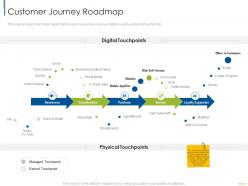
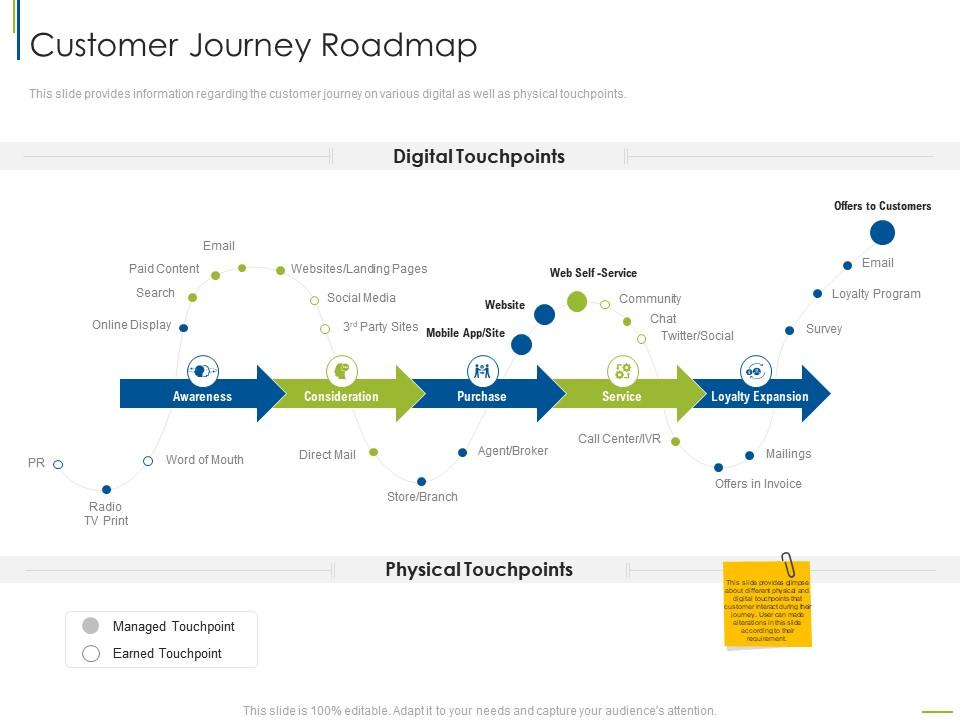
This slide provides information regarding the customer journey on various digital as well as physical touchpoints. Introducing Customer Journey Roadmap Digital Customer Engagement Ppt Elements to increase your presentation threshold. Encompassed with five stages, this template is a great option to educate and entice your audience. Dispence information on Awareness, Consideration, Purchase, Service, Loyalty Expansion, using this template. Grab it now to reap its full benefits.
FAQs for Customer journey roadmap digital customer

So the main stages are awareness, consideration, purchase, onboarding, and retention/advocacy. Start by mapping what your customers want, their frustrations, where they interact with you, and how they're feeling at each step. Customer interviews are honestly where the magic happens - way better than just guessing. Create visual maps that show the whole flow and mark where people might bail or get annoyed. Keep it simple though, or your team won't touch it. I'd tackle one persona first, back it up with actual data, then build from there. Oh and don't overthink the visuals - even sticky notes work.

So a customer journey roadmap basically looks at the whole picture, not just getting people to buy stuff. Sales funnels are pretty narrow - they track someone until they convert, then... that's it? Kinda weird. But roadmaps keep going after the sale. You're mapping out onboarding, support calls, renewals, all those little moments that either annoy people or turn them into superfans. It's like shifting your mindset from "how do we close this deal?" to "what's their entire experience gonna be like?" I'd start by listing everything that happens after someone buys - that's where most funnels just drop the ball completely.

Honestly depends on your budget and how complex you want to get. Miro and Mural are solid for basic stuff - really visual and everyone can jump in. UXPressia or Smaply are more specialized if you need fancy features. But real talk? Google Slides works fine when you're starting out. Even Figma if your team's already using it. The main thing is making sure everyone can actually access whatever you pick - there's nothing worse than choosing some tool half your team can't use. I'd just start with something simple you already have, then figure out what you're missing later.

Think of customer personas as the real people behind your customer journey map. You're not just designing for some random user - you're designing for Sarah who's juggling kids and work, or Mike who watches every dollar for his business. Different personas will move through your journey completely differently. Sarah might abandon her cart because she got distracted by a phone call, while Mike bounces because shipping costs too much. When you map personas to your journey, these patterns become super obvious. Honestly, this stuff can get overwhelming fast, so just pick 2-3 main personas to start. Walk through your current process as each of them and see where things fall apart.

You need both the numbers side and the feelings side, honestly. Track your touchpoints, conversion rates, where people bail out - that's your baseline data. But here's the thing - customer feedback and support tickets are pure gold. That's where you find out *why* someone actually left. Timing matters too, like how long between interactions and what device they switched to. Demographics help obviously. Oh and channel attribution if you're running multiple campaigns. I'd start with whatever data you can grab right now, then figure out what's missing based on your biggest headaches.

Honestly, start with your customer service team - they hear the same complaints over and over. Then hit up multiple channels for feedback: surveys, support tickets, social media rants, actual phone calls with customers. Heat maps are super helpful too since they show exactly where people bail on your website. Map out your whole customer journey first, then dump all that feedback data on top to see the real trouble spots. Sometimes we miss the obvious stuff because we're way too involved in our own processes. Oh, and don't sleep on analytics - they'll show you drop-off patterns you didn't even know existed.

Look, customer feedback is like your reality check - it shows where you're totally off base about what people actually want. I'd collect it at every touchpoint because honestly? Without it you're just making educated guesses. Set up surveys, do interviews, watch how people behave on your site. Map what you're hearing to different parts of the customer journey, then fix the biggest problems first. The whole point is creating those feedback loops so you can keep tweaking things. Don't just collect it once and call it done - make it ongoing.

So basically, it gets everyone on the same page about what customers actually go through. Marketing, sales, support - they're usually doing their own thing with zero clue how it affects the others. The roadmap shows those handoffs between teams, and trust me, some of them are painfully awkward. You'll spot where one department is accidentally making life harder for another. I'd start by getting reps from each team together to map out what's happening now. Then you can tackle the worst friction points first - there's always at least three that'll make you cringe.

Here's what works for me: track your customer's real journey, not some fantasy version you made up. Horizontal timelines are your friend - awareness, consideration, purchase phases laid out clean. Those circular diagrams? Total waste of time honestly. Don't forget emotions alongside touchpoints because people buy with their hearts way more than their heads. Keep everything visual with icons and colors - paragraphs kill these things. Oh, and validate with actual customer interviews before you show anyone. Makes such a difference when stakeholders can actually follow what you're presenting.

Honestly, your customer journey map is like a cheat sheet for finding where people get annoyed and bounce. Check where engagement suddenly drops or support tickets blow up - that's where you're losing people. I've watched companies save their retention rates by just fixing one stupid step in onboarding (amazing how much that matters). Post-purchase is huge since most companies totally phone it in after the sale. Map every interaction after someone buys, figure out what's making them leave, then tackle your worst drop-off spot first. Way more effective than guessing.

Focus on conversion rates between each stage - that's where you'll spot the bottlenecks. Time in each phase matters too, plus where people are dropping off. Customer satisfaction scores and NPS will tell you if people actually like the experience (which honestly gets overlooked way too often). Don't forget lifetime value and retention rates for the bigger picture. But here's the thing - pick maybe 3-5 metrics max that actually tie to your goals. Otherwise you'll just drown in spreadsheets and lose track of what matters.

Start by mapping out every place customers hit your brand - website, app, social media, stores, customer service, emails, all of it. The trick is making these channels actually talk to each other instead of being totally disconnected (which drives me crazy when I experience it as a customer). Look for those annoying gaps where people get lost switching between channels. Create consistent messaging and shared data so customers aren't repeating themselves constantly. Your roadmap needs specific integration points. Bottom line - people should feel like they're dealing with one brand, not five different companies.

Don't guess what customers are thinking - use actual data instead. Map the frustrating moments too, not just when everything goes smoothly. Here's the thing: everyone tries to document every single touchpoint right away, which is honestly a waste of time. Focus on the critical moments that actually move the needle for your business first. Also, avoid creating some gorgeous map that just sits there looking pretty. You need to actually use it to make decisions and keep updating it. Otherwise you're just making expensive wall art, you know?

So basically, take your roadmap data and create different touchpoints for each stage. Send targeted stuff based on where people are in their journey - different messaging, product recs, timing, whatever makes sense. Honestly, I've seen companies absolutely crush it just by fixing their email sequences around journey stages. Pretty wild what small changes can do. When customers hit certain milestones or look like they're about to bail, trigger personalized offers. Don't overthink it though - just pick one stage first and test personalized messaging against generic stuff. You'll see the difference right away.

So basically, customer journey roadmaps tell you exactly what content to make and when. Map different stuff to each stage - blog posts for awareness, comparison guides when they're deciding, case studies to close the deal. Honestly changed everything for me because I wasn't just throwing random content at the wall anymore. Plus you'll spot gaps where people drop off, which is super helpful for prioritizing what to create next. Oh and definitely audit what you already have first - might save you some work there.

Ratings and Reviews

80% of 100
Review Form
Write a review
Most Relevant Reviews
  1. 80%

    by Christopher Wood

    Very well designed and informative templates.

1 Item

per page: